

When you develop a custom dress, another sample is not always the best answer to every design change. A neckline, skirt volume or garment length can often be reviewed before the factory cuts another sample. From the production side, 3D dress sampling is most useful while the design is still being adjusted. Once the question moves to fabric behavior, fit or construction, we still need to see the garment itself.
Where 3D Sampling Fits Into Dress Development
Before a dress reaches bulk production, quite a few details may still change.
You may start with a sketch or reference garment, then move into pattern making, sampling, fitting and revisions. In practice, these stages do not always move in a straight line.
The first sample may show that the waist sits too low. Once that is corrected, the skirt can look fuller than expected. Then a sleeve adjustment may come up during the next fitting.
That is how one small change can turn into another sample round.
The development path can look like this:
Design → Pattern → First Sample → Fit Review → Pattern Revision → Revised Sample → PP Sample → Bulk Production
3D sampling gives you a chance to review the pattern before committing to another physical sample.
You can keep the existing sampling process and use 3D earlier in the development stage. The main benefit is deciding which changes are worth testing on a physical garment and which can be adjusted first on the pattern.
When Is 3D Dress Sampling Most Useful?
3D sampling is most helpful when you are still deciding how the dress should look.
You might be comparing a higher waist with a longer bodice, or checking whether the skirt needs more volume before asking the factory for another sample.
These changes can often be reviewed on the digital version first.
Silhouette
The first 3D review is usually about the overall shape of the dress.
This may include:
- A-line fullness
- Bodycon fit
- Fit-and-flare shape
- Straight or relaxed silhouettes
- Skirt volume
- Waist definition
If the overall shape is off, it is better to correct it before cutting the next sample.
Length and Proportion
For example, you may be comparing a short mini version with a longer version of the same design.
You can compare the proportions before committing another sample to the cutting table.
The same type of review works for:
- Waist position
- Bodice length
- Skirt length
- Shoulder width
- Sleeve length
- Hem proportion
For a collection, this can be especially useful because the same type of change may need to be reviewed across several styles.
Neckline and Sleeve Shape
These details are often difficult to describe through email.
“Make the neckline slightly lower” sounds simple, but the visual result depends on the surrounding proportions.
A 3D version gives both sides something specific to look at before the pattern maker makes another change.
Placement of Details
Pleats, gathers, panels, cut-outs, pockets and ruffles can also be reviewed before physical sampling when their main issue is placement.
Moving a detail a few centimeters may change the balance of the dress.
Seeing the revised position can be easier than trying to explain it through written measurements alone.
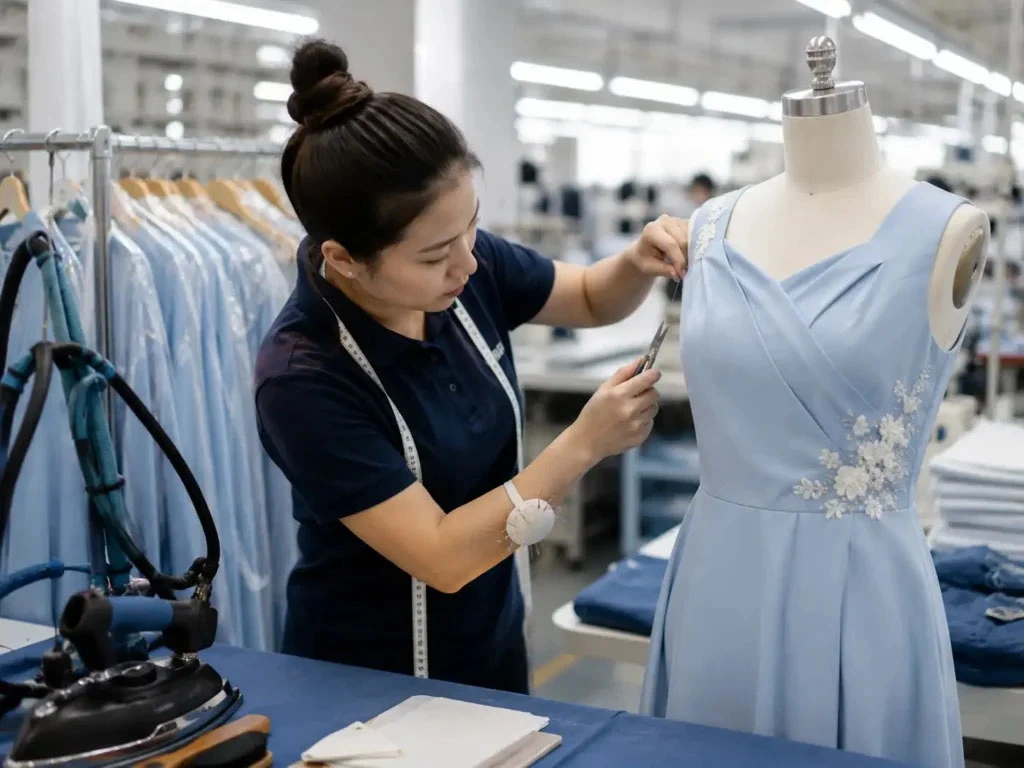
When Does 3D Sampling Save You a Physical Sample Round?
It depends on what you need the next sample to prove.
If you need another garment because you want to check fabric drape or final fit, 3D is unlikely to remove that step.
If the only issue is that the skirt looks too wide, the neckline is too high or the waist is sitting in the wrong position, another physical sample may not be necessary yet.
You can review the change first.
For example:
Traditional revision
First sample → Fit comments → Pattern revision → New sample → Review
With an early 3D review
First pattern → 3D review → Pattern revision → Physical sample → Review
For one style, that may only remove one sample-related step. With ten styles in development, those extra rounds add up quickly.
There is also the time outside the factory. The sample has to be packed, shipped, received, inspected and discussed before the next round can begin.
For overseas development, that waiting period can be longer than the sewing work itself.
When Is a Physical Sample Still More Important?
This is where you need to be careful with 3D sampling.
A digital dress can show you a lot about the design. It cannot give you the same information as the actual garment.
Fabric Drape
The same pattern can look very different in different fabrics.
A lightweight chiffon may fall away from the body. A stretch satin may follow the body more closely. Cotton poplin may hold a cleaner shape.
If the fabric’s movement is part of the design, you need to see the real material.
Stretch and Recovery
For fitted dresses, stretch is not just a visual issue.
You need to know how the fabric behaves when the garment is worn and whether it returns to its original shape.
A digital version can suggest the intended fit, but it does not replace checking the actual fabric.
Fit on the Body
A fitted bodice may look balanced on a digital avatar but feel too tight around the bust.
An armhole may look correct and still restrict movement.
The hip may need more ease than the original measurements suggested.
These are findings that usually appear during physical fitting.
Construction
Lining, boning, cups, elastic, zippers, interfacing and reinforcement can change how a dress actually sits.
A detail that looks simple on screen may require a different sewing sequence once the pattern reaches the sewing line.
Workmanship
Seams, hems, pressing, puckering and stitch tension are production issues.
You need a physical garment to assess them properly.
Which Dress Styles Need More Physical Checking?
Some dress styles simply need more physical checking because the fabric or construction has a bigger effect on the final result.
Bodycon Dresses
Bodycon styles depend heavily on stretch, recovery, ease and body measurements.
3D can help you review the proportion, but physical fitting remains important.
Slip Dresses
The appearance of a slip dress depends greatly on how the fabric falls from the body.
A digital review can help with the neckline, length and general silhouette, while the physical sample shows whether the selected fabric actually gives the desired fall.
Ruched Dresses
Ruching is affected by fabric weight, stretch, gathering ratio and sewing tension.
The digital version can help with the intended placement, but the actual gathered fabric needs to be checked.
Corset Dresses
Corset styles often involve boning, cups, lining and structured support.
The outside appearance is only part of the development.
Sequin Dresses
Sequins add weight and can change how the garment hangs.
They can also affect sewing, seam allowances and finishing.
A digital review can help with placement and overall appearance, but the actual material combination needs physical checking.
Bias-Cut Dresses
Bias construction is particularly sensitive to fabric behavior.
How the garment hangs after cutting and sewing can be quite different from what you expect from the pattern alone.
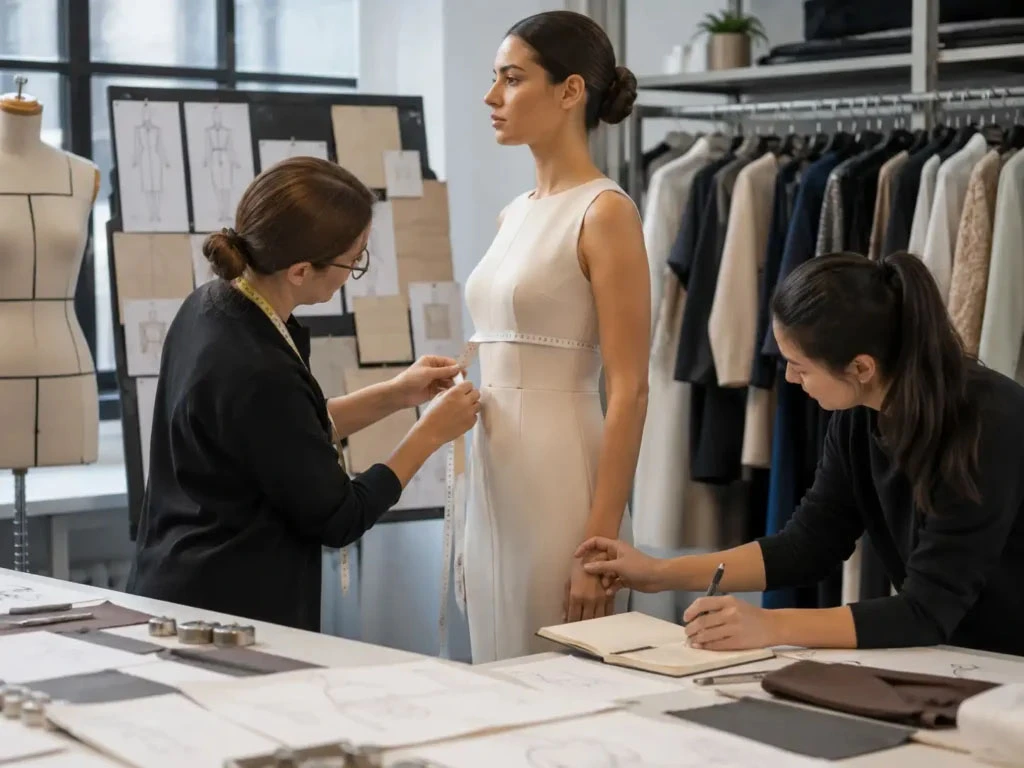
What Changes Are Better Kept in 3D?
From the factory side, we normally separate visual adjustments from fabric, fit and construction issues.
| Change during development | 3D review | Physical sample |
|---|---|---|
| Overall silhouette | Useful | Confirm later |
| Garment length | Useful | Confirm later |
| Waist position | Useful | Confirm later |
| Neckline shape | Useful | Confirm later |
| Sleeve proportion | Useful | Confirm later |
| Pleat placement | Useful | Confirm later |
| Fabric drape | Limited | Important |
| Stretch recovery | Limited | Important |
| Final fit | Limited | Important |
| Lining construction | Limited | Important |
| Boning/support | Limited | Important |
| Sewing workmanship | Not sufficient | Important |
| Final production approval | Not sufficient | Required |
You may not need both methods at every stage.
Start with the method that matches the question you need to answer.
What If Your Designer and Manufacturer Are in Different Countries?
You may be working with a designer in New York, a buyer in London and a clothing manufacturer in China. Everyone can look at the same digital version before another physical sample is shipped.
Instead of:
“The skirt looks a little too full.”
You can identify the exact version and discuss the intended change.
The factory pattern maker can then adjust the pattern, and you can review the result before deciding whether it is ready for physical sampling.
Clear revision comments are still important.
In fact, revision control becomes more important when several people are involved.
A simple system such as Style 102 – V3 – Approved for Physical Sample can prevent an old set of comments from being mixed with the latest version.
What Information Does the Factory Need for a Useful 3D Review?
You do not necessarily need a complete production package on day one.
A project may start from:
- Sketch
- Reference photo
- Existing garment
- Basic measurement chart
- Target fit
- Fabric direction
- Construction notes
As development progresses, more information can be added.
The factory mainly needs to know what has already been approved and what is still open for discussion.
For example, you may have approved the silhouette but not the final fabric.
That should be recorded as two separate decisions.
Otherwise, a digital sample can look more final than the actual product specifications really are.
The same applies to measurements.
If your size chart changes after the digital review, the factory needs to know which version should be used for the next pattern revision.
Can 3D Sampling Replace the First Physical Sample?
We would not treat 3D as a replacement for the first physical sample.
The first physical sample often answers questions that cannot be settled digitally.
It shows how the selected fabric behaves with the actual pattern. It also gives the fitting team something they can measure, wear, handle and inspect.
3D can reduce the amount of uncertainty before that sample is made.
For example, if the digital review shows that the skirt proportion is already close to your intended design, the physical sample can focus more on fit, fabric and construction.
That is a better use of the sample room’s time than making a garment only to discover an obvious visual issue.
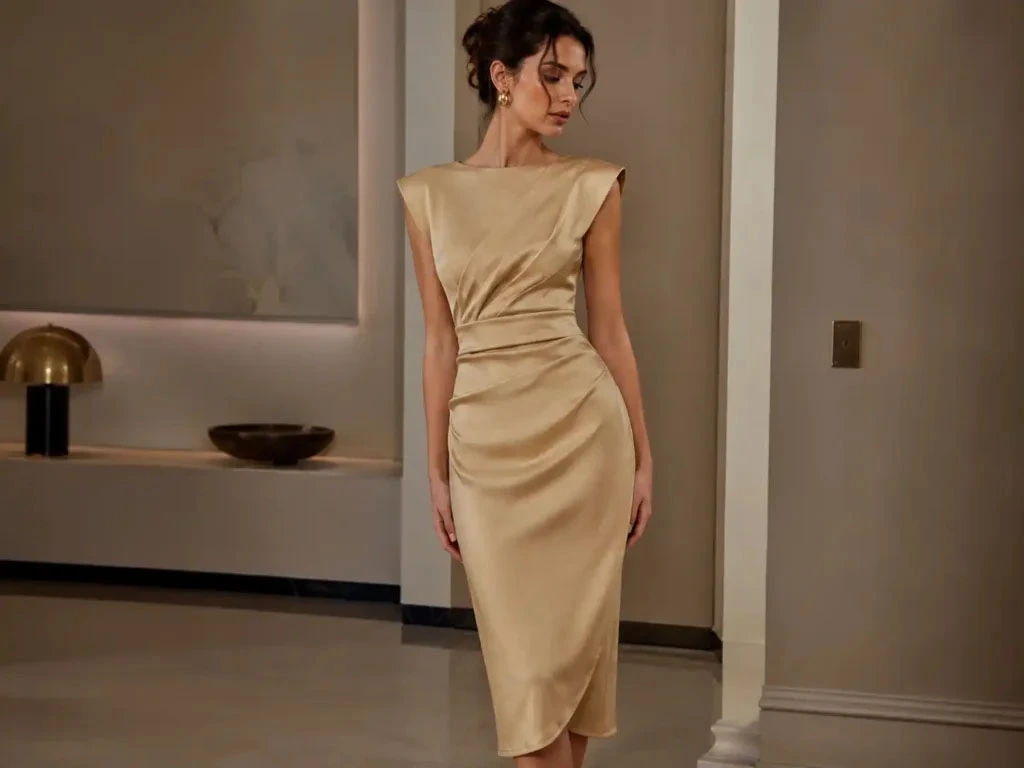
How Should You Use 3D Sampling in a Custom Dress Project?
A typical workflow is:
1. Start with the design
Send the sketch, reference garment or tech pack and identify which details are already fixed.
2. Develop the pattern
The factory creates the pattern based on the current measurements and construction requirements.
3. Review the 3D version
Check silhouette, proportion and selected design details.
4. Confirm the pattern changes
Only the confirmed revisions should move into the next version.
5. Cut and sew the physical sample
Use the revised pattern and confirmed fabric information.
6. Conduct the physical fitting
Check fit, drape, stretch, movement and construction.
7. Revise where necessary
Physical findings go back to the pattern and sample process.
8. Confirm the PP sample
Once the specifications are settled, the PP sample becomes the production reference before bulk manufacturing.
The point is to settle some design decisions before they require fabric, sewing and shipping.
When Is 3D Sampling Less Useful?
3D is not equally useful for every dress project.
If your dress has a simple shape and the first physical sample is likely to be close to the final version, adding a digital review may not remove much work.
The same can happen when the main development problem is the fabric itself.
If you are choosing between several fabrics with different stretch, weight and drape, you still need physical material evaluation.
A highly structured dress can also require physical development from an early stage because internal construction affects the final result.
In these cases, 3D can still help with communication, but adding it to the workflow may not save any actual development work.
How Much Time Can 3D Dress Sampling Actually Save?
There is no useful fixed number of days for every project.
The actual saving depends on the number of revisions, the type of changes, fabric availability, sample lead time and how quickly the team approves each version.
The bigger opportunity usually appears when you have several styles or repeated design changes.
If a physical sample has already been made and the only problem is the length, neckline or skirt proportion, another round may be avoidable.
If the problem is fabric stretch or actual fit, another physical sample may still be necessary.
From the factory side, I would measure the result by looking at sample rounds avoided, not simply the number of days spent on 3D development.
That gives you a more realistic picture of whether the process is helping your collection.
A Simple Rule for Deciding
For silhouette, proportion, neckline or length, a 3D review can often give you enough information to make the next pattern adjustment.
Fabric drape is different. If you need to know how a chiffon falls or how a stretch fabric recovers on the body, the physical material and garment still need to be checked.
The same applies to fit and construction. A bodice may look correct in 3D and still need more room during a fitting. Boning, lining, cups and other internal details also need physical development.
The technology is useful when it removes a sample round that does not need to happen. It is less useful when the sample is needed to answer a question that only the real garment can answer.
FAQ
1. Can a small fashion brand use 3D sampling without owning 3D software?
Yes. A small brand does not need its own 3D setup if the manufacturer can support the development work. If your clothing manufacturer can support 3D development, you can provide the design information and review the relevant versions remotely. Before starting, confirm what files or measurements the factory needs and how revisions will be shared.
2. What should you agree with the factory before starting 3D development?
Clarify who is responsible for the digital file, what information will be used, how many revision rounds are included, and what happens when the project moves into physical sampling. It is also worth confirming how the final pattern, measurement chart and approved sample will be recorded so the digital version does not become a separate specification.
3. Can 3D sampling be used for a collection instead of just one dress?
Yes. It can be especially practical when several styles are being developed at the same time. You can use the same review process for different silhouettes, lengths or design variations. The important part is keeping each style’s pattern, fabric information, revision number and approval status separate.
4. How do you prevent 3D revisions from creating more work?
Keep one clear revision owner on the brand side. Designers, buyers and product developers can comment, but the factory should receive consolidated instructions. When comments arrive from several people at different times, the pattern maker may have to clarify which version is actually approved, which can create another round instead of saving one.
5. What should you do if the 3D version looks right but the physical sample does not?
Start with the physical sample and find out where the difference comes from. Check whether the difference comes from fabric, pattern balance, measurements, construction or sewing. Record the physical fitting result, revise the pattern where needed and use the next approved sample as the reference for production.
Conclusion
3D dress sampling can take some unnecessary back-and-forth out of custom dress development, especially when the changes are mainly about silhouette, proportion or placement.
It is less useful when you are checking fabric drape, stretch, fit or construction. Those questions still need a physical sample.
From a factory perspective, the practical approach is simple: use 3D to settle the visual changes that can be decided digitally, then use physical sampling for the parts that depend on the actual fabric, body or construction.
Related Dress Manufacturing Services
If your project involves a specific dress fabric or construction, you can also review our related manufacturing pages:
- Bodycon Dress Manufacturer
- Midi Dress Manufacturer
- Ruffle Dress Manufacturer
- Party Dress Manufacturer
- Satin Dress Manufacturer
Get a Quote for an Existing Dress Style
If you are transferring an existing dress style to a new manufacturer, send us the latest approved sample, tech pack, product photos, or measurement chart together with your target quantity.
As a dress manufacturer, we can review the construction, fabric, trims, measurements, and current production status with you before confirming the sampling requirements.

