With 18+ years of apparel manufacturing experience, Xiuyu Apparel has developed and produced A-line dresses for boutique brands, retailers, wholesalers, and private label companies worldwide.
An A-line dress may look simple from the outside, but production becomes more challenging when a design moves from sampling into bulk manufacturing. Small differences in pattern balance, fabric behavior, or sewing accuracy can affect the final silhouette.
whether you are developing custom A-line dresses for a boutique collection or ordering wholesale production for retail distribution, Knowing how the production process works helps brands communicate better with manufacturers and avoid unnecessary development costs.
What Is An A-Line Dress?
In our experience, the biggest challenge of A-line dress production is not creating the first sample. The challenge is maintaining the same silhouette, measurements, and finishing quality when production scales from a few samples to hundreds or thousands of pieces.
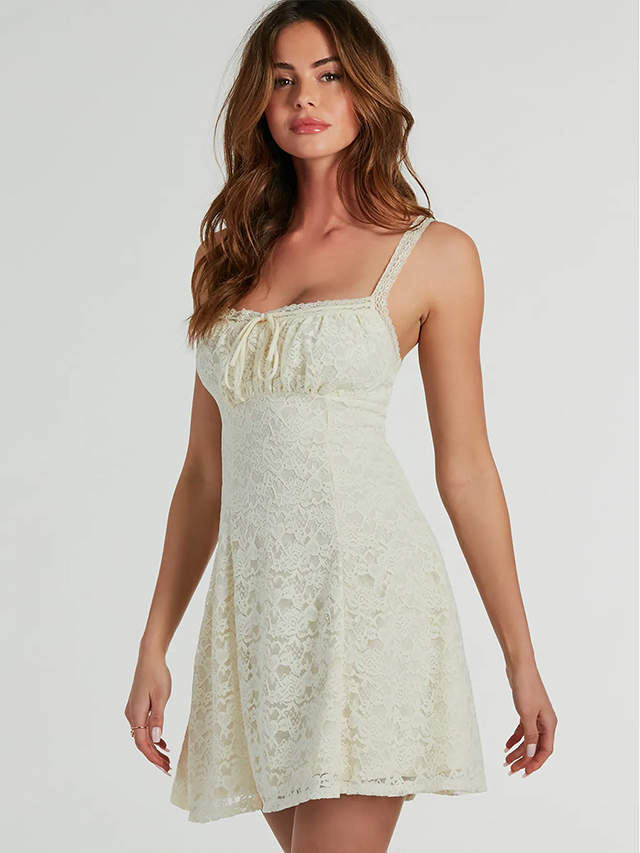
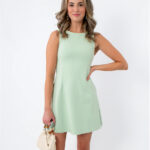
An A-line dress is one of the most commercially successful dress silhouettes because it combines elegance, comfort, and versatility.
The design follows the body through the shoulders and bust area, then gradually expands from the waist, upper hip, or bust line toward the hem, creating the recognizable “A” shape.
For brands developing an A-line dress collection, the silhouette depends on several technical factors:
- Pattern balance
- Flare proportion
- Fabric drape
- Waist position
- Dress length
- Construction method
- Sewing accuracy
A small mistake in production can affect the entire garment appearance. For example, an incorrect waist position may change the proportion, an uneven hem can make the dress look low quality, and poor zipper installation may damage the customer experience.
This is why working with an experienced custom a-line dress manufacturer is important when developing commercial fashion products.
1: From Design Concept to Production Sample
The manufacturing process starts by converting your creative idea into a production-ready garment.
As a fashion brand or retailer, you may provide:
- Design sketches
- Tech packs
- Reference samples
- Fabric requirements
- Size charts
- Color specifications
- Branding details
Your manufacturing partner will review these details and confirm whether the design can be produced efficiently.
A professional dress manufacturer will analyze:
Pattern Structure
The pattern determines how the final dress fits and moves.
The manufacturer needs to define:
- Bust measurement
- Waist shaping
- Hip allowance
- Flare starting point
- Hem circumference
- Front and back balance
Production Feasibility
Not every fashion design is easy to manufacture.
During development, your manufacturer should evaluate:
- Fabric availability
- Sewing difficulty
- Production cost
- Required workmanship
- Expected delivery timeline
Early technical evaluation helps you avoid expensive changes during bulk production.
2: Pattern Development and Fit Control
Pattern development is one of the stages where experience makes the biggest difference in A-line dress production.
The goal is to create a balanced shape where the upper body fits correctly while the skirt section creates natural movement.
The flare can be developed through different construction methods:
Side Seam Extension
This method increases the width from the side seams.
Advantages:
- Faster development
- Suitable for simple designs
- Lower production complexity
Princess Seam Construction
Princess seams allow the manufacturer to control shaping through multiple panels.
Advantages:
- Better silhouette control
- Premium appearance
- Suitable for luxury dresses
Multi-Panel Skirt Design
Multiple panels can distribute volume more evenly.
This is commonly used for:
- Maxi A-line dresses
- Evening dresses
- Resort collections
A skilled pattern team ensures that the dress maintains the intended shape after grading into different sizes.
3: Choosing The Right Fabric For A-Line Dress Manufacturing
Fabric selection affects not only the appearance of an A-line dress but also cutting efficiency, sewing difficulty, and final garment stability. For example, lightweight satin and chiffon can create an elegant drape, but they require more control during cutting and sewing because fabric movement can affect panel alignment and hem balance.
Different brands require different fabric characteristics depending on their market positioning.
Structured Fabrics
If you want your A-line dress to maintain a strong shape, structured fabrics are often preferred.
Common options include:
- Cotton poplin
- Denim
- Taffeta
- Twill
- Ponte knit
- Suiting fabric
These materials are suitable for:
- Workwear collections
- Casual fashion brands
- Structured dresses
However, structured fabrics require accurate sewing because any construction mistake becomes more visible.
Soft And Flowing Fabrics
For elegant and feminine collections, many brands choose fabrics with better drape.
Examples:
- Chiffon
- Satin
- Rayon
- Crepe
- Silk blend
These fabrics create movement but require additional production control.
Potential challenges include:
- Fabric shifting during cutting
- Seam puckering
- Uneven hem length
- Shrinkage after washing
During development, our team usually recommends fabrics according to:
- Target price level
- Customer market
- Production quantity
- Desired garment performance
4: Sample Making And Approval
Before bulk production starts, sample development allows you to confirm the final product. At Xiuyu Apparel, we normally review measurements, construction details, fabric performance, and finishing requirements together with clients.
The sample process usually includes:
First Prototype Sample
The first sample allows both the brand and manufacturer to confirm whether the design can achieve the expected appearance and production requirements.
You should review:
- Overall silhouette
- Neckline shape
- Sleeve fitting
- Waist position
- Flare volume
- Hem balance
Fit Sample
The fit sample focuses on customer wearing experience.
You should check:
- Is the bust comfortable?
- Does the waist sit correctly?
- Does the dress move naturally?
- Does the lining affect comfort?
- Is the length suitable?
For growing fashion businesses, choosing a clothing manufacturer with strong sample development capability can help reduce mistakes before bulk production.
5: Bulk Cutting And A-Line Dress Production
After sample approval, bulk production follows the same confirmed specifications to ensure consistency between the approved sample and final shipment.
The bulk production process usually includes:
- Fabric inspection
- Fabric relaxation
- Pattern marker planning
- Fabric cutting
- Sewing assembly
- Pressing and finishing
- Quality inspection
- Packing and shipment preparation
Before cutting begins, the factory checks:
- Fabric color consistency
- Fabric width
- Fabric defects
- Shrinkage performance
- Pattern accuracy
- Size ratio
This step is especially important for A-line dresses because the wider skirt area requires accurate cutting. Even a small cutting difference can affect hem balance and overall silhouette.
For brands ordering different colors or sizes, professional factories also control fabric batches to prevent shade variation between production lots.
6:A-Line Dress Manufacturing At Xiuyu Apparel Factory
1、As a China A-line dress manufacturer, A-line dress production follows a controlled manufacturing system:
1. Fabric inspection
2. Pattern confirmation
3. Sample approval
4. Bulk cutting
5. Sewing production
6. Inline QC
7. Final inspection
8. Packaging
Based on our 18+ years of apparel manufacturing experience, Xiuyu Apparel supports fashion brands, boutiques and retailers with OEM and private label dress production.
Our production experience includes supporting:
- European boutique brands developing occasion wear collections
- Fashion startups launching their first collections
- Retailers building private label dress lines
2、OEM & Private Label A-Line Dress Manufacturing Services
Our services include:
– Custom A-line dress development
– Fabric sourcing
– Pattern making
– Sample production
– Small batch manufacturing
– Private label solutions
– Bulk production
3、Factory Overview
Production Team:
750+ skilled workers
Equipment:
500+ sewing machines
Monthly Capacity:
150,000 pieces
Quality System:
- Fabric inspection
- Inline QC
- Final AQL inspection
4、Our A-Line Dress Manufacturing Capability
| Capability | Details |
|---|---|
| Experience | 18+ Years |
| MOQ | 50–100 pcs |
| Sample Development | 7 Days |
| Bulk Production | 25–30 Days |
| Production Capacity | 150,000 Pieces / Month |
| Export Markets | 40+ Countries |
| OEM/ODM Service | Available |
| Private Label | Supported |
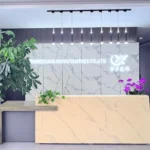
Real dress manufacturing process at Xiuyu Apparel factory.
Our production line covers fabric inspection, cutting, sewing, pressing, final inspection, and packing. Each stage is monitored by our production and quality teams before shipment.
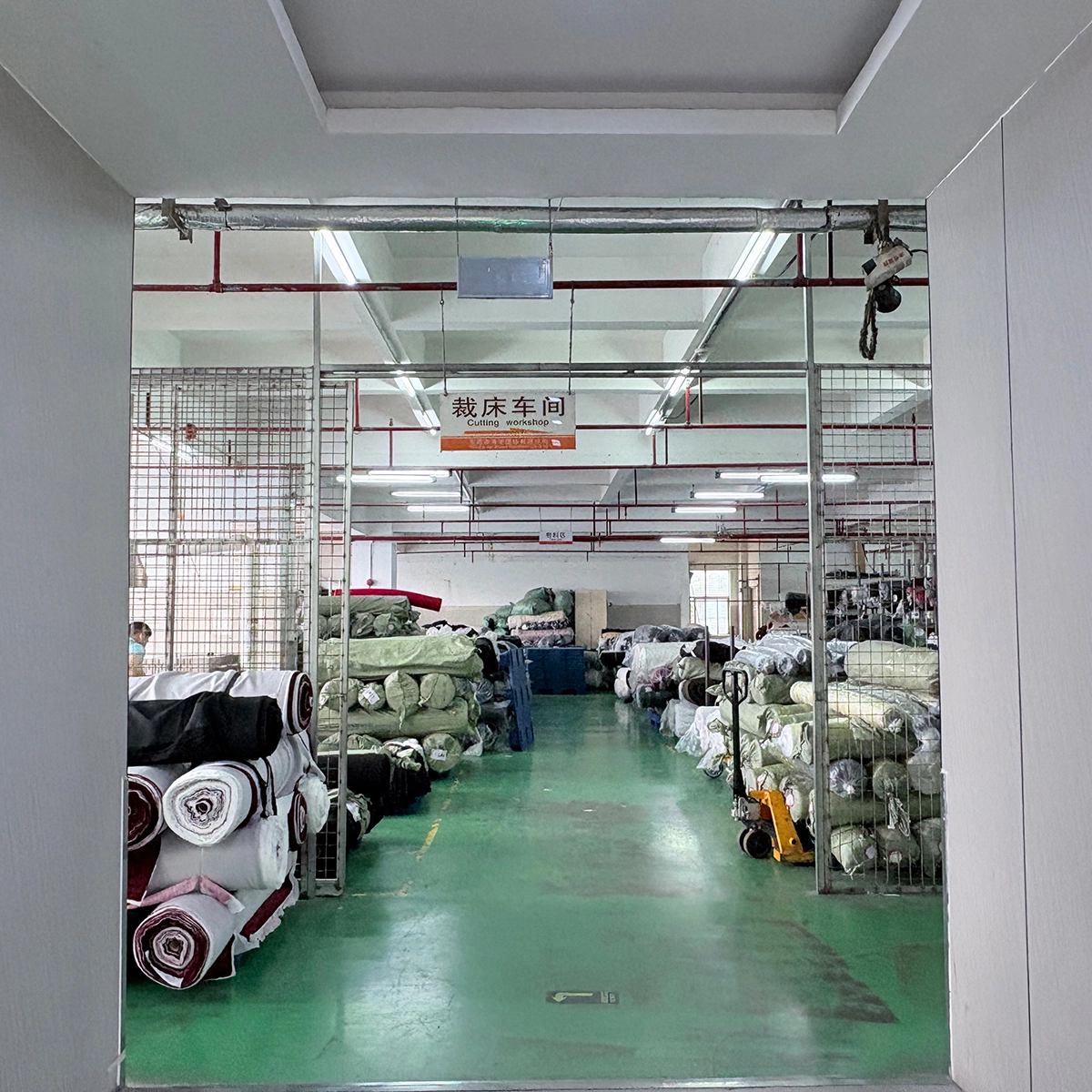
Fabric Warehouse
Before cutting begins, our team checks each fabric roll for color, quantity, and fabric condition. Each roll is recorded by batch, making it easier to track materials during production and handle any issues quickly.
↓
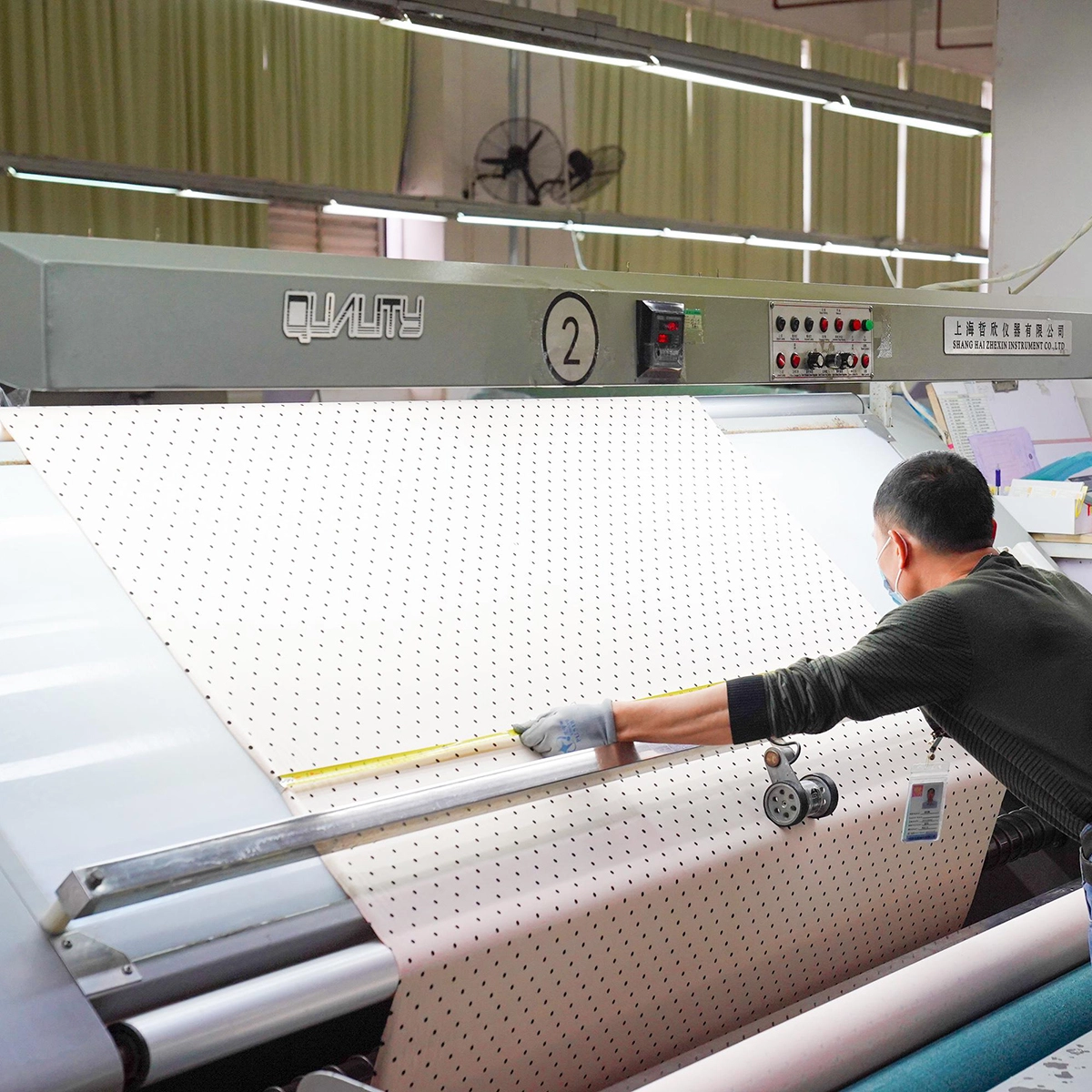
Fabric Inspection
Before cutting begins, our QC team inspects each fabric roll using the four-point inspection process. We check color matching, fabric condition, and visible defects to make sure the materials are suitable for production. This helps reduce fabric problems and maintain smooth OEM and ODM garment manufacturing. This step is especially important for fabrics with satin, silk, or delicate surfaces, where small defects can affect the final appearance of the garment.
↓
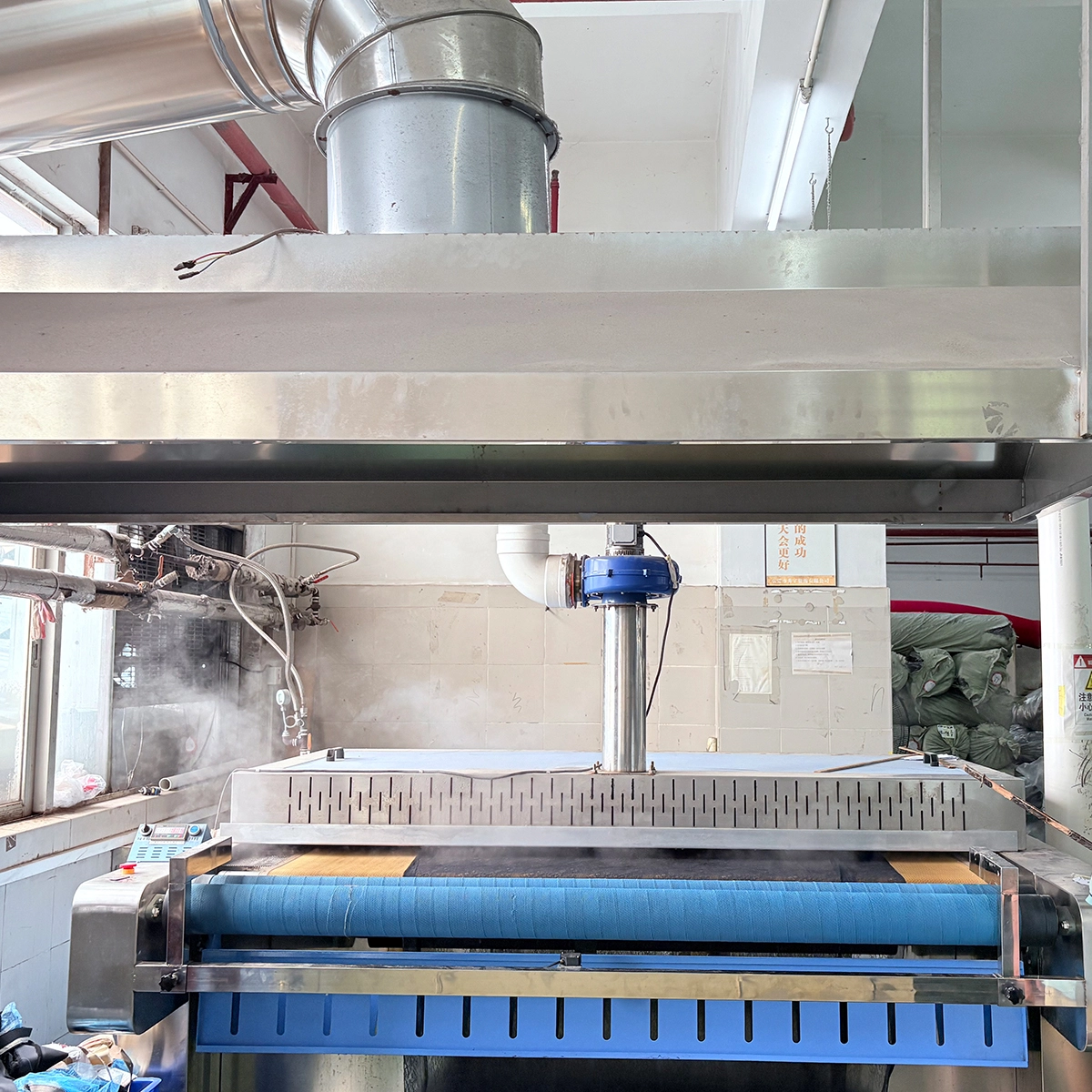
Fabric Pre-shrinking(when required)
After fabric inspection, approved fabrics go through a pre-shrinking process before cutting. This helps control shrinkage during washing and keeps garment measurements more consistent across bulk OEM & ODM orders.
↓
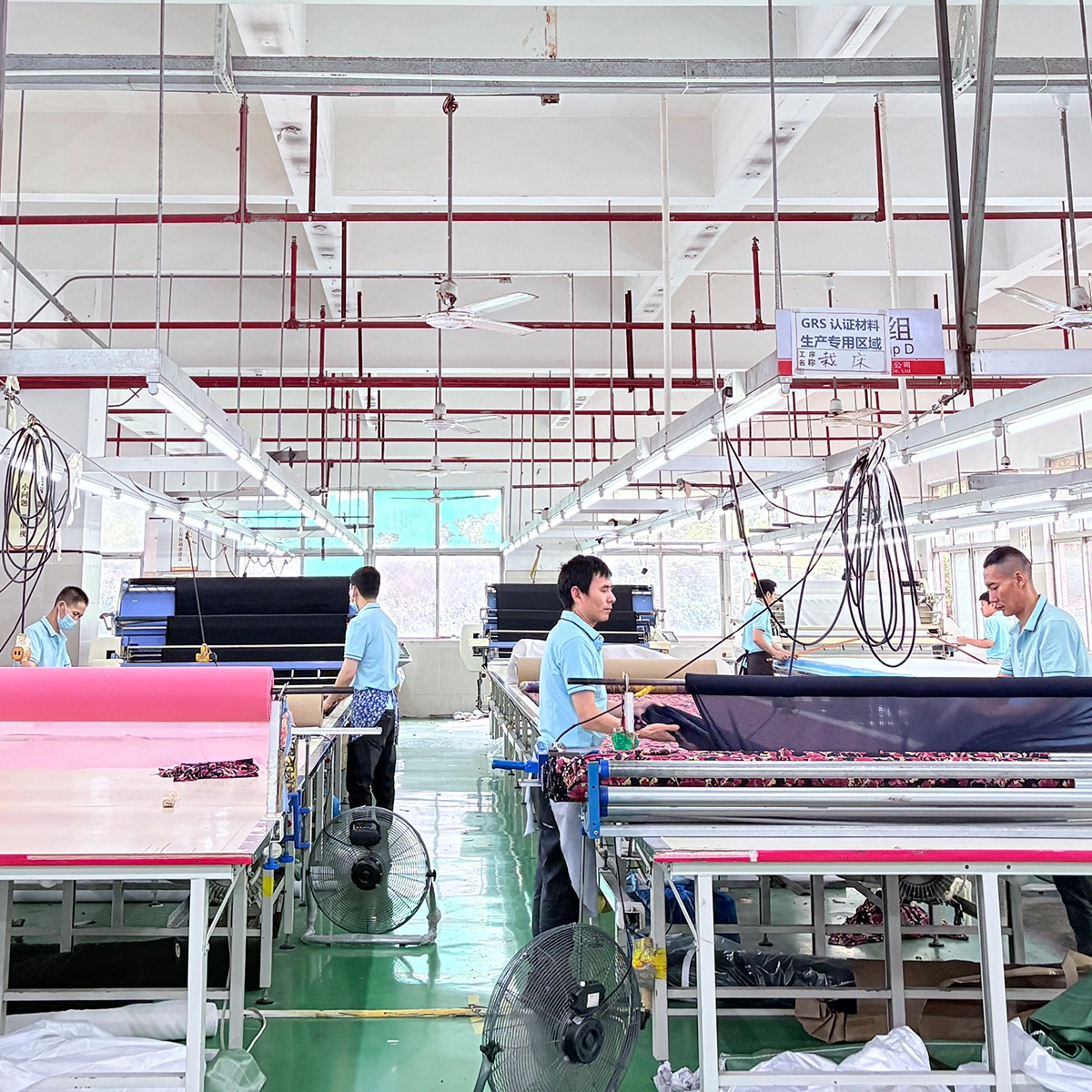
Automatic Cutting
We use computerized automatic cutting machines to cut fabric panels with consistent accuracy across bulk production. This helps reduce cutting errors, improve fabric efficiency, and maintain accurate garment measurements for OEM & ODM orders
↓
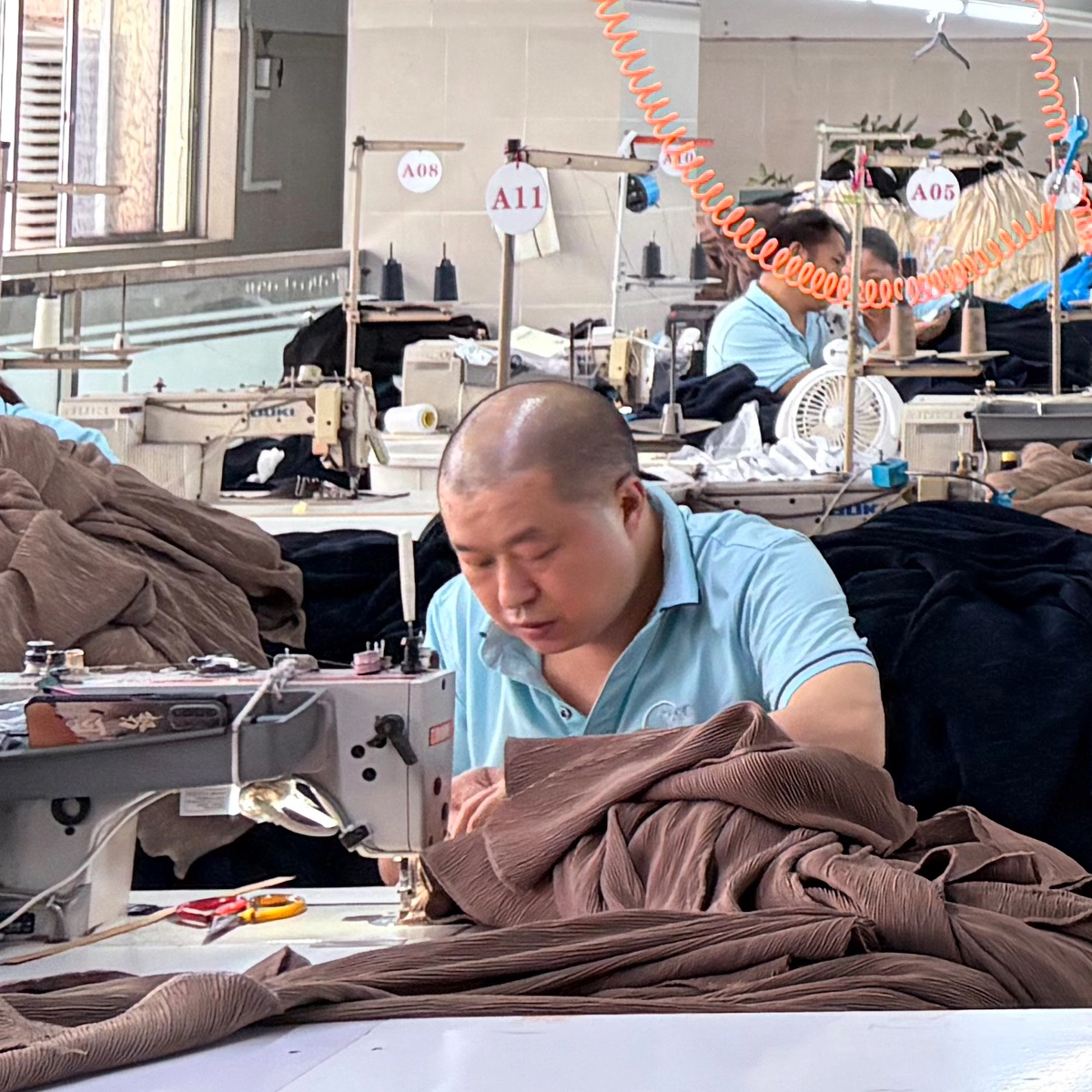
Bulk production Sewing
Skilled sewing operators work according to approved samples, patterns, and production requirements to ensure accurate garment assembly. Regular checks during sewing help control stitching quality and construction details across bulk OEM & ODM orders.
↓
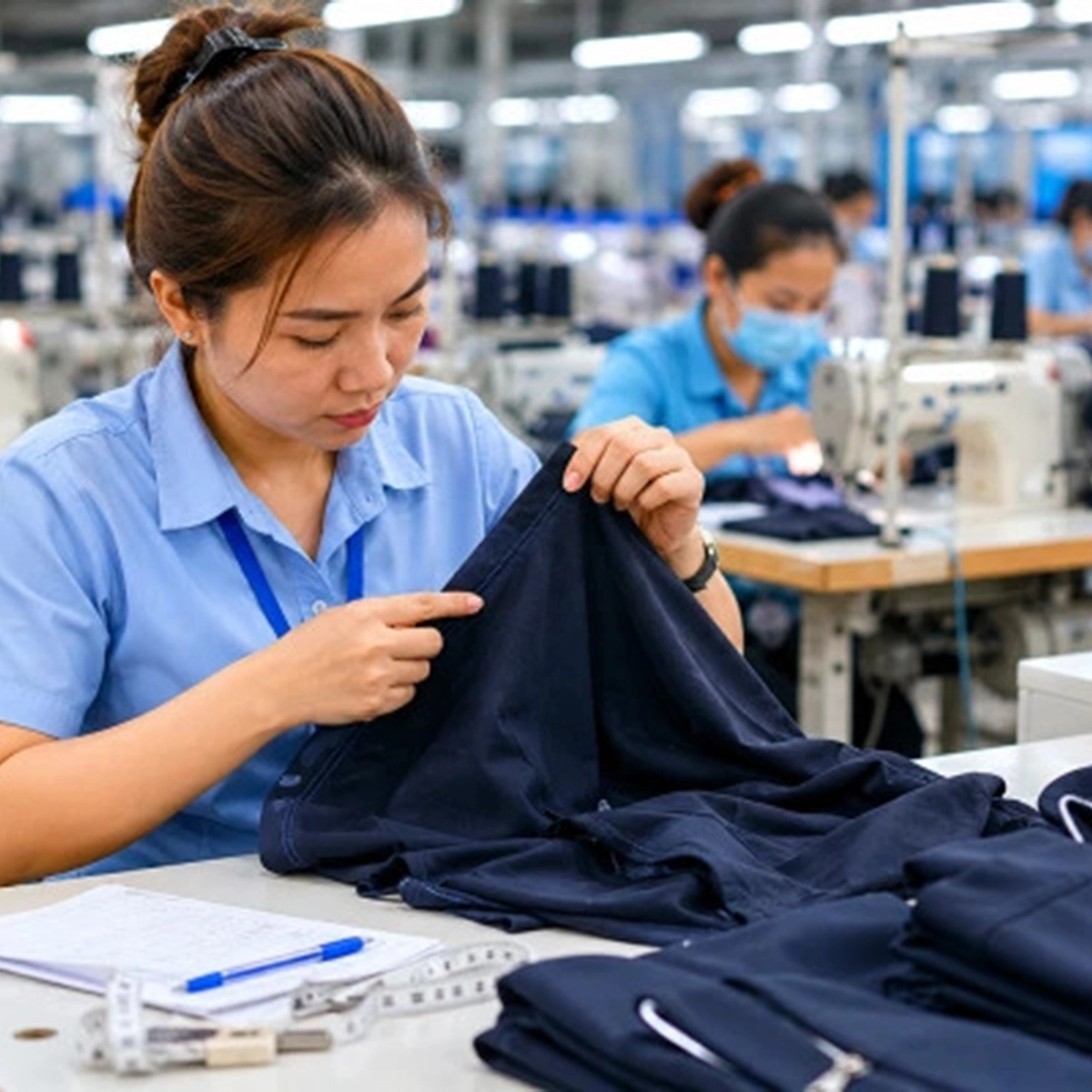
In-line Inspection
Our QC team monitors key steps from sewing to finishing, checking garment details, measurements, and workmanship during production. Early checks help reduce rework and maintain consistent quality across OEM & ODM orders.
↓
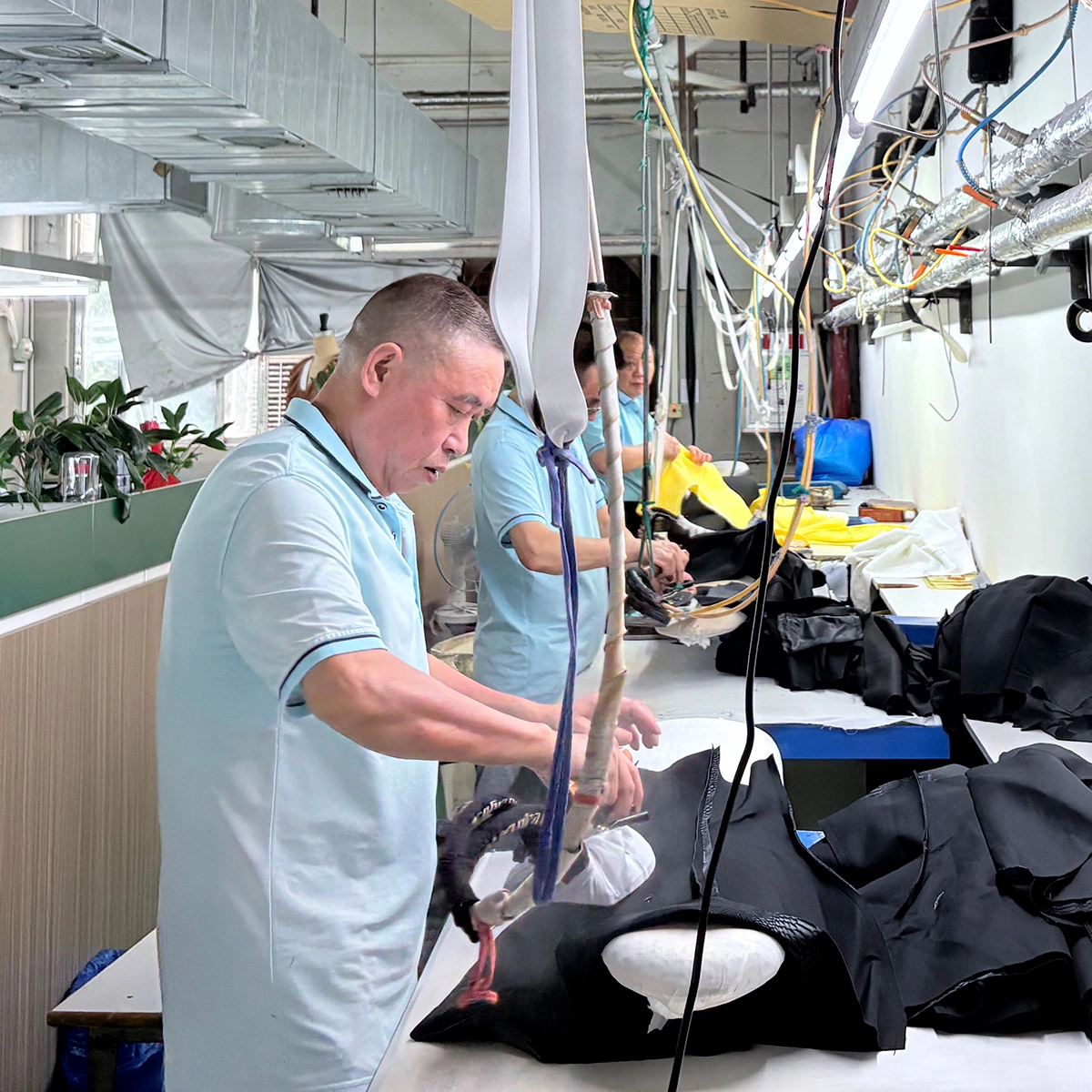
In-line Pressing
After garment assembly, each piece is pressed during production to remove wrinkles, shape key areas, and improve seam details. The pressing stage helps ensure garments meet appearance requirements before final inspection and packing.
↓
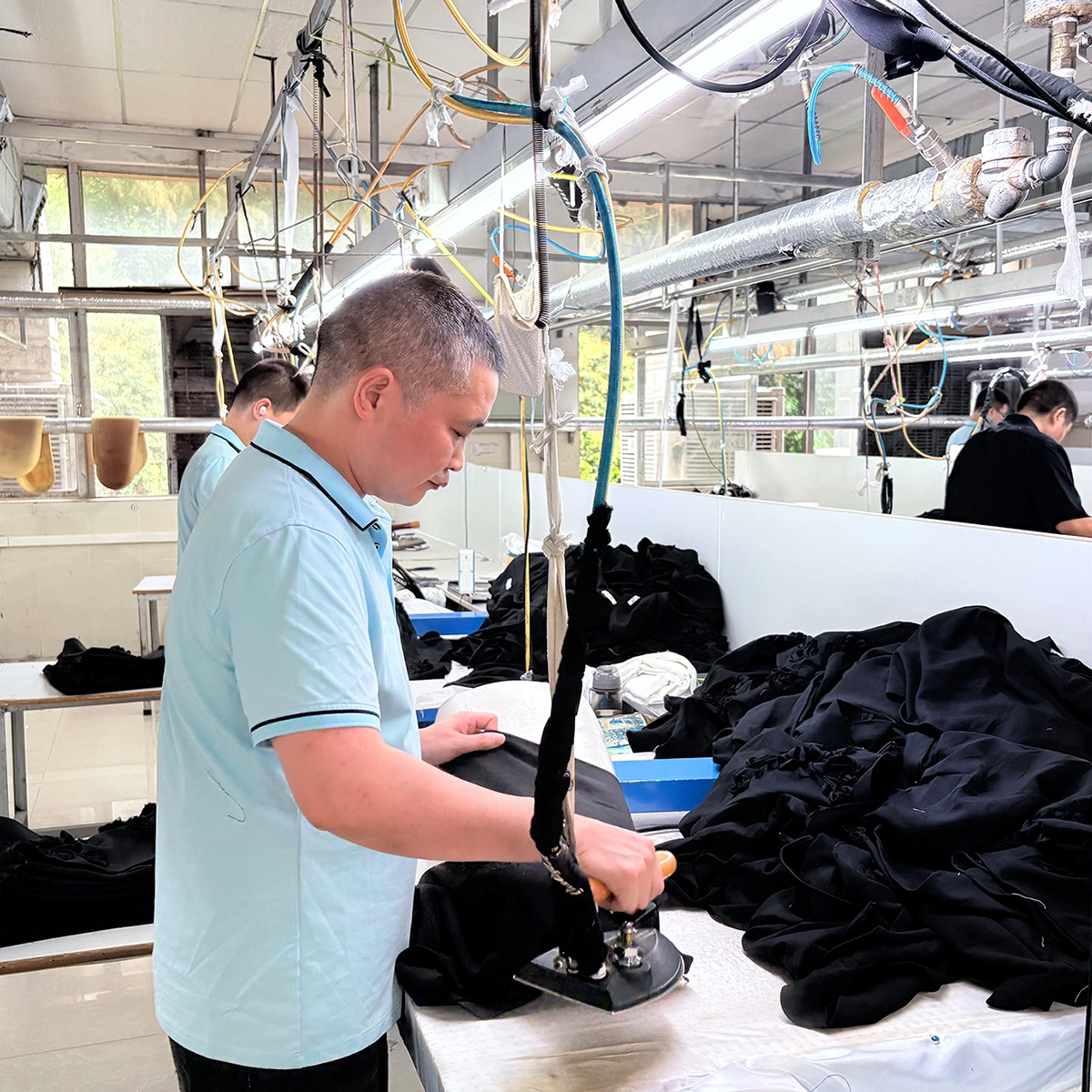
Final Pressing
After production, garments are pressed one last time to smooth seams, adjust key areas, and improve the final finish. Once pressing is completed, the team checks appearance and workmanship before packing and shipment.
↓
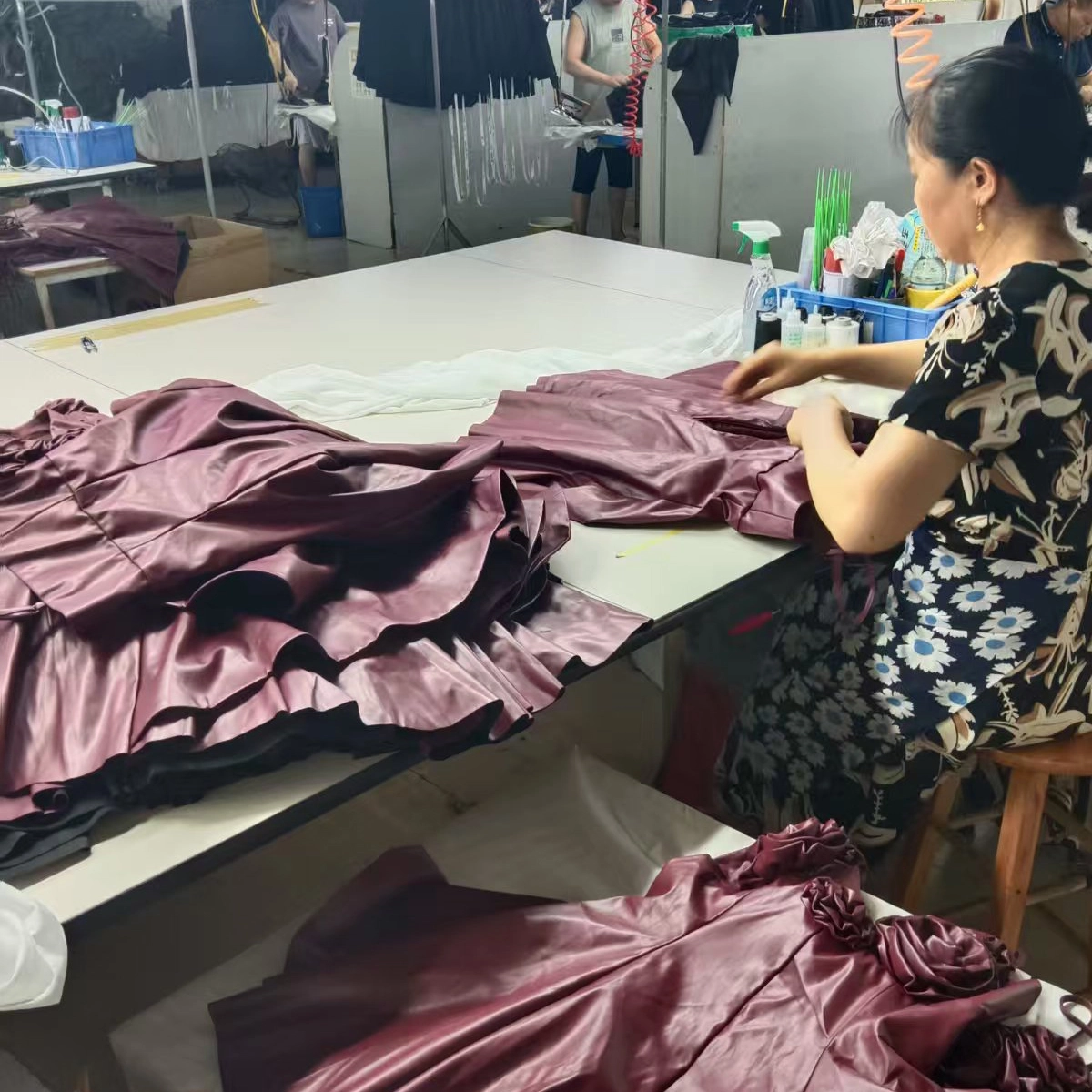
Final Inspection
Before loading, our QC team inspects finished garments for size, stitching, appearance, labels, and packing condition. After final checks are completed, the order is prepared for shipment.
↓
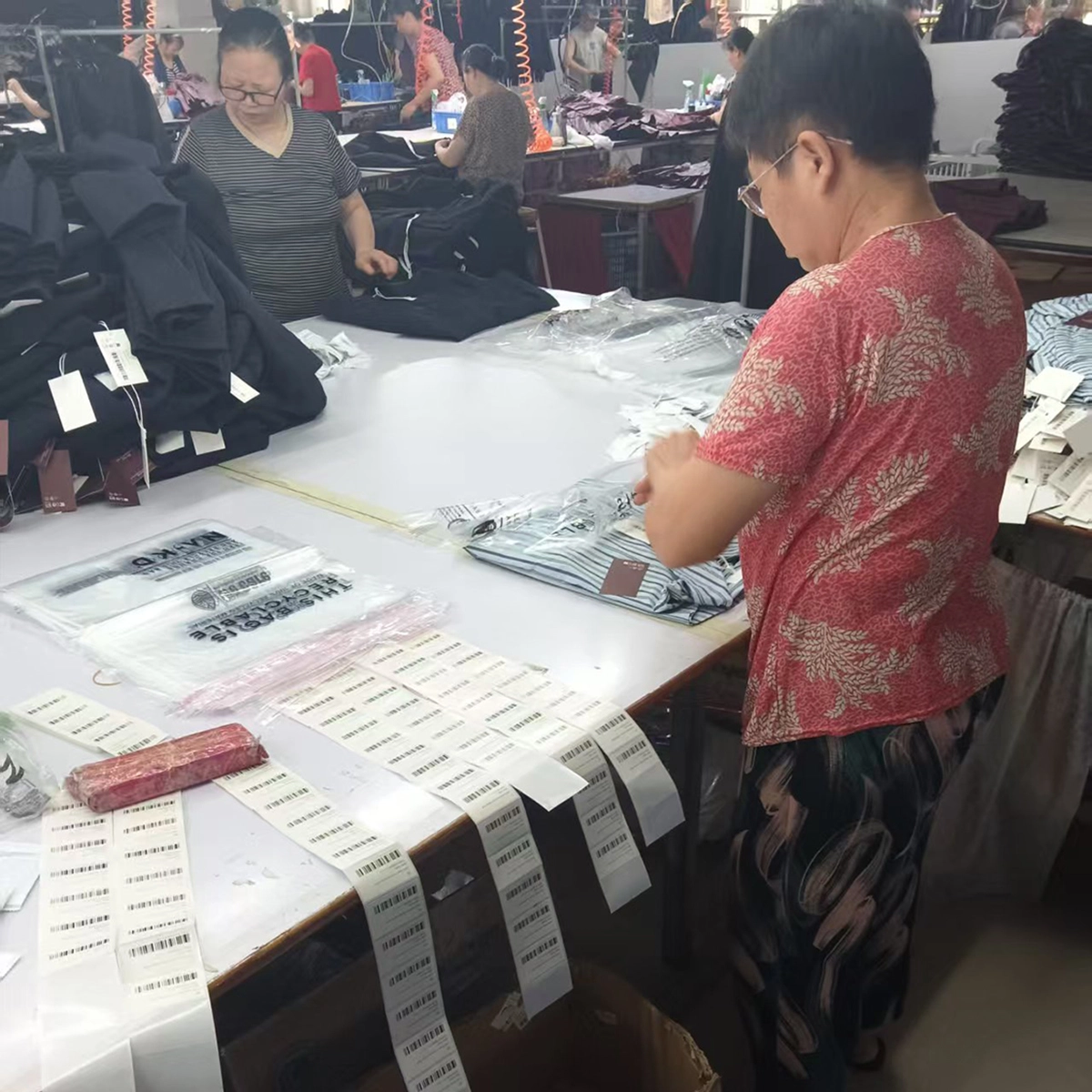
Garment Packing
After inspection, our packing team folds and packs finished garments following each order’s packing requirements. Labels, barcodes, and packaging details are checked before cartons are sealed and shipped.
↓
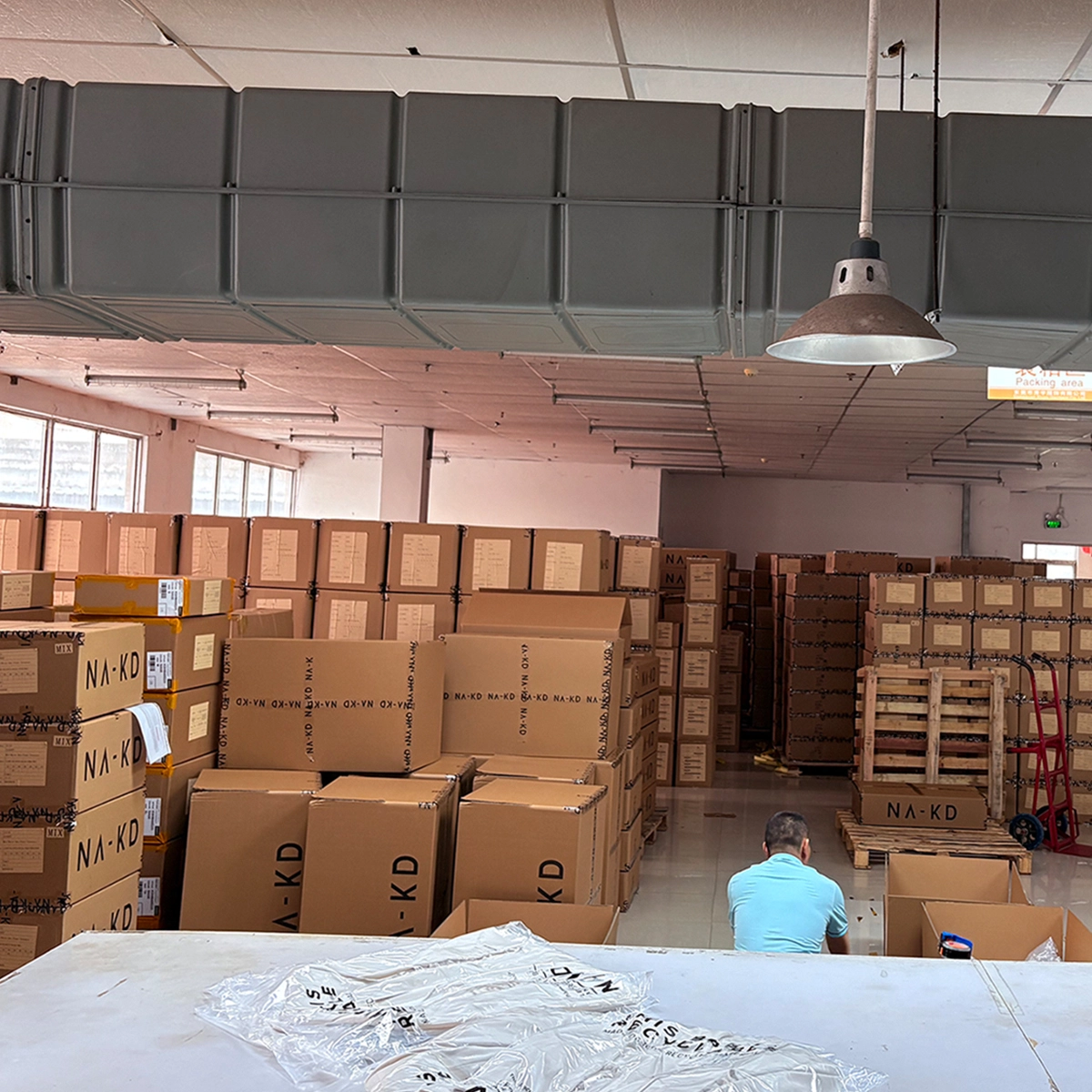
Finished Products
Before loading, our warehouse team reviews finished garments by style, color, and size. Carton quantities, labels, and packing details are checked to prevent shipment errors before orders leave the factory.
7. Case Study: Custom A-Line Dress Manufacturing For A European Boutique Fashion Brand
1. Client Overview
Client: European Boutique Fashion Brand
The client approached us after experiencing difficulty finding a supplier who could produce boutique-level dresses with flexible MOQ.
Industry: Women’s Fashion / Occasion Wear
Project: Custom A-Line Dress Collection
Order Details
- Order quantity: 300pcs
- Fabric:
Polyester crepe / satin / chiffon - Sizes:
XS-XL - Colors:
3 seasonal colors - Construction:
Invisible zipper + lining + princess seam - Production challenge:
A European boutique fashion brand was looking for a reliable clothing manufacturer to develop a customized occasion wear collection for its seasonal launch.
The brand was looking for a factory that could handle design development, fabric selection, and small-batch production while maintaining boutique-level finishing.
2. Project Requirements
The client required a manufacturing partner capable of delivering:
- High-quality fabric sourcing suitable for premium occasion wear
- Custom A-line dress development based on the brand’s sketches and design concepts
- Customized silhouettes, neckline details, sleeve designs, and garment structures
- Private label manufacturing services including branded labels and packaging
- Accurate pattern development and consistent sizing across different sizes
- Competitive production costs while maintaining premium finishing quality
The main challenge was controlling the skirt flare and hem balance because the selected satin fabric had a softer drape compared with structured fabrics.
3. Xiuyu Apparel’s Manufacturing Solution
As an experienced A-line dress manufacturer, Xiuyu Apparel provided a complete end-to-end production solution, covering everything from initial design development to final delivery.
Our team supported the project through:
Fabric Selection & Sourcing
Based on the brand’s positioning and target market, our sourcing team recommended suitable premium fabrics for the A-line dress collection.
We provided:
- Fabric sourcing from reliable suppliers
- Material recommendations based on dress structure and season
- Fabric testing and quality evaluation
- Lab dips and color matching for approval
After confirming fabric performance, hand feel, and appearance, we developed the final fabric solution for production.
Custom Pattern Development
Our technical team developed production-ready patterns based on the client’s design concepts.
The pattern development process focused on:
- Accurate A-line silhouette structure
- Proper waist and hip fitting
- Balanced dress proportions
- Comfortable wearing experience
- Production consistency across multiple sizes
Our pattern engineers adjusted the construction details to ensure the final garments matched the brand’s design expectations.
Sample Development & Fit Approval
We completed the first samples within 7 days and worked closely with the client throughout the approval process.
The sample development included:
- Initial sample creation
- Fit evaluation
- Measurement adjustments
- Design detail modifications
- Final sample approval
Through continuous communication and adjustments, the final sample achieved the desired boutique quality and fit standards.
Private Label Manufacturing
To help the brand build its own identity, Xiuyu Apparel provided complete private label solutions, including:
- Custom woven labels
- Branded hangtags
- Care labels
- Customized packaging solutions
All branding elements were integrated into the production process to create a finished product ready for retail distribution.
Small Batch Production & Quality Control
After sample approval, our production team started small-batch manufacturing with strict quality management.
The production process included:
- Professional cutting and sewing production
- In-line quality inspections
- Measurement checking
- Final garment inspection
- Pressing and packaging preparation
Every A-line dress was inspected before shipment to ensure consistent quality and finishing.
4. Production Details
| Project Details | Information |
|---|---|
| Product | Custom A-Line Dress based on client designs |
| Client Location | European Boutique Fashion Brand |
| Order Quantity | 300 Pieces |
| Fabric | Premium woven fabric selected according to design requirements |
| Customization | Silhouettes, Colors, Sleeves, Necklines, Labels, Packaging, Size Specifications |
| Sample Development | 7 Days |
| Bulk Production | 25 Days |
| Manufacturing Service | OEM + Private Label + Quality Inspection |
5. Manufacturing Results
Through close collaboration and professional production management, Xiuyu Apparel successfully helped the European boutique brand complete its customized A-line dress collection.
The project achieved:
After approval, the collection was delivered according to the agreed production schedule. The client continued discussing additional dress styles for future seasonal collections.
With professional OEM manufacturing capabilities and flexible production solutions, Xiuyu Apparel continues to assist fashion brands worldwide in developing customized dresses from concept to finished products.
See more case study
8: A-Line Dress Manufacturing Cost Breakdown
The manufacturing cost of an A-line dress is influenced by multiple factors, from fabric selection to production requirements. For fashion brands, boutiques, retailers, wholesalers, and private label companies, understanding these cost drivers helps you make better decisions when developing new collections and planning your production budget.
The cost of manufacturing A-line dresses depends on:
1. Fabric Selection
Fabric is usually the largest cost component of an A-line dress. The final price depends on material type, fabric weight, finishing process, and order quantity.
Examples:
- Cotton
- Satin
- Silk blend
- Chiffon
2. Design Complexity
Costs increase with:
- Multiple panels
- Embroidery
- Beading
- Special construction
3. Quantity
Larger orders usually reduce:
- Labor cost per piece
- Material waste
- Production efficiency
4. Customization
Including:
- Labels
- Packaging
- Custom colors
- Special trims
9: Sewing Process And Construction Control
The sewing process determines the final quality and durability of an A-line dress.
Depending on your design, the factory may complete the following operations:
Bodice Construction
The upper section requires precise control because it affects:
- Shoulder fitting
- Bust shape
- Waist position
- Neckline appearance
Common operations include:
- Sewing darts
- Joining princess seams
- Attaching sleeves
- Finishing necklines
- Adding reinforcement tape
Skirt Assembly
The skirt section creates the signature A-line shape.
During production, workers control:
- Panel matching
- Seam alignment
- Flare symmetry
- Hem width
For premium collections, multiple panels are often used to create a smoother and more elegant silhouette.
Zipper And Closure Installation
Many A-line dresses use invisible zippers to maintain a clean appearance.
The factory must ensure:
- Smooth zipper operation
- Straight zipper installation
- Strong seam support
- Correct alignment with waist seams
Poor zipper installation is one of the common problems that affects customer satisfaction.
10: Quality Control During A-Line Dress Manufacturing
Quality control is critical when producing fashion collections at scale.
A professional dress manufacturer should inspect garments at multiple production stages instead of only checking finished products.
Fabric Inspection
Before production starts, fabric is checked for:
- Color differences
- Surface defects
- Shrinkage issues
- Fabric consistency
Inline Production Inspection
During sewing, quality inspectors monitor:
- Stitch quality
- Seam strength
- Measurement accuracy
- Construction details
- Panel matching
Early inspection helps identify problems before hundreds of garments are completed.
Final Inspection
Before shipment, finished garments are checked for:
- Bust measurement
- Waist measurement
- Dress length
- Hem balance
- Zipper function
- Label accuracy
- Packing requirements
For international fashion brands, consistent quality is essential because production errors can lead to customer complaints, returns, and brand reputation damage.
11: Packaging And Shipping Preparation
After final inspection, garments enter the packing stage.
The factory prepares products according to your requirements, including:
- Hang tags
- Brand labels
- Care labels
- Polybags
- Carton packing
- Shipping marks
Different markets may have different packaging requirements.
For example:
- Boutique brands may require premium packaging presentation.
- Retail chains may require barcode systems.
- Private label companies may need customized labeling and packaging solutions.
Working with a private label clothing manufacturer allows you to manage product development, branding, and packaging through one supply chain partner.
12. Why Choose A Professional A-Line Dress Manufacturer?
For A-line dresses, the biggest production risks usually come from pattern accuracy, fabric behavior, and consistency between samples and bulk orders. This is why many brands evaluate manufacturers based on technical capability rather than only price.
A clothing manufacturer should provide:
Complete Development Support
From design evaluation and pattern making to sampling and bulk production.
Flexible Production Options
For emerging brands, a low MOQ clothing manufacturer can help you test new designs without investing in excessive inventory.
Experience With Different Markets
A manufacturer experienced with international buyers understands:
- Export requirements
- Quality standards
- Fabric expectations
- Production timelines
Reliable Communication
Clear communication helps avoid:
- Incorrect samples
- Production delays
- Unexpected costs
- Quality issues
For fashion startups, working with an experienced clothing manufacturer for startups provides additional support during the early stages of brand development.
13. Common Challenges When Manufacturing A-Line Dresses
1. Uneven Hem Problems
Because A-line dresses have wider hems, uneven cutting or fabric stretching can create an unbalanced appearance.
Solution:
Use accurate pattern control, fabric relaxation, and final hem inspection.
2. Poor Fit Around The Waist
Incorrect waist positioning can make the dress look unbalanced.
Solution:
Confirm measurements during the sample stage and complete proper fitting tests.
3. Fabric Selection Mistakes
Some fabrics cannot create the desired silhouette.
Solution:
Work with a manufacturer that understands fabric behavior and production requirements.
4. Quality Differences Between Samples And Bulk Production
Many brands worry that bulk products will not match approved samples.
Solution:
Choose a factory with strict production control and approval procedures.
14. A-Line Dress Manufacturing Timeline
| Stage | Time |
|---|---|
| Pattern Development | 3-5 days |
| Sample Making | 7 days |
| Fabric Preparation | 5-10 days |
| Bulk Production | 25-30 days |
14. Frequently Asked Questions About A-Line Dress Manufacturing
1. How long does it take to manufacture A-line dresses?
The timeline depends on fabric availability, design complexity, quantity, and production schedule.
For most custom A-line dress projects, sample development usually takes around 7 days. After approval, bulk production normally requires around 25–30 days depending on fabric preparation, order quantity, and construction details.
A professional clothing factory will provide a clear production timeline before starting your order.
2. What Is The MOQ For Custom A-Line Dresses?
MOQ depends on the manufacturer, fabric requirements, and customization level.
Some factories support small quantities for new brands, while larger factories may require higher production volumes.
Working with a low MOQ clothing manufacturer allows startups and boutique brands to test collections before scaling.
3. Can I customize the design of an A-line dress?
Yes, we can customize:
- Fabric
- Color
- Length
- Sleeve design
- Neckline
- Labels
- Packaging
You can provide your own design or work with the manufacturer’s development team.
4. What fabrics are best for A-line dresses?
The best fabric depends on your target market.
Popular options include:
- Cotton for casual collections
- Satin for elegant styles
- Chiffon for lightweight designs
- Crepe for premium dresses
- Silk blends for luxury positioning
Your manufacturer can recommend fabrics based on cost and performance requirements.
5. How can I ensure consistent quality during bulk production?
Choose a manufacturer with:
- Sample approval procedures
- Fabric inspection
- Inline QC
- Final inspection
- Production tracking
Quality control should happen throughout production, not only after completion.
6. Can a clothing manufacturer help with private labeling?
Yes.
A private label clothing manufacturer can support:
- Custom labels
- Hang tags
- Packaging
- Brand identity requirements
- Production development
This allows you to launch your own fashion collection without building your own factory.
7. How do I choose the right A-line dress manufacturer?
Price is only one part of supplier selection. For A-line dresses, pattern control and production consistency often have a bigger impact on the final product. A reliable production partner should understand your design requirements, control product quality, and support your collection from sampling to bulk production.
Before starting cooperation, fashion brands should consider several key factors:
- Manufacturing Experience
- Sample Development Capability
- Quality Control System
- MOQ And Production Flexibility
- Communication And Export Experience
8. Can you manufacture wholesale A-line dresses?
Yes, we manufacture A-line dresses for fashion brands, boutiques, retailers, and private label companies worldwide. We can produce different A-line dress styles, including casual A-line dresses, evening A-line dresses, maxi A-line dresses, floral A-line dresses, and customized designs based on your brand requirements.
With 18+ years of apparel manufacturing experience, our factory supports flexible MOQ, custom fabrics, colors, sizes, labels, and packaging solutions to help both startups and established brands launch their collections.
Conclusion
Develop Your Custom A-Line Dress Collection With Xiuyu Apparel, Whether you are launching a new fashion brand or expanding an existing collection, Xiuyu Apparel provides:
✓ Custom design development
✓ Premium fabric sourcing
✓ Low MOQ production
✓ Private label solutions
✓ Quality-controlled bulk manufacturing
Request Your Custom A-Line Dress Manufacturing Quote
Share your designs, estimated quantity, fabric requirements, and target market. Our team will provide professional production advice and a customized manufacturing solution.
Explore More Dress Manufacturing Solutions