

When you develop clothing for the EU market, product information can become difficult to control once a style moves from an idea to a finished order. Fabric details may change during sourcing, trims can be substituted, and the approved sample may not be the exact version used for bulk production. From a clothing manufacturer’s side, these changes are where DPP preparation becomes practical: keeping the information tied to the garment that is actually produced.
What Is a Digital Product Passport for Fashion?
A Digital Product Passport (DPP) is a digital record containing information about a product, including relevant details about its materials, components, and lifecycle.
For fashion, the idea is closely connected with product traceability. Instead of keeping information scattered across supplier documents, production records, labels, and internal systems, relevant product information can be made available through a digital record.
The European Union has included textiles and apparel among the priority product groups under the Ecodesign for Sustainable Products Regulation (ESPR). However, the detailed requirements for textile and apparel products are still being developed. The final rules will determine what information needs to be provided, who is responsible for it, and how the information needs to be presented.
So, if you are a fashion brand preparing for the EU market, it is better to think about DPP as a product-data and traceability issue rather than simply a QR-code project.
The QR code, NFC tag, or other data carrier is only the way someone may access the information. The harder part is making sure the information behind it matches the product that was actually made.
Why Does DPP Matter to Fashion Brands?
You may already have most of the basic information needed to describe a garment.
Your tech pack may show the fibre composition. The fabric supplier has a material specification. Your sample has a care label. The purchase order has the colour and quantity.
The trouble usually starts when those records no longer match.
Imagine you approve a dress sample using a particular fabric. A few weeks later, that fabric is unavailable in the required quantity. The factory sources another fabric with a similar appearance. The new fabric is approved, but the original specification remains in an old file.
The garment can still look correct.
The product record is now another matter.
The same issue can happen with lining, zippers, buttons, elastic, lace, embroidery materials, or other components.
For a brand, collecting the data is only part of the job. You also need to know which version belongs to the garment that went into bulk production.
That becomes harder when you are managing several styles, colourways, suppliers, and repeat orders at the same time.
What Information Should You Keep About a Garment?
The exact information required for a fashion DPP will depend on the final EU rules. The data fields discussed here should not be treated as a complete list of current mandatory requirements.
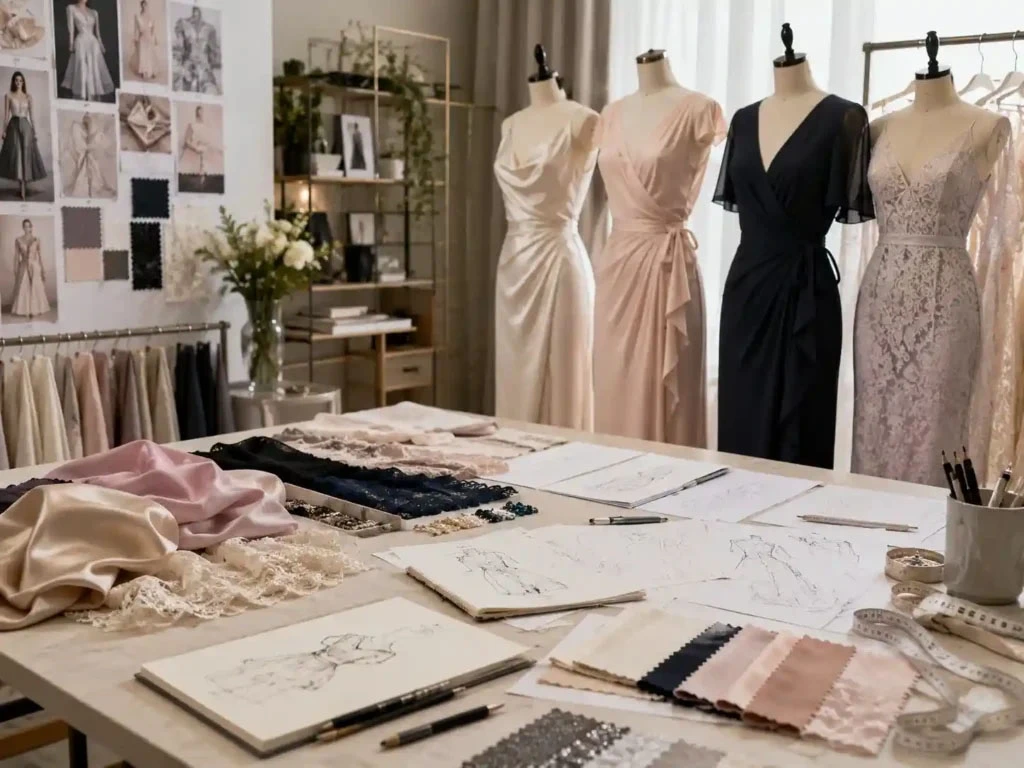
Even before the final DPP fields are confirmed, there are several production records worth keeping in order.
Fabric Information
Start with the main fabric because it usually makes up most of the garment.
Your records may include:
- Fibre composition
- Fabric reference
- Fabric type
- Weight
- Colour
- Supplier
- Relevant test or supporting documents
- Approved fabric reference
The fabric used for sampling should be clearly distinguished from the fabric approved for bulk production if they are not the same.
It becomes less straightforward when the development sample is made from available stock and the bulk order uses newly sourced fabric.
Garment Components
A dress is rarely made from one material.
Depending on the style, you may have:
- Lining
- Interfacing
- Zippers
- Buttons
- Elastic
- Lace
- Labels
- Beading
- Embroidery
- Appliqué
- Other trims
Not every component needs the same level of documentation. What matters is knowing where each piece of information comes from.
For example, the fabric mill may provide the shell-fabric information while the factory records the zipper and lining used in the finished garment.
Your production records should still show which finished style those components belong to.
Product and Production References
Your internal style number is useful here.
For each production version, keep track of information such as:
- Style number
- Colourway
- Size range
- Purchase order
- Approved sample
- Fabric reference
- Production date or batch where applicable
- Packing information
Repeat orders are where this kind of record becomes especially useful.
A repeat order placed six months later may look like the same product in your system, while the fabric supplier, trim, colour, or construction detail has changed.
Without a clear reference, your team may end up comparing the new order with the wrong version.
Where Can Product Information Change During Clothing Production?
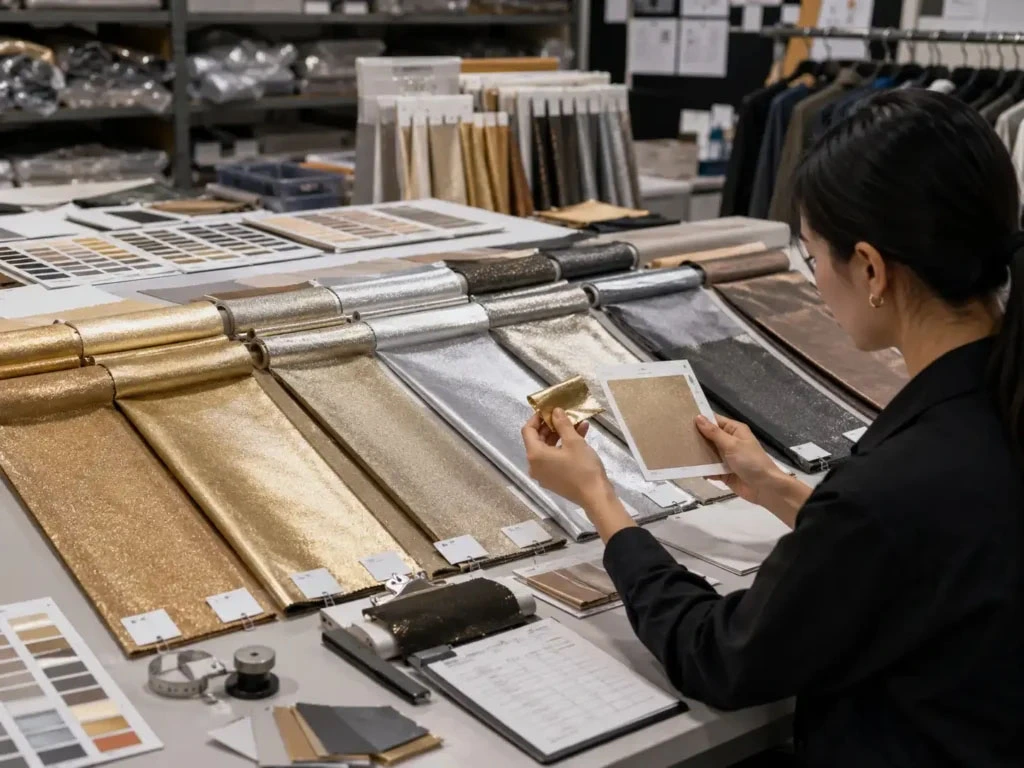
The production side is often less visible in DPP discussions.
By the time a garment reaches packing, several details may already have changed from the first sample.
During Fabric Sourcing
The fabric in your original tech pack may not be the fabric eventually purchased.
The colour may be unavailable, the supplier may not have enough quantity, or the fabric may pass the appearance check but fail the required shrinkage or weight standard.
If the original fabric is replaced, the replacement should go through the buyer’s approval before bulk cutting.
The approved replacement should then be recorded against the order.
During Sample Development
A fit change sometimes looks unrelated to material data. In the sample room, however, one construction change can lead to another material change.
A change in construction may require a different lining. A neckline revision may change the facing. A new sleeve design may require another type of interfacing or elastic.
For the pattern department, this is simply part of sample development.
At that point, the original specification may no longer describe the garment going into bulk production.
After PP Sample Approval
PP approval gives the production team a physical reference before bulk sewing starts.
If something changes after approval, the change needs to be clear.
The second version may be clear to everyone on the email thread today. Six months later, it may be difficult for someone else on the team to tell which zipper was actually approved.
During Bulk Production
Some problems only become obvious when the bulk fabric reaches the factory.
The fabric may have a different hand feel from the development lot. A trim may have a colour difference. A component may be short.
This is where communication between sourcing, pattern, cutting, sewing, and QC matters.
For your production records, use the approved bulk version rather than the first specification created during development.
What Happens When Bulk Fabric Is Different From the Sample?
This is one of the situations worth discussing with your clothing manufacturer before placing a larger order.
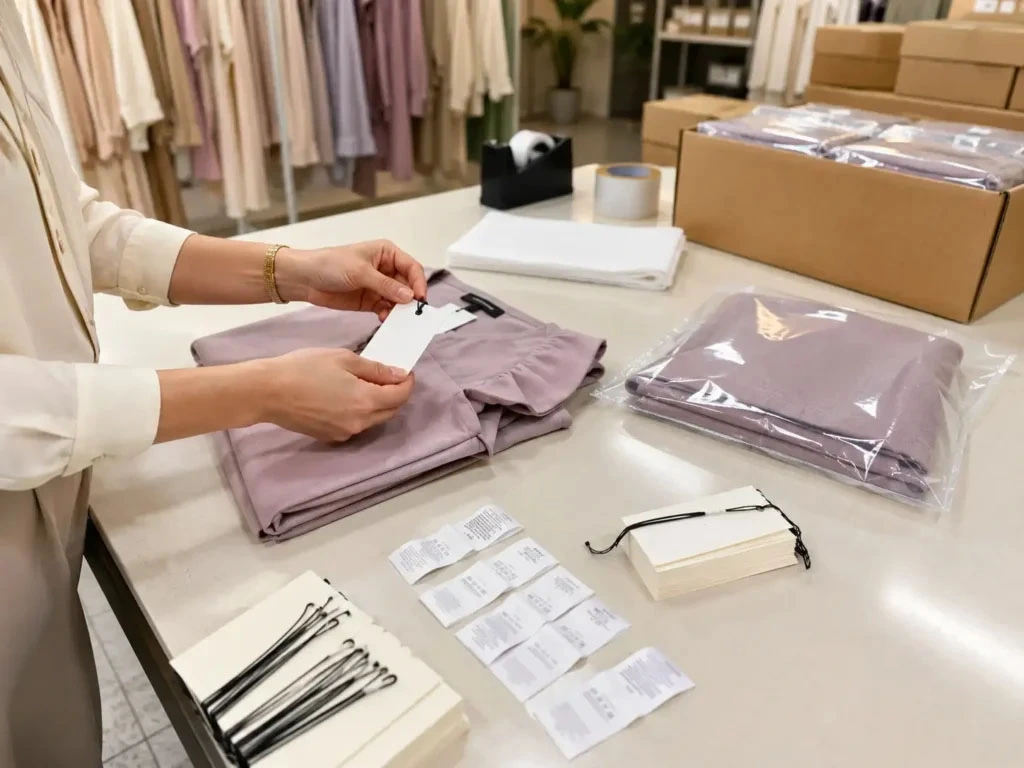
A development sample may have been made from a small fabric quantity. The bulk fabric may come from a later production lot or another approved source.
Even when the composition is the same, the fabric can behave differently.
Some differences only show up after testing or sewing. A change in stretch, weight or drape may not be obvious when the fabric first arrives.
The key question is simple: which material was approved for bulk production?
If it differs from the development sample, keep the change attached to the order.
How Should Fashion Brands Prepare Their Production Data?
You can start with a simple production record rather than building a separate DPP system.
Start With the Tech Pack
Put the basic product information in one working version:
- Fabric
- Composition
- Colour
- Lining
- Trims
- Measurements
- Construction
- Labels
- Packaging requirements
If you are starting with a sketch, reference image, or physical garment rather than a complete tech pack, these details can be confirmed during sample development.
Update the Record During Sampling
If a revision is agreed by email, carry it into the working specification as well.
If the neckline changes, the sleeve changes, or the fabric changes, update the working specification.
The same applies to comments made after a fitting.
A physical sample can be sitting in the sample room while your purchasing team is looking at an older PDF. Keeping the latest version clear saves problems later.
Check the PP Sample Against the Final Specification
Before bulk cutting, compare the approved PP sample with the production information.
Before cutting, check the details that are most likely to differ between the approved sample and the production record:
- Fabric
- Colour
- Lining
- Trims
- Labels
- Measurements
- Construction
- Packaging
This is also a useful point to confirm whether any approved changes were made after the first sample.
Keep Bulk Changes Traceable
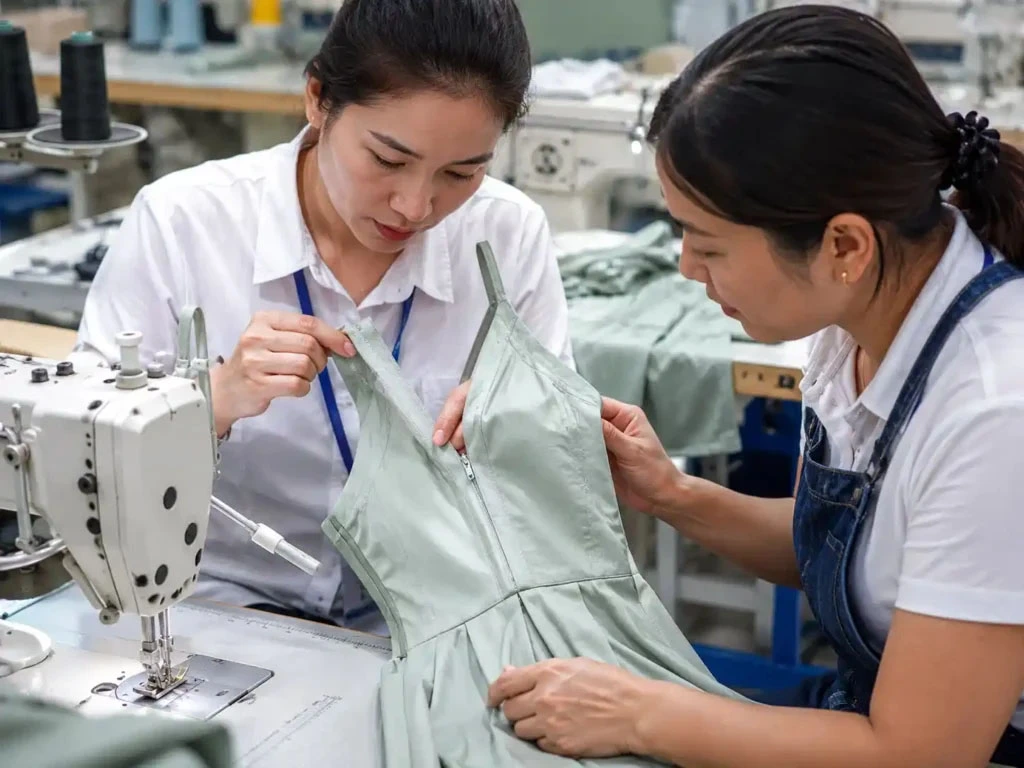
If a production change is necessary, record it before it becomes difficult to reconstruct.
Six months later, your team should still be able to answer a simple question:
“What exactly was used to make this order?”
The answer should be in the production record, not in someone’s memory.
What Should You Ask Your Clothing Manufacturer About DPP?
If you are developing private-label clothing, you do not need to ask your factory to provide every possible DPP field.
Start by asking what information the factory actually controls.
Ask where the following information comes from:
- Main fabric composition
- Fabric reference
- Lining and trim information
- Production location
- Final garment specifications
- Approved material substitutions
- Quality or testing records
- Packing information
Then ask how changes are recorded.
This matters because different parts of the supply chain may hold different information. A fabric mill may know the details of the fabric better than the garment factory. A testing laboratory may hold the test report. Your brand may control the final care-label wording.
The manufacturer may hold the production and material records. Other details may still come from the fabric supplier, testing laboratory or brand.
DPP and Private Label Clothing Production
Private-label orders can make product information more complicated because you may be coordinating several suppliers under one brand.
You could have:
Fabric supplier
↓
Trim supplier
↓
Clothing manufacturer
↓
Testing / inspection
↓
Your brand
The information does not automatically move cleanly from one party to the next.
For example, your manufacturer may know which fabric was used in production but not hold every piece of information about the fibre source. Your trim supplier may know the component specification but not know how it was used in the final garment.
Before production, agree on who will provide and maintain each type of information.
One practical way to divide the work is to map each field to the party that holds it.
| Information | Possible source |
|---|---|
| Fibre composition | Fabric supplier / manufacturer |
| Fabric reference | Fabric supplier / manufacturer |
| Lining | Manufacturer / supplier |
| Trims | Manufacturer / trim supplier |
| Garment measurements | Manufacturer |
| Production location | Manufacturer |
| Testing records | Laboratory / manufacturer |
| Care-label information | Brand / manufacturer |
| Packaging | Brand / manufacturer |
The exact responsibilities will depend on the final applicable requirements.
Before production starts, make sure someone is responsible for each piece of information.
How Can DPP Preparation Affect Your Production Timeline?
DPP itself may not be what causes a production delay.
Poorly organized product information can.
Suppose your bulk order is ready to cut, but the fabric reference on the purchase order does not match the latest approved sample.
Someone then needs to stop and check:
- Which fabric was approved?
- Which fabric arrived?
- Was a replacement approved?
- Which care-label information should be used?
- Which version should QC inspect against?
The more people involved in the order, the harder it can be to work out which version is current.
In practice, the production sequence may look like this:
Tech Pack → Fabric Confirmation → Sample → Fit Revision → PP Approval → Bulk Material Check → Cutting → Sewing → QC → Packing
This is useful even if the DPP rules affecting your particular product are not yet fully defined.
What Does DPP Mean for a Clothing Manufacturer?
For a clothing manufacturer, DPP preparation is less about creating a digital passport inside the sewing factory and more about maintaining accurate production information.
The manufacturer’s role is often to confirm the materials, components and production details it can verify from its own records.
That can include the approved fabric, components, garment specifications, production location, labels, and other information available within the manufacturer’s part of the supply chain.
Most traceability problems do not come from a straightforward order. They appear when something changes during production — a fabric is replaced, the lining colour changes, a zipper is substituted, or a measurement is approved after the first sample. Repeat orders can create the same issue when the material lot changes.
These changes are normal in clothing production. The problem is losing track of which version was finally approved and used.
What Should You Prepare Before Your Next EU Clothing Order?
You can start with a few practical questions.
Which version of the fabric is approved for bulk?
Where is each material record stored?
What happens when a material is substituted?
Which sample is the final production reference?
Which information comes from your manufacturer, and which comes from other suppliers?
For the next order, start with the production information already available. The immediate priority is keeping those records accurate and traceable.
Frequently Asked Questions
Does my clothing manufacturer need to create the Digital Product Passport?
The factory may provide part of the information, but that does not automatically mean it is responsible for the complete DPP. The actual responsibility will depend on the final legislation and the role of each party in the supply chain. Before production, confirm which information your manufacturer will provide and which information needs to come from your brand or other suppliers.
What if my brand uses several manufacturers for the same collection?
Each manufacturer’s production records should stay tied to the relevant style, order and material version. Two factories may produce the same style but use different approved materials, trims, or production batches. Combining their records into one generic product file can make later traceability difficult.
Should I keep the development sample after bulk production?
It is worth keeping, particularly for styles you expect to reorder. The development or PP sample gives your team a physical reference when questions arise about fit, construction, fabric, or finishing. For repeat orders, keeping the approved reference alongside the production record can save time when the style returns months later.
What if a supplier refuses to provide complete material information?
Start by identifying exactly what information is missing. Some suppliers may provide composition and material references but not information held further upstream. Ask your manufacturer which documents they can verify directly and which details need to come from the original material supplier.
Should every colourway have a separate product record?
That depends on how the products are identified and whether the material or component information differs. If colourways use different materials, linings, trims, or other specifications, keeping the differences visible is safer than treating every colourway as identical. Your internal SKU structure should make those differences easy to trace.
Conclusion
For a fashion brand, the practical side of DPP starts with knowing what actually went into the finished garment. Fabric substitutions, sample revisions, trim changes and repeat orders can all leave the original specification out of date. Keeping the approved material, sample and production records together gives your team a clear reference when the order needs to be traced later.
The textile DPP requirements will become clearer as the EU rules are finalized. In the meantime, the production record still needs to match the garment that was actually made.
Related Dress Manufacturing Services
If your project involves a specific dress fabric or construction, you can also review our related manufacturing pages:
- Cocktail Dress Manufacturer
- A Line Dress Manufacturer
- Velvet Dress Manufacturer
- Prom Dress Manufacturer
- Formal Dress Manufacturer
Get a Quote for an Existing Dress Style
If you are transferring an existing dress style to a new manufacturer, send us the latest approved sample, tech pack, product photos, or measurement chart together with your target quantity.
As a dress manufacturer, we can review the construction, fabric, trims, measurements, and current production status with you before confirming the sampling requirements.

