

When a new dress collection reaches our factory, we usually review the styles together before sampling starts. A collection may contain 10 or 20 different designs, but some of them can end up sharing almost the same silhouette, fabric or construction.
It affects sampling priorities, repeat-order planning and the quantity you assign to each style. Sorting the collection into core and fashion-led styles is one practical way to make those decisions before development gets too far.
Look at the Collection as a Whole
Two sketches may look quite different, but once they reach the sample room, you may find that the finished dresses use almost the same silhouette and construction.
Two dresses may have different necklines or prints, but the same fitted body, similar length and almost identical construction. On paper, they are different styles. On the production floor, there may not be much difference.
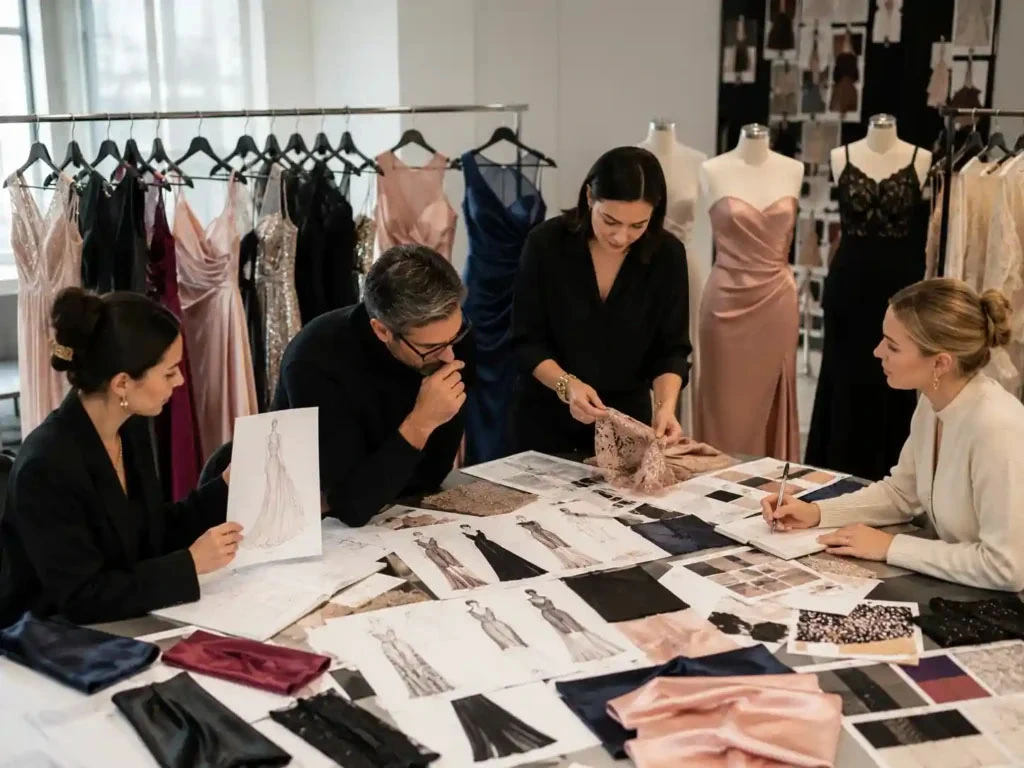
Before you send the collection for sampling, put all the styles together.
Look at:
- Main silhouette
- Length
- Fabric group
- Construction
- Design details
- Target price
- Expected quantity
- Likely reorder potential
Before we start sampling, we look for a clear reason for each style to be there.
Does every style have a clear reason to be in the collection?
That question can save more development work than adding another design to the range.
What Is a Core Dress Style?
We normally think of a core style as a dress that has a chance of staying in the range after the first launch.
It may be a familiar silhouette that fits your brand well, or a style you believe customers can buy repeatedly in different colors or fabrics.
A core dress does not have to be plain.
A fitted dress with panel construction, for example, can still be a core style if the pattern is stable, the fabric can be sourced again and the construction can be reproduced consistently.
When you consider a style for your core range, look at what happens after the first order.
For a potential core style, we normally check whether the pattern can be repeated, whether the main fabric can be sourced again, and whether the measurements and construction can stay consistent. It is also useful to know whether the style can move into new colors without requiring major pattern changes.
Those questions are often more useful than simply asking whether the dress looks commercial.
What Is a Fashion Style?
A fashion style is usually tied more closely to a season, trend or particular collection story.
You may use it to introduce a new silhouette, unusual neckline, statement sleeve, special print, cut-out, drape or decorative detail.
These styles often give the collection its stronger visual identity, but they can also take more work to sample and control in production.
A new design may require another pattern adjustment because the first sample does not create the intended shape. A lightweight fabric may behave differently around a gathered section. A decorative trim may look right in the design but become difficult to position consistently during production.
A fashion-led style can still be worth developing. The difference is that you may need more room for pattern changes, fabric testing or fitting before it is ready for bulk production.
Decide the Role of Each Style Before Sampling
You do not need a complicated merchandising system to classify your collection.
For each dress, decide whether its main role is closer to:
- Core commercial style
- Seasonal fashion style
- Statement style
- Supporting style
- Test style
The labels are less important than having the same understanding across design, purchasing and production.
If you expect one dress to generate repeat orders, tell the manufacturer early. The factory can then pay closer attention to fabric continuity, construction repeatability and the points that may affect future production.
If another dress is mainly a seasonal test, you may take a different approach to its development and quantity.
Check Your Silhouette Mix
After assigning a role to each style, compare the silhouettes again.
This is where you may find that the collection contains more repetition than expected.
For example, imagine you have:
- Three fitted mini dresses
- Two fitted midi dresses
- One bodycon maxi
- One fitted halter
- One fitted off-shoulder dress
The necklines are different, but most of the collection is still built around a close-fitting shape.
There is nothing wrong with having a strong fitted identity. What you want to avoid is adding another style that looks different on the line sheet but gives the customer almost the same product.
If most of the range is fitted, an A-line, wrap, slip or softer draped style can add more product difference than another fitted variation.
The same review applies to construction. If several dresses all require similar panels, closures and finishing operations, ask whether the additional styles are giving your customer enough difference.
Use Length Carefully
Mini, midi and maxi lengths can create real variation, but changing length alone does not always create a new product.
A mini and maxi version of the same dress can have different production requirements. Fabric consumption changes, the lining may need to be adjusted, and the weight of a longer skirt can affect how the garment hangs.
But if two styles have the same silhouette, same fabric, same construction and nearly the same customer occasion, changing the hem length may not be enough to justify developing both.
Look at the complete garment rather than one measurement.
Think About Fabric Before You Finalize the Collection
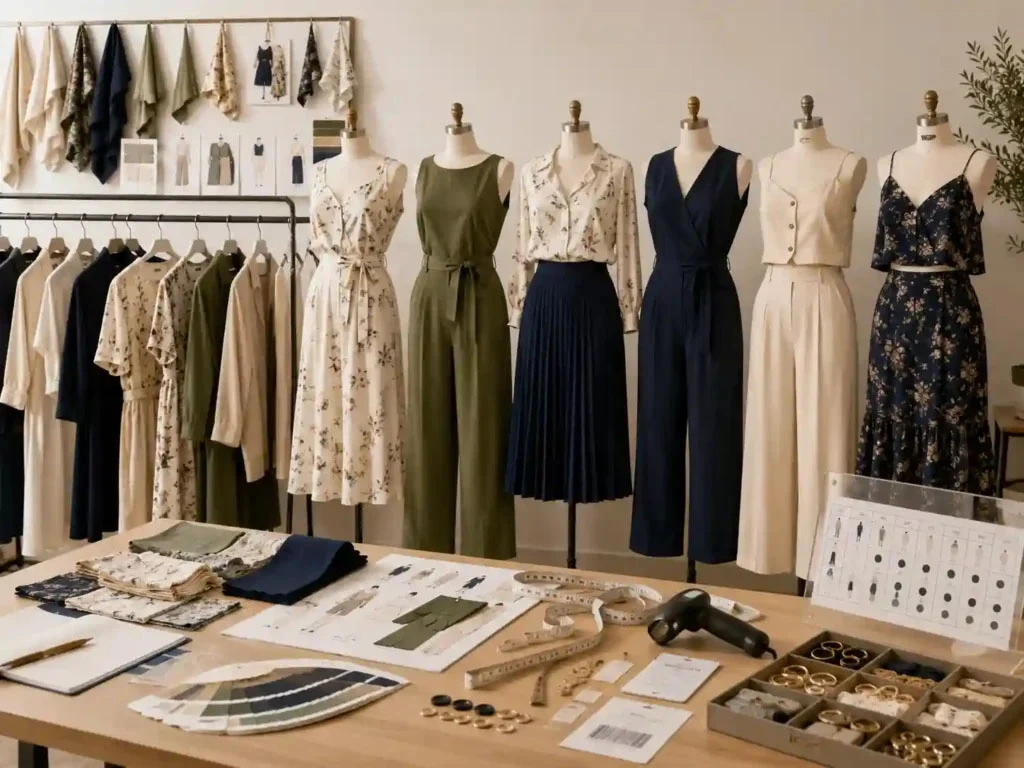
Fabric decisions become more important when you separate core and fashion styles.
A core dress needs a fabric that you can come back to. Before approving it, check whether the supplier can offer the same specification again rather than assuming the first fabric lot will always be available.
Check more than the color.
For repeat styles, our fabric checks normally cover:
- Weight
- Width
- Stretch
- Drape
- Shrinkage
- Opacity
- Hand feel
- Surface appearance
A successful first order can create a second problem: the brand wants to reorder, but the original fabric is no longer available in the same quality or specification.
Fashion styles can allow more flexibility when the product is intentionally seasonal. A shorter fabric supply window may be acceptable when the style is not expected to remain in the collection.
Still, the fabric needs to work with the pattern.
A swatch only shows part of the picture. Once the fabric goes through cutting, sewing and pressing, its drape, stretch or opacity can look quite different in the finished dress.
Give Important Styles More Development Attention
Not every dress needs the same amount of development time.
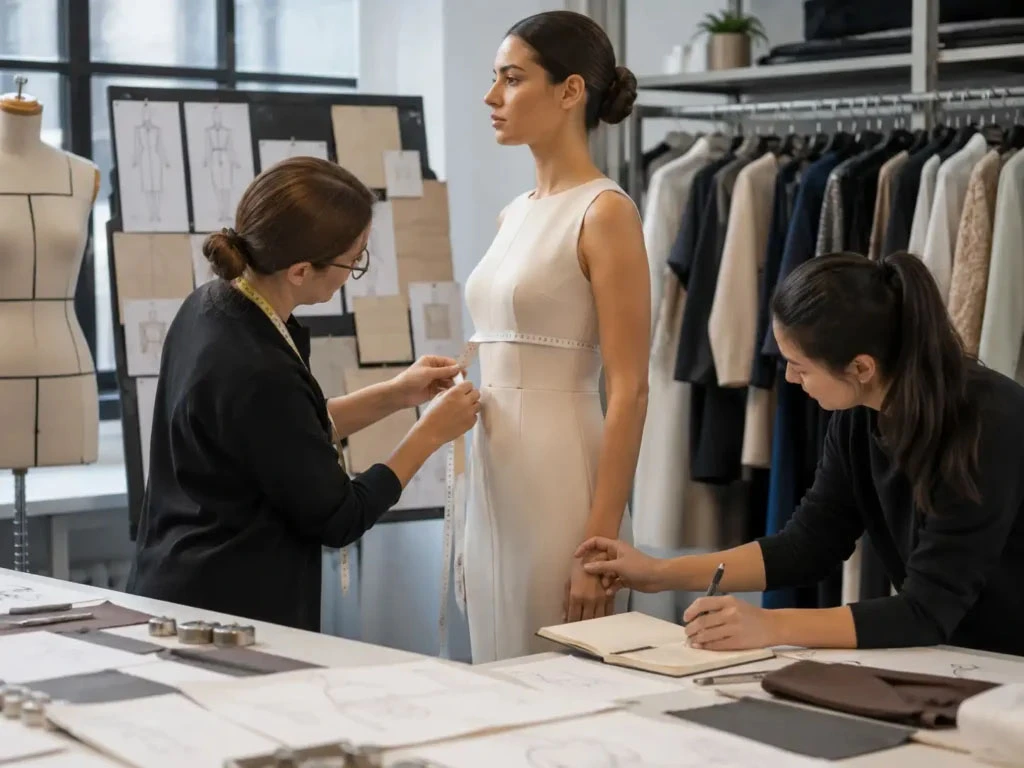
A simple slip dress may move through the sample room relatively quickly. A fitted dress with a corset structure, multiple panels and lining can require considerably more checking.
For an important core style, you may want to resolve:
- Fit
- Measurements
- Fabric behavior
- Construction
- Closure
- Lining
- Size grading
before moving it into bulk production.
A core style usually deserves more attention before bulk production because it may be repeated across colors, seasons or future orders.
A fashion-led style has a different development question: does the sample achieve the intended shape and can the difficult details be controlled consistently?
If the answer is no, it is better to find that out during development than after bulk fabric has been purchased.
Where Does 3D Sampling Fit?
3D review is useful for checking overall silhouette, garment length, skirt volume, sleeve proportion and the placement of major design details before another physical sample is made.
It does not replace physical sampling. Fabric behavior, fit, seam construction, lining and closures still need to be checked on the actual garment.
For fashion-led styles, this can help the team decide whether a design needs another physical sample or whether the change can be reviewed digitally first.
Plan Quantity by Style Role
Your collection size and your order quantity are closely connected.
Suppose you have 12 dress styles and four colors for each one. That creates 48 style-color combinations before size quantities are considered.
For a new brand, that can become a purchasing problem very quickly.
Instead of giving every dress the same quantity, consider what each style is expected to do.
A core style may justify a larger commitment if you already have confidence in the silhouette.
A fashion style may be better suited to a smaller test quantity, particularly when demand is less certain.
You also need to check the manufacturer’s MOQ and the fabric supplier’s requirements. A small garment quantity does not always mean a small fabric commitment.
It is worth giving the factory an estimated quantity before sampling, especially when several colors or fabrics are involved.
Plan for Reorders When You Choose Core Styles
A style that may become a repeat product should be considered with the second order in mind from the beginning.
You may want to record:
- Approved fabric
- Fabric supplier information
- Finished measurements
- Construction details
- Approved trims
- Label specifications
- Packaging requirements
- Sample comments
- PP sample information
The approved sample should not be the only reference.
Production needs clear information about what was actually approved.
When a Fashion Style Becomes a Core Style
A fashion-led style can move into the core range after it proves itself in sales.
A fashion-led dress may perform well after launch and become one of your repeat products.
If that happens, you should reassess the style from a production perspective.
Check whether:
- The fabric is still available
- The pattern is stable
- The construction can be repeated
- The trim can be sourced
- The size grading works
- The target cost is still realistic
You may also decide to develop the same basic style in new colors or fabrics.
Once you plan to reorder it, start treating the style as a repeat product rather than a one-season development.
Work With Your Manufacturer Before the Collection Is Locked
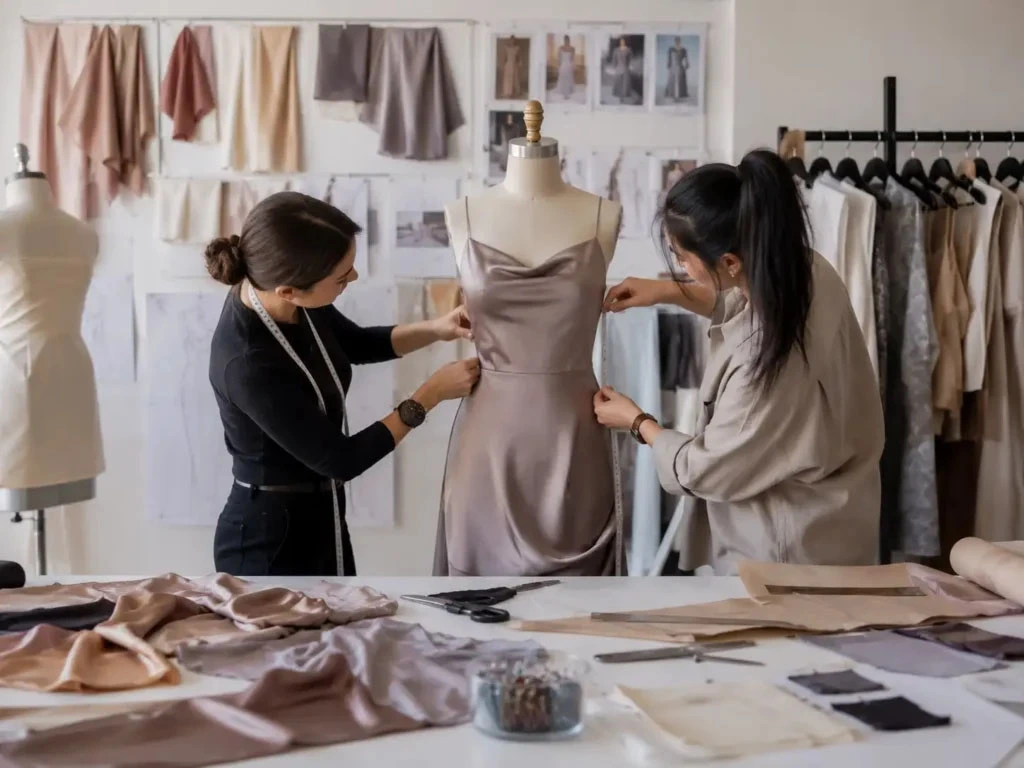
Early discussion is particularly useful if you are still deciding which styles to sample first, which fabrics to use or which designs may need more fitting work.
If you have sketches, reference images, a tech pack or even an early collection plan, the factory can review the designs from a production perspective.
It can help answer practical questions such as:
- Which styles to sample first
- Which fabrics are practical
- Which designs may need more fitting work
- Which styles are suitable for smaller quantities
- Which details may affect production cost
- Which materials need to be confirmed early
You remain responsible for the product direction, but early factory input can help you find production issues before they become sample or bulk-order problems.
Common Dress Collection Planning Mistakes
Too many styles with the same basic shape
Different necklines and prints do not always create enough product difference. Put the sketches side by side and compare the body shape, length and construction before adding another variation.
Treating every style as equally important
A repeat style may justify more work on fit, fabric continuity and grading. A seasonal test style may not need the same level of development.
Choosing fabric only from the sample
The fabric needs to be reviewed for production behavior, not just appearance. Weight, width, stretch, shrinkage and drape can all affect the finished dress.
Adding colors before checking quantity
More colors can make a collection look larger, but they also create more purchasing and inventory combinations. Consider whether each color has a clear reason to be included.
Forgetting the next order
If you expect a dress to continue selling, record the production details that will be needed for the next order. A successful first production run should make the second one easier, not require the product to be developed again from the beginning.
Dress Collection Planning Checklist
Before you send your collection to a clothing manufacturer, review each style and ask:
- What is the main role of this dress?
- Is it a core, fashion or test style?
- Is the silhouette genuinely different from the other styles?
- Does the fabric suit the construction?
- Can the key fabric and trims be sourced again?
- Which styles need the most fitting work?
- Which styles should be sampled first?
- What quantity do you expect for each style?
- How many style-color combinations will you create?
- Are the technical details clear enough for pattern development?
- What information needs to be fixed before PP approval?
A smaller collection is not automatically a better collection. The useful question is whether every style has a clear role before sampling and production costs start to build.
FAQ
Should a new fashion brand start with core styles or fashion styles?
A new brand can combine a small number of familiar silhouettes with a few stronger fashion-led designs. The key is to know which styles are intended for repeat business and which ones are being tested for the market.
How do you decide whether a dress is worth sampling?
Look at more than the sketch. Consider its role in the collection, target customer, expected quantity, technical difficulty and whether it adds something that another style does not. If two designs solve almost the same customer need, one may not justify another round of development.
Should you tell the manufacturer which styles you expect to reorder?
Yes. This information can be useful before sampling, even if your forecast is only an estimate. A manufacturer can then pay attention to material availability and construction repeatability rather than treating the style as a one-time seasonal order.
What if your collection has a very small first order?
Keep the development plan realistic. A small order does not necessarily require fewer designs, but spreading limited quantities across too many colors and styles can make purchasing difficult. Review the total number of style-color combinations before confirming the range.
Can one collection use several different fabrics?
Yes, provided each fabric has a clear purpose. From the factory side, we would check whether each material suits the relevant pattern and construction, then consider sourcing and production requirements. Using fewer fabrics may simplify purchasing, but it should not compromise the garment.
Conclusion
Before sending a dress collection to the factory, it is worth looking at the range as a production plan, not only as a group of designs.
Before sampling starts, we need to know which styles matter most, which ones are being tested and where the collection is repeating itself. That gives the pattern room and sample room a clearer starting point.
Once the collection is sent to the factory, the pattern room, sample room and production team need the same priorities. Deciding those priorities before sampling starts can reduce unnecessary development work and make the first production run easier to manage.
Related Dress Manufacturing Services
If your project involves a specific dress fabric or construction, you can also review our related manufacturing pages:
- Corset Dress Manufacturer
- Lace Dress Manufacturer
- Wrap Dress Manufacturer
- Slip Dress Manufacturer
- Mini Dress Manufacturer
Get a Quote for an Existing Dress Style
If you are transferring an existing dress style to a new manufacturer, send us the latest approved sample, tech pack, product photos, or measurement chart together with your target quantity.
As a dress manufacturer, we can review the construction, fabric, trims, measurements, and current production status with you before confirming the sampling requirements.

