

When you develop a custom dress, the delay is not always in making the sample. A fit change can send the style back to the pattern room, then through another round of cutting and sewing. If the sample is being developed overseas, there may also be another shipment before you can review it again.
In our factory, this happens when a change looks minor on the tech pack but still needs a physical sample to confirm. 3D sampling can take some of that checking earlier, allowing you to review the shape and proportions before another garment is cut.
Why Does Custom Dress Development Take So Long?
When a new dress comes into the factory, the sketch is only the starting point. Before the style is ready for production, the pattern, measurements, fabric, construction and fit all have to be checked.
A typical development sequence may look like:
Design → Pattern → First Sample → Fit Review → Pattern Revision → Revised Sample → PP Sample → Bulk Production
The extra time usually appears when something changes after the first sample.
Maybe the waist sits too low. The skirt has more volume than expected. The neckline needs to open up, or the sleeve is not sitting correctly. Sometimes the fabric also behaves differently from what was expected.
None of these changes is unusual. The time adds up because each physical revision means another round of pattern work, cutting, sewing, finishing and, for overseas orders, shipping.
Where Can 3D Sampling Save Time?
The main benefit is not eliminating physical samples. It is giving you a chance to review some changes before the next one is cut and sewn.
For example, if you are developing a fitted dress and the first version looks too long through the bodice, you may want to see the effect of shortening it before asking the factory to make another sample.
With a 3D version, you can review the revised proportion first.
For a dress that is still being adjusted, 3D review can help you compare details such as:
- Dress length
- Waist position
- Skirt volume
- Neckline depth
- Sleeve length
- Shoulder proportion
- Panel placement
- Pleat or gather placement
If the change is mainly about visual proportion, you may not need another physical sample just to find out that the proportion still needs adjustment. That decision can often be made earlier.
How Does 3D Sampling Change the Sampling Cycle?
Consider a traditional revision.
You receive the first sample and notice that the skirt is too full.
You mark the fitting comments, take photos, send the information to the factory and wait for the revised pattern and sample.
If you are working across different countries, shipping becomes part of every revision.
With 3D review, some of this checking can happen before the next physical sample:
Pattern → 3D Review → Pattern Adjustment → Physical Sample → Fit Review
The physical sample is still there.
The sample room does not need to make a new garment for every visual adjustment.
This becomes more noticeable when several styles are being developed together. If five styles each go through an additional sample round, the factory is handling five more pattern revisions, cutting and sewing jobs, fitting comments and sample shipments.
That is where 3D review can be useful. A visual change can be checked first, and only the changes that still need physical confirmation move into the next sample.
What Can You Check in a 3D Dress Sample?
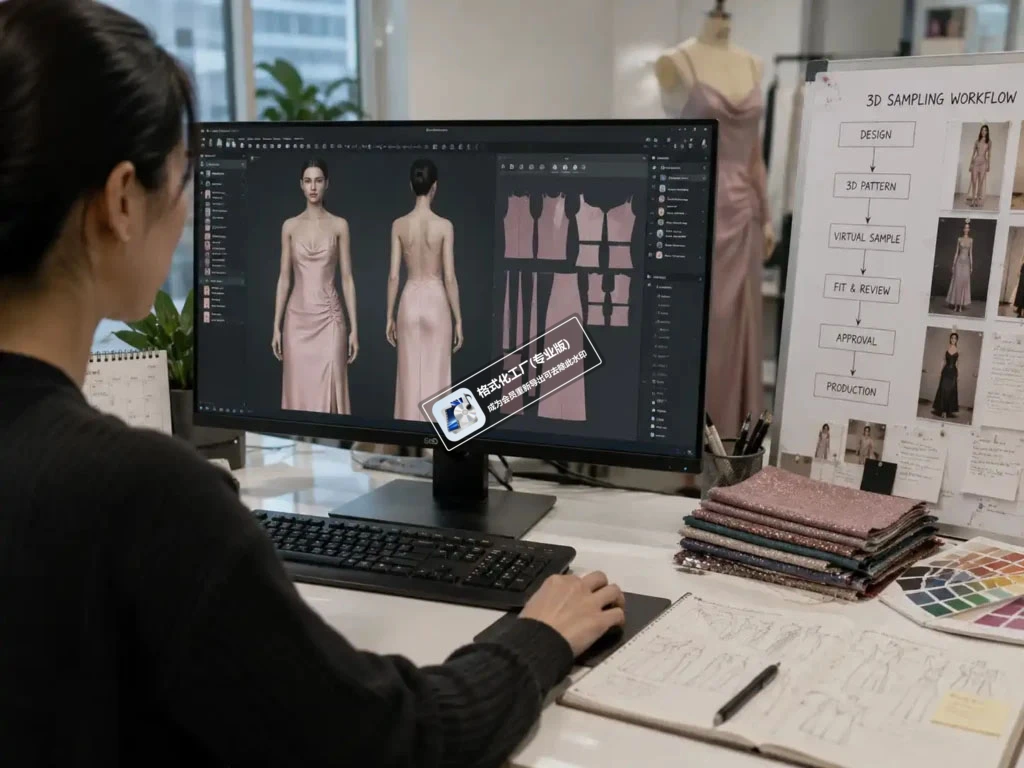
In the sample room, 3D is mainly useful for checking the overall shape before another physical sample is made.
Dress Silhouette
One of the first things to check is the overall silhouette. Is the dress sitting close to the body, or does it need more ease? Is the skirt falling away from the waist as expected?
This type of review can be useful for:
- A-line dresses
- Bodycon dresses
- Sheath dresses
- Slip dresses
- Fit-and-flare dresses
- Oversized dresses
- Draped dresses
If the skirt looks too narrow or the waist transition is in the wrong place, the pattern can be adjusted before the next physical sample is made.
Length and Proportion
Sometimes the first sample is close, but the proportions still feel wrong. You may want to see the same dress with a shorter hem, a higher waist or a fuller skirt before deciding which version should be sampled again.
A revised 3D version also gives the designer and factory something specific to review together, rather than discussing the change only through measurements and emails.
Neckline and Sleeve Shape
Necklines and sleeves can be difficult to describe accurately in writing.
A visual review can make it easier to discuss whether the neckline looks too high, whether the sleeve is too wide, or whether the shoulder proportion matches the design.
Placement of Design Details
You can also review the position of:
- Pleats
- Ruffles
- Gathers
- Panels
- Cut-outs
- Seams
- Pockets
- Draped details
If the position of a pleat, panel or cut-out changes the look of the whole dress, it is worth checking that position before cutting another sample.
Can 3D Sampling Reduce the Number of Physical Samples?
It can, although the answer depends on what you are trying to confirm with the sample.
A 3D review makes more sense for a proportion or visual change than for something that depends heavily on actual fabric behavior.
For example, you may be able to review a change to the skirt volume digitally.
But if you are developing a bias-cut chiffon dress, you still need to see how the actual fabric falls.
The same applies to stretch satin, lightweight fabrics, heavily textured fabrics and fabrics with unusual recovery.
At the factory, the more useful question is not:
“Can we eliminate physical samples?”
It is:
“Does this change need another physical sample to make the decision?”
If the answer is no, the digital review may save one step.
What Happens When You Develop Dresses With an Overseas Manufacturer?
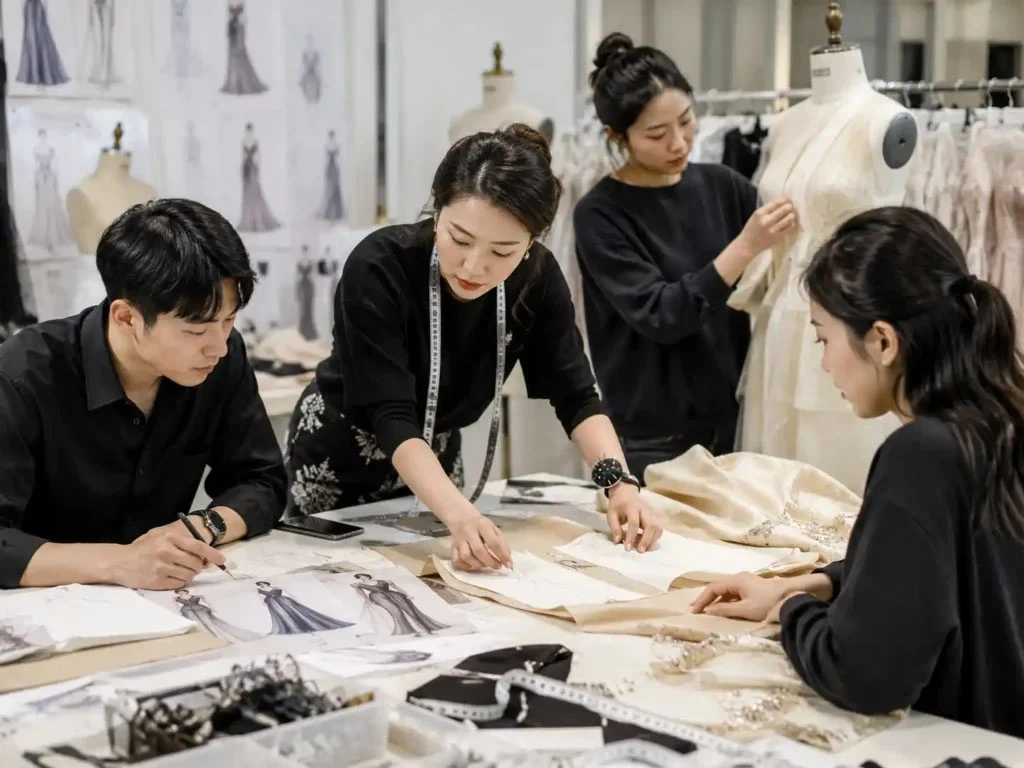
For overseas production, sample shipping can become part of the development calendar.
You may finish your comments today, but the factory still needs time to receive the information, revise the pattern and prepare the next sample. Once the sample is finished, you may need to wait again before your team can review it.
The extra waiting is easier to notice when the designer, buyer and factory are in different countries.
You may have:
- A designer checking the silhouette
- A buyer checking the commercial appearance
- A product developer checking measurements
- A factory pattern maker checking construction
This is where version control becomes important. A designer may ask for a lower neckline while the buyer is still working from the previous version. If those comments are not tied to the same revision, the factory can end up working from two sets of instructions.
A shared 3D version gives the team something visual to discuss before another physical sample is made.
You can mark the change, review the updated version and decide whether the issue needs to go into the next physical sample.
Does 3D Sampling Replace Physical Fit Samples?
No. A 3D garment can show proportions and overall shape, but it cannot tell you how the finished fabric feels or behaves on the body.
You need the actual sample to evaluate:
- Fabric drape
- Hand feel
- Stretch
- Recovery
- Transparency
- Actual garment weight
- Wearing comfort
- Seam behavior
- Lining
- Closure performance
A fitted dress is a good example.
The digital version may look balanced, but the physical sample can reveal pressure around the bust, insufficient ease at the hip, an uncomfortable armhole or a sleeve that restricts movement.
Those are production decisions, not just visual decisions.
So the practical workflow is not:
3D instead of physical sampling
It is:
3D before physical sampling → physical fitting → pattern correction
What Can Make a 3D Sample Misleading?
The 3D result still depends on the pattern and fabric information used to build it.
If the base pattern is wrong, a polished 3D image does not make the pattern correct.
Fabric information also matters.
A dress made from chiffon will not behave like one made from cotton poplin. Satin, jersey and structured woven fabrics each respond differently to movement and construction.
If you are reviewing a dress before the final fabric is confirmed, you should treat the 3D version as a development reference rather than a final representation of the finished garment.
The same applies to fit.
A digital avatar can help you see the direction of the fit, but the final measurements still need to be checked through the appropriate physical fitting process.
Which Dress Development Changes Are Better Suited to 3D Review?
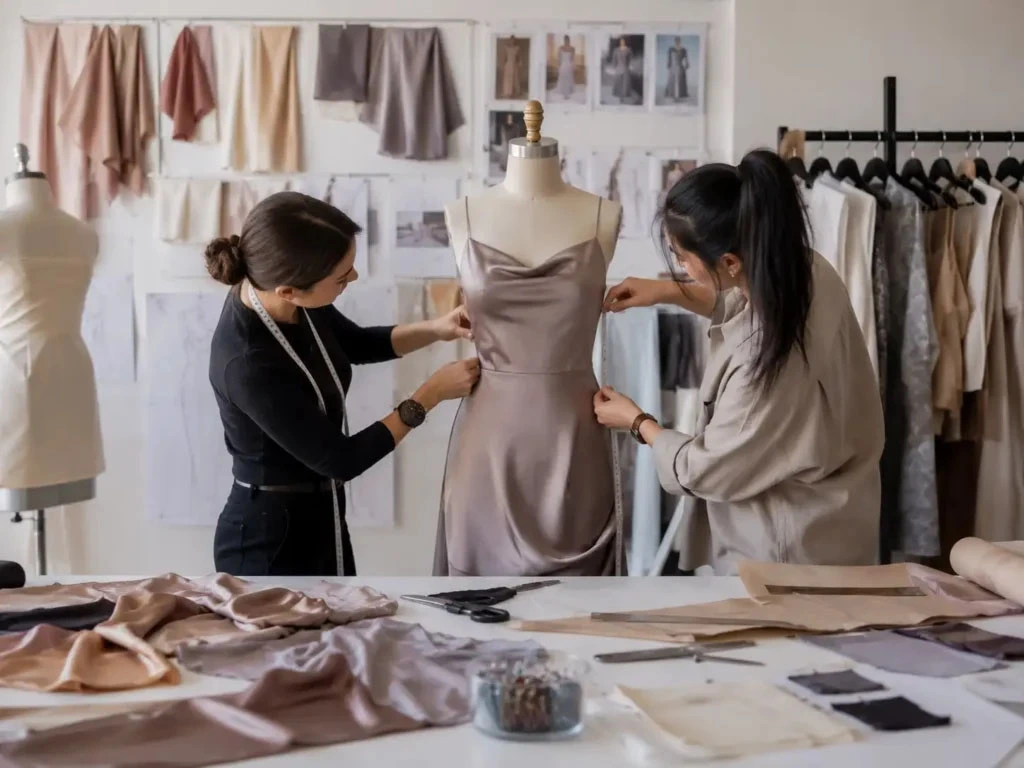
Not every revision deserves another physical sample.
3D review is particularly useful for changes such as:
Silhouette changes
You want to see whether the dress should be more fitted, wider or more relaxed.
Proportion changes
You want to compare different bodice, waist or skirt proportions.
Length changes
You want to compare mini, midi or longer versions before deciding which one to sample.
Detail placement
You need to move pleats, panels, gathers or other visual details.
Design variations
You are deciding between several neckline, sleeve or skirt options.
In these cases, a quick visual check can save a physical sample round.
Which Changes Still Need a Physical Sample?
Some decisions should move directly into physical development.
This includes situations where you need to confirm:
Actual fabric behavior
You need to see how the selected fabric drapes, stretches, wrinkles or recovers.
Final fit
You need to check the garment on a real body or through your normal fitting process.
Construction
You need to confirm seams, zippers, elastic, lining, interfacing and finishing.
Trims and accessories
Buttons, hooks, closures and other components need physical checking.
Production feasibility
A detail may look fine digitally but require a different sewing method, construction sequence or finishing treatment on the production floor.
3D review is one development step. Final approval still needs the approved specifications, materials and physical checks.
How Can You Use 3D Sampling Without Slowing Down the Factory?
The technology itself does not solve a poorly organized development process.
You still need clear information.
Before development starts, try to keep these items consistent:
- Measurement chart
- Fabric specification
- Color reference
- Construction details
- Size range
- Artwork or print placement
- Closure details
- Lining requirements
- Fit comments
- Sample revision number
The revision number is easy to overlook, especially when several people are reviewing the same style.
Otherwise, even a fast digital workflow can create more revisions rather than fewer.
From the production side, clear approval information is often what keeps the next sample moving.
What Should You Prepare Before Using 3D Sampling?
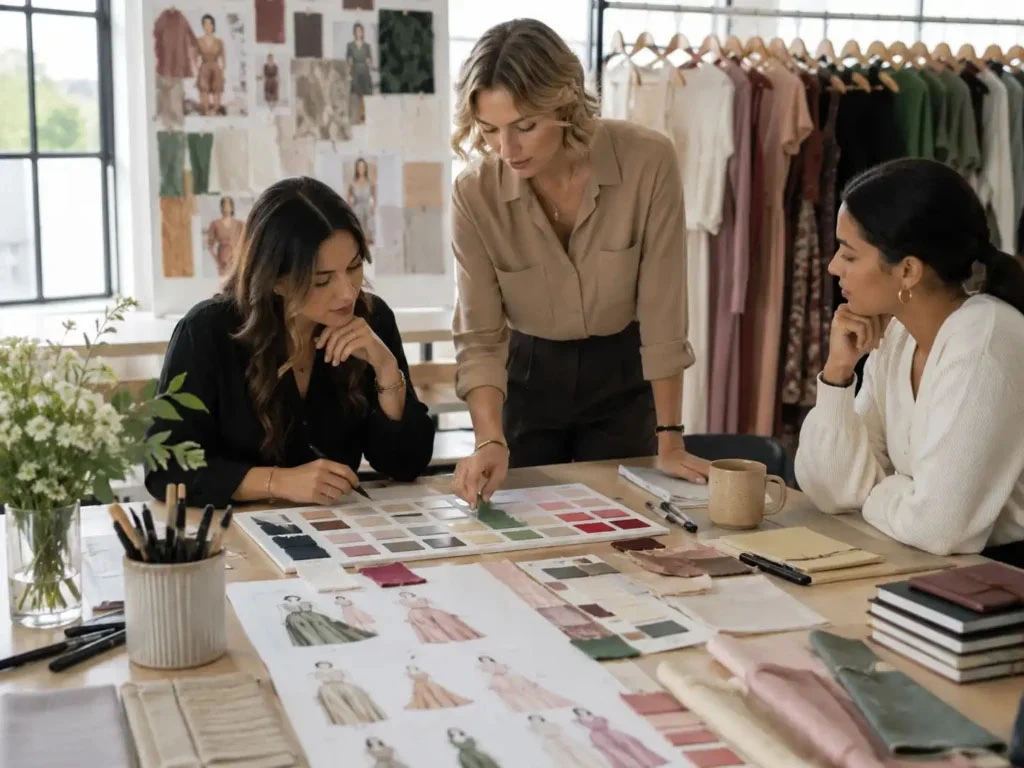
You do not need to have every detail finalized before starting development.
You may have only:
- A sketch
- A reference garment
- A reference photo
- Basic measurements
- A fabric direction
- Construction notes
- A target fit
That can be enough to begin discussing the development direction.
However, you should clearly separate confirmed details from open decisions.
For example, if you know the dress should have a fitted waist but have not chosen between satin and stretch crepe, that fabric decision should remain open.
That keeps the 3D version in its proper role: a development reference, not a final production specification.
How Much Development Time Can 3D Sampling Actually Save?
The time saved varies by style. If the first sample is already close to the final design, 3D may not remove much work. If the style goes through several visual revisions, the difference can be more noticeable.
If the first physical sample shows that only the length or neckline needs changing, the next version may be reviewed digitally before the factory cuts another sample.
So the useful question is not:
“How fast can 3D make a dress?”
It is:
“How many physical sample rounds can we avoid?”
That is a more useful measure when you are comparing a 3D-assisted development process with a traditional sampling cycle.
A Practical 3D Sampling Workflow for Custom Dresses
For a brand working with a clothing manufacturer, a workable process can look like this:
1. Design or tech pack
You provide the sketch, measurements, construction information and available fabric details.
2. Pattern development
The pattern is developed from the approved design direction.
3. 3D review
Review the silhouette, proportions and selected details before deciding whether another physical sample is needed.
4. Pattern revision
The pattern maker updates the pattern from the agreed comments.
5. Physical sample
The revised pattern is used to make a physical garment.
6. Fit review
Check the actual fit, fabric behavior and construction on the physical sample.
7. Further revision
Any physical fit or construction issues are corrected.
8. PP sample
Once the specifications are settled, the PP sample can be used to confirm the production version before bulk manufacturing.
The value of 3D is mainly between the pattern and physical sample stages. It gives you another opportunity to catch a problem before spending more time on physical development.
FAQ
1. Is 3D sampling worth using for a small fashion brand?
It can make sense when you are developing several styles or expect several visual revisions. If the first physical sample is already close to the final version, there may be little to gain. For a small brand, the useful question is whether 3D can remove a physical sample round, not whether the entire development process needs to become digital.
2. Can you start 3D dress development from a sketch?
A sketch is enough to start the development discussion, but it cannot define every technical detail. Measurements, fabric information, construction notes and fit requirements still need to be added as development moves forward.
3. Does 3D sampling work for complicated dress construction?
Complicated construction is where physical sampling becomes more important, but complicated construction still needs physical checking. Draping, internal support, boning, lining, unusual closures and layered construction can behave differently once the actual materials are cut and sewn.
4. Can 3D sampling help if your designer is in another country?
Yes. It can reduce some of the back-and-forth involved in remote development because certain visual changes can be reviewed before another sample is shipped. The factory still needs clear measurements, comments and revision numbers so everyone is working from the same version.
5. Should the 3D version be used as the final production reference?
The final production reference should still be the approved specifications, materials and physical sample/PP sample. A 3D file can support development, but it cannot fully confirm fabric behavior, workmanship, fit or finishing on the production garment.
Conclusion
3D sampling does not remove the need for physical dress samples. Its value is earlier in the development process, where you can review silhouette, proportions and certain design details before asking the factory to make another sample.
For a custom dress project, the goal is not to make the entire process digital. Use 3D for the changes that can be judged visually, then use physical samples for fabric, fit, construction and finishing.
Related Dress Manufacturing Services
If your project involves a specific dress fabric or construction, you can also review our related manufacturing pages:
- Floral Dress Manufacturer
- Sequin Dress Manufacturer
- Evening Dress Manufacturer
- Bridesmaid Dress Manufacturer
- Halter Dress Manufacturer
Get a Quote for an Existing Dress Style
If you are transferring an existing dress style to a new manufacturer, send us the latest approved sample, tech pack, product photos, or measurement chart together with your target quantity.
As a dress manufacturer, we can review the construction, fabric, trims, measurements, and current production status with you before confirming the sampling requirements.

