

When you develop a knit dress, the wrong fabric weight can affect the fit, coverage and finished silhouette. As a clothing manufacturer, we check GSM during fabric selection, but we never approve a knit based on weight alone. You need to consider the fabric construction, stretch, recovery and intended garment shape before confirming a material. This is particularly important when you are developing fitted dresses or ordering several colorways.
What Does GSM Mean in Knit Fabric?
GSM stands for grams per square meter. It measures the weight of one square meter of fabric and is commonly used when comparing materials from different suppliers.
When you source knit fabrics, GSM helps you narrow down the options. A 160 GSM jersey and a 300 GSM ponte are clearly different in weight, thickness and typical use.
However, two fabrics with the same GSM can still behave quite differently.
For example, a 220 GSM jersey may feel soft and flexible, while a 220 GSM rib knit may have more visible texture and stretch. The difference comes from the yarn, stitch construction, fiber composition and finishing process.
When you request fabric quotations, include more than the target GSM. Composition, knit construction, usable width and stretch requirements should also be part of the discussion.
How Does GSM Affect the Finished Knit Dress?
The weight of your fabric can influence several aspects of the finished garment. The important thing is to consider these effects in relation to the actual design.
Coverage and Opacity
If you are developing a fitted dress, check how the fabric looks when stretched across the body rather than judging it while lying flat.
A material that appears opaque on the cutting table may become thinner around the bust and hips. This is particularly noticeable with white, cream and pastel colors.
Moving to a heavier GSM can help in some cases, but it is not always the right solution. A tighter knit construction or a different fiber blend may provide better coverage without making the dress unnecessarily heavy.
If the design requires lining, check that it works with the stretch of the outer fabric. Otherwise, the lining may restrict movement or pull against the seams.
Drape and Garment Shape
Fabric weight affects how a dress hangs, especially when the design has a long skirt or additional volume.
A lightweight jersey can work well for a relaxed summer dress because it moves easily with the body. A heavier ponte may be more suitable when you want a cleaner, more defined silhouette.
One problem can appear when you use the same fabric for different dress lengths. A material that works well for a fitted mini dress may pull downward when used in a long gathered skirt.
When reviewing your sample, look at the whole garment rather than just the fabric surface. Check whether the hem hangs evenly and whether the skirt keeps the shape shown in your original design.
Fit and Shape Retention
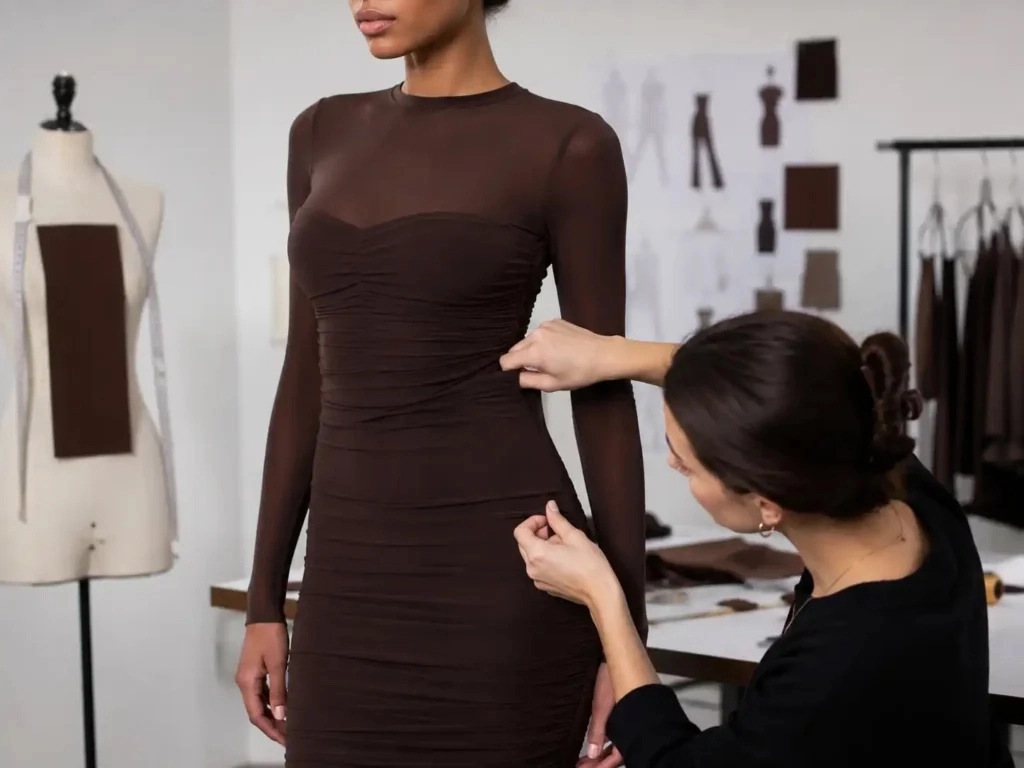
For bodycon dresses, stretch and recovery are important considerations alongside GSM.
Your fabric needs enough stretch to accommodate movement, but it should also return to its original shape after being worn. Poor recovery can cause looseness around the waist, hips and seat.
We pay particular attention to these areas during fitting because they experience repeated tension.
A thick fabric is not automatically more supportive. If its recovery is weak, increasing the weight may not solve the fitting problem. The fabric and pattern need to be assessed together before the material is approved.
Fabric Consumption and Garment Cost
GSM can affect the finished garment weight and material cost, but it does not determine fabric consumption by itself.
Usable width, pattern layout, garment length and skirt fullness all influence how much fabric your order requires.
For example, a long dress with gathers may consume considerably more fabric than a fitted mini dress using the same material. A narrow fabric width can also increase consumption because more fabric is needed to arrange the pattern pieces.
When comparing quotations, look at the price per meter or yard, usable width and estimated consumption together. A lower fabric price does not always mean a lower finished garment cost.
What GSM Is Suitable for Different Knit Dress Styles?
There is no universal GSM for knit dresses. The following ranges can help you shortlist materials before requesting samples.
| Knit Fabric | Approx. GSM | Suitable Dress Styles | Main Considerations |
|---|---|---|---|
| Lightweight Jersey | 140–180 GSM | Summer and relaxed dresses | Coverage, shrinkage, drape |
| Medium Jersey | 180–260 GSM | Casual and fitted dresses | Stretch, recovery, opacity |
| Rib Knit | 180–320 GSM | Bodycon and fitted midi dresses | Fabric growth, recovery |
| Interlock Knit | 200–300 GSM | Casual and stable dress styles | Thickness, stability, drape |
| Ponte / Roma | 250–380 GSM | Structured and fitted dresses | Bulk, flexibility, shape retention |
These figures are starting points for fabric development, not fixed manufacturing requirements. Actual performance varies with composition, yarn, knit construction and finishing.
For example, a 220 GSM jersey and a 220 GSM rib knit may have different levels of stretch and surface coverage. You should not assume that matching the weight means matching the finished garment.
If you are developing several styles within one collection, select fabrics according to each design rather than applying one GSM requirement across the entire range.
What GSM Should You Choose for a Bodycon Dress?
For a bodycon dress, 200–300 GSM is a reasonable range to start sampling. The final selection depends on the amount of stretch, coverage and support required by your design.
A 240 GSM fabric with good recovery may be more suitable than a heavier material that becomes loose after repeated stretching.
During sample development, pay attention to:
- Bust and hip coverage when stretched
- Waist recovery after movement
- Stretch direction and percentage
- Fabric growth after repeated handling
- Seam stability around fitted areas
- Surface appearance under tension
Another point worth checking is how the fabric behaves after the garment has been worn and washed. A material that looks good during the first fitting may change after washing or repeated stretching.
If your target market expects a close-fitting silhouette, ask for the fabric’s stretch and dimensional stability information before approving the sample. This gives you a better basis for evaluating the material than GSM alone.
What GSM Works Well for a Knit Midi Dress?
A knit midi dress gives you more fabric options because the silhouette can be fitted, straight or relaxed.
For a fitted midi, medium-weight jersey or rib knit may provide a good balance between flexibility and coverage. If you want the dress to hold a more defined shape, a compact knit such as ponte is another option worth sampling.
For a loose summer midi, lightweight jersey may be more appropriate.
The main consideration is the finished length and amount of fabric used. A heavy knit can become uncomfortable in a long dress, particularly when the skirt includes gathers or pleats.
If you are developing a collection with both mini and midi versions of the same design, do not automatically use the same fabric specification. Make sure the material works with the proportions of each version.
Does Higher GSM Mean Better Fabric Quality?
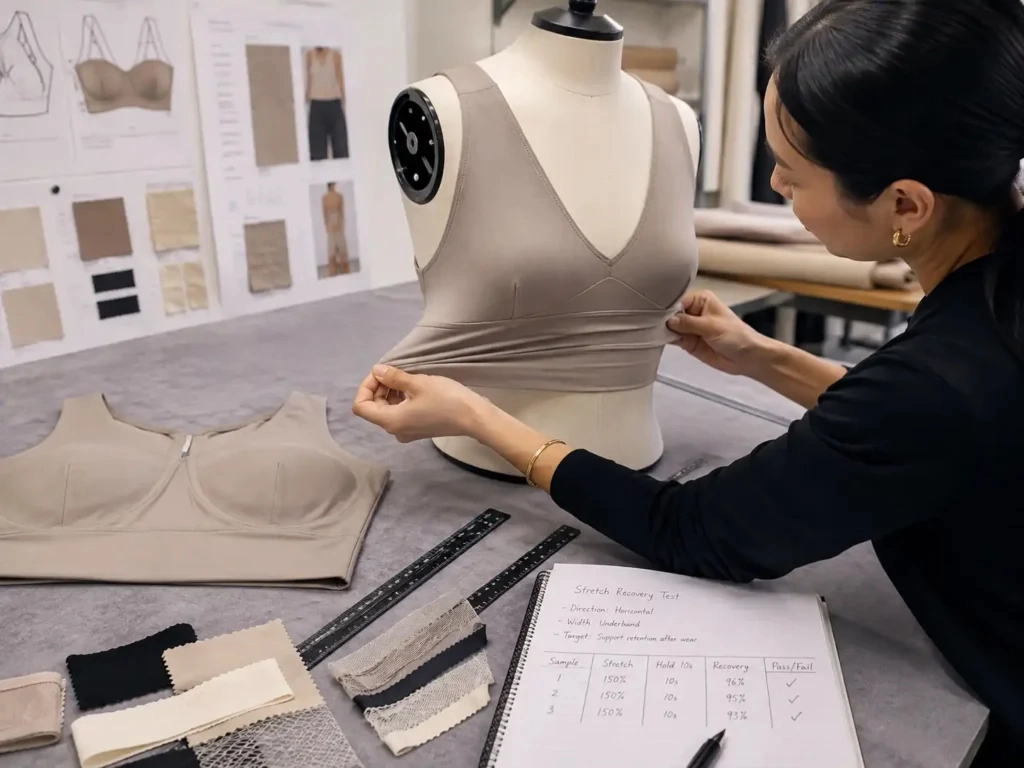
No. GSM measures fabric weight, not overall quality.
A heavier knit may provide more body, but it can also feel stiff or create unnecessary bulk. A lighter material with suitable construction may perform better for a dress that requires soft movement.
When comparing fabrics from different suppliers, consider the following:
- Fiber composition and yarn quality
- Knit construction and surface condition
- Stretch and recovery
- Opacity and color consistency
- Shrinkage after washing
- Usable fabric width
- Sewing performance
Your retail positioning also matters. A premium fitted dress and an affordable summer dress may require different material specifications.
Rather than choosing the fabric with the highest GSM, compare the available options against your design requirements, target price and expected wearing experience.
Why Can Two Fabrics With the Same GSM Look Different?
GSM tells you the total weight of the fabric, but it does not explain how the fibers and yarns are arranged.
A single jersey, rib knit and interlock can all have the same weight while differing in thickness, texture and elasticity.
Finishing can also change the way a fabric feels. Brushing, compacting, dyeing and other treatments may affect its surface and dimensional behavior.
Color is another consideration when you are developing several versions of the same dress. A white fabric may show more transparency under stretch than a black version, even when both have the same construction and target GSM.
For a multi-color order, check the actual dyed fabrics before approving the full range. Do not assume that every color will have exactly the same hand feel or appearance.
Should You Add Lining Instead of Choosing a Heavier Knit?
Lining is one option when the outer fabric does not provide enough coverage, but it needs to be considered as part of the garment construction.
For a fitted knit dress, a non-stretch lining can restrict movement and create pulling around the waist or hip seams. It may also affect how the dress sits on the body.
For lightweight summer styles, adding a heavy lining can make the finished garment warmer than intended.
If you are considering lining, check the weight, stretch and attachment method of both materials. A sample with the actual lining combination will give you a more reliable result than approving the shell and lining separately.
What Should You Check Before Approving a Knit Fabric?
Before confirming bulk fabric, review the material against your approved requirements. A supplier’s GSM specification is useful, but it does not confirm how the fabric will perform after cutting and sewing.
For a new knit dress, the main checkpoints include:
| Checkpoint | What to Confirm |
|---|---|
| GSM | Actual fabric weight and agreed tolerance |
| Composition | Fiber content and spandex percentage |
| Stretch and recovery | Extension and return in the required directions |
| Shrinkage | Dimensional change after washing |
| Opacity | Coverage under normal wear and stretch |
| Fabric width | Usable width for pattern cutting |
| Color | Match with the approved color reference |
| Hand feel | Suitable texture and softness |
| Sewing performance | Puckering, skipped stitches and seam distortion |
| Finished sample | Fit, appearance and measurements after sewing |
One detail that deserves attention is fabric behavior during cutting and sewing. Some knits can stretch or distort when handled, which may affect panel dimensions and seam alignment.
If you are comparing two materials, ask for samples made with the same pattern and construction. This makes it easier to identify whether a difference comes from the fabric rather than the pattern.

What Should You Include in a Knit Dress Fabric Specification?
When you send a development request to a clothing manufacturer, writing only “Knit Fabric” in your tech pack leaves too much room for interpretation.
A more useful specification gives the factory enough information to source and evaluate suitable materials.
| Fabric Requirement | Example |
|---|---|
| Composition | 95% Polyester / 5% Spandex |
| Target GSM | 220–260 GSM |
| Knit Construction | Jersey / Rib / Interlock |
| Stretch | 4-way stretch |
| Recovery | Agreed recovery requirement |
| Fabric Width | 150 cm usable width |
| Color | Pantone reference or approved lab dip |
| Shrinkage | Agreed test tolerance |
| Lining | Not required / Stretch lining |
| Reference | Physical swatch or approved garment |
If you are still developing the design, you may not have every technical detail ready. A reference garment, sketch, product photo or fabric swatch can help the factory understand the expected appearance and fit.
The important thing is to identify which specifications are fixed and which can be adjusted during sampling. This avoids unnecessary fabric changes later.
What If You Need to Replace an Approved Knit Fabric?
Fabric replacement can happen when a supplier discontinues a material, cannot meet the required quantity or has a longer replenishment lead time than expected.
The mistake is assuming that a replacement with the same GSM will produce the same garment.
If your approved fabric is 240 GSM, another 240 GSM knit may still differ in composition, width, recovery, shrinkage and hand feel.
Before accepting a substitute, compare it against the original approved swatch. If the difference is noticeable, request a new sample using the replacement material.
You should also check whether the existing pattern still works. A change in fabric stretch or thickness may affect garment measurements, seam construction and overall fit.
For larger orders, settle these questions before bulk cutting. Replacing material after production has started can create additional sampling costs and delays, particularly when several colors or sizes are involved.
How Can You Avoid Fabric Problems Before Bulk Production?
A common problem in clothing development is approving a sample without confirming whether the same material can be supplied consistently for the full order.
Before placing a bulk fabric order, check these points with your supplier:
- Available quantity: Is enough material available for the complete order, including cutting allowance?
- Color availability: Can all required colors be supplied within the agreed shade standard?
- Replenishment time: How long will additional fabric take if the original quantity is insufficient?
- Batch consistency: Will the bulk material match the approved sample in weight, hand feel and appearance?
- Testing requirements: Have shrinkage, colorfastness and other required performance checks been completed?
For multi-color collections, keep approved fabric references for each color. This gives your purchasing team and factory a clear standard to follow when bulk materials arrive.
A little more attention at this stage can prevent unnecessary resampling and production changes.
FAQ
1. Should you buy knit fabric by kilogram or by meter?
This depends on how the supplier sells the material. Knit fabrics may be quoted by weight or length, so you should confirm the GSM and usable width before comparing prices. If you receive a kilogram-based quotation, ask the supplier for the estimated meterage per kilogram.
2. How much extra fabric should you order for a knit dress collection?
There is no single allowance for every design. Your order quantity should account for fabric width, pattern layout, garment size range, cutting efficiency and possible defects. Ask the factory to estimate consumption from the approved pattern before confirming the fabric purchase.
3. Can you mix different fabric batches in one production order?
It is possible, but you should be careful when the fabrics come from different dye lots. Even small shade differences can become visible when garments are displayed together. Keep batch information and arrange shade checks before cutting, particularly for large orders.
4. What should you do if the fabric arrives with visible defects?
Record the affected rolls and take clear photographs before cutting. Ask the supplier to review the defects and confirm the usable quantity. If the problem affects the approved material or cutting efficiency, resolve the replacement or compensation arrangement before production continues.
5. Is it better to develop all sizes using the same fabric specification?
Generally, one approved fabric specification can cover the full size range, but the fitting should be checked across representative sizes. A fabric may perform well in a sample size but create different tension or coverage issues in larger sizes. Confirm the grading and fit before bulk approval.
Conclusion
Choosing the right GSM for a knit dress requires more than comparing fabric weights. You need to consider the pattern, stretch, coverage, garment length and production requirements together. Always check the material in a finished sample before committing to bulk fabric. At Xiuyu Apparel, we consider fabric performance during garment development, not just material sourcing. As an experienced dress manufacturer, we understand the importance of confirming these details before production begins.

