

When you develop a fitted dress, the measurements on the tech pack are not the whole story. The fabric can change how those measurements behave once the dress is on the body. A waist that looks correct during fitting may relax later, while a bodycon dress can gradually lose some of its shape after repeated stretching.
In our factory, fabric recovery is one of the points we check before approving a stretch fabric, especially for fitted and body-contouring dresses. As a dress manufacturer, we usually check this during fabric development rather than waiting until bulk production.
What Is Fabric Recovery?
Fabric recovery is how well a fabric returns toward its original shape after being stretched.
For fabric approval, we look at recovery separately from stretch. A fabric can have plenty of stretch and still fail to return well after being pulled.
A fabric can stretch a long way and still have poor recovery. It may fit easily over the body but remain slightly extended after the tension is released. On a fitted dress, that small difference can become visible quite quickly.
When we check stretch fabrics during development, we do not look only at how far the fabric can stretch. We also pay attention to how it behaves after being released and whether the same behavior remains after repeated stretching.
That is why we do not approve stretch fabric from the stretch number alone.
Why Does Fabric Recovery Matter for Dress Fit?
Poor recovery does not always show up during the first fitting. A sample can look fine in the fitting room and change later after the garment has been worn, stretched, or left under tension.
You may notice:
- The waist becomes less fitted
- The hip area becomes looser
- The neckline moves out of position
- The dress loses part of its original shape
- The garment becomes longer or shorter after relaxation
- Different sizes do not feel consistent when worn
The effect is easier to see when the fabric is helping to hold the shape of the dress. A small recovery issue may be barely noticeable on a loose A-line style but much more obvious on a bodycon dress.
How Does Fabric Recovery Affect Dress Sizing?
Fabric recovery can influence how a garment feels without necessarily changing the original size specification.
Your tech pack may specify a 70 cm waist, and the finished sample may measure 70 cm on the table. But if the fabric stretches significantly during wear and does not recover well, the waist may no longer feel like the same 70 cm garment.
So a measurement can be correct on the table and still feel different on the body.
For a stretch dress, we look at more than the finished garment measurements:
- Finished garment measurements
- Fabric stretch
- Fabric recovery
- Negative ease
- Stretch direction
- Fabric weight
- Garment construction
- Expected wearing conditions
A pattern that works well in one fabric may not give the same fit in another.
Which Areas of a Dress Are Most Affected?
Bust
The bust area puts regular tension on stretch fabric. If recovery is weak, the neckline may move slightly or the fabric may not sit as securely after wear. This matters more on close-neck styles where the fabric is providing part of the support.
Waist
The waist is often one of the first areas where recovery problems become noticeable. On a fitted dress, even a small amount of permanent growth can make the waist look less defined after wear.
If the style is designed to follow the waist closely, the fabric needs to return after stretching rather than stay extended.
Hip
The hip area is under frequent movement, so recovery problems can become noticeable on bodycon and other close-fitting styles. We pay attention to how the fabric sits after movement rather than judging it only from a folded swatch.
Dress Length
Recovery can also affect length, particularly with knit fabrics.
When the fabric is stretched vertically or allowed to relax after sewing, the finished length may change. This can be noticeable on mini, midi, and fitted maxi dresses where the proportions are important.
Fabric Stretch vs Fabric Recovery
We often see buyers focus on stretch percentage when comparing fabrics. That number is useful, but it does not tell you how well the fabric will hold its shape after being stretched.
Stretch tells you how far the fabric can extend. Recovery tells you how well it comes back afterward.
Stretch asks: How far can the fabric extend?
Recovery asks: How well does the fabric return afterward?
For example, two jersey fabrics may both stretch 40%, but they may not behave the same way in a finished dress.
One may return close to its original dimensions. The other may show noticeable growth after repeated stretching.
A higher stretch percentage is not automatically better for a fitted dress. During custom clothing manufacturing, the fabric needs to be evaluated together with the pattern, intended fit and construction rather than selected by stretch percentage alone.
You need enough stretch for the intended fit, but you also need the fabric to recover well enough to maintain the shape.

Which Dress Styles Need Better Fabric Recovery?
The required recovery depends on the design.
Bodycon Dresses
Bodycon dresses are among the most sensitive to fabric recovery because the fabric is constantly working against the body.
If recovery is too weak, the dress may lose definition around the waist and hips after repeated wear.
If recovery is extremely strong, however, the garment can feel restrictive.
We would not choose a bodycon fabric simply because its recovery is strong. If the fabric is too firm, the dress may hold its shape but feel uncomfortable during normal movement.
Rib Knit Dresses
Rib knit fabrics can have considerable stretch because of their construction.
When you develop a rib knit dress, pay attention to the direction of stretch and whether the rib structure returns consistently after being extended.
A rib fabric can look stable on the roll but behave differently once it is stretched across the body.
Jersey Dresses
Jersey is widely used for fitted and casual dresses, but jersey is not one uniform fabric category.
Two jersey fabrics can have the same fiber composition and GSM and still behave differently. Construction, finishing and the amount of stretch built into the fabric can all change how the finished dress fits.
That is why fiber composition and GSM alone are not enough for us to approve a jersey. The actual stretch and recovery still need to be checked.
Ponte Dresses
Ponte and Roma fabrics are generally more stable and structured than lightweight jersey.
They can work well for fitted dresses where you want a cleaner silhouette, but their higher weight and structure also affect drape, seam behavior, and comfort.
The pattern should be developed against the actual fabric rather than an assumed specification.
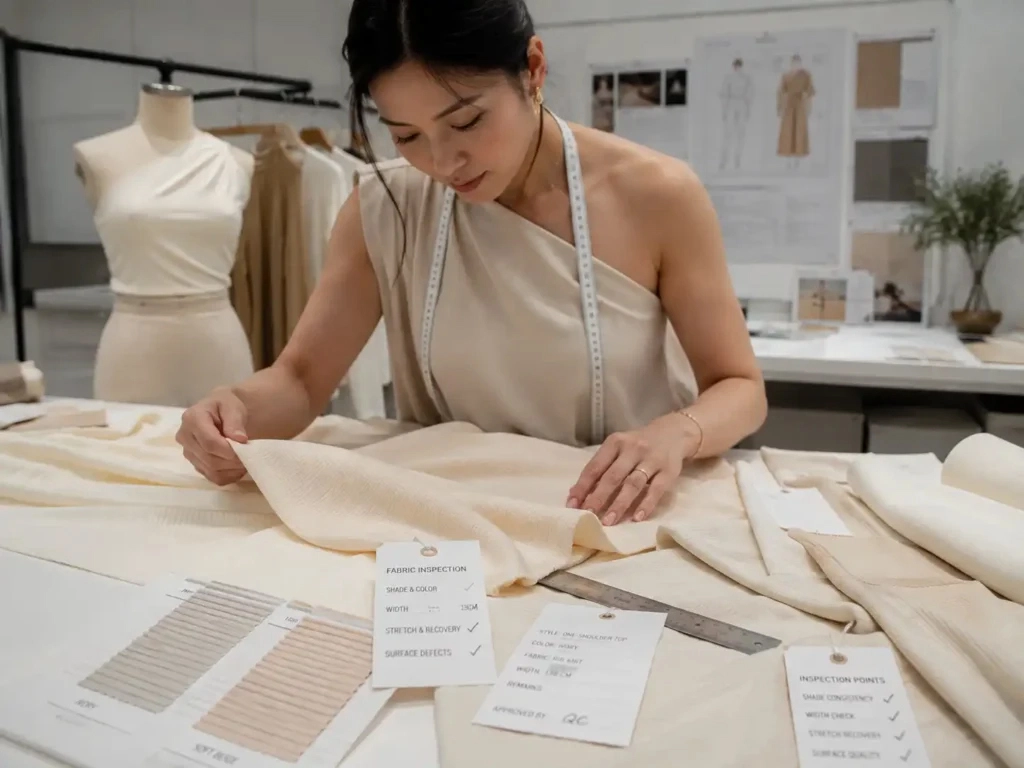
How Do You Check Fabric Recovery Before Dress Production?
Recovery problems are easier to deal with when they are found before bulk cutting, rather than after production has started. For a clothing manufacturer, this is also where fabric approval, pattern development and sample fitting need to work together.
1. Start With the Actual Production Fabric
Use the fabric intended for production as early as possible.
Check the composition, GSM, stretch direction, stretch level, recovery, hand feel and shrinkage requirements. A swatch may look right, but the finished dress can tell a different story.
2. Look at Stretch and Recovery Together
Maximum stretch is only one part of the check.
Stretch the fabric and observe how it returns after release. Repeat the process rather than checking it only once.
For a fitted dress, repeated behavior is often more useful than a single stretch measurement.
3. Check the Fabric in the Sample
This is where many problems become easier to see.
Once the fabric has been cut and sewn into the dress, check how it behaves around the bust, waist, hip, neckline, and other areas under tension.
The finished sample usually tells us more than the fabric by itself. Once the fabric is cut, sewn, lined and put under body tension, its behavior can change.
4. Test After Washing if Needed
If the dress will be washed before sale or during normal customer use, recovery should be considered together with shrinkage and dimensional stability.
A fabric can behave acceptably before washing and produce a different result afterward.
5. Compare the Bulk Fabric With the Approved Sample
Before bulk cutting, make sure the production fabric is consistent with the fabric used for the approved sample.
If the stretch, recovery, weight, or finishing has changed, you should not assume that the original pattern will give exactly the same fit.
Should You Change the Pattern If Fabric Recovery Is Different?
Sometimes a pattern adjustment is necessary, but changing the pattern should not be the first solution to a poor fabric choice.
If the fabric does not have enough recovery for the design, making the garment smaller may create a different problem. The dress may fit initially but become uncomfortable when worn.
First decide whether the fabric is suitable for the intended silhouette. If it is not, making the pattern smaller is unlikely to solve the underlying problem.
Once that is confirmed, the pattern can be adjusted according to the actual fabric behavior.
For stretch dresses, the development process may involve reviewing:
- Negative ease
- Bust, waist, and hip measurements
- Stretch direction
- Seam placement
- Fabric weight
- Garment length
- Lining
- Support construction
If the fabric changes, the pattern may need to change with it. We would not treat the two as separate decisions on a fitted style. This is particularly important when working with an OEM clothing manufacturer, because the approved fabric and pattern need to remain consistent through sampling and bulk production.
When Should Buyers Approve Fabric Recovery?
If you are developing a new dress collection, fabric recovery should be checked before the final production specifications are locked.
In most developments, the sequence is fairly simple:
Fabric selection → Sample → Fit test → Pattern adjustment → PP sample → Bulk production
The fabric stage tells us whether the material is suitable. The sample shows how it behaves after cutting and sewing. Fit approval confirms the silhouette, while the pre-production check makes sure the bulk fabric is still consistent with the approved version.
The earlier a recovery problem is found, the easier it is to correct. Once bulk cutting has started, changing the fabric or pattern becomes much more difficult.
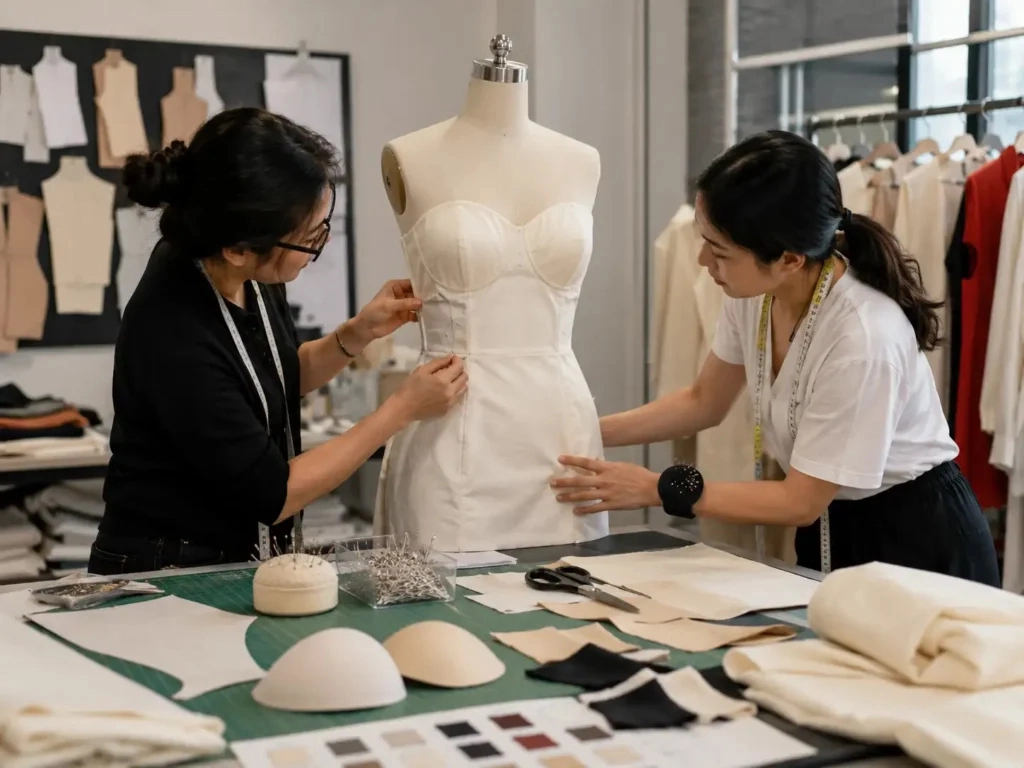
What Should You Check When Approving a Stretch Dress Fabric?
For a stretch dress, our fabric approval checklist usually covers:
| What to Check | Why It Matters |
|---|---|
| Composition | Affects fabric behavior and care |
| GSM | Influences coverage, structure and drape |
| Stretch | Determines how far the garment can extend |
| Recovery | Helps maintain the intended fit |
| Shrinkage | Can change finished measurements |
| Stretch direction | Affects pattern placement and garment fit |
| Drape | Influences the final silhouette |
| Washing behavior | Helps predict post-care performance |
| Actual sample fit | Confirms fabric and pattern compatibility |
| Batch consistency | Helps maintain the approved fit in bulk |
For stretch dresses, you should avoid approving a fabric from appearance alone.
A fabric can look almost identical to your reference and still produce a different fit once it is sewn into the garment.
What Problems Can Poor Fabric Recovery Cause in Bulk Production?
A recovery issue can become more expensive once bulk production has started.
If you discover during sampling that the waist relaxes too much, the fabric can still be changed or the pattern can be adjusted.
After bulk cutting, the options become more limited.
You may need to deal with:
- Garments that do not match the approved fit
- Additional alteration work
- Different measurements between production batches
- Customer complaints after launch
- Increased return rates
- Delays caused by rework
This is why we try to catch recovery problems during development. Before bulk cutting, there is still room to change the fabric, adjust the pattern or make another sample. After cutting, those options become much more expensive.
FAQ
Can fabric recovery affect different sizes differently?
Yes. The same fabric can behave differently across sizes because larger sizes usually require more fabric stretch around the bust, waist, or hips. If recovery is weak, a larger size may relax more after fitting or wear. For graded styles, we prefer to check more than one size before final approval. The same fabric can feel different as the amount of stretch changes across the size range.
Does fabric recovery change after repeated wear?
Yes, it can. Some fabrics recover well when new but gradually lose elasticity after repeated stretching, washing, or heat exposure. For fitted dresses, we pay particular attention to this after washing and repeated stretching, because even a small amount of permanent growth can affect the fit.
Can lining interfere with the fit of a stretch dress?
Yes. We’ve seen the outer fabric fit correctly, but the lining pull the dress back because it has less stretch. For stretch dresses, the lining needs to match the shell’s stretch and recovery as closely as possible. We usually check both layers together during fitting, not separately.
Why can two batches of the same fabric fit differently?
Two batches can vary slightly in stretch, recovery, GSM, finishing, or shrinkage, even when the fabric is ordered under the same specification. That’s why we compare the new batch with the approved fabric before cutting, especially on repeat orders where the original fit has already been approved.
How should buyers handle a fabric substitution during production?
If a fabric needs to be substituted, don’t approve it from a swatch alone. Compare the new fabric with the approved version for GSM, stretch, recovery, shrinkage, color and hand feel. For fitted styles, we prefer to make a quick test sample before bulk cutting.
Conclusion
For a fitted or knit dress, fabric recovery is worth checking before the fabric is approved. A fabric may look fine during sampling but behave differently after the dress has been stretched, washed or worn repeatedly.
In our experience, recovery problems are much easier to deal with before bulk cutting. At that stage, the fabric can still be changed, the pattern can be adjusted, or another sample can be made. Once production fabric has been cut, the same problem becomes much harder and more expensive to fix.
Explore More Dress Manufacturing Services
If you are developing a new dress and need support with fabric selection, internal construction, sampling, and bulk production, working with an experienced clothing manufacturer can help reduce unnecessary development changes.
At Xiuyu Apparel, we work with fashion brands, startups, designers, and private label companies from sample development through bulk production.
Get a Clothing Manufacturing Quote Based on Your Design
If you already have a garment design, send us the product photo, tech pack, or reference sample together with your target quantity.
As a dress manufacturer, we can review the fabric, lining, construction, trims, workmanship, and finishing requirements and prepare a quotation based on the actual garment rather than a general price range.

