

Crepe vs Georgette for Dresses: Which Fabric Should You Choose?
When you are developing a dress for your brand, choosing between crepe and georgette is not just about how the fabric looks on a swatch. You need to consider how it drapes after sewing, whether it needs lining, how stable it is during cutting, and whether the finished garment matches your target cost. In production, we look at the fabric together with the pattern before bulk production.
Crepe vs Georgette for Dresses: At a Glance
For most dress development, we look at it as a question of control versus movement. Crepe usually gives us more control, while georgette tends to move more freely.
| Crepe | Georgette | |
|---|---|---|
| Overall feel | Smooth to slightly textured, depending on construction | Lightweight with a fine grainy texture |
| Drape | Controlled to fluid | Soft and flowing |
| Opacity | Often better coverage | Lightweight versions can be sheer |
| Movement | Moderate | More noticeable movement |
| Stretch | Depends on fiber and construction | Usually limited unless blended |
| Lining | Depends on weight and color | More often considered |
| Suitable styles | Fitted, midi, cocktail, evening | Flowing, layered, ruffled, occasion |
| Cutting | Usually easier when stable | Lightweight versions need more handling |
| Main production concern | Fabric-specific pressing and seam control | Shifting, feeding and lightweight handling |
The fabric name alone does not tell you enough. Composition, weight, width, weave and finishing can all change how the dress behaves in production.
What Is Crepe Fabric for Dresses?
Crepe is a broad fabric category rather than one fixed material. You can find silk crepe, polyester crepe, stretch crepe, crepe de Chine and heavier constructions, and they do not behave the same way in production. If you are developing silk-based styles, our silk dress manufacturer page covers some of the fabric and production considerations involved.
In dress production, we normally look at crepe when the design needs a cleaner surface or a more controlled fall.
It is commonly used for:
- Fitted dresses
- Midi dresses
- Cocktail dresses
- Evening dresses
- Straight silhouettes
- Dresses with clean waist shaping
How Does Crepe Drape on a Dress?
Weight makes a noticeable difference here. A lighter crepe will usually fall more softly, while a heavier one gives the bodice or skirt more control. That is why two dresses both described as “crepe” can look quite different once they are made up.
If your design has a fitted bodice and a clean skirt, a stable crepe can make the pattern easier to control.
For a looser silhouette, you may prefer a softer crepe with more movement.
We prefer to check the fabric on the actual pattern before approving it.

What Is Georgette Fabric for Dresses?
Georgette is generally recognized by its lightweight construction and slightly grainy surface. It is often chosen for dresses where softness and movement are more important than structure.
You will commonly find silk and synthetic georgettes, with polyester versions being widely used for commercial dress production.
Georgette can work particularly well for:
- Flowing maxi dresses
- Ruffle dresses
- Gathered skirts
- Layered dresses
- Soft sleeves
- Occasion dresses
How Does Georgette Drape on a Dress?
Georgette usually has more movement than a medium or heavy crepe.
For a skirt that needs to move as the wearer walks, this lighter construction can work well.
The production side is different, especially with very lightweight georgette. Very lightweight georgette can move on the cutting table and requires more attention during sewing. A small swatch may look easy to handle. Several meters on a cutting table are a different story.
We want to find that out during sampling, before the fabric reaches bulk cutting.
Crepe vs Georgette: What Is the Difference?
1. Drape and Movement
This is probably the most noticeable difference once the fabrics are made into a dress.
Crepe generally gives you more control over the silhouette. It can follow the body without creating as much floating movement.
Georgette tends to move more freely, especially in lightweight skirts, sleeves and gathered sections.
For a fitted midi dress, crepe may be the first fabric worth testing.
For a loose maxi dress with gathers or multiple layers, georgette may give you the movement you are looking for.
Fabric weight can change that result, so we would not approve the fabric from the name alone.
2. Weight and Opacity
When comparing fabrics, weight should be one of the first specifications you confirm with the supplier.
A lightweight crepe may be more transparent than expected, while a heavier georgette can provide more coverage.
Color also matters.
White, ivory and pale colors usually need more attention than black or darker shades. A fabric can look sufficiently opaque in one color and become noticeably sheer in another.
For a dress collection, check:
- Fabric weight or GSM
- Usable width
- Opacity
- Color
- Hand feel
- Shrinkage
- Finished drape
The usable width is particularly important because it affects your cutting layout and fabric consumption.
3. Stretch and Recovery
Do not choose a fabric based only on the word “crepe” or “georgette” if your dress is fitted.
Some crepes contain elastane or have stretch characteristics that make them suitable for closer-fitting designs. Most traditional georgettes have limited stretch, although blended constructions can be different.
We check both stretch and recovery, especially on fitted styles.
For a fitted dress, check what happens at:
- Bust
- Waist
- Hip
- Armhole
- Zipper area
A fabric that stretches well but does not recover properly can make the garment look different after wear.
4. Does Crepe or Georgette Need Lining?
The decision depends on fabric weight, color, opacity, garment construction and the level of coverage you want.
Georgette is more likely to need lining when you are using a lightweight or light-colored version.
Crepe may also need lining when the fabric is lightweight or when the design requires additional body.
Lining can also change how the finished dress feels and moves.
A heavy lining can reduce the movement of a lightweight outer fabric. A lining with insufficient stretch can also restrict a fitted dress.
We prefer to test the lining together with the outer fabric during sampling, rather than add it after the fit has already been approved.
5. Cutting and Sewing
You see the difference more clearly once the fabric reaches cutting and sewing.
A stable crepe is usually easier to keep in position during cutting, although slippery or lightweight versions still require care.
Lightweight georgette can shift more easily. Gathering, narrow seams and lightweight hems also need closer control.
During production, we pay close attention to:
- Fabric movement during spreading
- Cutting accuracy
- Seam puckering
- Thread tension
- Needle selection
- Machine feeding
- Gathering
- Hem construction
- Pressing
The sample may look fine, but the fabric still needs to behave consistently in bulk production.
Which Is Better for Different Dress Styles?
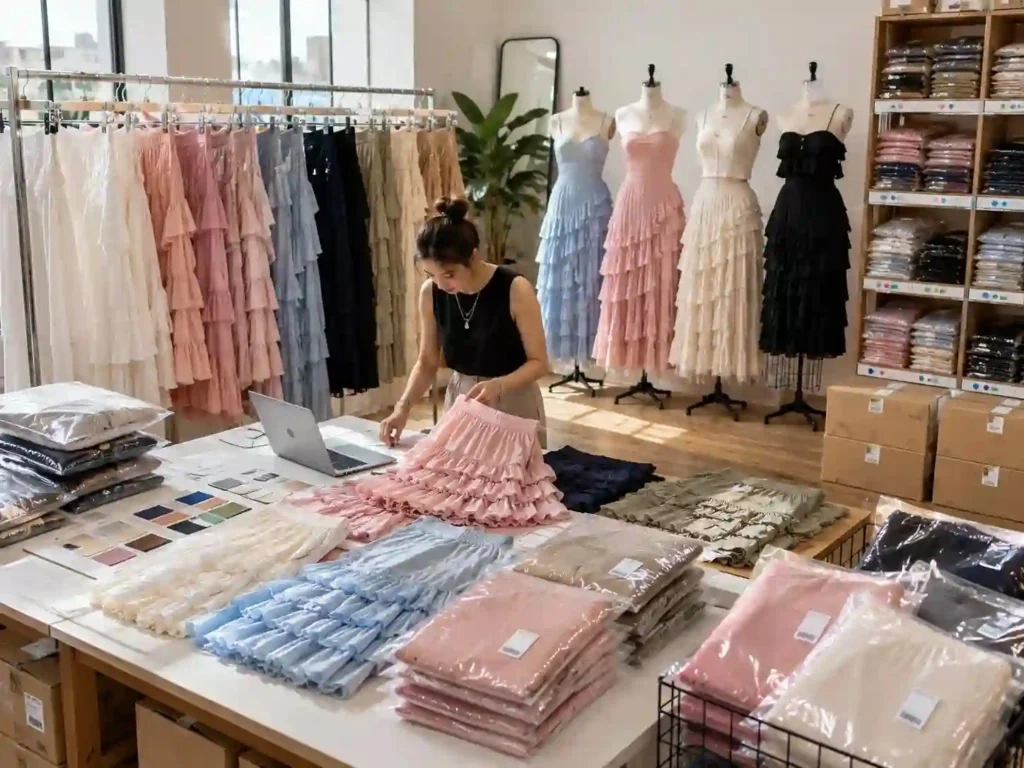
Start with the silhouette, then choose the fabric. The same fabric can give very different results on a fitted midi dress and a loose maxi dress.
| Dress Style | First Fabric to Test | Why |
|---|---|---|
| Maxi Dress | Georgette | Good starting point for soft, flowing movement |
| Midi Dress | Crepe | Often easier to control for clean silhouettes |
| Mini Dress | Crepe | Can provide a neater shape |
| Slip Dress | Both | Depends strongly on drape and fabric weight |
| Evening Dress | Both | Depends on silhouette and finish |
| Cocktail Dress | Crepe | Often works well with fitted construction |
| Ruffle Dress | Georgette | Lightweight movement suits gathers and ruffles |
| Layered Dress | Georgette | Useful for soft, flowing layers |
| Fitted Dress | Crepe | Suitable when controlled stretch and recovery are available |
These are only starting points. Once we put the fabric on the actual pattern, the result can be different.
A bias-cut slip dress, for example, can completely change the comparison because the pattern direction affects how the fabric falls.
Is Crepe or Georgette Better for Maxi Dresses?
For a flowing maxi dress, georgette is usually the first fabric we would test.
It can work well for flowing skirts, gathered panels and lightweight sleeves.
Crepe can make more sense when the maxi dress needs a cleaner or slightly heavier fall.
Before approval, put the fabric through the actual skirt pattern. The difference in movement is much easier to judge on a finished panel than on a small swatch.
Is Crepe or Georgette Better for Midi Dresses?
A clean midi silhouette often starts with crepe in our fabric trials.
It can give you better control around the waist, hip and skirt shape without making the garment feel overly structured.
Georgette is still useful when the midi dress has gathers, soft sleeves or a looser shape.
If your design is close-fitting, check stretch and recovery before making the fabric decision.
Is Crepe or Georgette Better for Evening Dresses?
Evening dresses are less straightforward because both fabrics can work, depending on the construction.
Crepe is often suitable when you want a smooth and controlled silhouette. Georgette is useful when the design depends on movement, layering or a lighter appearance. If your evening collection also includes satin styles, you can compare the construction requirements with our satin dress manufacturer service.
We also recommend checking the fabric under the lighting where the dress will normally be sold or worn. Surface texture, transparency and color can look different under daylight, showroom lighting and evening lighting.
What Should You Consider Before Choosing Crepe or Georgette?
Target Garment Cost
The fabric price is only one part of the calculation.
The final garment cost also includes:
- Fabric consumption
- Usable width
- Lining
- Cutting loss
- Sewing time
- Finishing
- Shrinkage
- Order quantity
For example, a fabric with a lower price per meter may not produce a cheaper garment if it requires additional lining or has a less efficient cutting layout.
Pattern and Construction
We normally select the fabric together with the pattern, especially for fitted or more complicated styles.
A design with gathers, pleats, bias-cut panels or a fitted bodice can behave very differently from a simple A-line dress.
If you change from crepe to georgette after the pattern is finalized, you may need to adjust measurements, lining or construction.
That is why fabric approval should happen early enough to avoid locking the pattern around the wrong material.
Fabric Width and Consumption
Fabric width is easy to overlook when comparing supplier quotations.
Two fabrics with similar prices can produce different garment costs because their usable widths are different.
Before we release a fabric for bulk, we normally check:
- Usable fabric width
- Marker efficiency
- Average consumption per size
- Size ratio
- Cutting loss
- Direction requirements
This becomes especially important when your collection contains several sizes or larger skirt panels.
Color Consistency
If you are producing several colors, do not assume that one approved fabric sample represents every future dye lot. For repeat orders, we prefer to keep an approved fabric reference rather than rely on the original supplier description.
For each new color, the actual shade should be checked before bulk production.
Light colors deserve additional attention because opacity and surface appearance can change noticeably.
If your brand depends on consistent colors across seasonal collections, keeping an approved fabric standard is useful when repeat orders are placed.
What Should You Check Before Bulk Production?
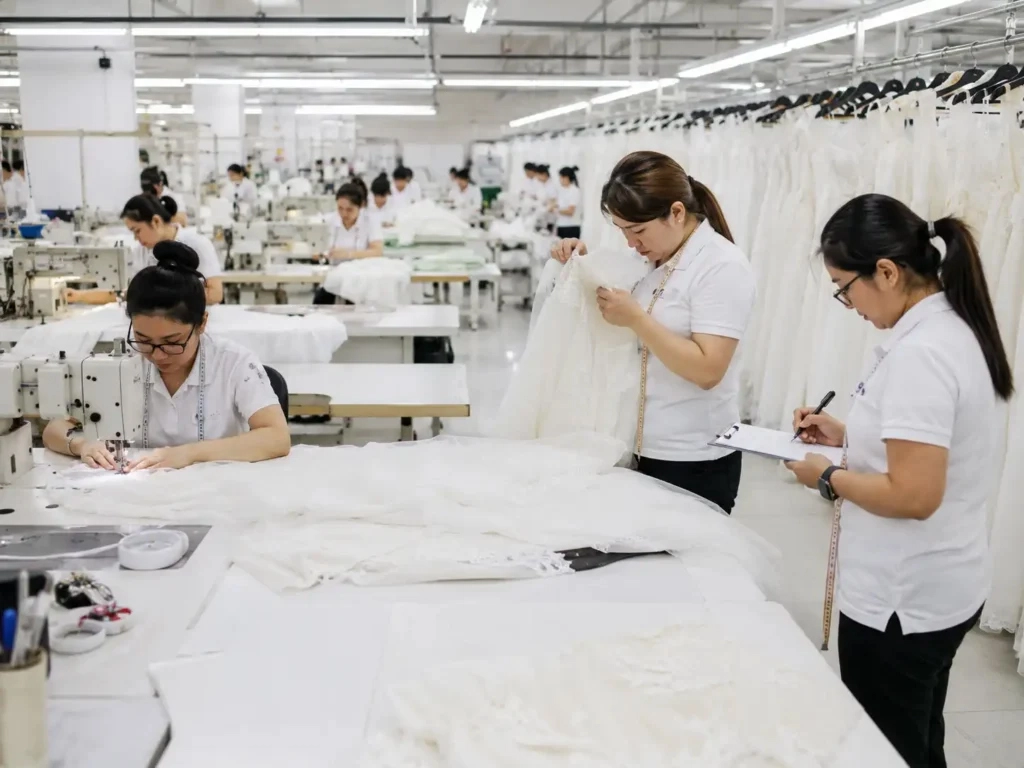
Before the fabric is released for bulk cutting, compare the actual material with the approved sample.
A practical check includes:
- Composition – Does the actual fabric match the agreed specification?
- Weight – Is the GSM or fabric weight within the expected range?
- Width – Is the usable width sufficient for the cutting layout?
- Drape – Does it create the expected silhouette?
- Opacity – Does each color provide the required coverage?
- Stretch and recovery – Is the fit stable?
- Shrinkage – Are finished measurements likely to remain consistent?
- Sewing behavior – Are seams clean and stable?
- Finishing – Can the fabric be pressed without unwanted marks?
- Consumption – Does the actual marker support the target garment cost?
We still need to check the actual material against the dress pattern and target production requirements.
A Practical Factory Check Before Bulk Cutting
Before bulk cutting, we normally put the approved fabric through the same basic steps it will face in production: spreading, cutting, sewing and pressing. Small swatches do not always show how the fabric will behave on the cutting table or sewing line, especially with lightweight georgette or fabrics that change after pressing.
What Should You Send to the Factory When Developing a Dress?
If you are developing a dress for a fashion brand, boutique, retailer or private label collection, working with a dress manufacturer can make the fabric and construction decisions easier to evaluate. The fabric name alone is usually not enough for a factory to assess the project.
Try to provide:
- Tech pack
- Reference photos or sample
- Fabric composition
- Preferred fabric weight
- Color reference
- Finished measurements
- Size range
- Stretch requirement
- Lining requirement
- Expected quantity
- Washing requirement
- Packaging requirement
If you already have a physical fabric swatch, send it whenever possible.
With a physical swatch, our team can check the hand feel, weight, stretch, drape and sewing behavior instead of relying only on a fabric description.
For a new style, it is also better to test the fabric before the pattern is completely locked. A change in weight or stretch can affect the fit and construction later.
Crepe vs Georgette: Which Fabric Should You Choose?
If your dress needs a cleaner, more controlled silhouette, crepe is usually the first option worth testing.
If your design depends more on lightness, movement, gathers or flowing layers, georgette is usually worth testing first.
For B2B production, though, the final choice should come from the actual fabric and finished sample. We look at the material together with the pattern because weight, width, stretch, lining, construction and consumption can all change the result. The fabric name is only the starting point.
FAQ
How early should a buyer confirm the fabric during product development?
We normally confirm the main fabric before the final sample. Once the fabric changes, the drape, fit and lining can change too. In some cases, the sample has to be adjusted or made again before bulk production, so it is better to settle the fabric early.
What information helps a factory estimate fabric consumption accurately?
A clear tech pack helps us estimate fabric consumption more accurately. We normally check the garment measurements, fabric width, size range, length, lining, and cutting direction. Details such as bias cutting, matching prints, or one-way fabrics can also increase the actual yardage needed.
How should a buyer handle a fabric substitution during production?
If the original fabric is unavailable, we usually send the buyer a fabric swatch or new sample for approval before cutting. We compare weight, composition, color, hand feel, and drape with the approved fabric. Production should only continue after the replacement is confirmed.
Can fabric problems be corrected after bulk cutting has started?
Once bulk cutting has started, the options become limited. A minor issue may be manageable, but wrong color, incorrect width or serious fabric defects can affect the cut pieces already on the table. We normally stop the affected work and check the material before continuing.
What should a brand keep as a fabric approval standard for repeat orders?
Keep the approved fabric swatch, composition, weight, color reference, fabric width, and any agreed finish from the original order. We also recommend keeping a signed sample or production reference. When a repeat order comes in, these records give both sides something concrete to check against.
Conclusion
For us, the decision usually comes down to the finished garment rather than the fabric name. A crepe may be the better choice for a clean fitted dress, while georgette can make more sense for a lightweight, flowing style. Before bulk production, we would rather test the fabric on the actual pattern than make the decision from a swatch alone.
Explore More Dress Manufacturing Services
If you are developing a new dress and need support with fabric selection, internal construction, sampling, and bulk production, working with an experienced clothing manufacturer can help reduce unnecessary development changes.
At Xiuyu Apparel, we work with fashion brands, startups, designers, and private label companies from sample development through bulk production.
Get a Clothing Manufacturing Quote Based on Your Design
If you already have a garment design, send us the product photo, tech pack, or reference sample together with your target quantity.
As a dress manufacturer, we can review the fabric, lining, construction, trims, workmanship, and finishing requirements and prepare a quotation based on the actual garment rather than a general price range.

