

When you are planning a custom dress order, the quoted production days are only one part of the schedule. Fabric may still be in preparation, a sample may need another fitting round, or the PP sample may not be approved yet. From the factory side, these are the points we check before an order goes into bulk production. The date we can give you depends on what is already confirmed and what is still open.
How Long Does Custom Dress Manufacturing Take?
For a straightforward custom dress order, bulk production may take around 25–30 days after the PP sample has been approved and the main fabric and specifications are confirmed.
That 25–30 days is for the bulk production stage. It starts much later than the first design discussion and does not include every step before the cartons reach your warehouse.
Your actual order timeline may also include:
Design review → Pattern development → Sample → Fit revisions → PP sample → Fabric preparation → Bulk cutting → Sewing → Finishing → QC → Packing → Shipping
Not every stage has to wait for the previous one to finish.
For example, labels and packaging can be discussed while a sample is being revised. Bulk cutting is different. The production fabric, final pattern, and approved measurements need to be settled before cutting can move forward.
So when you receive a lead-time estimate from a clothing manufacturer, ask one simple question:
“When does the production lead time start?”
That answer tells you what the quoted production days actually cover.
Fabric Can Change the Schedule Before Sewing Even Starts
Before bulk cutting, we need to know whether the production fabric is ready in the required quantity and specification.
A fabric swatch being available does not mean the required quantity is sitting in stock.
If you need a standard fabric that the supplier already carries, material preparation may be relatively straightforward. If you need a custom color, printed fabric, special finish, or a fabric that has to be developed to a particular specification, there may be additional supplier time before the factory can begin cutting.
You also need to make sure the bulk fabric matches the approved material.
We pay attention to things such as:
- Fabric width
- Weight
- Color and shade
- Shrinkage
- Stretch and recovery
- Surface defects
- Hand feel
- Drape
The effect is easier to see on fitted or structured dresses.
A small change in stretch can affect the fit of a bodycon dress. Different drape can change the appearance of a slip or maxi dress. Shrinkage can affect finished measurements after washing or pressing.
If the bulk fabric is not confirmed, the production date can still change.
Dress Construction Affects Production Time
The number of garments is not the only thing a factory looks at.
A 500-piece simple slip dress and a 500-piece corset dress are very different production jobs.
A corset style may involve:
- Multiple bodice panels
- Boning
- Cups
- Lining
- Closures
- More fitting work
- More detailed pressing
A beaded or embroidered dress adds another set of operations and inspection points.
Pleats, ruching, layered skirts, appliqué and cut-outs can add work as well, especially when several of these details appear in the same style.
That is why 500 pieces does not give the factory enough information to estimate the work.
When asking for a production timeline, send the design or reference sample with the quantity. “500 dresses” alone does not tell the factory much about the work involved. The construction tells the factory much more about the work involved.

The First Sample Is Where Some of the Timeline Gets Used
It is easy to count the schedule from the planned bulk sewing date and forget the work that has to happen before it.
Before bulk production, the pattern needs to work on the actual fabric and measurements.
If you send a sketch, tech pack, reference garment, or sample, the pattern team converts those instructions into a production pattern. The first sample then shows whether the measurements and construction work on the actual fabric.
You may find that the:
- Waist needs to move
- Neckline needs to be raised
- Skirt needs more volume
- Sleeve opening needs adjustment
- Length needs changing
- Lining pulls against the outer fabric
- Fabric does not fall as expected
These are not unusual problems during development.
What changes the schedule is how many rounds are needed before the design is ready for production.
A clear revision list helps here. If your comments say exactly what needs to change and include measurements where possible, the pattern team has something concrete to work from.
A comment such as “make it fit better” usually creates another round of questions.
PP Sample Approval Sets the Bulk Production Start
The PP sample is more than another sample for the buyer to look at.
It gives the production team a final physical reference for the bulk order.
Before you approve it, you may still be changing:
- Measurements
- Fabric
- Color
- Construction
- Trims
- Finishing
- Labels
- Other production details
Once the PP sample and production specifications are approved, the factory has the final reference for bulk production.
Your delivery schedule should start from the actual PP approval date, not the date you first discussed the order.
If the factory tells you that bulk production takes 25–30 days, but your PP sample is approved a week later than expected, the original shipping plan needs to be adjusted.
For a launch with a fixed date, sample approval is not a small administrative step. It is one of the dates your production calendar should be built around.
Order Quantity Does Not Tell the Whole Story
A larger order does not always mean a proportionally longer production time.
It is not always that simple.
For production planning, we also look at how the quantity is divided.
For example:
1,000 pieces / 1 style / 1 color
is a different job from:
1,000 pieces / 8 styles / 4 colors
Each additional style can require its own pattern, cutting plan, sewing operations, measurements, trims, and QC points.
With several styles, the production team has more patterns, cutting plans, sewing operations, and QC points to coordinate, even when the total quantity is not very large.
If you are placing several styles together, send the style-color-size breakdown early. It gives the production team a clearer picture of the actual workload.
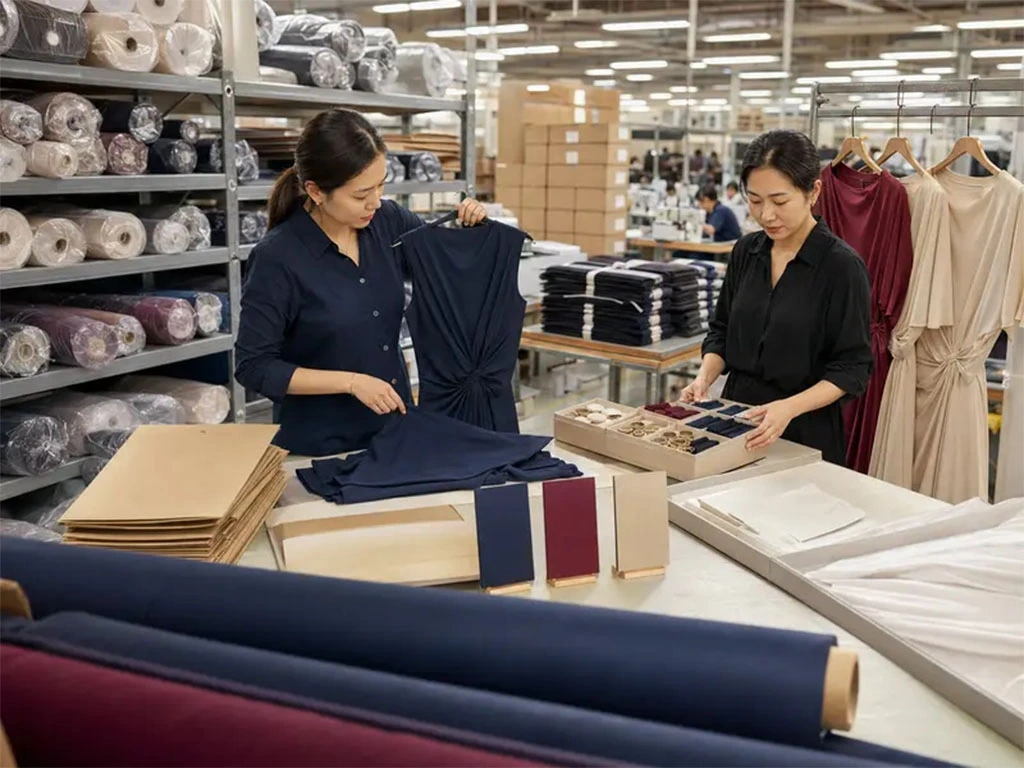
Labels and Trims Can Become a Small Delay That Holds Up a Large Order
Zippers and buttons are obvious examples, but private-label orders have more details to coordinate.
You may also need:
- Main labels
- Care labels
- Hangtags
- Barcodes
- Elastic
- Lace
- Beads
- Appliqué
- Custom packaging
- Special folding or packing instructions
These items may take less time to prepare than the garments themselves, but one missing component can still stop the final packing stage.
For example, the dresses may be finished while the required labels are still being prepared.
If you are launching a private-label collection, it is better to confirm branding and packaging requirements while the sample is being developed rather than after bulk sewing has started.
Factory Scheduling Also Matters
Even when your fabric and PP sample are ready, your order still needs a place in the production schedule.
A factory may be running several styles at the same time. Some require different sewing operations, equipment, or experienced operators.
Production planning normally considers:
- Order quantity
- Style complexity
- Fabric readiness
- Cutting workload
- Sewing capacity
- Required delivery date
- Current production commitments
Give the manufacturer your target delivery date before production is scheduled.
There is a difference between asking:
“How many days do you need?”
and asking:
“I need these garments ready for shipment by June 20. The PP sample will be approved by May 10. Can you plan the order around this date?”
The second question gives the factory something practical to schedule.
QC Can Add Time — or Prevent a Bigger Delay
QC should not start only after the last garment has been sewn.
A problem found during sewing is easier to correct than the same problem found after the whole order is finished.
If measurements, stitching, construction, or appearance are checked during production, a problem can be corrected before a large quantity is completed.
If the same problem is only found at final inspection, the factory may need to bring garments back for rework.
That can affect:
- Finishing
- Pressing
- Packing
- Final inspection
- Shipment
From the production side, a few minutes spent checking the first pieces can be much cheaper than finding the same problem after hundreds of garments have been sewn.
Buyer Approval Time Also Affects the Schedule
Buyer review time is often left out of the production calendar.
You may be waiting for:
- A designer to review the sample
- A buyer to approve the fit
- A team member to confirm the color
- A brand owner to approve packaging
- A purchasing manager to confirm the quantity
The factory cannot always move to the next stage until that decision comes back.
If you have a fixed launch date, leave review time on your side of the schedule as well.
Leave time for sample review instead of counting on same-day approval.
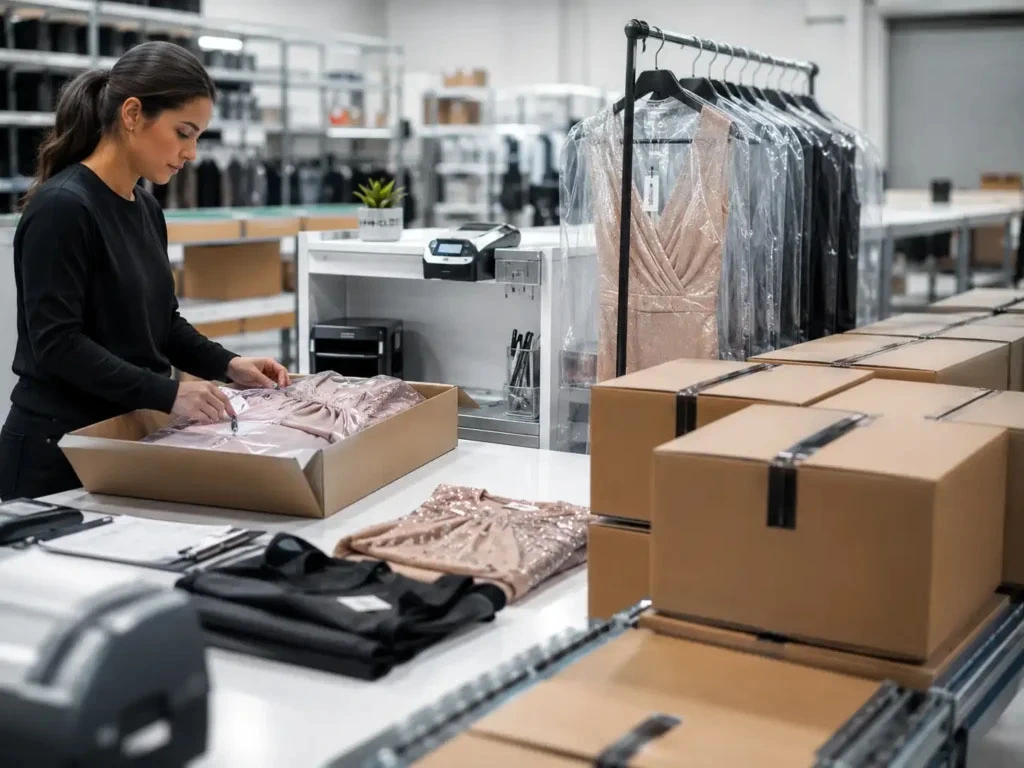
How Should You Build a Realistic Dress Production Timeline?
Instead of counting backward only from the quoted bulk production days, work backward from the date you actually need the finished goods.
For example:
Required Delivery Date
← Shipping
← Packing & Final QC
← Bulk Production
← Fabric and Trim Readiness
← PP Sample Approval
← Sample Revision
← First Sample
← Pattern Development
← Design and Material Confirmation
This lets you see where each stage fits before the delivery date.
If the goods need to reach your warehouse by a fixed date, this calculation shows how much time is available for development, production, and transportation.
For seasonal collections, campaign launches, or retailer delivery windows, it is also sensible to leave some room for unexpected changes.
A schedule with zero spare time may work on paper, but one fabric delay or one additional sample revision can push the whole order back.
How Buyers Can Reduce Avoidable Production Delays
You cannot control every part of a manufacturing schedule, but you can remove many avoidable delays before production starts.
Before Sampling
Have these details ready:
- Design or reference sample
- Measurement requirements
- Fabric reference
- Color
- Construction details
- Size range
- Estimated quantity
You do not need a finished tech pack before contacting a manufacturer. But anything that is still undecided should be identified early.
During Sample Development
When you receive a sample, give consolidated comments.
Instead of sending:
“The waist looks a little big.”
Give the production team something measurable:
“Reduce finished waist measurement by 1 cm.”
The same applies to length, neckline depth, sleeve opening, hip measurement, and other areas that can be measured.
Before Bulk Production
Make sure the factory is working from one final set of information:
- Approved PP sample
- Final pattern
- Final measurements
- Fabric
- Color
- Trims
- Labels
- Size breakdown
- Quantity breakdown
- Packing requirements
It also avoids a situation we see in production: the sample room, cutting team and sewing line working from different versions of the same style.
Production Lead Time Is Not the Same as Total Order Lead Time
The difference matters when you are working toward a fixed launch date.
Production lead time normally refers to the period needed to manufacture the approved bulk order.
Total order lead time can include:
Product Development + Sampling + Approval + Material Preparation + Bulk Production + QC + Packing + Shipping
A 25–30 day bulk production quote does not mean you can simply count 30 days back from your launch date.
You may still need time for fabric preparation, sample approval, final inspection, packing, freight, customs, and delivery to your warehouse.
If you are working toward a fixed retail launch, the second calculation is the one you need.
A Simple Lead Time Checklist for Buyers
Before confirming the production schedule, check:
- When does the quoted production time start?
- Is the bulk fabric confirmed?
- Is the PP sample approved?
- Are measurements and grading final?
- Are trims and labels ready?
- Is the style-color-size breakdown confirmed?
- Are packaging requirements clear?
- Has the factory reviewed the target delivery date?
- Is time allowed for QC and packing?
- Have you included shipping time?
You cannot predict every production problem before the order starts.
What you can do is identify the decisions and materials that could hold up the order before bulk production begins.
Frequently Asked Questions
Can a factory start bulk production before the PP sample is approved?
Some preparation work can be done in advance, but full bulk production before PP approval creates a risk. If the fit, construction, or measurements change afterward, the factory may have to rework completed pieces. For a new style, final approval is normally the safer production point.
What happens if my fabric arrives later than expected?
The impact depends on whether the factory can continue other work while waiting for the fabric. If pattern, trims, or other preparation work can continue, part of the delay may be absorbed. If cutting cannot begin without the fabric, the bulk schedule will move. Tell the factory about any fabric risk early so the production plan can be adjusted rather than discovered at the last minute.
Should I give the factory my target delivery date before placing the order?
Yes. A target date gives the production team something concrete to work backward from. It also lets you find out early whether sampling, material preparation, bulk production, and shipping fit into the available window. The manufacturer can then check the production schedule against that date.
Does a repeat order always have the same lead time?
Not necessarily. A repeat style normally skips much of the original pattern and sample development, but fabric availability, production loading, quantity, colors, and trims can still change the lead time.
How much extra time should I leave for unexpected problems?
The extra time needed depends on the order. The extra time should sit around the stages that are still uncertain, rather than simply adding a few days to the end of the schedule.
Conclusion
Custom dress production does not start with bulk sewing. Fabric preparation, pattern work, sample revisions, PP approval, trims, cutting, QC, and packing all take a place in the schedule.
For a fixed launch or delivery date, start with the date the goods need to be ready and work backward. Confirm the fabric, final measurements, PP sample, quantity breakdown, labels, and packing requirements before bulk production starts. That gives the factory a clearer production plan and gives you a more realistic date for shipment.
Related Dress Manufacturing Services
If your project involves a specific dress fabric or construction, you can also review our related manufacturing pages:
- Bridesmaid Dress Manufacturer
- Corset Dress Manufacturer
- Halter Dress Manufacturer
- Lace Dress Manufacturer
- Off Shoulder Dress Manufacturer
Get a Quote for an Existing Dress Style
If you are transferring an existing dress style to a new manufacturer, send us the latest approved sample, tech pack, product photos, or measurement chart together with your target quantity.
As a dress manufacturer, we can review the construction, fabric, trims, measurements, and current production status with you before confirming the sampling requirements.

