

Choosing a custom dress manufacturer is not simply a matter of finding the lowest price. A quotation may look competitive, but the real differences often appear when the factory starts developing your sample, sourcing fabric or preparing the bulk order. As a clothing manufacturer, we know that unclear specifications, unsuitable production methods and poor communication can create problems that are difficult to correct later. Before committing your order, look at how each factory will actually handle your dresses.
1. Make Sure Every Manufacturer Is Quoting the Same Dress
The first problem with comparing manufacturers is that buyers do not always send the same product information to every supplier.
You might give one factory a complete tech pack, including fabric weight, measurements and construction details, while another receives only a reference photograph. Both may return a quotation, but the prices could be based on completely different assumptions.
For a custom dress, several details can change the manufacturing cost:
- Fabric composition, weight and width
- Lining and interlining
- Measurements and size range
- Seams, panels and construction
- Zippers, buttons and other closures
- Printing, embroidery and embellishments
- Quantity by style, color and size
- Brand labels and packaging
If your design is not fully developed, separate confirmed requirements from details that are still open.
Take a fitted satin dress as an example. Fabric weight and drape affect how the garment falls, while lining and construction influence the sewing process. A factory quoting a lightweight satin without lining is not offering the same product as one pricing a heavier fabric with a fully lined bodice.
When we review a new dress project, the construction and material requirements are among the first things considered. If important specifications are missing, the quotation should clearly state the assumptions rather than present an estimated price as a final production cost.
2. Look Beyond the Factory’s List of Dress Styles
A manufacturer may advertise experience with evening dresses, maxi dresses, party dresses and casual dresses. That does not automatically mean its production team is equally familiar with every construction.
Your design may involve a fitted bodice, shaped waist panels, stretch fabric, delicate chiffon, layered tulle or detailed embellishment. These require different pattern-making and sewing experience.
Rather than asking whether the factory makes your type of dress, discuss the construction itself.
For example, a fitted jersey dress needs attention to stretch allowance and fabric recovery. A structured dress may require more work on the bodice pattern, internal support and fitting. Beaded or sequined garments also need careful handling during sewing and finishing.
You can ask to see samples of similar constructions or photographs of previous production work. Pay attention to the inside of the garment as well as the outside. Seam finishing, lining attachment and closure construction often reveal more about production ability than a styled product photograph.
You do not need a manufacturer that has produced your exact design. You need one whose pattern makers and sewing team can understand the technical requirements and identify potential difficulties before bulk production.

3. Pay Attention to the First Sample, Not Just Its Appearance
A sample that looks attractive in photographs may still have fitting or construction problems.
When the first dress arrives, try it on or arrange a proper fit review. Check the bust, waist and hip measurements, garment length, neckline, armholes, sleeve position and overall balance.
Also look at how the fabric behaves when the garment is worn. Does the waist stay in position? Does the lining pull when the wearer moves? Does the neckline sit correctly? Does the skirt hang as expected?
These details can be difficult to judge from a flat photograph.
The development process matters just as much as the sample itself. A capable factory should be able to discuss unclear instructions and explain when a design detail needs further confirmation.
In our sample room, pattern adjustments are not always isolated changes. Increasing the bust measurement of a fitted dress, for example, may affect the waist shaping and side seam. Changing the skirt length can also alter the garment’s proportions.
When you review samples from different manufacturers, keep the comments and revised measurements together. This gives you a useful record of whether the factory understands your feedback and translates it into the next version.
4. Understand What You Are Actually Paying For
A lower unit price can be attractive, especially when you are developing a new collection or managing a limited purchasing budget.
However, compare the cost breakdown before deciding which manufacturer offers better value.
| Cost Item | Details to Compare |
|---|---|
| Main fabric | Composition, weight, quality and consumption |
| Lining | Material and coverage |
| Trims | Zippers, buttons, elastic and accessories |
| Labels | Brand, size and care labels |
| Packaging | Hangtags, polybags and cartons |
| Printing | Print method and design coverage |
| Embellishment | Beading, embroidery and sequins |
| Finishing | Special washing or garment treatments |
| Sampling | Development and additional sample charges |
Fabric deserves particular attention. Two suppliers may both quote polyester satin, but the material can differ in weight, width, finish and drape. These differences affect both the garment’s appearance and fabric consumption.
The same applies to packaging. One quotation may include branded hangtags and individual polybags, while another covers only the finished garment.
Ask each supplier to identify what is included, what is excluded and which specifications have been assumed. A slightly higher quotation may be the more accurate one if it covers the product you actually intend to sell.
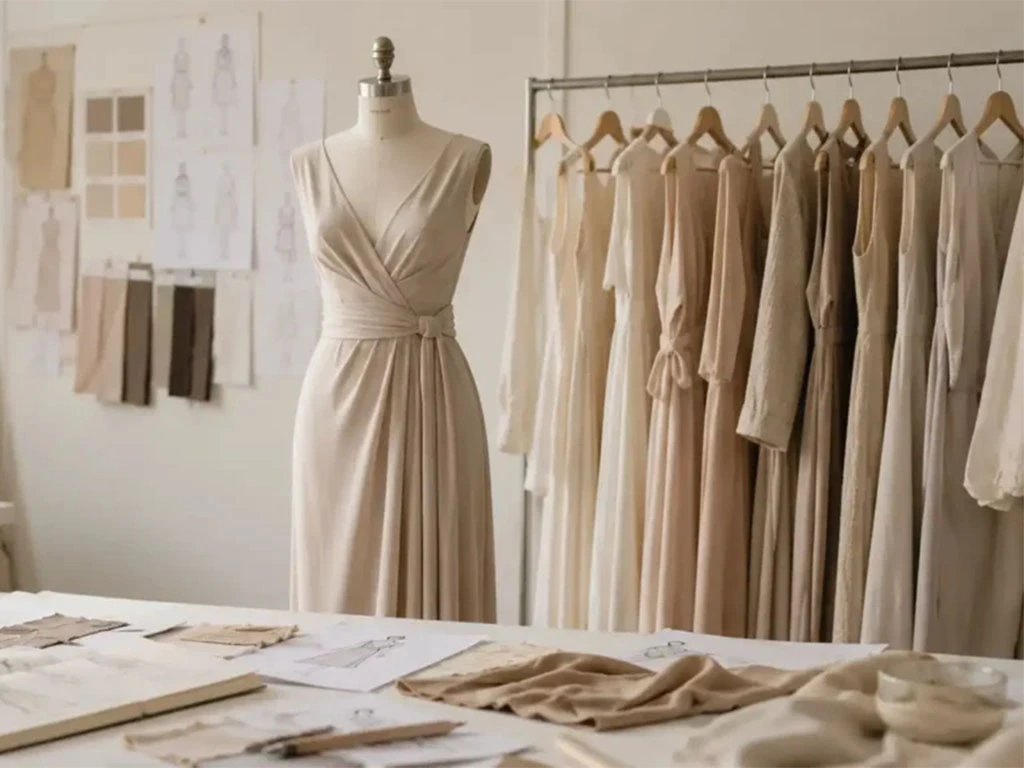
5. Understand the Difference Between Garment MOQ and Material MOQ
For new fashion brands and boutique buyers, order quantity is often one of the first commercial limitations.
A manufacturer might accept 100 pieces per style, but that does not necessarily mean you can divide the order freely between colors.
You need to understand whether the MOQ applies per style, per color or per fabric. Custom dyeing, printed materials and special trims may also have separate minimum requirements.
Consider a collection with four dress styles in two colors each. A factory accepting 100 pieces per style creates a different purchasing commitment from one requiring 100 pieces per color.
Fabric sourcing can introduce another problem. Your garment quantity may meet the factory’s minimum, while the fabric mill requires a larger quantity for a custom color or special material.
Discuss these points when reviewing the initial quotation. Otherwise, you may discover that the original order plan is not commercially workable after development has already started.
For a brand planning to test several designs before increasing production, it is also worth discussing whether the manufacturer can support repeat orders in larger quantities.
6. Find Out What Happens When Fabric Arrives at the Factory
Fabric quality is not something that should be left entirely to the supplier’s specification sheet.
Once fabric arrives, it needs to be checked before cutting. The inspection may cover width, weight, color, surface defects, shrinkage and, where relevant, stretch and recovery.
This matters because problems with incoming material can affect the whole production run.
For example, a fabric roll with unexpected shrinkage may cause finished garments to fall outside the approved measurements. Different dye lots can produce visible shade differences, especially when several rolls are used for one order.
Fabric width also affects marker planning and material consumption. If the usable width is smaller than expected, the original fabric calculation may no longer be accurate.
Some materials need pre-shrinking or other preparation before cutting. Others require particular attention to fabric direction or surface appearance.
Rather than relying on a general statement that the factory has QC, find out who checks incoming fabric and what happens when a roll does not meet the approved specification.
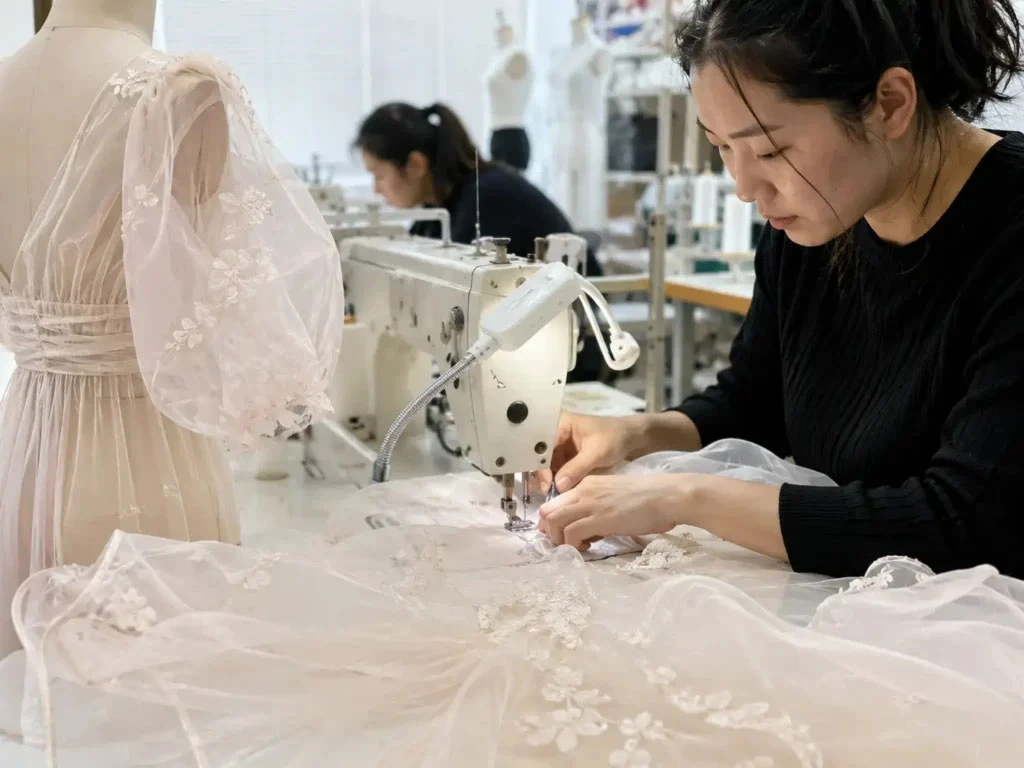
7. Understand How the Factory Handles Production Problems
A final inspection can identify defects, but it cannot replace checks during manufacturing.
Dress production usually involves several operations, from cutting and sewing to pressing and packing. Each stage can introduce different problems.
During cutting, panel accuracy and fabric direction need attention. During sewing, measurements, seam allowance and construction consistency become more important. Pressing can also affect the shape of delicate or structured garments.
One example is an uneven seam that appears repeatedly on the sewing line. If it is noticed early, the production team can check the machine setting, sewing method or operator technique before more pieces are affected.
If the same defect is discovered after the entire order is completed, the factory may need to spend considerably more time sorting and reworking garments.
When evaluating a manufacturer, ask how production problems are reported and who is responsible for deciding whether affected pieces need correction or replacement.
The important point is not whether a factory claims to have zero defects. It is whether problems are identified, communicated and dealt with before they affect the whole order.
8. Compare Lead Time and Available Production Capacity
A quoted lead time is useful only when you understand what it covers.
For example, a factory may quote 25–30 days for bulk production after PP sample approval and fabric confirmation. That is different from promising shipment within the same period after receiving your purchase order.
Your actual schedule may include:
Sample Development → Fit Revision → PP Sample Approval → Fabric Preparation → Bulk Production → Final Inspection → Shipment
If you have a seasonal launch date, allow time for development and material preparation rather than looking only at the days spent sewing the garments.
Production availability matters too. A factory may have substantial monthly output but limited capacity for your particular dress construction during a busy season.
Discuss how your order will fit into the production schedule, especially if you are ordering several styles or expect a repeat order shortly afterward.
If a particular dress becomes a regular product for your brand, consistency between the original and repeat orders becomes important. The approved pattern, fabric specification, measurements and construction details need to remain clear.
9. Confirm Private Label and Packaging Details Early
Private label production involves more than attaching a brand label to a finished dress.
Your order may require woven labels, size labels, care labels, hangtags, barcodes, custom polybags and specific carton markings.
Some of these details affect sewing operations. Label position, for example, needs to be confirmed before the relevant garment section is completed.
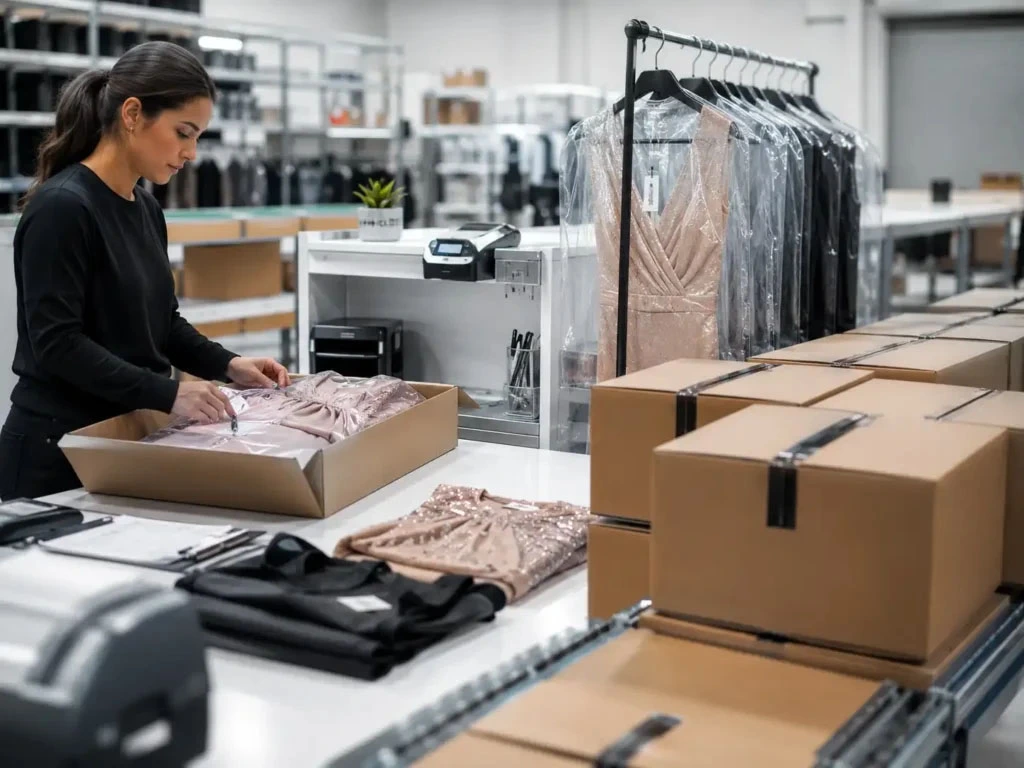
Packaging instructions also need to reach the factory before the packing stage. If your retailer requires individual barcodes or a particular quantity per carton, those requirements should be included in the order documents.
Ask how the manufacturer records these instructions and who checks them before shipment.
It is much easier to correct a missing packaging detail during sample development than when the finished garments are already packed.
10. Make the Final Decision Based on the Actual Order
After collecting quotations, samples and production information, put the main differences into one comparison sheet.
| Comparison Point | Manufacturer A | Manufacturer B | Manufacturer C |
|---|---|---|---|
| Relevant dress experience | |||
| Fabric capability | |||
| MOQ conditions | |||
| Sample development | |||
| Revision charges | |||
| Quotation scope | |||
| Fabric inspection | |||
| Production QC | |||
| Lead time | |||
| Available capacity | |||
| Private label | |||
| Repeat-order support |
Do not rush to turn every item into a numerical score.
One factory may offer a lower garment price but exclude packaging. Another may accept your order quantity but require a larger fabric commitment. A third may have a longer sample development period but identify a construction issue before bulk production.
Which one is better depends on your product and purchasing plan.
A startup testing a new collection may prioritize manageable quantities and development support. An established retailer may place more importance on production availability, repeat-order consistency and delivery schedules.
The right manufacturer is the one whose production arrangements match the order you are actually planning to place.
FAQ
1. Can you change manufacturers after your dress sample has already been approved?
Yes, but transferring an approved style requires more than sending the original sample. Prepare the latest measurement chart, construction details, fabric specifications, trim information and revision history. The new factory may need to develop its own pattern or sample to confirm that the garment can be reproduced consistently.
2. How can you protect your dress designs when working with a new manufacturer?
Discuss confidentiality before sharing sensitive design files. You can use a written NDA and include ownership, permitted use and restrictions on sharing your designs in the agreement. Also keep dated records of your original sketches, tech packs and approved development documents.
3. What should you do when the factory recommends changing your original design?
Ask the factory to explain the production reason and show which part of the design is difficult to achieve. A suggested change may relate to fabric behavior, seam construction or the way a garment is assembled. Review the effect on appearance, fit and cost before approving any modification.
4. How should you handle communication when several people from your brand are involved?
Assign one person to consolidate comments and confirm production decisions. Designers, buyers and purchasing managers can all review the product, but sending conflicting instructions directly to the factory creates confusion. Keep approved changes in one shared document and identify the latest version clearly.
5. What information should you retain after completing your first bulk order?
Keep the approved PP sample, final measurement chart, pattern reference, fabric details, trim specifications, inspection records and packing instructions. These records become particularly useful when you reorder the same style, investigate a quality complaint or transfer the product to another production facility.
Conclusion
A suitable custom dress manufacturer should be able to handle more than the sewing work. You need clear product communication, reliable material handling, practical development support and production arrangements that fit your order. Compare the actual samples, costs and manufacturing processes before releasing your PO. Working with the right dress manufacturer can make future development and repeat orders much easier. You can learn more about Xiuyu Apparel and its dress manufacturing services.

