

When developing a velvet or velour dress, a fabric can look right on the swatch and behave quite differently once it is made into a garment. Before production, we check stretch, recovery, weight, pile direction, usable width and how the fabric handles during cutting and sewing.
The better choice depends on the dress construction. A fitted bodycon dress may need good stretch and recovery, while a long evening dress may need more body, weight and surface depth.
Velvet vs Velour for Dresses: What Is the Difference?
Velvet usually has a more defined pile and deeper surface appearance, which makes it a common choice for evening and occasion dresses. Velour tends to feel softer and more flexible, while stretch versions can work well for fitted styles.
When a fabric is sent for sampling, the name on the spec sheet is only the starting point. Composition, GSM, stretch, recovery, usable width and surface all need to be checked before the fabric is matched to the pattern.
A useful comparison is:
| Factor | Velvet | Velour |
|---|---|---|
| Surface | Dense and defined pile | Soft and flexible pile |
| Appearance | Richer, more formal | Softer, more relaxed |
| Stretch | Depends on construction | Stretch versions are common |
| Drape | Depends strongly on weight | Often softer |
| Fitted dresses | Suitable with the right construction | Stretch versions can work well |
| Eveningwear | Often a strong option | Depends on the design |
| Cutting | Nap direction needs attention | Usually more flexible |
| Pressing | Pile can be marked by pressure | Still requires care |
| Fabric choice | More dependent on final appearance | More dependent on stretch and hand feel |
During sampling, we start with the dress construction and then confirm the choice through fabric testing.
Which Fabric Is Better for Different Dress Styles?
The same velvet or velour fabric can work well on one dress and cause problems on another. The silhouette is usually the first thing we look at. The fabric then needs to hold the required shape, stretch where needed and still move properly on the body. A fabric that works well on a straight mini dress may not behave the same way on a fitted bodycon or a long bias-cut style.
Evening and Occasion Dresses
When the design relies on a rich surface and a more polished look, velvet is often one of the first fabrics we test.
Velvet is commonly tested for evening dresses, cocktail dresses, occasion dresses and styles where the surface of the fabric is part of the design. It is also a practical option for velvet midi and long-sleeve seasonal dresses
For these styles, the pile itself becomes part of the visual effect. Lighting can also change how the fabric looks. For that reason, a sewn sample gives a more reliable impression than a small swatch alone.
Weight still needs attention. A heavy velvet may give a dress more body, but on a flowing skirt it can also make the garment feel stiff or pull the skirt down A lighter construction may move better but provide less structure or coverage.
Bodycon and Fitted Dresses
On a fitted dress, stretch and recovery usually matter more than whether the fabric is called velvet or velour.
Stretch velour can work well when the dress needs close body contact without restricting movement. Stretch velvet is also an option, but its recovery should be checked carefully during sampling.
A fabric can have plenty of stretch and still cause problems if recovery is weak. The first sample may fit correctly, but the waist, hip or seat can start to look loose after repeated stretching.
This is why the actual pattern is used for the fabric test whenever possible. A small swatch shows the fabric’s stretch, but it cannot tell us how the waist, hip or other fitted areas will behave once the dress is sewn.
Casual or Relaxed Dresses
Velour can be a practical choice when the design calls for a softer hand feel and a less formal look.
It can suit simple mini dresses, relaxed silhouettes and styles where comfort matters more than a deep, structured pile.
Fabric weight still matters here. A very soft fabric can also be surprisingly heavy and pull the dress down. On the other hand, a very light fabric may need additional support or lining to provide enough coverage.
How Does Fabric Weight Affect Velvet and Velour Dresses?
GSM affects how a velvet or velour dress feels, hangs and behaves during production.
A heavier velvet can give an evening dress more body and warmth, but it also adds seam bulk and overall garment weight. On a long flowing skirt, that extra weight can pull the fabric down and change the way the dress hangs.
A lighter fabric usually gives more movement, but it may also show body lines more easily or require additional support.
This is also relevant when comparing factory quotations. Two dresses made from the same pattern can have different material costs because fabric width, GSM and consumption are not necessarily the same.
For a new collection, the fabric is best approved against the dress design rather than by GSM or price alone. Choosing only by price or GSM can give a misleading result once the garment is sewn.
How Important Are Stretch and Recovery?
For a fitted velvet or velour dress, stretch needs to be considered both before cutting and after the garment is sewn.
During sampling, the main points we check are:
- Stretch percentage
- Stretch direction
- Recovery
- Fabric growth after repeated stretching
- Seam stability
- Fit at the bust, waist, hip and armhole
The waist, hip, bust and armhole areas tend to show fitting problems first.
One common issue is good stretch with weak recovery. The dress may feel comfortable during the first fitting but gradually lose its shape after repeated wear.
The fabric is checked before cutting and again after sewing. The second check matters because seams, lining and construction can change the amount of stretch available in the finished dress.
Why Does Velvet Nap Direction Matter?
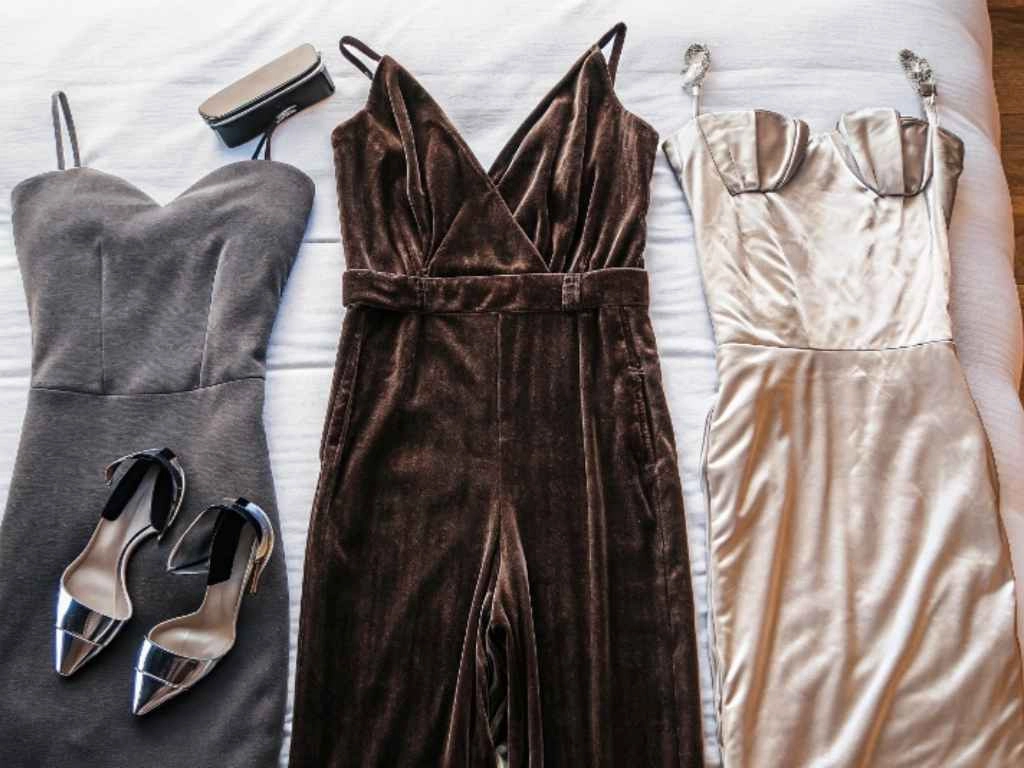
Nap direction is one of the details that needs to be confirmed before bulk cutting.
When velvet is viewed from different directions, the pile catches and reflects light differently. As a result, two garment panels from the same fabric roll can look slightly different if they are cut in opposite directions.
The main pattern pieces normally need to follow the same pile direction.
This also affects fabric consumption.
A pattern piece cannot always be turned around just to fill an empty space on the cutting marker. If all pieces need to run in the same direction, the layout can become less efficient. This is one reason a velvet dress can use more fabric than a similar style made from a fabric that allows two-way cutting.
The difference is more noticeable on long dresses or styles with several large panels. Fabric consumption can increase simply because the pieces cannot be rotated freely.
That extra consumption should be included when calculating the fabric requirement for bulk production. It is better to account for it during costing than to discover the problem after the order has been confirmed.
What Should You Check Before Cutting Velvet or Velour?
Before cutting starts, the fabric should be checked against the approved sample and the production requirements.
Fabric Width
One thing we check before costing is usable width, not just the supplier’s stated width. If the selvedge is uneven or part of the roll has defects, the actual cutting width can be smaller. That difference may look minor on a sample order, but it can affect fabric consumption across a bulk order.
Shrinkage
Shrinkage should be checked before the pattern is finalized. This is especially important for close-fitting dresses, where even a small change in measurements can affect the fit.
Stretch Direction
For stretch velvet or velour, the direction of elasticity needs to match the pattern. Turning the fabric simply to improve marker efficiency may affect the way the dress fits.
Nap Direction
Velvet should normally be laid consistently so the finished panels have the same surface direction and appearance.
Shade
If several rolls are being used, we check the shade before cutting. A difference that looks minor on a single roll can be much easier to see when two panels are sewn together.
Surface Defects
Pile damage, marks, crushed areas or irregular sections are easier to deal with before fabric reaches the cutting table.
It is much easier to deal with these issues at the fabric inspection stage than after hundreds of dresses are already in production.
What Problems Can Happen During Sewing?
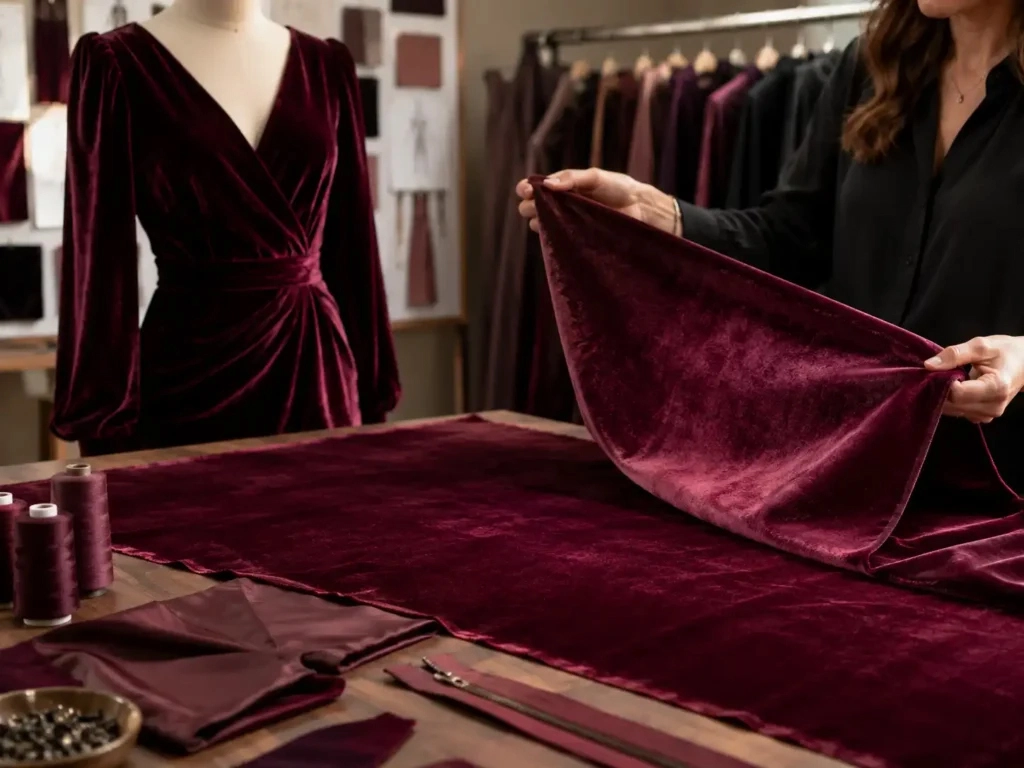
Velvet and velour can behave differently under the presser foot, particularly when the pile is thick or the fabric has a high stretch content.
Common problems include:
- Uneven seams
- Puckering
- Fabric shifting
- Wavy seams on stretch fabric
- Excessive seam bulk
- Distortion around zippers
- Different surface appearance along the seam
For fitted dresses, seam placement can make the problem more noticeable. A curved seam running through a high-stretch area may change the way the garment sits on the body if the fabric tension is not controlled.
During sampling, the machine settings are adjusted to suit the fabric rather than using the same settings for every velvet or velour.
Needle choice, thread tension, presser-foot pressure and fabric handling may all need adjustment depending on the fabric. A small change can show up as puckering, shifting or an uneven surface.
How Should Velvet Be Pressed?
Velvet needs particular care during pressing because direct pressure can affect the pile.
Direct pressure can flatten or crush the pile and leave marks on the surface. In some cases, the marks can remain visible after the garment has been finished.
We test the pressing method on a fabric cutting or sample before bulk production. This avoids applying the same pressure or handling method to every velvet fabric.
Particular attention is needed around:
- Seams
- Hems
- Zipper areas
- Bust seams
- Waist seams
- Folded edges
The fabric should also be judged after pressing. A material that looks good before production can lose some of its surface character if the pile is handled incorrectly during sewing or finishing.
Does Lining Change the Choice?
Lining can change both the way a velvet or velour dress feels on the body and the way it moves.
For a fitted dress, the lining needs to work with the stretch of the outer fabric. If the shell stretches but the lining does not, the finished garment can feel tighter than expected even when the outer fabric itself has enough stretch. For a fitted stretch dress, we normally test the shell and lining together rather than approving them separately.
With heavier velvet, lining also adds weight and can change the drape.
The lining is checked for:
- Stretch compatibility
- Hand feel
- Static
- Weight
- Breathability
- Attachment method
The lining is best considered during development, while the outer fabric and pattern are still being tested. Adding it later can change the fit that was already approved.
Velvet vs Velour: What Should Buyers Consider Before Approval?
For a new dress collection, the most useful comparison is between the fabric options and the finished design.
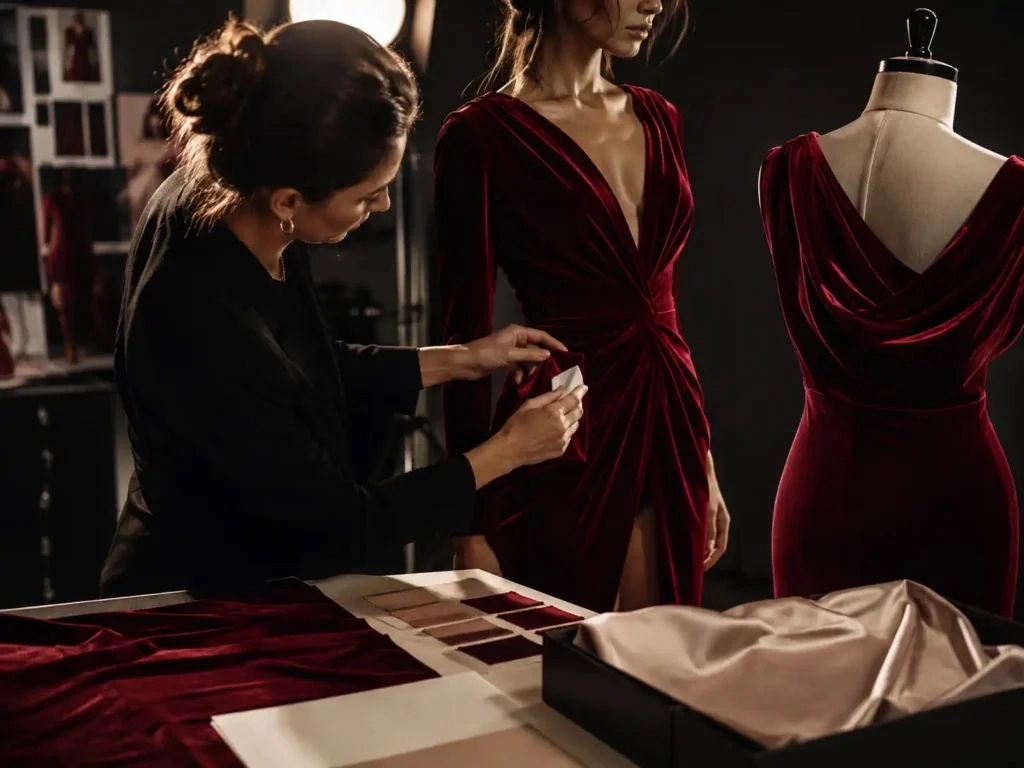
Before approval, the fabric should be checked against the dress design for appearance, weight, stretch, recovery, drape, cutting consumption, sewing and finishing. Lining compatibility and shrinkage should also be confirmed before bulk production.
If two fabrics look similar on the swatch, testing both on the same pattern usually gives a clearer comparison before the final choice is made. The difference is often much easier to see after sewing.
The fabric name is only a starting point. What matters is how the fabric behaves once it is cut and sewn.
What Should You Ask the Factory Before Ordering?
When a velvet or velour dress is prepared for production, the factory needs enough information to assess the fabric together with the garment construction.
Useful information includes:
- Your reference sample or tech pack
- Target fabric composition
- Preferred GSM or fabric weight
- Stretch requirements
- Finished measurements
- Size range
- Lining requirements
- Color references
- Expected order quantity
- Washing requirements
- Packaging requirements
If you already have a specific fabric, send a physical swatch whenever possible. It gives the factory something concrete to test for stretch, weight, sewing and finishing instead of relying only on the composition listed in the tech pack.
For a new design, it is also useful to test the fabric before the pattern is completely locked. A change in fabric weight or stretch can require adjustments to measurements, seam construction or fabric consumption.
Velvet or Velour: Which One Should You Choose?
For an evening or occasion dress where surface depth and a richer appearance are important, velvet is often the better starting point. For a softer fitted or more casual style, a suitable stretch velour may be easier to handle.
For a B2B dress project, the final choice is best made after the fabric has been checked against the pattern. Composition, GSM, stretch, recovery and construction can all change the result. The fabric name alone does not tell you enough.
FAQ
Can the same velvet fabric be used for different dress sizes?
The fabric itself does not usually need to change simply because the size range changes. The bigger issue is fabric consumption. Larger sizes can affect the cutting layout, especially when all pieces need to follow the same nap direction. We check the marker and usable width before confirming bulk yardage.
Should buyers order the fabric before the dress pattern is finalized?
We recommend waiting until the pattern is close to final before placing a large fabric order. Changes in length, width or design details can affect consumption. Once the pattern is approved, the required yardage can be calculated from the actual cutting layout.
How many fabric colors should be tested before a bulk order?
For a new color, we ask the buyer to approve a fabric shade before bulk dyeing or ordering. Screen colors and small swatches can be misleading. With velvet, the surface should also be checked under different lighting because pile direction can change the way the color appears.
Can stretch velvet be used for bodycon dresses?
Yes, provided the stretch and recovery are suitable for the pattern. During sampling, we check how the fabric behaves at the bust, waist, hip and armhole rather than judging stretch from the fabric swatch alone. Lining and seam construction also need to work with the outer fabric.
What happens if the approved fabric is unavailable before bulk production?
We first check what the supplier still has in stock and whether another production lot is coming. We also compare the available lot with the approved sample. If the shade, weight or surface is different, we send it to the buyer for approval rather than switching the fabric ourselves.
Conclusion
For a new velvet or velour dress, the fabric is best approved on a sewn garment sample. Fit, surface appearance and sewing issues are much easier to spot before bulk cutting begins.
If you are sourcing velvet or velour dresses, send us your tech pack or a fabric swatch. We can review the fabric with the pattern and check the main production points, including stretch, lining, fabric consumption and sewing, before bulk cutting.
Explore More Dress Manufacturing Services
If you are developing a new dress and need support with fabric selection, internal construction, sampling, and bulk production, working with an experienced clothing manufacturer can help reduce unnecessary development changes.
At Xiuyu Apparel, we work with fashion brands, startups, designers, and private label companies from sample development through bulk production.
Get a Clothing Manufacturing Quote Based on Your Design
If you already have a garment design, send us the product photo, tech pack, or reference sample together with your target quantity.
As a clothing manufacturer, we can review the fabric, lining, construction, trims, workmanship, and finishing requirements and prepare a quotation based on the actual garment rather than a general price range.

