

When a new dress goes into sampling, crepe and satin can behave quite differently even when the design is exactly the same. We may see the difference in the fit, drape, cutting or sewing once the sample is made. That is why we check the fabric on the garment before approving it for bulk production.
Crepe vs Satin: What Is the Difference?
Crepe and satin are not single fabric specifications. Composition, weight, construction, finish and stretch can vary considerably, so two fabrics sold under the same name may cut, sew and drape quite differently.
Crepe generally has a matte or low-sheen surface with a slightly textured hand feel. It tends to give dresses a cleaner appearance and more controlled drape.
Satin has a smooth surface with a noticeable sheen. It is often selected when you want more fluid movement or a polished eveningwear appearance.
Once we put the fabric into the actual style, the comparison becomes much clearer. Fit, movement, surface appearance and production handling can matter more than whether the fabric is generally described as “better.”
Crepe vs Satin at a Glance
| Feature | Crepe | Satin |
|---|---|---|
| Surface | Matte or low sheen | Smooth and shiny |
| Hand feel | Slightly textured | Smooth |
| Drape | Soft and controlled | Fluid and flowing |
| Visual effect | Clean and understated | Glossy and glamorous |
| Fit | Often suitable for fitted styles | Often emphasizes body movement |
| Common applications | Cocktail, fitted and modern dresses | Slip, evening and occasion dresses |
| Cutting | Generally easier to control | Can move more easily between layers |
| Pressing | Usually more forgiving visually | Pressing marks can be more noticeable |
Fabric weight, construction and finishing can change the result quite a bit.
How Does Crepe Work for Different Dress Styles?
Crepe for Fitted Dresses
For a fitted dress, crepe is often a practical starting point when the design calls for a clean silhouette without much surface shine.
On the body, a suitable crepe can follow the shape without looking too fluid or shiny. We see this work well on sheath dresses, fitted midi dresses and some bodycon styles.
Stretch is another point we check. A fabric may feel comfortable during fitting but recover poorly after wear. When sampling close-fitting styles, we normally check the waist, hip, bust and armhole because small changes in fabric recovery can become noticeable once the garment is worn.
Crepe for Cocktail Dresses
Crepe is also useful when you want a cocktail dress to look elegant without relying on shine.
A lighter crepe usually gives the dress more movement. A heavier one can hold the shape better, but may feel too stiff for some designs. We normally judge this from the actual pattern. The same crepe can work well on one silhouette and feel too heavy or too flat on another.
If the style will run across several sizes, check the graded pattern with the fabric as well. A sample can fit well in one size, while the same fabric behaves differently around the waist or hip after grading.
Crepe for Draped Dresses
Crepe can drape well, but fabric weight makes a noticeable difference.
With a very light crepe, folds can look weak or uneven. A heavier quality gives more body but may take away some of the softness shown in the original sketch.
For a draped style, we prefer to test the fabric on the actual pattern before making the final decision.
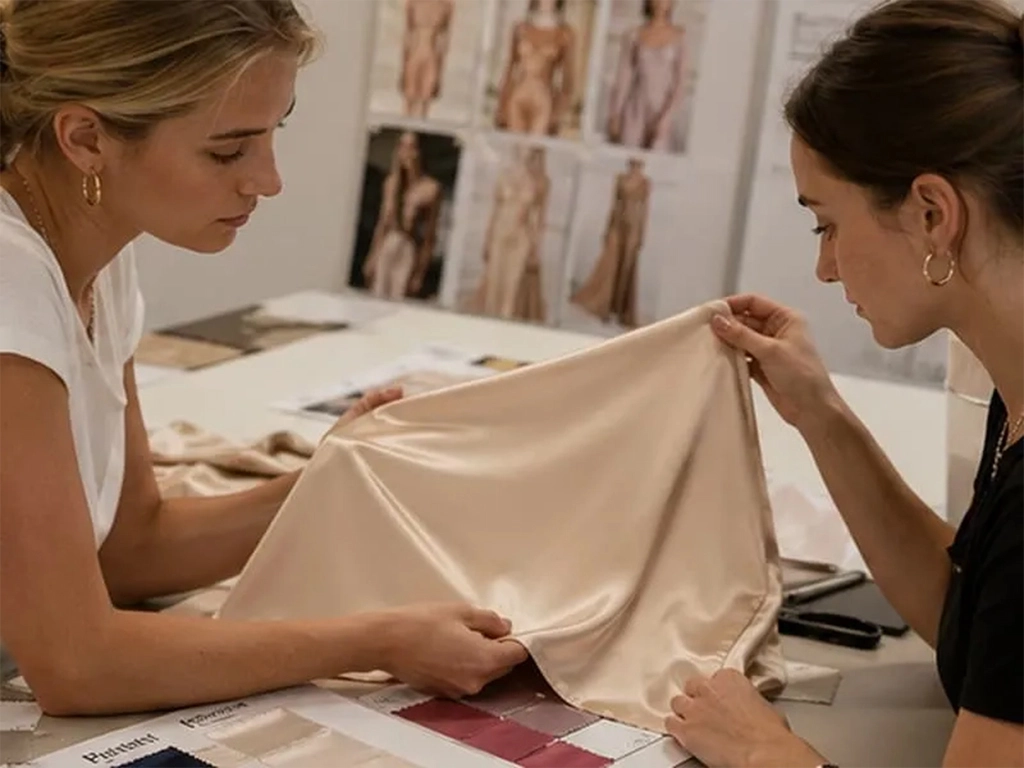
How Does Satin Work for Different Dress Styles?
Satin for Slip Dresses
Satin is a common choice for slip dresses because its smooth surface and fluid drape suit simple silhouettes.
This is especially noticeable with bias-cut construction. Once the fabric is cut on the bias, it can follow the body closely and create a softer line from the shoulder to the hem.
That same fluidity can also make fitting less predictable. During fitting, that movement can make the neckline, side seams or hem harder to keep in position.
For this type of design, you should evaluate the fabric on a sewn sample before locking the production pattern.
Satin for Evening Dresses
If your design is intended for eveningwear, satin can give you the polished appearance that buyers often associate with occasion dresses.
The shine can work especially well with simple silhouettes, cowl necklines, draped panels, and clean floor-length designs.
At the same time, shiny fabric can make small production problems easier to see. A slightly uneven seam or pressing mark that might go unnoticed on a matte fabric can become visible under strong lighting.
On a premium evening dress, those finishing details can affect the final look just as much as the fabric.
Satin for Draped and Flowing Dresses
If your design depends on movement, satin can be a strong option.
On a moving body, satin usually gives softer folds and a more fluid line. However, not every satin will give you the same result.
A lightweight satin may flow easily but offer less body. A heavier satin may create a richer appearance while changing the way gathers and folds sit.
When comparing fabrics, place the actual materials against the same pattern. This gives you a much more useful comparison than looking at two swatches side by side.
Crepe vs Satin for Fit and Drape
We usually see the difference more clearly when both fabrics are made into the same dress.
Crepe generally gives you a more controlled silhouette. This can be useful when your design depends on clean seams, fitted panels, or a defined waist.
Satin tends to emphasize movement. It can create a softer line and reflect light as the dress moves, which is one reason it is widely used for slip dresses and eveningwear.
We would not choose one simply because it is crepe or satin. The pattern and the finished look matter more.
A structured cocktail dress will usually work better with the controlled behavior of a suitable crepe. On a fluid slip dress, the movement of satin can be part of the design itself.
The same thing can happen with the pattern. A fabric that works perfectly on a straight-cut dress may not behave the same way on a bias-cut version of the same design.
Crepe vs Satin for Dress Manufacturing
The differences become much more obvious once the fabric reaches the cutting table.
Cutting
Satin can be more challenging during cutting because the smooth layers may move more easily.
Long panels, bias pieces and multi-layer cutting can make this more difficult, where even a small amount of movement can affect the finished piece.
Crepe is often easier to control, although lightweight crepe can also move or stretch depending on its construction.
Before bulk cutting, usable width, shrinkage, grain direction and the actual marker all need to be checked. Do not base fabric consumption only on the nominal width listed by the supplier.
Sewing
Satin can show sewing problems quite clearly.
Seam puckering, uneven thread tension, needle marks, or slight distortion may stand out against the smooth surface. Sewing settings should be checked on the sample instead of simply copying the settings used for another satin style.
Crepe is usually less visually sensitive, but lightweight versions can still create problems around seams and hems.
Fabric names only tell you so much. The sewing behavior needs to be checked on the actual sample.
Lining
We check the lining together with the outer fabric, especially on fitted dresses.
A lining that works well with one satin may not behave properly with another. Differences in weight and movement can cause the outer fabric and lining to pull against each other.
For crepe, lining may be used to improve opacity, comfort, or structure depending on the fabric.
On a fitted dress, the outer fabric and lining should be checked together during fitting. Adding a lining later can change measurements and how the garment hangs.
Pressing
Pressing is particularly important with satin.
Because the surface reflects light, unwanted shine or pressing marks can become easy to see. Temperature, pressure, and handling need to suit the actual fabric.
Crepe is generally more forgiving in appearance, but delicate versions still require controlled pressing.
A useful production check is to inspect the garment after final pressing under the lighting conditions in which the dress will normally be photographed or displayed.
Bulk Production
A good PP sample does not always mean the bulk fabric will behave exactly the same.
Before cutting, the approved fabric should be compared with the bulk lot for color, weight, hand feel, usable width and surface appearance.
For satin, changes in sheen can be particularly noticeable. Two lots may technically have the same color but look different under direct light.
Keeping an approved fabric swatch and sample with the production reference gives the cutting and QC teams something practical to work from.

Crepe vs Satin: Which One Should You Choose?
The choice is usually easier once we test both fabrics on the actual pattern.
Crepe is usually worth considering when the style needs:
- A matte or low-sheen surface
- A cleaner fitted silhouette
- More controlled drape
- A modern cocktail or occasion look
- Less visual emphasis on shine
Satin is usually worth considering when the style needs:
- A smooth, glossy surface
- More fluid movement
- A stronger eveningwear look
- A slip or bias-cut silhouette
- More visual impact under light
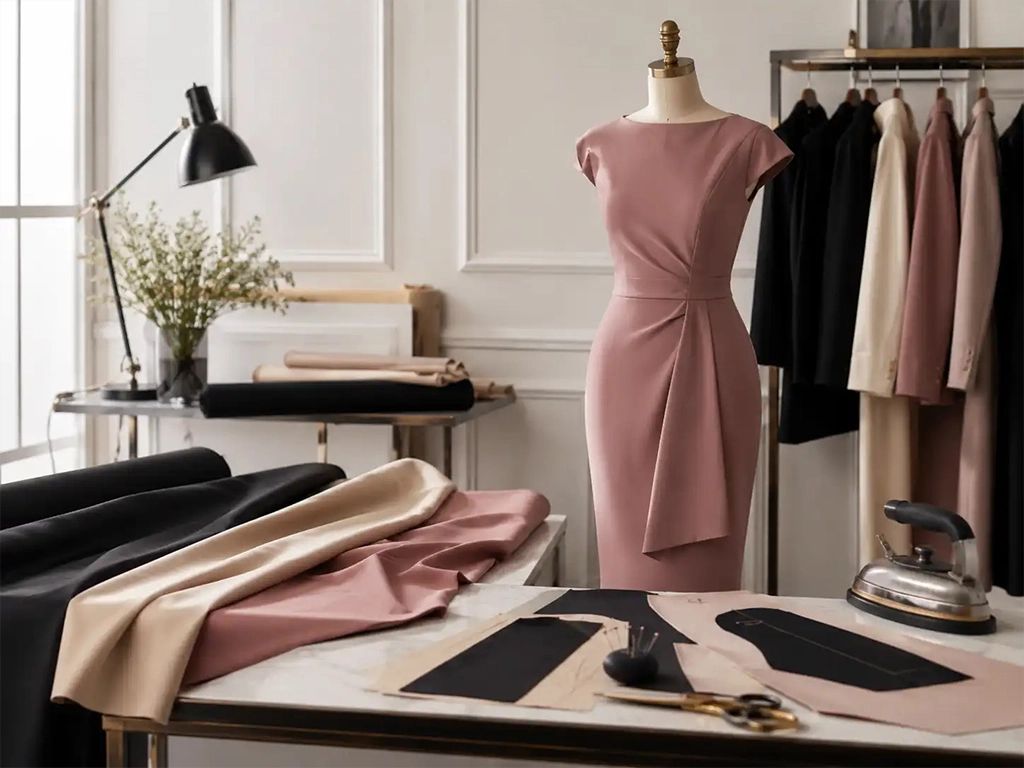
If the design could work with either fabric, we would compare both on the actual sample before deciding. Look at weight, stretch, drape and construction on the sample.
In many cases, we do not know which fabric is the better fit until the first garment is made.
What Should You Check Before Ordering Crepe or Satin?
Before ordering, there are a few fabric checks that can save problems later, especially when the style is going into bulk production.
Fabric Composition
Confirm the actual fiber composition. “Crepe” and “satin” describe fabric types or constructions and do not by themselves tell you whether the material is polyester, silk, rayon, acetate, or a blend.
Fabric Weight
Ask for the actual fabric weight and compare it with the approved sample. Weight affects more than hand feel; it can change how the dress hangs, how much lining it needs and how much fabric the pattern uses.
Stretch and Recovery
For fitted dresses, we check both stretch and recovery. A fabric may feel comfortable when stretched on the fitting model but still lose shape after repeated wear.
This is particularly important when the garment relies on stretch for comfort rather than using a zipper or other opening.
Shrinkage
Check shrinkage before finalizing finished measurements.
If the fabric changes noticeably after washing or finishing, the pattern may need to be adjusted before bulk cutting.
Fabric Width and Usable Width
Do not calculate fabric consumption from width alone.
The usable width can be smaller because of selvedges, defects, finishing, or the way the pattern needs to be placed. This becomes more important with long dresses and bias-cut styles.
Color and Surface Consistency
For satin especially, check the color and surface under more than one type of lighting.
A fabric can look correct under showroom lighting but appear different in daylight or photography. This matters when you are ordering multiple colors or repeating the same style later.
Finished Sample
Before committing to bulk production, evaluate the actual dress rather than only the fabric.
Check the fit, drape, hem, seams, lining, pressing, and overall appearance. If something feels wrong at sample stage, it is usually much easier to correct before bulk cutting begins.
FAQ
How can a buyer compare two fabric suppliers offering the same satin?
We would not compare suppliers on price and fabric name alone. We normally check weight, width, composition and color first, then compare hand feel, drape and shrinkage. If the order is for bulk production, a sewn sample is much more useful than comparing fabric swatches alone.
Should the fabric supplier or garment factory decide the final fabric?
The fabric supplier can suggest suitable options, but the final choice should be checked against the garment. A satin can look good on the roll and still create problems during cutting, sewing or pressing. The sewn sample is the point where we make the final call.
What if the fabric looks different after dyeing or finishing?
Dyeing and finishing can change the fabric’s color, surface and hand feel, and the difference can be quite visible on satin. We compare the finished fabric with the approved swatch before cutting. If the difference is outside the agreed range, we confirm it with the buyer first.
Can changing from crepe to satin affect the finished measurements?
Yes, especially when the two fabrics have different stretch, shrinkage or drape. We do not assume that the original pattern will work unchanged. After making the sample in the new fabric, we check the garment measurements and make pattern adjustments where necessary.
What should a buyer do if the first sample looks good but the fabric feels different in bulk?
Don’t move straight into cutting. We compare the bulk fabric with the approved sample, checking weight, hand feel, color and drape. If the difference is noticeable, we hold the cutting process and confirm the next step with the buyer before production starts.
Conclusion
Crepe and satin can both produce good dresses, but they behave differently once they reach the pattern and production stages. Weight, stretch, drape, lining and even pressing can change how the finished dress looks and fits.
For a new style, we prefer to test the actual fabric in a finished sample before the bulk order is locked. It gives both sides something concrete to review before bulk production, instead of making the decision from a swatch or fabric name alone.
Explore More Dress Manufacturing Services
If you are developing a new dress and need support with fabric selection, internal construction, sampling, and bulk production, working with an experienced clothing manufacturer can help reduce unnecessary development changes.
At Xiuyu Apparel, we work with fashion brands, startups, designers, and private label companies from sample development through bulk production.
Get a Clothing Manufacturing Quote Based on Your Design
If you already have a garment design, send us the product photo, tech pack, or reference sample together with your target quantity.
As a clothing manufacturer, we can review the fabric, lining, construction, trims, workmanship, and finishing requirements and prepare a quotation based on the actual garment rather than a general price range.

