

When developing a dress, lining is not something we decide separately from the outer fabric. A lining that looks fine on a fabric swatch can behave very differently once it is sewn into the garment. It can affect the drape, fit, weight and even how the dress moves when worn.
From a manufacturing point of view, the shell fabric, pattern and lining need to be checked together during sampling. In production, we choose the lining according to the fabric, construction and fit requirements of the style.
The main difference is how much of the garment is lined.
With full lining, the lining covers most of the main body of the dress. It is commonly used when you want more coverage, a cleaner inside finish, or a little more body in the garment.
With partial lining, only certain areas are lined. For example, we may line the bodice, bust, front body or part of the skirt while leaving other sections unlined.
Neither option is automatically better. When reviewing a new style, we first ask:
What does the lining actually need to do in this dress?
If the outer fabric is sheer, the main reason may be coverage. If the fabric is already opaque but very lightweight, full lining may add weight that the design does not need.
When Does Full Lining Make More Sense?
Full lining is often considered when the dress needs more coverage or when the inside finish is an important part of the product.
It is commonly used for:
- Formal dresses
- Structured silhouettes
- Highly transparent fabrics
- Premium occasionwear
- Dresses where a cleaner interior is required
- Styles where the lining is part of the construction
During sampling, added weight is one of the first things we check.
A lightweight shell can feel completely different after a full lining is added. This is especially noticeable in chiffon, lightweight satin and other fluid fabrics. The dress may lose some of the movement that looked good in the original shell fabric.
A lining can look suitable on a swatch and behave differently once it is sewn into the dress. We therefore check it on the finished sample before confirming the specification.
When Is Partial Lining the Better Option?
Partial lining is useful when coverage is needed in certain areas but a full lining would change the look or feel of the dress too much.
For example, a style may use:
- A lined bodice with an unlined skirt
- A shorter skirt lining
- Lining behind a sheer panel
- A lined bust area
- A lined front section
- A nude or contrast lining under lace
Lightweight and semi-sheer styles often benefit from this approach. The lined areas provide the necessary coverage while the unlined sections can keep the original movement of the shell fabric.
From a production point of view, partial lining may also reduce fabric consumption and sewing work. However, we would not choose it simply because it uses less material. The construction still needs to be stable, clean and practical for bulk production.
Which Lining Option Is Better for Different Dress Fabrics?
The shell fabric is usually one of the first things we look at when reviewing a lining specification.
Chiffon Dresses
Chiffon is lightweight and often transparent, so lining is usually needed somewhere.
The main question is how much.
A full lining can provide good coverage, but it may also reduce the lightness and movement of the skirt. A shorter or partial lining can sometimes keep the outer chiffon more fluid while covering the areas that need it.
The lining color also needs to be checked carefully. Even a small difference between the shell and lining can affect how the chiffon looks from the outside.
Satin Dresses
With satin, even a small change in lining weight can be noticeable in the finished dress.
If you are working with a soft satin, a heavy lining can make the dress feel less fluid. On the other hand, the right lining can improve the inside finish and make the garment more comfortable to wear.
With satin, the shell and lining need to be checked together in the sample. A lining that feels suitable on its own may make the finished dress heavier or less fluid than expected.
Mesh Dresses
Mesh gives you more freedom with lining placement because transparency can be part of the design.
You may want the shoulders, sleeves or selected body sections to remain sheer while the bust or lower body has more coverage.
In these styles, partial lining usually gives us more flexibility during development.
Lace Dresses
With lace, the lining can change the entire visual effect.
A nude lining can make the lace appear closer to the skin, while a matching lining creates a more covered appearance. Contrast lining can create an entirely different look.
If the lace has a large or directional motif, we also check the lining together with the lace placement. Otherwise, the contrast between the two layers can look different once the garment is cut and sewn.
Silk Dresses
Silk usually needs a little more attention during lining selection, especially when the fabric is lightweight or cut on the bias.
Adding a lining with noticeably different weight or behavior can change the way the dress moves and hangs.
The lining also needs to be considered for shrinkage. If the shell and lining behave differently after washing or pressing, the finished dress can develop pulling, twisting or an uneven hem.
How Does Dress Silhouette Affect the Choice?
Fabric alone does not determine the lining construction.
The pattern and silhouette matter just as much.
A-Line Dresses
An A-line skirt needs enough freedom to move after the lining is added. If the lining is too restrictive, the outer skirt may lose some of its flare.
Bodycon Dresses
Bodycon styles are different because stretch becomes much more important. If the shell stretches but the lining does not, the lining can become the part that limits the fit.
Slip Dresses
With a slip dress, drape is usually the first thing to check. A heavy lining can make a soft shell feel much stiffer than expected.
Strapless Dresses
For a strapless design, lining can also work together with internal support.
The important issue is not simply whether the dress is fully lined. You need to consider neckline stability, internal construction, fit and comfort together.
A well-chosen lining can help create a clean interior, but it should not create unnecessary bulk around the bust or neckline.
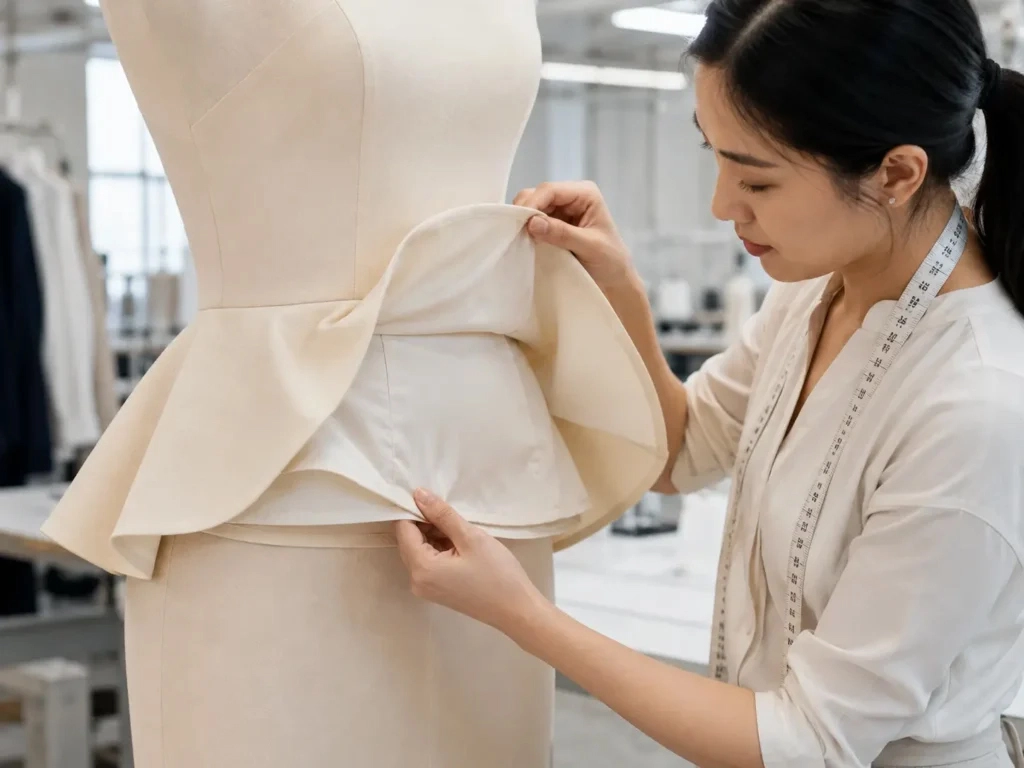
Does Full Lining Cost More?
In most cases, yes.
But when you compare full and partial lining, fabric price is only one part of the calculation.
Full lining normally adds lining fabric as well as additional cutting, sewing, finishing and inspection work.
The difference will vary with the pattern and construction.
A long maxi dress, for example, can use considerably more lining than a short fitted dress. A panelled dress may also require more lining pieces and additional sewing operations.
Two factories can quote different prices for what appears to be the same dress when the specifications are not actually identical.
Before comparing quotations, check whether both factories are using the same:
- Lining composition
- Lining weight
- Coverage
- Fabric consumption
- Construction
- Quantity
- Finishing requirements
A lower quotation can sometimes come from a different lining or a reduced construction specification rather than better production efficiency.
How Can the Wrong Lining Affect Dress Fit?
Some lining problems only become obvious after the first sample is sewn.
Imagine your shell fabric has some natural flexibility, but the lining does not. On the table, the measurements may look correct. Once the garment is worn, however, the lining can restrict movement.
In fitting, this can show up as:
- Pulling around the bust
- Tightness at the hip
- The lining riding up
- Restricted walking
- Drag lines
- Uneven tension around seams
The lining should also be checked during the fit review.
Your approved garment measurements may be correct, but the finished dress still needs to move correctly on the body.
What Should You Check During the First Sample?
Some lining problems only show up after the sample is sewn and worn. They are difficult to judge accurately from the fabric swatches alone.
1. Start With the Overall Weight
Hold and wear the finished sample.
Does the dress still feel like the design you intended?
A lightweight outer fabric combined with a heavy lining can produce a surprisingly different result.
2. Look at the Skirt When Hanging
Hang the dress and look at the skirt.
Pay attention to whether the lining pulls the shell inward, changes the flare or makes the garment look heavier.
3. Test the Dress in Movement
Walk, sit and move your arms.
A lining may look perfectly clean when the dress is hanging but catch against the body during movement.
4. Fit It on the Correct Size Model
Try the sample on the correct fit model.
Pay particular attention to the bust, waist, hip, armhole and neckline. For fitted dresses, compare the shell movement with the lining movement.
5. Check the Shell and Lining at the Hem
The shell and lining should remain balanced.
With fluid fabrics, the garment may continue to drop after sewing. Final hem adjustment should therefore be based on the behavior of the completed garment, not only the original paper pattern.
6. Test What Happens After Care
Care testing is easy to overlook during development.
If the shell and lining have different shrinkage behavior, problems may appear later rather than during the first fitting.
For a collection that will be washed by the end customer, this point deserves attention before bulk production.
How Should Brands Decide Between Full and Partial Lining?
There is no universal rule, but the following is a useful starting point:
| Main Requirement | Starting Point |
|---|---|
| Maximum coverage | Full lining |
| Lightweight garment | Partial lining |
| Preserve transparency | Partial lining |
| Formal appearance | Full lining |
| Fluid chiffon movement | Partial or carefully selected lining |
| Structured construction | Full or targeted lining |
| Stretch bodycon fit | Stretch-compatible lining |
| Sheer lace or mesh | Targeted partial lining |
| Clean interior | Full lining |
| Lower material consumption | Partial lining |
This is only a starting point. The final lining should still be confirmed against the actual fabric, pattern and fit sample.
Common Problems When Developing Dress Lining
Lining Makes the Dress Too Heavy
The measurements may be correct, but the finished dress can still look different from the intended silhouette.
This often happens when the lining weight is selected without considering the shell fabric.
The Lining Limits Stretch
This is common with fitted dresses.
The outer fabric may stretch comfortably, while the lining limits the finished garment.
Lining Shows at the Hem
A lining that is too long or not properly controlled can become visible during movement.
The correct lining length depends on the construction and fabric behavior.
The Dress Loses Too Much Sheerness
This can happen when full lining is added to a fabric where transparency was part of the original design.
For lace, mesh and chiffon, lining placement should be considered part of the visual design rather than simply an inside layer.
Shell and Lining Shrink Differently
Different shrinkage or recovery can lead to twisting, pulling or an uneven hem.
Problems with shrinkage are much easier to correct during material and sample testing than after bulk production.
FAQ
Can the lining be sourced separately from the shell fabric?
Yes. We can source the lining separately from the shell fabric based on the dress structure, fabric weight, opacity and hand feel. During sampling, we check how the two fabrics work together before confirming the lining for bulk production, especially for lightweight or draped dresses.
Should lining fabric be approved before the main fabric?
The shell fabric is usually confirmed first because its weight, stretch, drape and color affect the lining choice. Once the main fabric is selected, we test suitable lining options during sampling and confirm the final combination with the sample.
Can one lining specification be used across an entire dress collection?
It can work for some collections, but we would not recommend using one lining blindly across every style. Different fabrics and constructions may need different weights, stretch, or finishes. If the same lining works across several styles, we can keep it consistent to simplify sourcing.
How early should lining requirements be included in development?
Lining requirements should be discussed when the dress is first developed, not after the pattern is finished. During sampling, we look at the lining together with the shell fabric, construction and fit. This helps avoid changes later that can affect the pattern, cost, or production schedule.
What information should a buyer give the factory about lining?
At the start, it helps to provide the preferred lining type, color, composition, weight, and whether stretch is required. If there is a tech pack or reference sample, send it with the shell fabric details. This gives the factory enough information to check compatibility before we cut the sample.
Conclusion
There is no single lining construction that works for every dress.
For some styles, full lining gives the coverage and interior finish the garment needs. For others, especially lightweight, sheer or fluid dresses, partial lining can make more sense because it keeps the shell fabric closer to its original weight and movement.
From a manufacturing point of view, we recommend confirming the lining with the actual shell fabric and first sample. Check the fit, drape, stretch, hem and care behavior before the specification is locked for bulk production.
A good lining should solve a problem without creating another one for the finished dress.
Explore More Dress Manufacturing Services
If you are developing a new dress and need support with fabric selection, internal construction, sampling, and bulk production, working with an experienced clothing manufacturer can help reduce unnecessary development changes.
At Xiuyu Apparel, we work with fashion brands, startups, designers, and private label companies from sample development through bulk production.
Get a Clothing Manufacturing Quote Based on Your Design
If you already have a garment design, send us the product photo, tech pack, or reference sample together with your target quantity.
As a clothing manufacturer, we can review the fabric, lining, construction, trims, workmanship, and finishing requirements and prepare a quotation based on the actual garment rather than a general price range.

