

Many buyers start comparing clothing manufacturers by looking at the unit price. In our experience, however, the quotation only tells part of the story. A dress that costs less to produce may require more corrections during sampling, or create problems with fabric handling, fit, and construction once bulk production begins. Fabric behavior, pattern accuracy, and construction details can create problems that are not visible in the first sample. When you compare Uniqlo, Zara, and H&M, their retail strategies are easy to notice. From a factory perspective, the more useful question is how their different product priorities affect manufacturing—and what your own brand can learn before placing a bulk order.
How Do Uniqlo, Zara, and H&M Approach Clothing Manufacturing?
Uniqlo, Zara, and H&M serve different customer expectations, and those expectations influence how products are developed, sourced, and manufactured.
Uniqlo’s everyday clothing range puts considerable emphasis on consistent fabric quality, fit, and product performance. For manufacturers, maintaining these details across repeat orders requires clear specifications and reliable material sourcing. Zara is known for responding to fashion trends through an integrated design, production, distribution, and retail model. H&M works with independent suppliers and manufacturers to support a broad product range and a large international retail business. These are broad business-model differences; production arrangements can vary by product and season.
| Brand | Broad product focus | Manufacturing priorities |
|---|---|---|
| Uniqlo | Functional wardrobe essentials | Consistency, material control, repeat production |
| Zara | Trend-responsive fashion | Development speed, flexibility, timely decisions |
| H&M | Broad fashion assortment | Cost planning, supplier coordination, production management |
For your own collection, the goal is not to copy one company’s supply chain. It is to identify which production priorities matter most to your customers and choose a factory that can support them.
What Can Fashion Brands Learn From Uniqlo’s Manufacturing Approach?
Uniqlo’s focus on everyday products highlights the importance of consistency. Customers who buy the same basic T-shirt, knitwear, or dress again may expect the fabric feel, fit, color, and workmanship to remain familiar.
That expectation creates specific requirements for the factory. Your production specifications should cover:
- Fabric composition, weight, and hand feel
- Color references and acceptable shade variation
- Finished garment measurements and tolerances
- Stitching and construction details
- Shrinkage and colorfastness requirements
- Inspection standards before shipment
A sample is only one reference point. When a style is reordered months later, the factory needs the approved sample and production records to reproduce it accurately.
We have seen repeat styles become difficult to match when the original fabric came from a limited stock lot. A replacement material may look similar but have a different weight, drape, or shrinkage rate. Those differences can affect the garment even when the pattern remains unchanged.
If your brand depends on core products, keep records of the approved sample, measurement chart, fabric details, trims, and inspection results. Before placing a repeat order, confirm that the original material is still available. If it is not, review the substitute fabric before bulk cutting.
For a smaller brand, repeat orders need more than an old sample or product photograph. The factory should have access to the original measurements, fabric specifications, trims, and approved construction details before starting another production run.
Why Zara’s Fast Fashion Model Requires Different Manufacturing Skills
Zara is associated with responding quickly to fashion trends. For brands developing seasonal collections, the lesson is that speed depends on more than asking a factory to finish an order faster.
When a brand works toward a seasonal launch, fabric selection, pattern details, and target quantities need to be settled early enough for the sample room and production team to work from the same information. Design references, fabric direction, target quantities, and construction details need to reach the factory in a form the development team can use. If these details remain unsettled, faster sampling may simply lead to more corrections later.
From a production perspective, common pressure points include:
- Fabric availability before sampling
- Timely review of the first sample
- Quick confirmation of colors and quantities
- Clear communication when a design changes
- Production scheduling around the launch date
We have worked on seasonal dress development where the selected fabric created uneven draping around the waist and side seams after pressing. The problem was not obvious from the design reference alone. The team had to review the fabric behavior and adjust the pattern before moving forward.
For a trend-driven collection, that correction can affect the schedule. If the fabric is difficult to source again or the design changes after sample approval, the production plan may need to be revised.
If your brand sells seasonal fashion, discuss the launch date with the factory before sampling begins. Confirm which decisions must be completed before bulk production and which details can realistically be adjusted later.
A faster sample schedule will not help much if the fabric is still changing or the fit has not been approved. These decisions need to be settled before the order moves into bulk production.
How Does H&M’s Business Model Highlight Cost and Production Planning?
When a collection contains several dress styles, the quotation needs to account for differences in fabric consumption, sewing operations, trims, and finishing. Comparing unit prices alone may hide these differences.
When you develop multiple products, the total production cost is affected by fabric purchasing, order quantities, construction complexity, trims, packaging, and the coordination required between suppliers. H&M’s own supply-chain information describes its use of independent suppliers and the importance of purchasing practices, forecasting, costing, and supplier relationships.
Before comparing factory quotations, check whether each supplier has priced the same:
- Fabric composition and weight
- Lining and trims
- Sewing and finishing details
- Label and packaging requirements
- Order quantity and size breakdown
- Inspection requirements
Two dresses may look similar in a product photo but require different sewing time. A simple shift dress is generally less complicated to assemble than a lined design with pleats, boning, or hand-applied embellishments.
Order structure also matters. A quantity divided across several colors may require separate fabric purchases and more complicated planning than the same quantity in one color. If each color has a different size breakdown, cutting and packing arrangements become more involved.
For a new brand, compare the full quotation rather than the headline price. Ask the factory to identify excluded operations or materials before you make a decision.
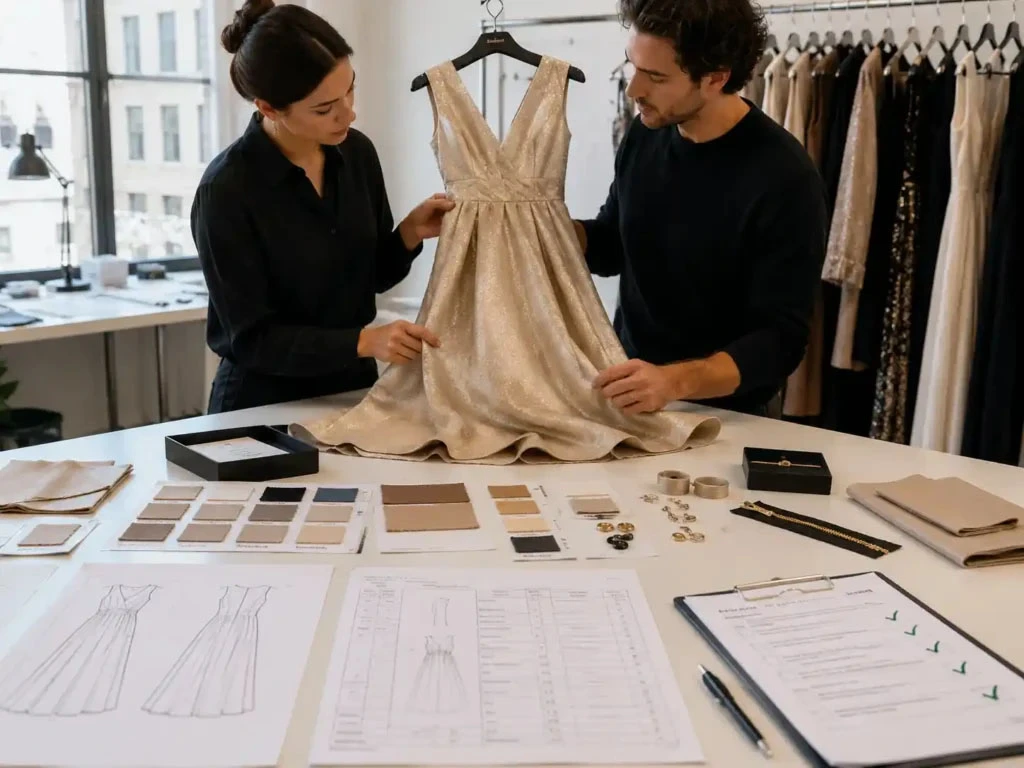
Fabric Selection: Why the Same Design Can Produce Different Results
A fabric swatch may look suitable for a dress, but the same material can behave differently once it is cut, sewn, and pressed. Weight, stretch recovery, and drape all affect the finished garment.
The same design can produce different results when made in materials with different weight, stretch, recovery, or drape. A fabric that works well for a loose silhouette may not provide enough support for a fitted bodice. Lightweight satin may look smooth on a swatch but shift during cutting or become difficult to control around curved seams.
When selecting fabric for your collection, consider:
- Fiber content and fabric weight
- Drape and surface appearance
- Stretch and recovery
- Shrinkage after washing
- Color consistency
- Suitability for the garment construction
A swatch is useful, but it cannot show every production issue. Some materials need to be checked for shrinkage, pressing response, or how they behave when sewn into the garment.
For dress collections, pay particular attention to necklines, waist seams, zippers, lining, and hems. A fabric change can affect more than appearance; it may also require pattern adjustments or different sewing methods.
Before bulk production, make sure the selected material has been checked against the approved sample and intended construction. If the fabric changes, do not assume the original pattern will produce the same result.
What Manufacturing Experience and Quality Control Mean for Your Brand
A well-finished sample does not automatically mean every piece in a bulk order will look the same. During production, fabric shade, cutting accuracy, seam allowance, and pressing can all affect the finished garments. Small differences in fabric shade, cutting accuracy, stitching, or measurements can become noticeable when hundreds of garments are produced.
Quality control should take place at several stages rather than only at the end.
Fabric inspection
Before cutting, fabric rolls are checked for visible defects, shade differences, and quantity. Where the factory uses a Four-Point System, defects can be recorded and assessed before the fabric is released for production.
Fabric preparation and cutting
Some materials require relaxation or pre-shrinking before cutting. The cutting team also needs the approved patterns, fabric direction, and size breakdown. If fabric shifts during spreading or the marker is incorrect, cut panels may not match the required measurements.
Sewing and in-line inspection
During sewing, operators follow the approved construction details. In-line checks help identify problems such as skipped stitches, uneven seams, measurement differences, or fabric distortion before the same issue affects more garments.
Pressing and final inspection
Pressing can change the appearance and shape of a garment, particularly when working with delicate or lightweight fabrics. Finished garments should be checked against the approved sample and inspection requirements before packing.
In our experience, problems are easier to correct when they are identified early. A measurement issue found during sewing may be manageable; the same issue discovered after the entire order is finished can lead to rework, delays, or rejected goods.
When you evaluate a factory, ask how it checks quality during production—not only whether it provides a final inspection report.
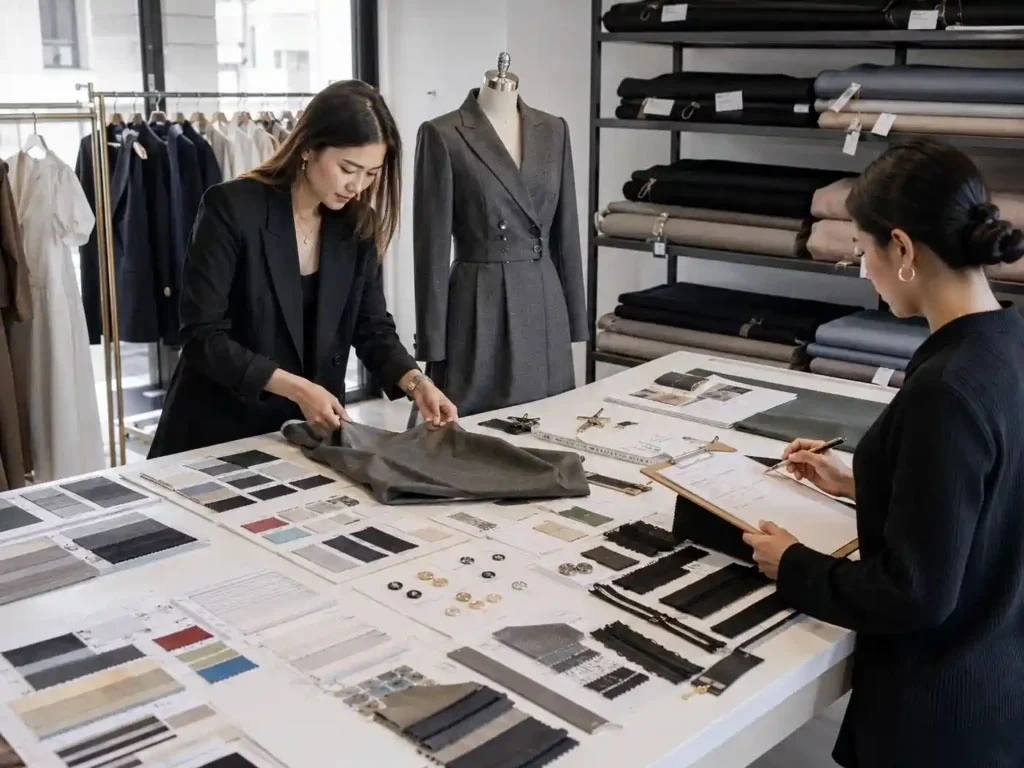
What Smaller Fashion Brands Can Learn From These Three Models
A smaller fashion brand may not need the same supply-chain structure as these retailers. What matters is whether its manufacturing partner can support the product range, order quantities, and delivery schedule.
If your brand focuses on core products, prioritize repeatability. Keep fabric and measurement records, approve clear standards, and discuss how the factory will handle future orders.
If you develop seasonal collections, prioritize communication and development speed. Confirm fabric availability early, provide clear references, and respond to sample comments promptly.
If your collection includes many styles or price points, prioritize cost transparency and planning. Review construction requirements and make sure quotations cover the same materials and operations.
A small brand may need all three capabilities, but not in equal measure. The right balance depends on your product range, launch schedule, customer expectations, and budget.
What Should Buyers Check Before Placing a Bulk Order?
Before committing to production, make sure the factory understands the garment and the standards it must meet.
Review these points before approving bulk production:
- Does the factory have experience with your product category?
- Can it explain the fabric and construction requirements?
- Has the sample been checked for fit and workmanship?
- Are the final measurements and size breakdown confirmed?
- Are fabric, trims, and packaging details approved?
- Is the production timeline realistic?
- Are inspection requirements agreed before bulk cutting?
- Will you receive updates if a material or schedule changes?
These questions help you evaluate more than the quotation. They also show whether the factory can communicate clearly when a production issue needs a decision.
Frequently Asked Questions About Fashion Manufacturing
1. Which manufacturing model is best for a new fashion brand?
It depends on your product range. If you sell core styles, prioritize consistent materials and repeat production. If your collection changes seasonally, look for responsive sampling and sourcing. If you have many styles at different price points, focus on cost transparency and production planning.
2. How can I compare clothing factory quotations fairly?
Make sure each quotation uses the same fabric, construction details, trims, packaging, quantity, and inspection requirements. Ask the factory to identify exclusions. A lower price may reflect a simpler specification rather than better production efficiency.
3. What should I do if the fabric changes after sample approval?
Ask the factory to provide the replacement fabric for review before bulk cutting. Compare its weight, drape, stretch, color, and shrinkage with the approved material. If the fabric behaves differently, the pattern or construction may need another check.
4. How can I reduce the risk of bulk production problems?
Confirm the final sample, measurement chart, fabric, trims, and packing details in writing. Ask how the factory checks quality during cutting and sewing, not only at final inspection. Clear approval records reduce the chance of different teams working from outdated instructions.
5. Is a factory with a lower MOQ always the better choice?
A factory offering a low MOQ may still require you to use available stock fabrics rather than develop a specific material for your design. Before placing an order, check whether the quoted MOQ applies to each style, color, or fabric.
Conclusion
Uniqlo, Zara, and H&M show that fashion manufacturing must support different priorities: consistency, speed, and cost control. Your brand does not need to copy their scale, but it should identify which priorities matter most to its products and customers. Working with an experienced clothing manufacturer can help you plan production around those needs. For dress collections, a specialized dress manufacturer can support fabric selection, pattern development, and construction decisions. If you are developing a new dress collection and need support with fabric selection, sampling, or bulk production, you can contact Xiuyu Apparel to discuss your product specifications and order requirements.

