

When developing a new dress collection, the manufacturing timeline can determine whether your launch, inventory, and sales plans stay on schedule. As a clothing manufacturer, we work with brands, designers, and buyers who need to coordinate design approval, fabric preparation, sampling, and bulk production within a limited schedule. A clear production timeline shows which decisions need to be completed at each stage and where delays may happen before shipment.
Why Planning a Dress Manufacturing Timeline Matters
Many brands focus on the design itself but underestimate the time required to turn a design concept into a production-ready garment.
A dress may look simple when finished, but producing the same style consistently requires several production steps to be completed in the right order:
- fabric confirmation
- pattern development
- sample fitting
- construction adjustments
- PP sample approval
- bulk production preparation
From our factory experience, production delays often happen before the sewing process starts. A late fabric decision, unclear measurement, or repeated sample adjustment can affect the following production schedule.
A clear timeline shows when each decision needs to be finalized and prevents one delayed step from affecting the following stages.
Main Stages of a Dress Manufacturing Timeline
A dress production timeline covers the complete process from product review to final shipment. The exact schedule depends on the dress design, materials, order quantity, and production requirements.
1. Product Information Review and Development Preparation
Before making samples, the manufacturer needs to understand the product requirements.
At this stage, the factory checks:
- design sketches or reference garments
- measurements and size range
- fabric preference
- construction details
- trims and accessories
For new brands, preparing complete product information before development reduces repeated questions and unnecessary adjustments during sampling. If key details are missing, the factory may need additional confirmation during pattern or sample development.
This stage has a direct impact on how efficiently the following development steps can proceed.
2. Fabric Selection and Confirmation
Fabric is one of the first factors that can affect a dress production timeline.
Different fabrics create different challenges during cutting, sewing, pressing, and finishing.
For example:
- chiffon dresses may need careful cutting because of fabric movement
- satin dresses require attention during pressing and handling
- stretch fabrics may need fitting adjustments during sample development
Before bulk production starts, you need to confirm:
- fabric type
- color
- weight
- availability
- finishing requirements
Delayed fabric confirmation can push back sampling and affect the planned bulk production schedule.
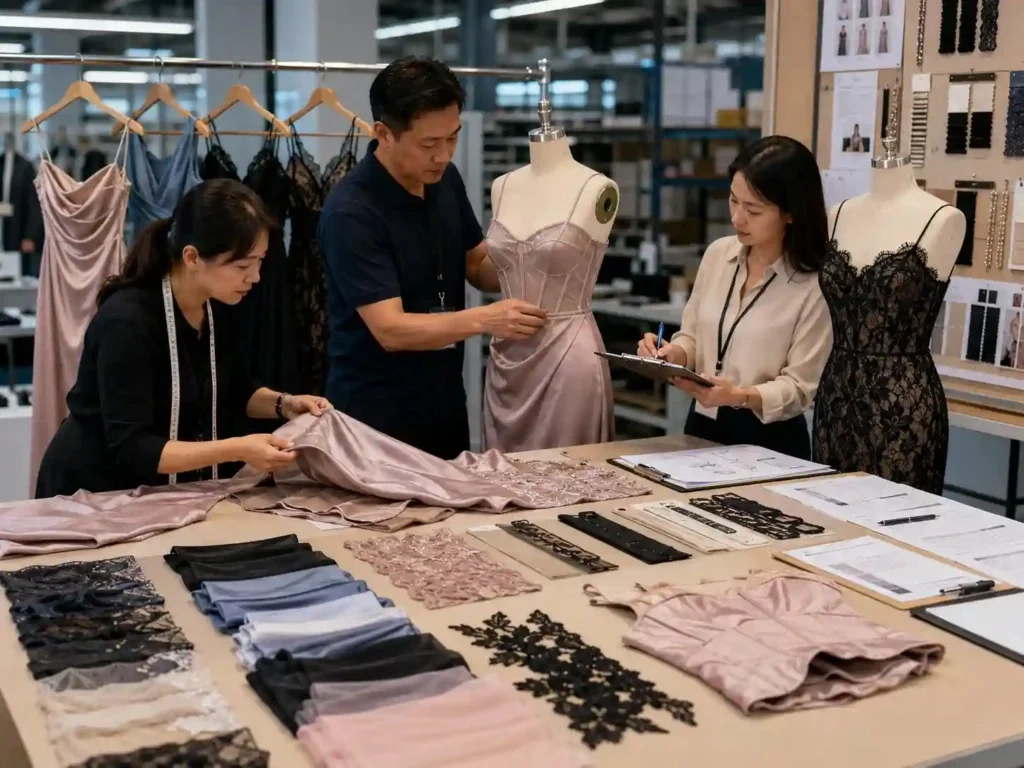
3. Pattern Development and Sample Making
After product details and materials are confirmed, the manufacturer develops the pattern and creates the first sample.
During sampling, brands can review:
- dress silhouette
- fitting
- construction details
- fabric performance
- finishing quality
For brands developing new collections, working with an experienced OEM clothing manufacturer during sampling can help identify production issues before bulk manufacturing begins.
For example, a neckline may need adjustment, a fabric may require different handling, or a construction detail may need to be simplified for better consistency during production.
4. Sample Revision and PP Sample Approval
After reviewing the sample, you may provide comments about fitting or design details.
The manufacturer then updates the pattern and prepares the revised version.
Before bulk production begins, many brands approve a PP (pre-production) sample as the final production reference.
The PP sample confirms:
- approved fabric
- final measurements
- sewing details
- trims
- finishing requirements
After PP sample approval, the approved sample becomes the production reference used by the sewing and quality teams.
5. Bulk Production and Quality Control
After PP sample approval, the order moves into bulk production.
Bulk production is carried out through:
- fabric inspection
- cutting
- sewing
- in-line quality checking
- pressing
- final inspection
- packing
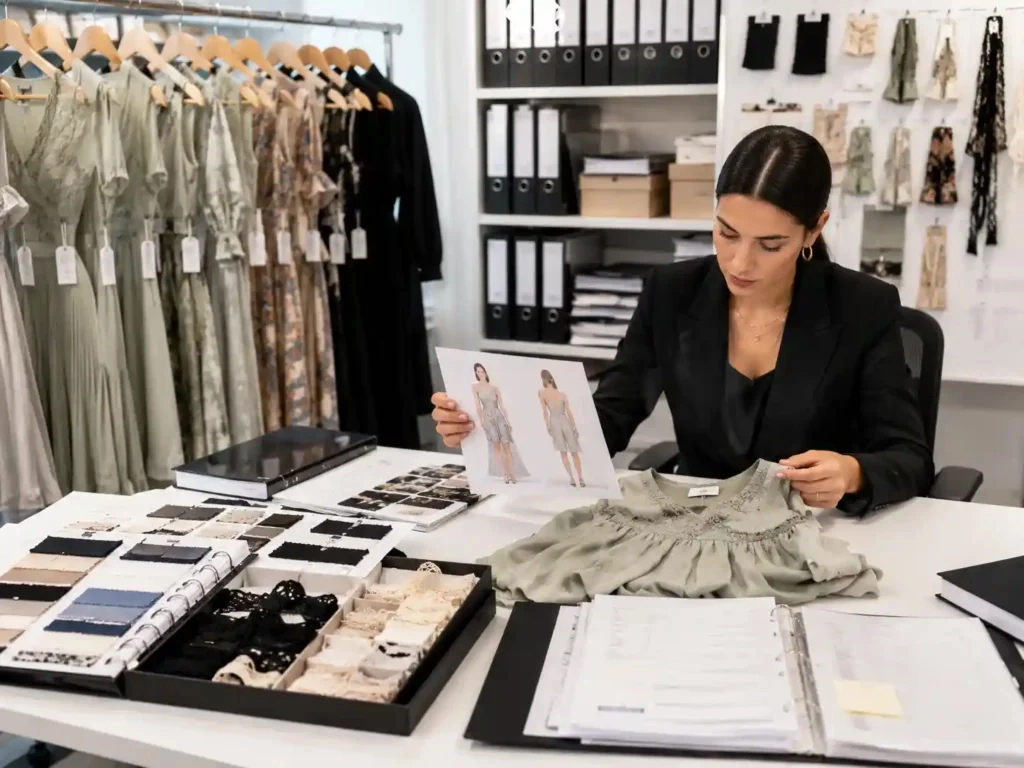
For many orders handled by a dress manufacturer, bulk production takes around 25–30 days after all production details are confirmed. However, complex styles with embroidery, beading, special construction, or larger quantities may require additional time.
Quality checks are carried out throughout production, not only during final inspection. In-line checking during sewing helps catch issues before they reach the final inspection stage.
Common Factors That Affect Dress Production Timelines
Even with a production schedule, some factors may change the final delivery date.
Late Design Changes
Changes after sample approval can affect pattern adjustments, material preparation, and production planning.
Fabric Availability Issues
Custom colors, special fabrics, or limited materials may require longer preparation time.
Complex Dress Construction
Styles with multiple panels, corsetry, embroidery, appliqué, or detailed finishing usually need more development and production time.
Slow Approval Process
Delayed feedback on samples, colors, or packaging details can prevent the factory from moving into the next planned stage.
Production Planning During Peak Seasons
During busy seasons, production schedules may also be affected by factory capacity planning. Brands that confirm orders earlier usually have more flexibility when arranging production slots.
How Fashion Brands Can Prepare for a Smoother Production Timeline
Before contacting a dress manufacturer, you can prepare the following information:
- product sketches or reference images
- estimated order quantity
- target delivery date
- fabric requirements
- size range
- labeling and packaging needs
During development, confirming key details before the next production step can reduce repeated adjustments and timeline changes.
In practice, projects move faster when brands and manufacturers confirm key details before each production stage begins.
Example Dress Manufacturing Timeline
Below is a general production schedule for a custom dress project:
| Production Stage | Estimated Time |
|---|---|
| Product review and quotation | 1–3 days |
| Fabric sourcing and confirmation | 3–10 days |
| Pattern development | 3–7 days |
| Sample making | 3–7 days |
| Sample revision | 3–5 days |
| PP sample approval | 3–5 days |
| Bulk production | 25–30 days |
| Final inspection and shipment preparation | 3–7 days |
The actual timeline may change depending on the style complexity, materials, quantity, and approval process.
What Should Brands Confirm Before Bulk Production Starts?
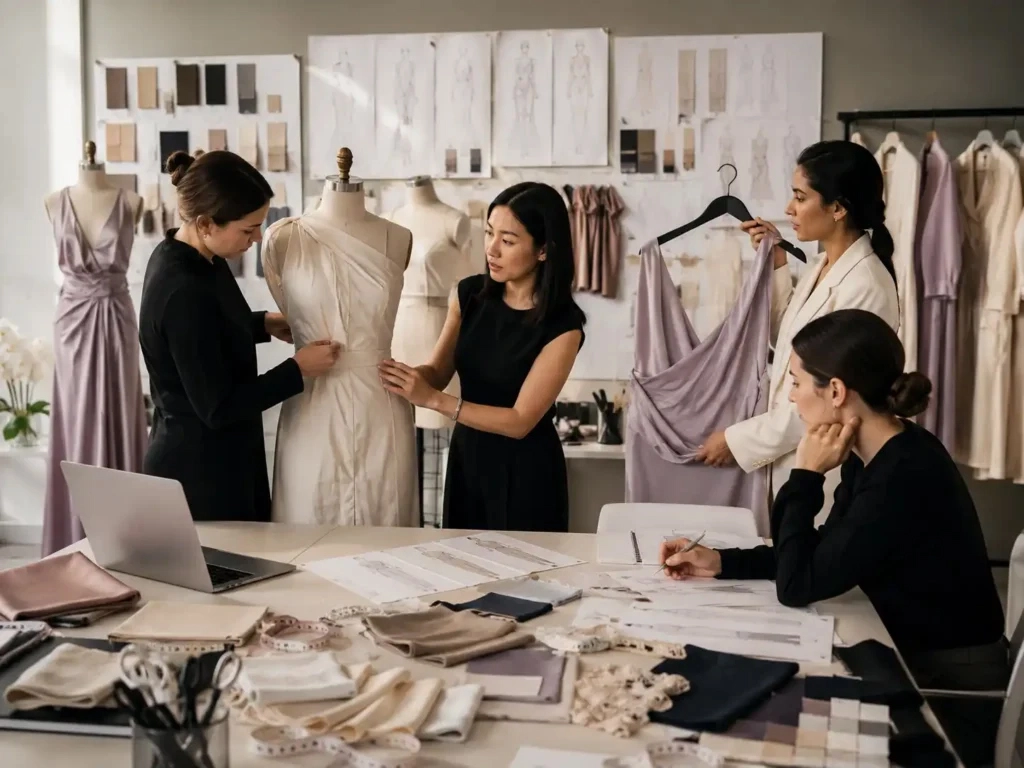
Before bulk production begins, you should make sure the following details are approved:
Product Details
- measurements
- size grading
- construction method
- finishing requirements
Materials
- fabric
- color
- trims
- accessories
Production Standards
- sample approval
- packaging requirements
- inspection requirements
Once these details are confirmed, the factory can arrange production more accurately and reduce changes during manufacturing.
Frequently Asked Questions
How long does it take to develop a dress sample before bulk production?
Sample development time varies based on the dress construction, fabric preparation, and the number of fitting adjustments required.
What is the difference between a sample and a PP sample?
A development sample is mainly used to check design, fitting, and construction. A PP sample is the final approved version used as a production reference before bulk manufacturing starts.
Can a factory estimate delivery time before seeing the final design?
A manufacturer can provide an initial production estimate after reviewing basic details such as style, quantity, and materials. A more accurate production timeline usually requires reviewing the complete product details and confirming development requirements.
Why do some dress orders take longer than expected?
Most delays happen when materials, samples, or production details are changed after the next production stage has already been prepared. Late decisions may require the factory to adjust patterns, sourcing, or production arrangements.
What should a brand prepare before requesting dress production?
Prepare as much product information as possible, including sketches, measurements, quantity expectations, fabric preferences, and delivery requirements. Clear information helps the manufacturer evaluate the project and create a realistic production schedule.
Conclusion
A well-planned manufacturing timeline gives brands better control over sampling, production preparation, and delivery schedules. Confirming materials, samples, and production details before each production stage helps avoid unnecessary changes and keeps the delivery plan realistic. A clear timeline also keeps communication between brands and manufacturers more efficient throughout production.
Related Dress Manufacturing Services
If you are developing a new dress and need support with fabric selection, internal construction, sampling, and bulk production, an experienced clothing manufacturer can help you deal with these decisions before they become production problems.
At Xiuyu Apparel, we work with fashion brands, startups, designers, and private label companies from sample development through bulk production.
- Wrap Dress Manufacturer
- Chiffon Dress Manufacturer
- One Shoulder Dress Manufacturer
- Mesh Dress Manufacturer
Get a Clothing Manufacturing Quote Based on Your Design
If you already have a garment design, send us the product photo, tech pack, or reference sample together with your target quantity.
As a dress manufacturer, we can review the fabric, lining, construction, trims, workmanship, and finishing requirements before preparing a quotation based on the actual garment rather than a general price range.

