

When developing a new dress collection, the manufacturing location you choose affects practical factors such as sourcing, sampling, production cost, and future order planning. As a clothing manufacturer, we work with brands evaluating different production locations before dress development and bulk manufacturing. The question for most brands is not simply which country is better, but which manufacturing partner can support their designs, order quantities, budget, and long-term production plans.
Why Fashion Brands Compare China and Portugal for Dress Manufacturing
When a brand starts looking for a dress manufacturer, the production location is usually one of the first decisions to make.
Some brands prefer Portugal because they want European production, shorter shipping distances, or a closer supply chain. Others consider China because of its large manufacturing network, flexible production options, and wider access to fabrics and garment suppliers.
In dress manufacturing, the “better” production location is usually decided by the product requirements rather than the country name itself. A startup developing its first collection and an established brand placing repeat orders may need completely different manufacturing support.
Before comparing countries, you should first understand what your project requires:
- How many styles do you plan to produce?
- What is your expected order quantity?
- Do you need custom development or existing styles?
- Are special fabrics or complex details involved?
- How much support do you need during sampling?
China vs Portugal Dress Manufacturing: Main Differences
| Factor | China | Portugal |
|---|---|---|
| Production scale | Large manufacturing network | Smaller European production base |
| Fabric sourcing | Wide range of textile suppliers | Strong European textile connections |
| MOQ flexibility | Many options for emerging brands | Depends on manufacturer |
| Production cost | Usually more competitive | Generally higher |
| Custom development | Suitable for complex designs | Strong for selected product categories |
| Shipping location | Longer distance to Europe/US | Closer for European brands |
This comparison does not mean one country is suitable for every brand. The right choice depends on your product strategy.
Manufacturing Cost: What Should Fashion Brands Really Compare?
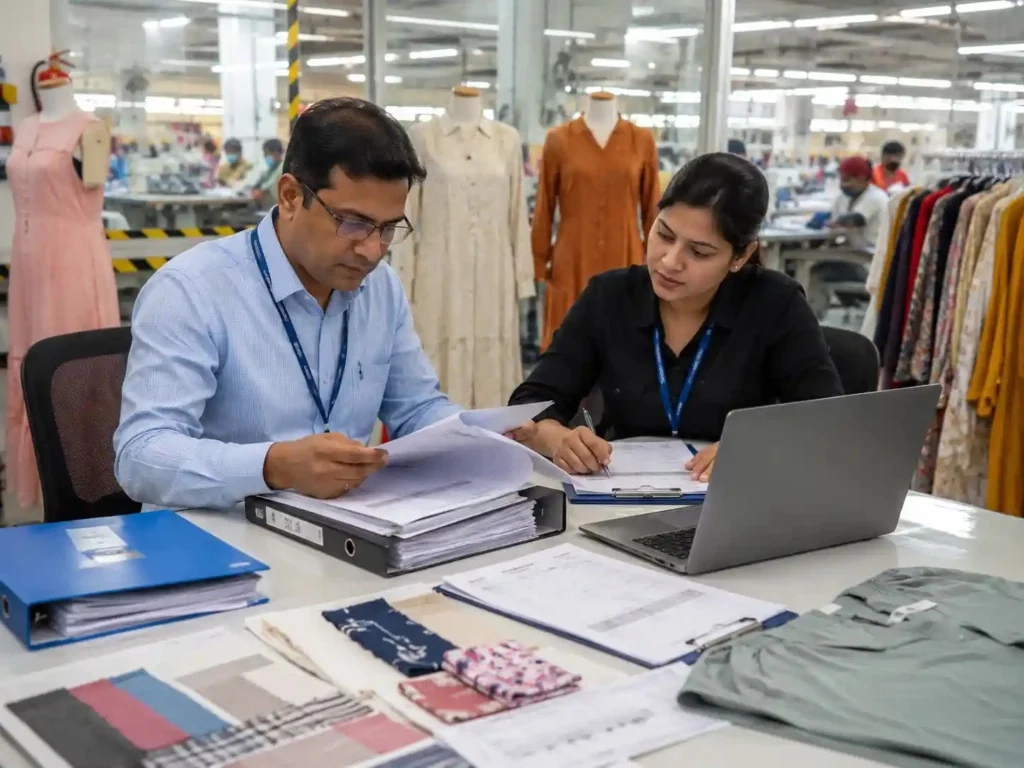
Many brands compare manufacturing countries mainly by unit price.
A lower factory quotation does not always mean a lower final production cost.
When developing dresses, your final cost can be affected by:
- fabric selection
- fabric consumption
- pattern complexity
- trims and accessories
- sample adjustments
- production quantity
- packaging requirements
- shipping method
A corset dress may require additional pattern adjustments, boning support, lining construction, and more fitting rounds compared with a simple loose silhouette. A dress with boning, cups, layered skirts, or detailed embellishment usually requires more development time than a simple slip silhouette.
Even if both are produced in the same country, the manufacturing cost can vary significantly.
One advantage of China’s apparel manufacturing industry is that brands can often work with connected suppliers for fabrics, trims, printing, embroidery, and garment production within the same sourcing network.
Portugal can also provide quality garment production, but the manufacturing cost structure is usually different due to labor costs and production scale.
For your brand, it is more practical to compare the complete production process rather than only the factory quotation.
MOQ and Production Flexibility for Growing Fashion Brands
MOQ is one of the first questions many new brands ask before contacting a manufacturer.
Many new brands approach manufacturers with several designs but are still testing which styles have stronger market potential.
Because China has different types of apparel factories, brands can often find suppliers for different production needs, from sample development and small test orders to repeat bulk production.
For example, some brands may start with smaller quantities for testing and increase production after confirming market response.
Portugal can also support quality-focused collections, but production flexibility depends more on the individual factory size and business model.
When you compare manufacturers, you should ask:
- What is the MOQ per style?
- Can different colors be combined?
- How are sample costs handled?
- Can the factory support repeat orders?
These questions usually give you a clearer picture than comparing countries alone.
Product Development: Turning Dress Designs Into Production
The biggest difference between a concept and a finished garment appears during development.
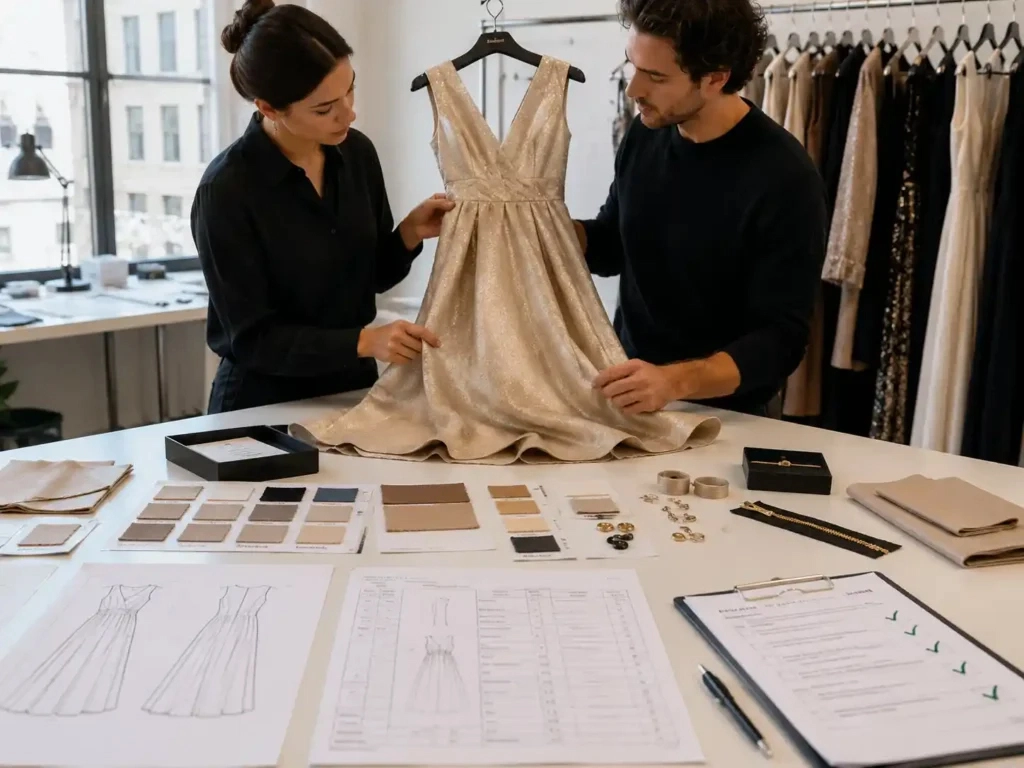
Many brands send a sketch, reference image, or existing garment and expect the manufacturer to understand the final product immediately. However, a sketch or reference image alone is not enough to start production. The factory needs to confirm the construction details behind the design.
Before a dress enters production, the factory team needs to confirm measurable details such as fabric behavior, pattern structure, fitting requirements, sewing construction, and finishing details.
During development, the process usually includes:
- Reviewing tech packs, sketches, reference samples, or existing garments provided by the brand
- Developing patterns
- Creating samples
- Checking fitting and construction
- Making adjustments
- Approving the PP sample before bulk production
China’s apparel industry has developed a complete supporting system around these steps. Brands working on customized dresses can usually access different fabric options, trims, printing, embroidery, and other production resources.
Portugal also has experienced garment manufacturers, especially for brands looking for European-based production.
Fabric Supply and Material Options
For dress brands, fabric choice can influence both appearance and production difficulty.
A satin slip dress, chiffon bridesmaid dress, and sequin evening dress may look simple from a design perspective, but each requires different handling during manufacturing.
One advantage of working with Chinese apparel manufacturers is that brands can usually access a wider supplier network for fabrics, trims, printing, embroidery, and garment accessories during development, including:
- chiffon
- satin
- lace
- velvet
- sequins
- printed fabrics
- stretch fabrics
Having access to different suppliers also allows brands to compare fabric performance, color options, minimum order requirements, and production costs before making final decisions.
Portugal has its own textile strengths and can be suitable for brands that prefer European sourcing.
Your choice should depend on the materials your collection requires and how much flexibility you need during development.
Quality Control: Is Manufacturing Quality Different Between China and Portugal?
When brands compare overseas manufacturers, quality control is usually one of the first concerns. However, consistent garment quality is created through production control rather than the manufacturing location itself.
During dress production, issues such as uneven hems, incorrect measurements, puckering seams, or poor pressing results usually come from unclear specifications or weak process control.
A reliable dress manufacturer should have quality checks throughout production:
- fabric inspection before cutting
- checking measurements during sewing
- reviewing construction details
- final garment inspection before shipment
Many production issues can be reduced when specifications are clear and samples are approved before bulk production.
Approved samples and clear production specifications give both the brand and factory a reference point before bulk production starts.
Lead Time and Communication Considerations
The production timeline of a dress order is affected by several practical steps, including fabric availability, sample approval speed, production scheduling, and inspection arrangements.
A dress order timeline includes:
- design confirmation
- sample development
- fabric preparation
- production scheduling
- bulk manufacturing
- inspection
- shipment arrangement
China may provide advantages when your project requires multiple suppliers, because many production resources are located within the same manufacturing regions.
Portugal may be convenient for European brands that want shorter transportation distances.
However, the factory’s communication process is often more important than the physical distance.
A manufacturer that understands your requirements can help avoid delays caused by repeated revisions or unclear specifications.
Which One Should Your Fashion Brand Choose?
The right choice depends on what your brand needs from the manufacturing process.
China may be a suitable option if you need:
- flexible production options
- competitive manufacturing costs
- wider fabric choices
- support for different dress categories
- scalable production capacity
Portugal may be a better fit if you prioritize:
- European production location
- shorter regional shipping distance
- specific craftsmanship requirements
However, the manufacturer itself is often more important than the country. A capable factory with clear communication, technical experience, and stable production management can reduce many risks during development.
FAQ
1. What should brands check before choosing between China and Portugal for dress manufacturing?
Before choosing between China and Portugal, brands should compare factors such as production cost, MOQ, fabric availability, development support, quality control process, and communication efficiency. The right choice depends on the product requirements rather than the country alone.
2. Does choosing a European manufacturer guarantee better quality?
Not necessarily. Quality depends on production management, technical experience, inspection procedures, and communication. A well-managed factory in any country can produce consistent garments when specifications and quality standards are clearly defined.
3. What should I prepare before contacting a dress manufacturer?
Before contacting a manufacturer, prepare key product information, such as sketches, reference images, measurements, estimated quantities, fabric preferences, and branding requirements.
4. Is production cost the most important factor when choosing a manufacturer?
Production cost matters, but it should be considered together with quality control, development support, communication, and delivery reliability. A lower price may create extra costs if problems occur during production.
5. How can a new fashion brand reduce risks when starting production?
New brands can reduce production risks by confirming samples carefully, reviewing measurements and construction details, and making necessary changes before bulk production begins.
Conclusion
Choosing between China and Portugal for dress manufacturing depends on your product requirements, order plans, and development expectations. A suitable manufacturing partner should support the complete process — from fabric sourcing and pattern development to sample approval, bulk production, and final inspection.
For this reason, choosing the right manufacturing partner is often more important than choosing a country alone. At Xiuyu Apparel, brands usually provide sketches, tech packs, reference garments, or product photos first. Our development team reviews construction details before moving into sampling and bulk production.
Related Dress Manufacturing Services
If you are developing a new dress and need support with fabric selection, internal construction, sampling, and bulk production, an experienced clothing manufacturer can help you deal with these decisions before they become production problems.
At Xiuyu Apparel, we work with fashion brands, startups, designers, and private label companies from sample development through bulk production.
- Maxi Dress Manufacturer
- Halter Dress Manufacturer
- Bridesmaid Dress Manufacturer
- Slip Dress Manufacturer
Get a Clothing Manufacturing Quote Based on Your Design
If you already have a garment design, send us the product photo, tech pack, or reference sample together with your target quantity.
As a dress manufacturer, we can review the fabric, lining, construction, trims, workmanship, and finishing requirements before preparing a quotation based on the actual garment rather than a general price range.

