

When you develop a midi skirt collection, the first sample is only the beginning. Moving from a design concept to stable bulk production requires careful control of fabric, pattern, and construction details. Small differences in fabric performance, pattern balance, or construction methods can affect the final fit and appearance of the bulk order. As a clothing manufacturer, we work with brands, designers, and buyers during the stages of fabric evaluation, pattern development, sampling, and bulk production to make sure each style is suitable for manufacturing.
1. Design Review and Production Planning
Before production starts, you need to provide enough product details for the factory to understand how the skirt should be constructed and finished. This usually includes sketches, tech packs, reference garments, measurements, fabric requirements, and construction details.
A midi skirt may look simple, but small design changes can affect production. The waistband structure, skirt volume, lining, zipper position, and finishing details all need to be reviewed before pattern development begins.
During this stage, we review whether the design is practical for production and check details that may cause problems later, such as difficult sewing operations or unstable fitting.
For example, a skirt with a wide waistband or layered construction may require additional pattern adjustments before sampling because small changes can affect the final fit.
2. Fabric Selection and Pre-Production Preparation
The fabric you choose affects the final appearance, fitting, and production performance of a midi skirt. You need to consider not only appearance but also weight, drape, shrinkage, stretch, and sewing performance.
For example, satin midi skirts require careful handling because slippery fabrics can affect cutting accuracy and seam alignment. Chiffon styles often need lining consideration because lightweight fabrics may influence coverage and structure. Knit fabrics require attention to stretch recovery to maintain the correct fit.
Before bulk production, fabric inspection helps confirm whether the material performs as expected during cutting, sewing, and finishing.
Some fabrics may look suitable from a design perspective but create difficulties during sewing or pressing, so material testing before bulk production is important.
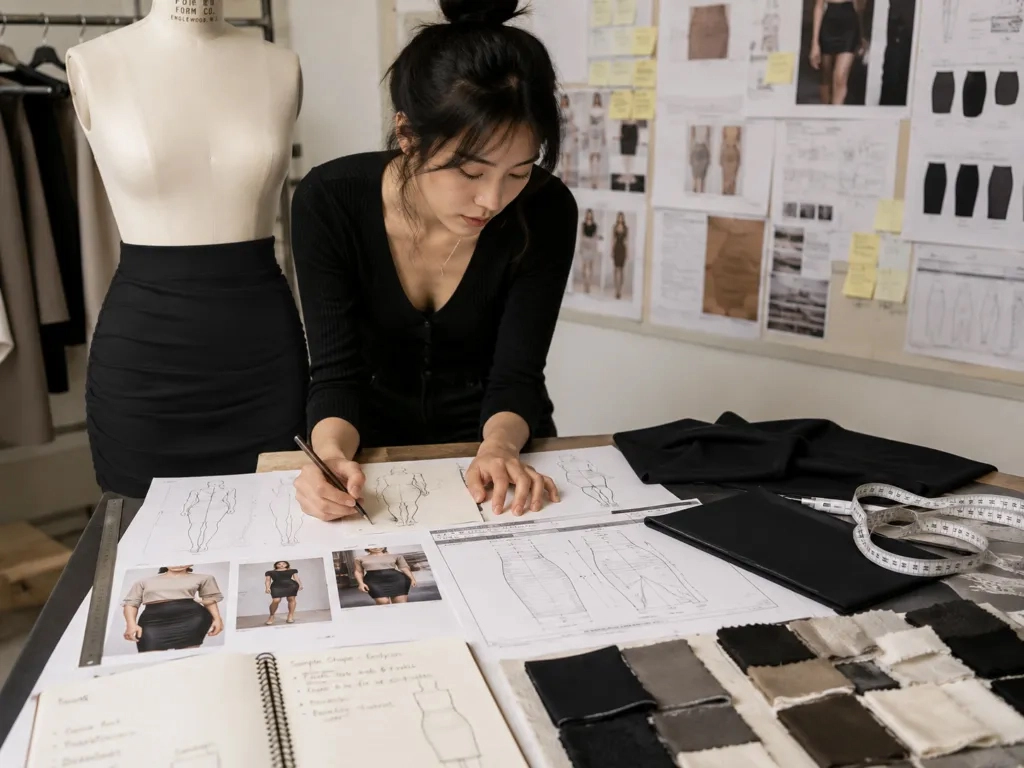
3. Pattern Development and Sample Making
Once the production details are confirmed, the pattern team creates the first version based on your design requirements.
The sample stage gives you the opportunity to review important details, including:
- overall silhouette
- waist and hip fitting
- skirt length
- seam construction
- finishing quality
A sample is used as a reference for both appearance and production details before bulk manufacturing starts. It allows both sides to identify fitting or construction problems before production begins.
After feedback is collected, the pattern and construction details can be adjusted until the sample reflects the final production standard.
During sample review, the factory may adjust the waist curve, hem balance, or seam allowance based on fitting results.
4. Bulk Cutting and Production Setup
After sample approval, the factory prepares for bulk production. Cutting needs careful planning because fabric layout affects material usage, sizing accuracy, and the consistency of finished garments.
Before cutting begins, the fabric is usually inspected, spread, and arranged according to the cutting plan. The pattern layout needs to consider fabric direction, size combinations, and material characteristics.
For midi skirts with special structures, such as pleats, bias cuts, or printed fabrics, careful cutting preparation helps keep the finished garments consistent throughout the order.
5. Sewing and Garment Assembly
During sewing, different midi skirt designs require different production techniques.
For example:
- A pleated midi skirt requires accurate pleat positioning and pressing control.
- A satin midi skirt requires careful seam handling to avoid visible imperfections.
- A lined midi skirt requires proper attachment between outer fabric and lining.
At this stage, operators follow approved samples and production specifications to keep each piece consistent. Construction details such as waistband attachment, zipper installation, hem finishing, and stitching quality are checked throughout the process.
For longer midi skirt styles, controlling fabric tension during sewing is important because uneven handling can affect the final drape.
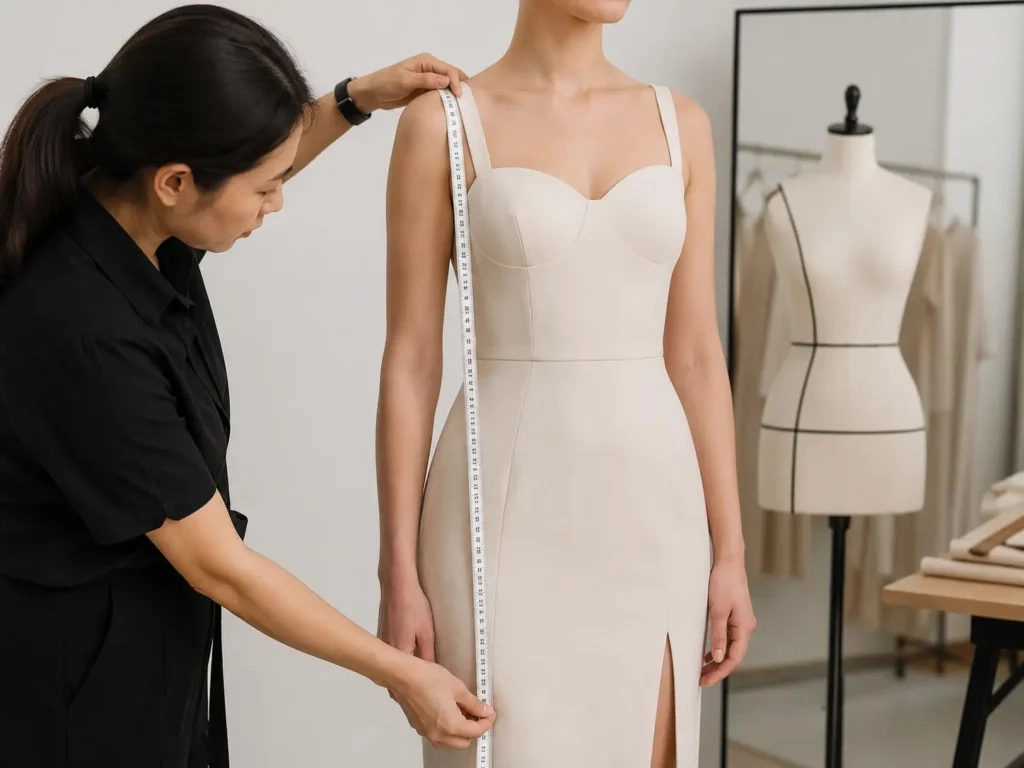
6. Quality Control During Midi Skirt Production
Quality checks usually happen throughout production instead of waiting until the final inspection stage.
During production, inspectors check details such as:
- stitching quality
- measurements
- seam strength
- fabric appearance
- construction accuracy
When an issue appears during production, the production team can correct it before continuing with the remaining pieces.
Inline inspection allows problems to be corrected while production is still running instead of discovering them after all pieces are completed.
Checking measurements during production is especially important because small deviations can become more noticeable in longer skirt silhouettes.
For brands and retailers, this helps avoid common bulk production problems such as inconsistent measurements or uneven finishing.
7. Final Inspection and Private Label Preparation
Before shipment, finished midi skirts go through a final inspection to confirm that products match the approved sample and production requirements.
The inspection usually covers garment appearance, measurements, labels, packaging, and overall finishing.
For private label brands, the final stage may also include custom requirements such as woven labels, hangtags, care labels, barcodes, and customized packaging.
A complete production process helps make sure your midi skirts are finished according to the approved sample and production details before entering your sales channels.
What Should You Prepare Before Starting Midi Skirt Production?
Before contacting a manufacturer, preparing clear product information can make the development process smoother.
You should consider providing:
- design sketches or reference images
- measurement specifications
- preferred fabrics
- target quantity
- branding requirements
- packaging expectations
The more production details you can share, the easier it is for the factory to evaluate your project and provide accurate feedback.
FAQ
1. How long does it take to develop a custom midi skirt sample?
For standard styles, the first sample can often be completed within several days after all materials and specifications are confirmed. More complex designs may require additional fitting rounds.
2. What information does a manufacturer need to quote a midi skirt project?
A manufacturer usually needs details such as design references, fabric preferences, quantity, target market, and branding requirements. Having these details ready allows the factory to review your project more accurately and provide a more realistic quotation.
3. How can brands reduce problems during bulk midi skirt production?
Many production problems happen because specifications are incomplete or materials have not been fully evaluated before production. Providing accurate measurements, approving samples carefully, and confirming fabric performance before bulk production can help avoid unnecessary production adjustments after bulk manufacturing starts.
4. Can a manufacturer help improve a midi skirt design before production?
Yes. A manufacturer familiar with similar skirt constructions can review details and suggest practical adjustments before production. These suggestions may include fabric alternatives, sewing methods, or pattern changes that improve manufacturability.
5. What causes differences between samples and bulk midi skirts?
Differences between samples and bulk orders usually happen when materials, measurements, or production instructions are not controlled carefully. Keeping the same fabric, measurements, and sewing methods from sample approval through bulk production is important for maintaining the final result.
Conclusion
Manufacturing midi skirts requires more than sewing fabric together. From design review and material selection to sampling, production, and inspection, each step affects the final quality. When you understand the factory process, you can communicate requirements more clearly, reduce production risks, and develop midi skirt collections with better consistency.
Related Skirt Manufacturing Services
If you are developing a new skirt and need support with fabric selection, internal construction, sampling, and bulk production, an experienced clothing manufacturer can help you deal with these decisions before they become production problems.
At Xiuyu Apparel, we work with fashion brands, startups, designers, and private label companies from sample development through bulk production.
Get a Clothing Manufacturing Quote Based on Your Design
If you already have a garment design, send us the product photo, tech pack, or reference sample together with your target quantity.
As a skirt manufacturer, we can review the fabric, lining, construction, trims, workmanship, and finishing requirements before preparing a quotation based on the actual garment rather than a general price range.

