

When you are building a new dress collection, having enough design ideas is rarely the main problem. The harder decisions usually come later: which styles are worth sampling, how many styles your budget can support, and where to spend development time first. From a clothing manufacturer’s side, we often see collections become complicated because fabric, fit, MOQ and sampling requirements are considered too late. Sorting these points out before development can reduce a lot of back-and-forth later.
Start With Your Brand Positioning
Start by defining what the collection needs to do for the brand.
Look at your target customer, price range, season and main selling channel. A boutique selling occasion dresses may need a very different range from a new DTC brand focused on everyday pieces. A resort collection also has different fabric and construction requirements from a winter occasionwear range.
You do not need to have every detail fixed before contacting a clothing manufacturer. It helps to have a clear idea of:
- Who you are selling to
- Your target retail price
- Main selling season
- Main wearing occasions
- Expected sales channel
- Overall design direction
These decisions affect production later.
For example, if your target price is relatively low, a dress with multiple layers, extensive handwork and complicated internal construction may create problems before you even reach bulk production. If you know the price position early, you can make better decisions about fabric and construction while the design is still flexible.
Choose the Hero Styles First
Your hero styles are the dresses that give the collection its first impression.
They may be used in campaign photography, on your homepage, in launch content or as the main pieces shown to buyers. They do not necessarily need to become your highest-volume styles. Their role is often to show what makes the collection different.
When selecting these styles, look at more than the sketch.
A neckline may look simple on paper but require several fitting changes. A draped skirt may depend heavily on fabric weight and grain direction. A backless dress may need additional support or changes to the pattern to keep the garment stable during wear.
A manufacturer can usually spot some of these issues before the first sample is made.
When we review a new dress design, we look at the intended silhouette together with the fabric, construction and pattern requirements. A design that looks straightforward in a drawing may become much more involved once it is turned into a physical garment.
Your hero styles might include:
- A distinctive silhouette
- Strong neckline or back details
- Statement sleeves
- Draping or ruching
- Unusual cut-outs
- Custom print placement
- Special trims or embellishment
Try not to make every style a statement piece. If every dress requires extensive development, the collection can become difficult to sample, cost and reproduce.
Build Core Styles Around the Hero Pieces
Once you know which dresses represent the collection, add styles that customers can understand more quickly.
These are usually the styles that give the collection its commercial base.
They may include familiar shapes such as slip dresses, A-line dresses, bodycon dresses, shirt dresses, wrap dresses or simple maxi dresses. The exact silhouettes depend on your customer, but the purpose is similar: give the collection products that are easier to wear, price and reorder.
A hero style can often be simplified into two or three related products.
Suppose your hero piece is a draped maxi dress. You might develop a simpler maxi using a related fabric or construction approach. A slip dress could then provide another price point, while a shorter version gives the customer a different length option.
This also makes it easier to carry the same fabric, trim or construction details across several styles.
From the production side, this relationship can also be useful. Related styles may share certain construction methods, trims or fabric groups, which can reduce unnecessary development work.
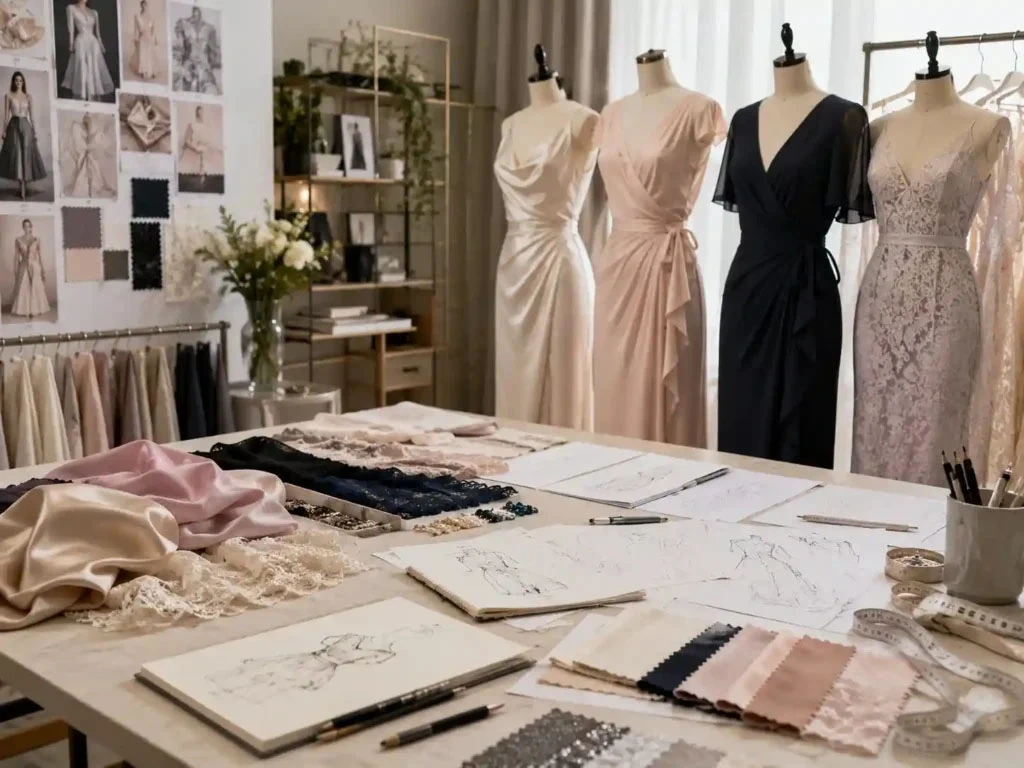
Use Supporting Styles to Fill the Gaps
Supporting styles do not need to compete with your hero products.
They give the collection more room to work with different lengths, necklines, sleeves and fabrics.
You might use them to introduce another length, neckline, sleeve or fabric without creating an entirely new design direction. A summer collection, for example, could have a few stronger maxi dresses alongside simpler mini dresses, shirt dresses and lightweight slip styles.
Supporting styles can also be useful for testing something new.
If you are considering a new print, sleeve shape or fabric but do not yet know how customers will respond, putting that idea into a supporting style can carry less development risk than making it the main product of the collection.
When you review your range as a whole, ask whether each style has a reason to exist.
If two dresses look almost identical and target the same customer at the same price, you may not need both. If one fills a different occasion, price point or styling need, the overlap may make more sense.
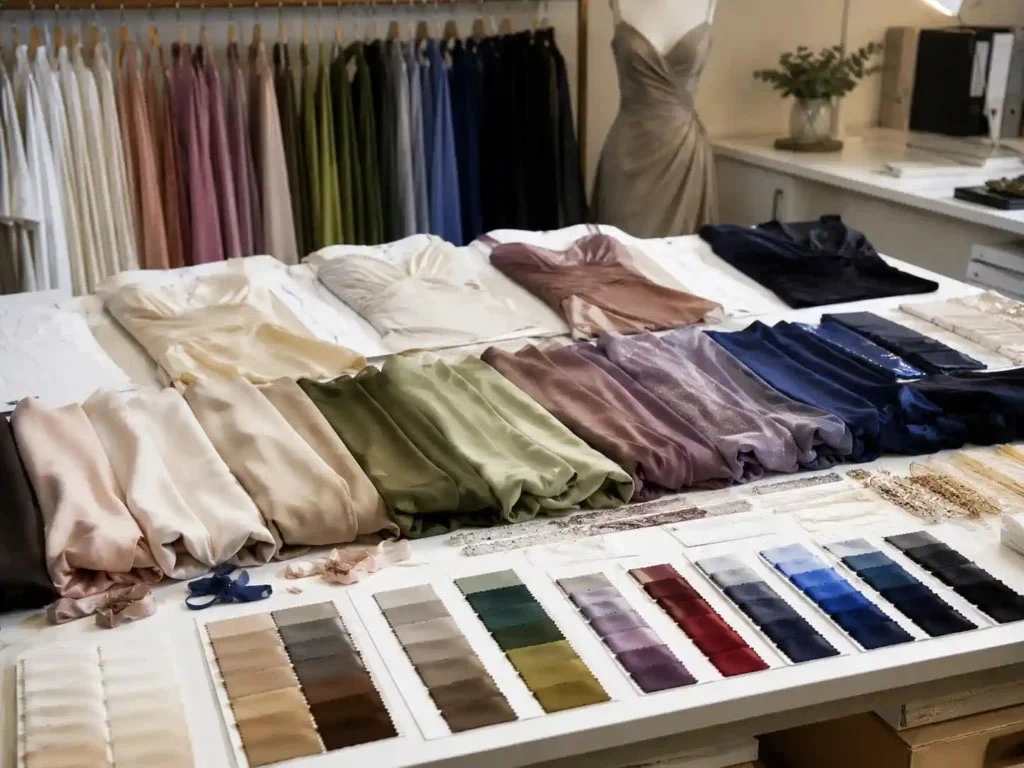
Fabric and Dress Design Need to Be Considered Together
Fabric selection and dress design usually need to be worked out together.
A dress pattern does not behave the same way in every material. Chiffon, satin, cotton poplin, rayon and linen blends each create different requirements during cutting, sewing, pressing and finishing.
The main fabric points to check are:
- Fabric weight
- Drape
- Stretch and recovery
- Shrinkage
- Opacity
- Width
- Surface texture
- Sewing behavior
- Lining requirements
A fitted dress behaves differently in stretch and non-stretch fabrics. A fabric with good recovery may require a different pattern approach from a woven fabric with no stretch. The same neckline can also sit differently when the fabric becomes heavier or more fluid.
For printed dresses, there is another consideration: the artwork.
Print scale, repeat direction and panel placement can affect how much fabric is needed and how the finished garment looks. A large floral print that works on a loose maxi may need more attention when used on a fitted bodice.
If you already have a preferred fabric, provide the fabric composition, weight or swatch as early as possible. If you are still choosing, explain what you need from the fabric rather than selecting only by appearance.
How Many Styles Can a New Brand Actually Develop?
A new brand can easily end up with too many styles on the development sheet.
Twenty designs may look manageable when they are only sketches. Once you add patterns, fabric sourcing, samples, revisions, colors, sizes and production quantities, the workload becomes very different.
The right number depends on the collection and the resources behind it.
Look at your development budget, expected sales, available inventory and the amount of attention each style requires.
As a planning example, a small collection might contain:
- 2–3 hero styles
- 4–5 core styles
- 3–4 supporting styles
That is only a planning example. You may need fewer styles for a tightly focused launch, or more if you are supplying several retail channels.
Style count is only one part of the SKU calculation.
Ten dresses in one color are very different from ten dresses in three colors and six sizes. Once you add size and color combinations, your inventory requirement can grow quickly.
Before approving the full range, calculate the collection by style × color × size, not just by the number of designs.
Which Styles Should You Sample First?
Sample order matters when some styles are much harder to develop than others.
If one of your hero styles has complicated draping, a difficult fabric or an unusual construction, it makes sense to test that style early. You do not want to discover after developing the rest of the collection that the key fabric cannot achieve the intended shape or that the construction needs major changes.
We often pay particular attention to:
- New silhouettes
- Close-fitting styles
- Unfamiliar fabrics
- Complicated draping
- Cut-outs
- Special sleeves
- Heavy embellishment
- Unusual closures
- Print placement
The first sample is mainly for checking the pattern, fabric behavior and construction. Fit problems are easier to identify at this stage than after the style has moved into bulk production.
When you receive a sample, record specific changes. Instead of saying “the fit is too loose,” note where the garment is loose and by how much. If the waist is correct but the bust is too large, that distinction matters to the pattern maker.
Clear comments make the next revision much more useful.
Give Your Manufacturer Enough Information to Start
You do not always need a finished technical package before speaking with a factory.
Some projects start from a complete tech pack. Others begin with a sketch, reference photograph, existing garment or physical sample.
What matters at this stage is that the key requirements are clear.
Depending on the project, you may need to provide:
- Reference design
- Measurement chart
- Fabric information
- Color reference
- Size range
- Construction details
- Artwork or print file
- Trim information
- Label requirements
- Packaging requirements
If something is non-negotiable, say so.
For example, you may be flexible about the fabric composition but not the finished drape. Or you may accept pattern adjustments but need the neckline and hem length to remain close to the original design.
This distinction helps the pattern team know where they can make practical changes and where they need to stay close to your reference.
Check Cost Before the Design Is Locked
It is better to check costing while the design is still flexible.
If you wait until every design is finalized, you may find that some styles no longer fit the target retail price. At that point, reducing cost can mean changing the design itself.
Instead, check the major cost drivers while the collection is still being developed.
Look at:
| Cost Factor | What Can Affect the Cost |
|---|---|
| Fabric | Composition, weight, width, sourcing and MOQ |
| Construction | Number of panels, seams and sewing operations |
| Lining | Coverage, fabric usage and additional sewing |
| Trims | Zippers, buttons, hardware and other components |
| Printing | Method, artwork size, repeat and placement |
| Embellishment | Beading, sequins, appliqué and handwork |
| Quantity | Fabric purchasing and production efficiency |
| Packaging | Labels, hangtags, polybags and cartons |
Keep sample development cost separate from the eventual bulk production cost.
A style may need more development work during sampling but become straightforward once the pattern and construction are approved. Another style may look simple but require expensive fabric or special trims in every production run.
Looking at both stages gives you a more realistic picture.
Review the PP Sample Before Bulk Production
Once the design has gone through revisions, the PP sample becomes an important production reference.
Do not review it only from the front and decide whether it “looks right.”
Check the measurements against the approved specifications. Look at seams, closures, lining, labels, print placement and finishing. Try the garment on if possible, particularly when fit or movement is important.
For some styles, you should also check:
- Strap position
- Bust coverage
- Waist placement
- Hem balance
- Transparency
- Ease of movement
- Stretch recovery
- Closure performance
The PP sample gives you a final opportunity to catch issues before bulk production starts.
Once it has been approved, the approved sample and production specifications become the reference for the production floor.
The production team needs a specific reference to follow. General comments such as “keep the same fit” are much harder to control than an approved sample with clear measurements and construction details.
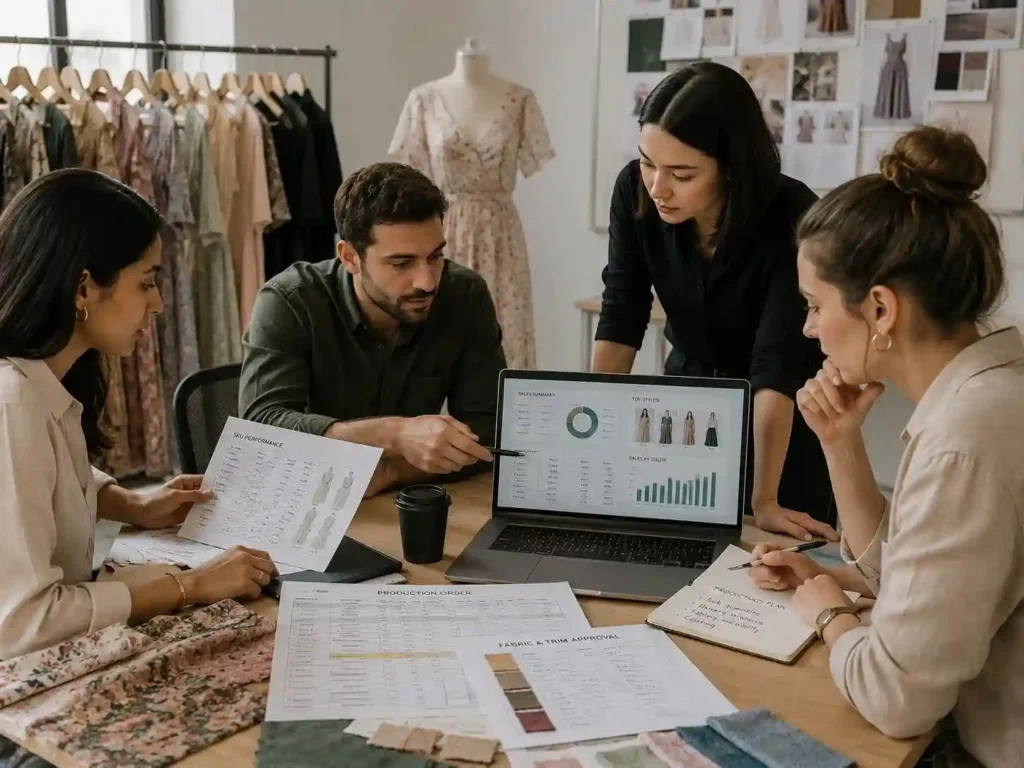
Plan MOQ and Quantity by Style
MOQ is not just a number you receive from a factory.
Your actual production quantity can be affected by fabric availability, fabric MOQ, color count, special trims and the construction of the garment.
For a new brand, ordering the same quantity for every style may not always make sense.
A hero style with strong launch support may justify a larger quantity. A new silhouette that you are still testing may need a more cautious first order.
Fabric grouping is another point worth checking.
If several styles use the same or closely related fabrics, material planning may become easier. If every style requires a completely different fabric, color and trim combination, the collection can become more complicated before production even starts.
Discuss these points before confirming quantities rather than trying to solve them after the purchase order has been issued.
Plan the Collection Backward From Your Launch Date
Work backward from the date you actually need the collection to launch.
If you need samples for a photo shoot, the photo-ready samples need to be finished before the shoot. If bulk goods must arrive before a retail launch, fabric sourcing, sample revisions, PP approval, bulk production, inspection, packing and shipping all need to fit into the calendar.
A simple production timeline might look like:
Design reference → Fabric confirmation → Pattern development → First sample → Fit revision → PP sample → Bulk material preparation → Cutting → Sewing → QC → Packing → Shipment
A complicated dress may need several sample revisions, so leave enough time between the first sample and PP approval instead of treating sampling as the last step before production.
Do not leave all sampling until the end of the collection development period. A difficult hero style can hold up your launch if it needs several revisions and you have not allowed enough time.
What to Check Before Choosing a Dress Manufacturer
When you compare a dress manufacturer, look beyond the sewing floor.
The useful comparison is what happens before bulk production, not only what happens on the sewing floor.
Ask whether the factory has its own pattern development and sample-making capability. Find out how fabric sourcing is handled, how sample comments are recorded, how PP approval works, and how quality is checked during production.
For a dress collection, the useful capabilities may include:
- Pattern making
- Sample development
- Fabric sourcing
- Fit revisions
- Bulk cutting
- Sewing
- In-line QC
- Final inspection
- Private label labeling
- Packaging
Expected quantity and development timing should also be discussed before the full collection is confirmed.
If a neckline needs to be changed during sampling, the pattern can still be adjusted. Once the same issue reaches bulk production, changing it is much more difficult.
FAQ
1. Can I develop a dress collection if I only have sketches?
Yes. A sketch can be enough to start discussing the project, especially if you can also explain the intended fit, fabric direction and key design details. The pattern team may need more information before sampling, a complete tech pack is not always required at the first stage.
2. Should I use one manufacturer for every dress in my collection?
You can. Whether it makes sense depends on the range. If the collection contains very different categories or specialized techniques, different factories may have different strengths. If you want one production partner, check whether its pattern, fabric, sampling and bulk capabilities actually match the styles you plan to develop.
3. How early should fabric sourcing start?
Start earlier for fabrics with unusual compositions, custom colors, prints or higher minimums. A common stock fabric may be easier to source, while a custom fabric can add lead time before sampling can even begin. Ask about availability before fixing your development schedule.
4. What happens when two styles need the same fabric but different colors?
The fabric itself may be the same, but each color can have different availability or minimum requirements. If custom dyeing is involved, color development also needs time. It is worth checking the fabric mill or supplier requirements before finalizing the color range.
5. How do I avoid making too many changes during sampling?
Make your comments in one organized round whenever possible. Separate fit corrections from design changes and fabric issues, and mark measurements or photos where needed. Sending scattered comments over several messages can make it harder for the pattern team to know which version is the current approved direction.
Conclusion
Planning a dress collection becomes much easier when production requirements are considered before the designs are fully locked.
Start with the styles that matter most to the collection, then build the core and supporting range around them. Check fabric behavior, sample requirements, costing and MOQ while there is still room to make changes. For more complicated styles, sample them early and use the approved PP sample as the production reference.
At Xiuyu Apparel, we see the same production issues become much easier to manage when these points are discussed early, before bulk production starts.
Related Dress Manufacturing Services
If your project involves a specific dress fabric or construction, you can also review our related manufacturing pages:
- Cocktail Dress Manufacturer
- Bridesmaid Dress Manufacturer
- Prom Dress Manufacturer
- Chiffon Dress Manufacturer
- One Shoulder Dress Manufacturer
Get a Quote for an Existing Dress Style
If you are transferring an existing dress style to a new manufacturer, send us the latest approved sample, tech pack, product photos, or measurement chart together with your target quantity.
As a dress manufacturer, we can review the construction, fabric, trims, measurements, and current production status with you before confirming the sampling requirements.

