

When a new dress collection reaches the factory, one of the first questions is whether the project will follow an OEM or ODM route. From a clothing manufacturer’s side, the difference goes beyond design ownership. It affects who handles the technical development, what information the factory receives, and how much work needs to happen before the first sample.
OEM and ODM Look Different Once a Dress Enters the Factory
On a quotation sheet, OEM and ODM can look like two simple service options.
On the production floor, the difference is more practical.
If you arrive with a finished design, measurements, fabric requirements, and construction details, the pattern team has a defined product to work from. That is the typical starting point for an OEM project.
If you bring only a concept, reference image, rough sketch, or market direction, the factory may need to help with the garment before a production-ready sample can be made. At that point, the manufacturer is taking on part of the product development work.
The key question is who makes the product decisions before sample approval.
| OEM Dress Manufacturing | ODM Dress Manufacturing | |
|---|---|---|
| Starting point | Your design and specifications | Your concept or product direction |
| Design control | Mainly with your brand | Shared during development |
| Technical development | Based on your requirements | More manufacturer involvement |
| Pattern development | Built around your specifications | Manufacturer may develop or modify |
| Fabric decisions | Often specified by you | Factory may suggest options |
| Sampling | Tests your defined product | Helps develop the product |
| Best fit | Brands with clear designs | Brands needing more development support |
These are working differences rather than strict industry rules. A project can include elements of both models.
What Happens When You Bring Your Own Dress Design?
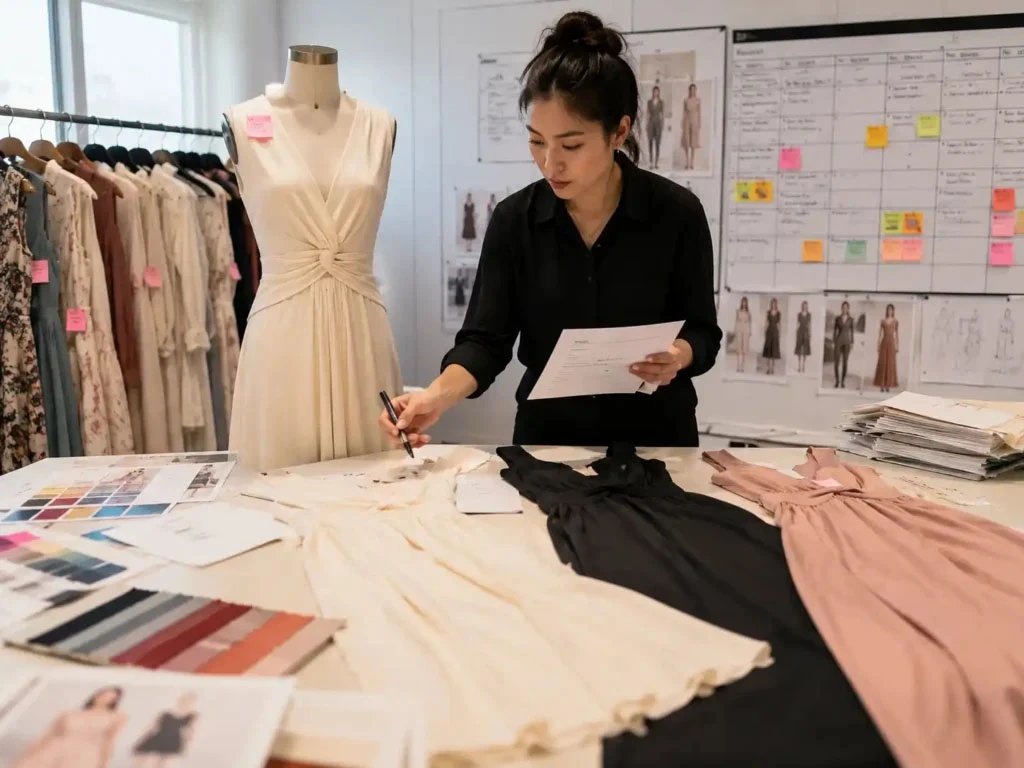
If you already have a dress design ready for production, the factory will normally start with the information you can provide.
You may send the factory a sketch, tech pack, measurement chart, fabric reference, and construction notes. You may also send an existing garment if the fit is important.
The pattern team then has to translate those materials into a pattern that can actually be cut and sewn.
Small changes often appear once the design is turned into an actual pattern.
A neckline may need more support. A skirt may require more fabric to achieve the intended volume. A lightweight fabric may need lining. A fitted bodice may need additional ease around the armhole.
These changes are usually pattern or construction adjustments rather than changes to the original design. The goal is to make the reference work as a finished garment.
With OEM, you normally have more control over those decisions because the starting specifications come from your brand.
If a certain detail is essential, you need to identify it clearly before sampling. Otherwise, the factory may make a technically workable choice that does not match what you had in mind.
What Changes When the Factory Takes a Larger Development Role?
With ODM, you may not arrive with a complete technical package.
You could have a rough idea such as:
A fitted evening dress with a low back, soft drape, and a clean waistline.
That tells the manufacturer the direction, but it does not yet tell the pattern team exactly how to construct the garment.
The factory may need to work through:
- Silhouette
- Fabric options
- Pattern proportions
- Seam placement
- Closure
- Lining
- Fit
- Finishing details
You then review the sample and decide which parts need to change.
This can reduce the amount of technical work you need to prepare before sampling, especially if your brand does not have a large product development team. The trade-off is that more open decisions can also lead to additional sample revisions, so the details that matter to your brand should be clear before the first sample.
OEM vs ODM: Who Controls the Product?
For many brands, the more important question is how much control they want to keep over the finished garment.
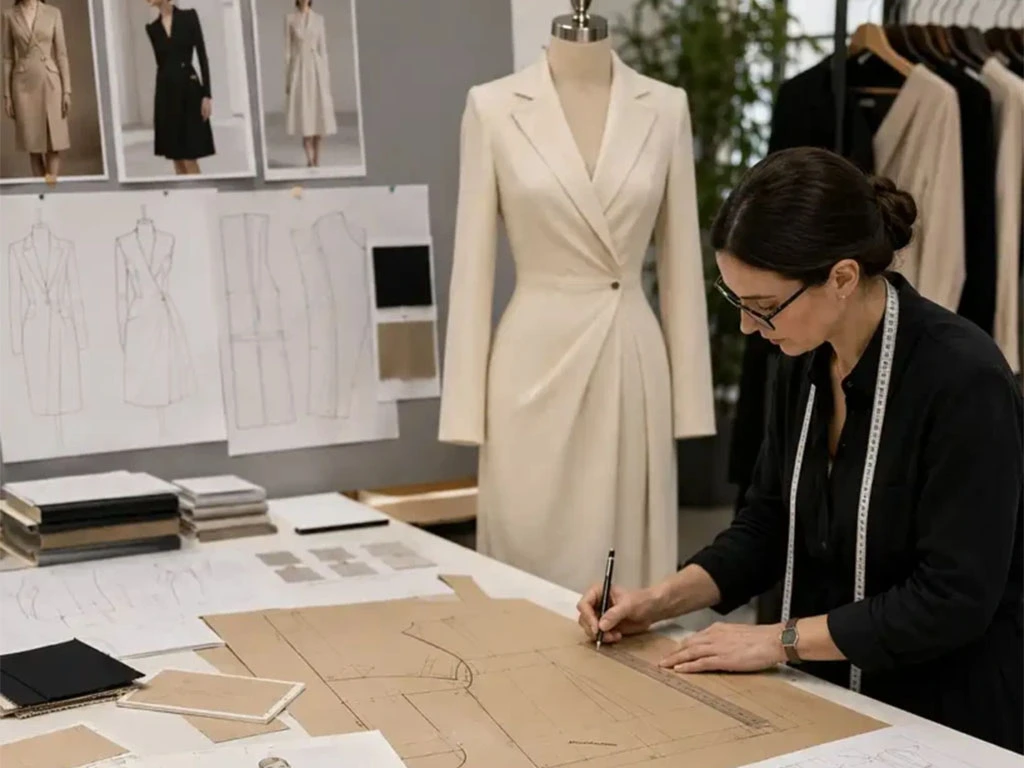
If your brand is built around a recognizable silhouette, specific fit, or unusual construction, you may want to control the garment from the pattern stage.
With OEM, those decisions can stay closer to your original specifications.
You can specify:
- Garment measurements
- Neckline depth
- Waist position
- Skirt length
- Sleeve shape
- Ease
- Fabric characteristics
- Construction details
- Trim placement
The manufacturer still needs to solve production problems, but the starting point is your specification.
ODM works differently.
You give the factory more room to help shape the product. That can save development work on your side, but you need to decide which details are fixed and which can be adjusted.
For example, you may be comfortable changing the fabric weight but not the waist position. Or you may allow the factory to suggest the closure while keeping the neckline unchanged.
That distinction should be clear before the first sample.
Your Tech Pack Can Change the Entire Development Conversation
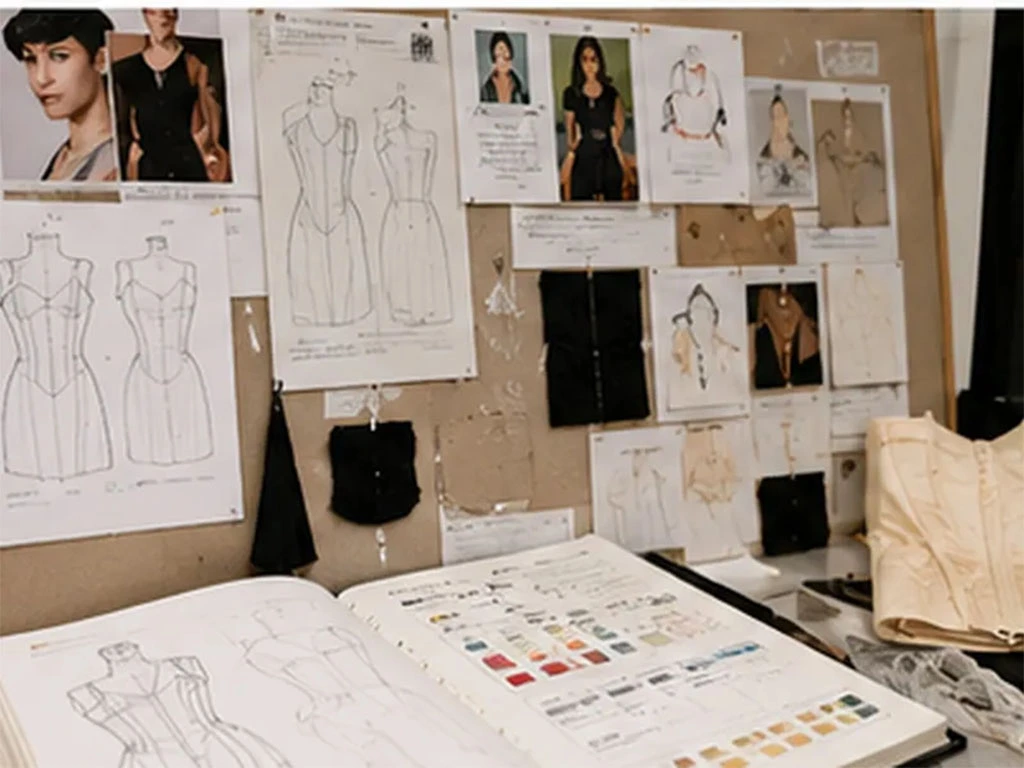
A tech pack does more than list measurements. It shows the factory which parts of the garment have already been decided.
A detailed package may include:
- Technical flats
- Measurement chart
- Size specifications
- Fabric composition
- Fabric weight
- Color references
- Construction details
- Stitching requirements
- Trim information
- Label placement
- Packaging instructions
You do not always need all of these before contacting a factory.
However, there is a practical difference between saying:
“I want a fitted black satin dress.”
and providing:
“Here is the reference silhouette, finished length, bust and waist measurements, fabric direction, lining requirement, zipper position, and neckline construction.”
The second gives the pattern and production teams much less room to make assumptions.
If you are using ODM, some of this information can be developed during the project. If you are using OEM, you normally have more of it decided before sampling.
The First Sample Usually Reveals Which Model You Are Really Using
You may start with what looks like a straightforward design.
After the sample arrives, you notice:
- The bust is too tight
- The waist sits too high
- The skirt does not fall correctly
- The sleeve restricts movement
- The lining pulls against the outer fabric
- The neckline needs reinforcement
- The fabric does not hold the intended shape
In an OEM project, you normally review these points against your specifications.
For example, if the finished waist measurement is outside the approved measurement chart, the correction is relatively clear.
In an ODM project, the discussion may be broader:
Should the waist position change?
Should the fabric be heavier?
Should the skirt construction be adjusted?
Should the silhouette remain loose rather than fitted?
In practice, that usually means more development discussion before an ODM product is finalized.
Both models can require several sample adjustments. What changes is who takes the lead when those adjustments involve fit, fabric, or construction.
Fabric Can Push an OEM or ODM Project in a Different Direction
The fabric can change how the same dress pattern behaves.
A chiffon dress may need lining and careful seam handling. Satin can show puckering or tension around seams more easily. Stretch fabric requires attention to recovery and fit. Cotton poplin can hold a shape that a softer rayon fabric cannot.
You may already have a fabric selected for an OEM project.
If you are working through ODM, the manufacturer may suggest another fabric because the original choice does not give the intended drape, weight, or structure.
That suggestion should not automatically be treated as a product change.
In many cases, the fabric is simply the reason the pattern is not behaving as expected.
From the factory side, it is much easier to solve this before bulk cutting than after the production fabric has already been purchased.
Does OEM or ODM Mean a Different MOQ?
Not necessarily.
MOQ is affected by the production setup, not simply by whether a project is called OEM or ODM.
Your order may be affected by:
- Fabric availability
- Custom dyeing
- Printing
- Number of colors
- Style complexity
- Trims
- Labels
- Packaging
- Order quantity
- Production planning
For example, 300 dresses in one color and 300 dresses split across six colors are not always the same production situation.
The total quantity is identical, but material planning and production setup can be different.
The calculation can also change when the fabric has to be custom developed instead of taken from an available stock program.
For a startup, the quoted MOQ is only one part of the calculation. Fabric commitment, total development cost, and inventory risk can matter just as much.
Look Beyond the OEM or ODM Unit Price
When comparing factory quotations, separate development work from the actual bulk production cost.
With OEM, you may have more responsibility for:
- Tech pack preparation
- Product specifications
- Design development
- Fit comments
- Material decisions
With ODM, the manufacturer may take on more of that work.
But that does not mean ODM automatically costs more or OEM automatically costs less.
The useful comparison is what each quotation actually includes.
For example:
Development
Pattern work, sampling, revisions, fabric sourcing.
Production
Fabric, cutting, sewing, finishing and quality control.
Branding
Labels, hangtags and packaging.
Additional work
Special printing, embroidery, trims or construction requirements.
Two factories can quote the same unit price while including very different amounts of development work.
For your first order, understanding the scope of the quote can be more useful than comparing two numbers line by line.
When Does OEM Make More Sense for Your Brand?
OEM tends to work better when most of the product decisions have already been made.
You may have:
- A complete design
- A detailed tech pack
- An established fit
- Specific fabric requirements
- Your own pattern
- A reference garment
- Detailed construction instructions
It can also make sense when the dress itself is part of your brand identity.
If your customers recognize your collection because of a particular silhouette, fit, or construction detail, adapting the product around an existing factory development may not give you enough control.
In that situation, consistency matters beyond the first order. The approved pattern, fabric, measurements, and construction details all need to remain usable when the style is reordered.
When Can ODM Be Useful for a Fashion Startup?
ODM is often easier for a startup that knows what the collection should look like but does not yet have every technical detail worked out.
You may know:
- Who your customer is
- What price range you are targeting
- What type of dresses you want
- What styles are selling in your market
- What overall look your collection should have
But you may not have an in-house pattern maker or product developer.
Instead of preparing every technical detail yourself, you can involve the manufacturer earlier.
This is common with first collections, when a small team is still working out which silhouettes need another round of development and which can move forward.
You should still decide which parts of the product define your brand.
If every detail is left open, you may save work at the beginning but spend more time correcting the product later.
What If You Are a Designer With Strong Product Control?
If you already work with detailed sketches and technical specifications, you may naturally prefer an OEM-style workflow.
The important details may be as specific as shoulder proportion, waist position, neckline depth, skirt volume, sleeve shape, fabric behavior, and fit.
You want the factory to understand those decisions rather than replace them with a simpler construction.
A reference garment can be particularly useful here.
If you have an approved sample from another manufacturer, send it with your specifications and clearly identify what must remain unchanged and what you want to improve.
That gives the pattern team something physical to evaluate rather than relying only on drawings.
What If You Are a Buyer, Boutique, Retailer, or Wholesaler?
Your priorities may be different from those of a designer.
You may care more about whether the factory can consistently reproduce the garment at the quantity you need.
Before choosing a manufacturing model, look at:
- Repeat production
- Fabric availability
- Size consistency
- Color consistency
- Delivery planning
- Packaging
- Label requirements
- Quality standards
- Reorder capability
The first approved sample is not enough if the style will be reordered.
The approved pattern, fabric information, measurements, construction details, and quality requirements should remain clear for future production.
This is especially important when your selling season depends on a specific delivery window.
OEM vs ODM Is Not the Same as Custom vs Private Label
These terms are sometimes mixed together during supplier conversations.
OEM and ODM mainly describe how the product is developed and how much the manufacturer participates in that development.
Private label usually refers to selling a manufacturer’s existing or adaptable product under your own brand, often with changes to branding, color, fabric, fit, or selected details.
Custom manufacturing is broader. It can involve developing a garment around your own specifications, whether the manufacturer is involved heavily or only in specific technical areas.
So a project can contain overlapping elements.
You might use an existing base style, change several construction details, develop a new pattern, and add your own branding.
For supplier discussions, it is often more useful to list the actual work required than to focus too much on the label.
Can One Dress Project Use Both OEM and ODM Development?
Yes.
In factory projects, the two models often overlap.
A brand may provide the overall design but ask the manufacturer to recommend the fabric.
Another project may come with a reference garment but still require the factory to improve the fit.
A detailed tech pack may still need pattern adjustment after the fabric is changed.
Some projects start with an early concept and become more specific as samples are developed.
The important part is to agree on responsibilities before development begins.
Write down:
- What you provide
- What the manufacturer develops
- Which details are fixed
- Which details can change
- What needs approval
- What is included in sampling
- What happens when revisions are required
Putting these points in writing also gives both sides something to refer back to when sample revisions or production questions come up.
How an OEM or ODM Dress Moves From Idea to Bulk Production
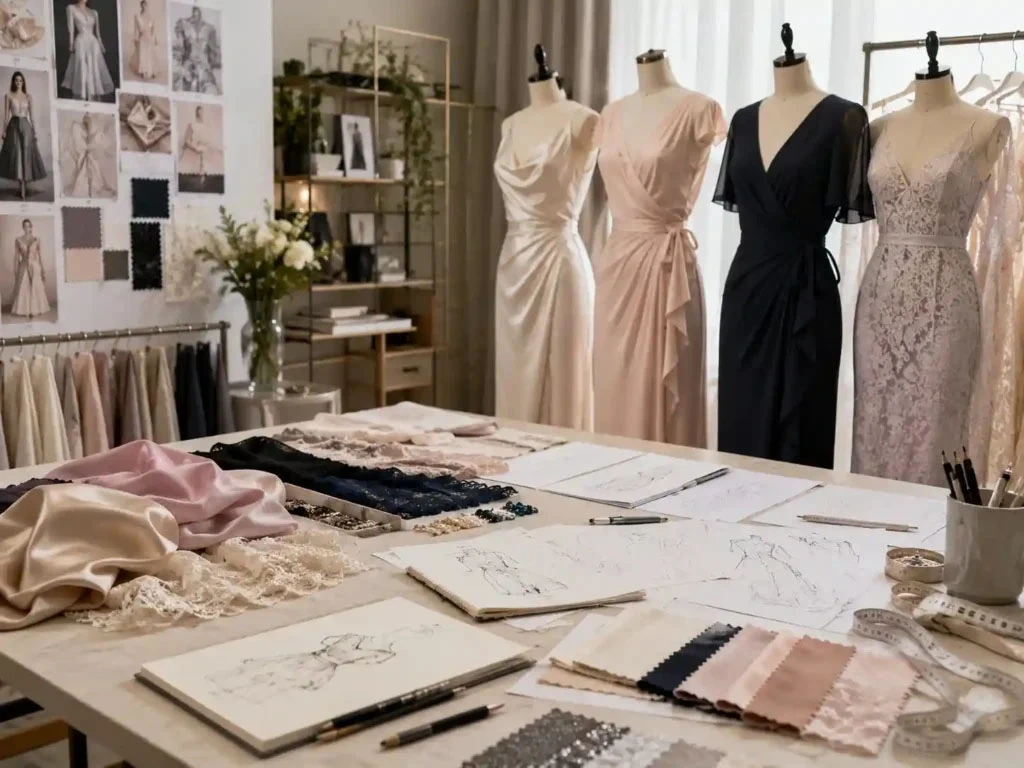
The early steps may differ, but both routes still have to reach the same point: an approved sample and a production standard the factory can follow.
A typical dress development process is:
Design concept
↓
Tech pack / sketch / reference
↓
Fabric review
↓
Pattern development
↓
First sample
↓
Fit review
↓
Sample revision
↓
PP sample approval
↓
Fabric confirmation
↓
Bulk cutting
↓
Sewing and in-line QC
↓
Final inspection
↓
Packing
Regardless of the starting point, both routes eventually need an approved sample and a production standard the factory can follow.
In an OEM project, your specifications normally guide the process more closely.
In an ODM project, the factory may participate much earlier in design and technical development.
Once the PP sample is approved, however, both approaches need the same basic discipline: the production team needs clear specifications and approved references to work from.
What Should You Prepare Before Contacting an OEM or ODM Manufacturer?
You do not need a perfect development package to start a conversation.
But you should give the factory enough information to understand the project.
Before requesting a quotation, it helps to have the following information ready:
- Dress type
- Sketch or reference image
- Target quantity
- Size range
- Preferred fabric
- Color requirements
- Target delivery date
- Branding requirements
- Packaging requirements
- Important fit or construction details
If you have a tech pack, include it.
If you only have a sketch, say so.
If you have a reference garment, explain whether you want the factory to copy the fit, construction, appearance, or only use it as inspiration.
Those distinctions make the initial quotation and development discussion much more useful.
A Practical Way to Choose Between OEM and ODM
Start with one question:
How much of the dress has already been decided?
If the design, fit direction, fabric requirements, and construction details are already established, an OEM workflow will generally give your team more control over how the garment is developed.
If you have a strong product idea but need help turning it into a production-ready dress, ODM allows the manufacturer to become more involved during development.
You should also consider your internal resources.
A fashion brand with its own designers and technical team may prefer to keep more development work in-house. A startup with a small team may need the factory to handle more of the technical side.
And if you are somewhere between the two, explain the project as it actually exists.
A manufacturer can then identify which parts require custom development and which parts are already production-ready.
FAQ
1. Can you start an OEM project with only a sketch?
A sketch is enough to start a development discussion, but it is not enough to define the production details. The factory will still need information about fit, fabric, measurements, and important construction points before sampling.
2. How do you know whether your project needs ODM development?
Start with the information your team can provide before sampling. If the design is clear but pattern development, fabric selection, or construction decisions still need outside support, the project may need more ODM-style involvement.
3. What should you do if the factory’s sample looks different from your design?
Do not approve or reject it based only on the overall appearance. Compare the sample with your original specifications and identify the exact differences. Check measurements, fabric, construction, fit, and proportions separately. This gives the factory clear revision instructions instead of a general request to “make it closer.”
4. Can you change the fabric after an OEM or ODM sample is made?
You can, but the replacement fabric should be evaluated before assuming the existing pattern will still work. Differences in weight, stretch, drape, shrinkage, and recovery can change the fit and appearance. A fabric change may therefore require another sample or pattern adjustment.
5. What should you confirm with a manufacturer before starting development?
Before development starts, make sure both sides agree on responsibility for the design, pattern, fabric sourcing, sample revisions, and approvals. It is also worth confirming what information the factory needs and what the quoted development work includes.
Conclusion
OEM and ODM mainly differ in how product development work is divided between the brand and the manufacturer. A brand with defined specifications, fit requirements, and construction details can keep more of the development process under its own direction. A brand with a strong concept but less technical support can involve the manufacturer earlier.
Before you ask a factory for pricing, separate the parts of the dress that are already fixed from the parts that still need development. That makes it easier to discuss pattern work, sampling, fabric, cost, and repeat production from the start. That gives the factory a clearer basis for pattern work, sampling, pricing, and repeat production.
Related Dress Manufacturing Services
If your project involves a specific dress fabric or construction, you can also review our related manufacturing pages:
- Party Dress Manufacturer
- Mini Dress Manufacturer
- Evening Dress Manufacturer
- Lace Dress Manufacturer
- Satin Dress Manufacturer
Get a Quote for an Existing Dress Style
If you are transferring an existing dress style to a new manufacturer, send us the latest approved sample, tech pack, product photos, or measurement chart together with your target quantity.
As a dress manufacturer, we can review the construction, fabric, trims, measurements, and current production status with you before confirming the sampling requirements.

