

Changing dress manufacturers is not simply a matter of sending your existing sample to another factory. Your approved fit, pattern, fabric, construction details, and production schedule all need to be transferred correctly. As a clothing manufacturer, we know that missing information at this stage can lead to repeated sampling, unexpected material costs, and delayed shipments. If you are moving an existing dress order, the first step is to establish what the new factory can reuse and what needs to be checked again.
1. Review Your Existing Production Before Switching Manufacturers
Before moving an order, check how far the previous factory has progressed. A dress that has only completed sampling is relatively straightforward to transfer. An order that has already entered bulk production involves more decisions about materials, cut panels, finished garments, and outstanding work.
Start with the current production status:
- Has the latest sample been approved?
- Is the original pattern available?
- Has the fabric been purchased or cut?
- Have any garments entered sewing?
- Are labels, zippers, and other trims ready?
- How many finished and unfinished pieces are remaining?
- What is the outstanding delivery quantity?
These details help you and the new manufacturer establish a realistic starting point.
For example, if the previous supplier has already purchased the bulk fabric, check whether it can be released and transferred. If cutting has started, you also need to know whether the cut panels meet the new factory’s construction and quality requirements.
Do not treat the remaining order as a completely new purchase without first checking what has already been completed. Otherwise, you may end up paying twice for materials or development work.
Send the Latest Approved Sample
Your latest approved dress sample should be the main reference for the transfer.
During development, a style may go through several versions. The original sample may have a different neckline, waist measurement, or hem length from the final fitting sample.
Mark the approved version clearly and separate it from earlier samples.
If you have agreed on corrections after the last physical sample was made, provide the updated measurement chart and fitting comments. The new pattern maker should know whether to follow the physical garment, the written measurements, or a later correction.
Leaving this unclear can result in the new factory reproducing an outdated version of your design.

2. Prepare the Information Your New Dress Manufacturer Needs
You do not necessarily need a perfect tech pack before approaching a new manufacturer. However, the more production information you can provide, the less time the factory has to spend reconstructing the original style.
Approved Sample and Measurement Chart
Send the physical garment together with its latest measurement chart.
Pay particular attention to measurements that changed during fitting, such as bust, waist, hip, shoulder, armhole, and garment length.
For fitted dresses, small differences can change the silhouette considerably. A waist measurement that is slightly larger may affect the way the skirt falls, while an incorrect armhole measurement can change how the bodice sits on the body.
If the sample and measurement chart do not match, identify the final approved reference before development begins.
Original Pattern Files
If you have the original pattern, ask your previous supplier to provide the complete files.
Useful information includes:
- Individual pattern pieces
- Seam allowances and notches
- Grainline direction
- Cutting and construction details
- Size grading information
- Pattern revision records
An existing pattern can save development time, but it does not mean the new factory can use it without checking.
The pattern maker should compare the files with the approved sample and confirm whether the measurements, construction, and fabric specifications are still suitable.
This is particularly relevant when transferring fitted dresses, structured bodices, or styles with multiple panels.
Fabric and Trim Specifications
Fabric information should go beyond the material name.
Provide the original fabric composition, weight, usable width, stretch, recovery, color reference, and supplier code where available.
Also include details of:
- Lining and interlining
- Zippers and buttons
- Elastic and drawstrings
- Decorative trims
- Main labels and care labels
- Hangtags and packaging
If the original fabric is still available, confirm its stock quantity and whether the same batch can be used.
If you need to source it again, check whether the supplier can provide the same specification. A fabric with the same composition may still have a different weight, finish, or hand feel.
Previous Fitting and QC Comments
Do not leave previous fitting corrections behind when changing factories.
For example, your original sample may have required several adjustments to the waist, neckline, sleeve opening, zipper area, or lining.
These comments show the new factory where the original garment needed attention.
We find that specific fitting records are often more useful than general design descriptions. They give the pattern maker a clear starting point instead of requiring another round of trial and correction.

3. Does a New Manufacturer Need to Make Another Sample?
In most cases, yes. Even if your previous supplier has completed sampling, the new factory should make its own sample before bulk production.
The reason is straightforward: the new production team has not developed the style before.
Different pattern makers may interpret construction details differently. Sewing methods, machine settings, pressing techniques, and fabric suppliers can also affect the finished garment.
The first sample should be treated as a reproduction check rather than an opportunity to redesign the entire style.
Compare the new sample with your approved reference, paying attention to:
- Bust, waist, and hip measurements
- Neckline and shoulder proportions
- Armhole and sleeve construction
- Zipper and lining details
- Seam positions and stitching
- Hem shape and garment length
- Overall fit and fabric drape
A dress can match the main measurements but still look different because of construction or fabric behavior.
For example, a fitted dress made from a fabric with less stretch may feel tighter even when the bust and waist measurements are correct.
Give the Factory Specific Correction Comments
Avoid vague feedback such as “the body is too loose” or “the neckline needs improvement.”
Instead, describe the area and the required change.
For example:
- Reduce the finished waist measurement by 1 cm.
- Lower the neckline by 0.5 cm.
- Increase the sleeve opening by 1.5 cm.
- Move the zipper position 1 cm toward the center back.
For construction problems, identify the exact seam or area that needs correction.
This gives the pattern maker and sample sewer a practical instruction to follow. It also makes the next sample easier to evaluate because each correction can be checked against the previous version.
4. What If the Original Fabric Is No Longer Available?
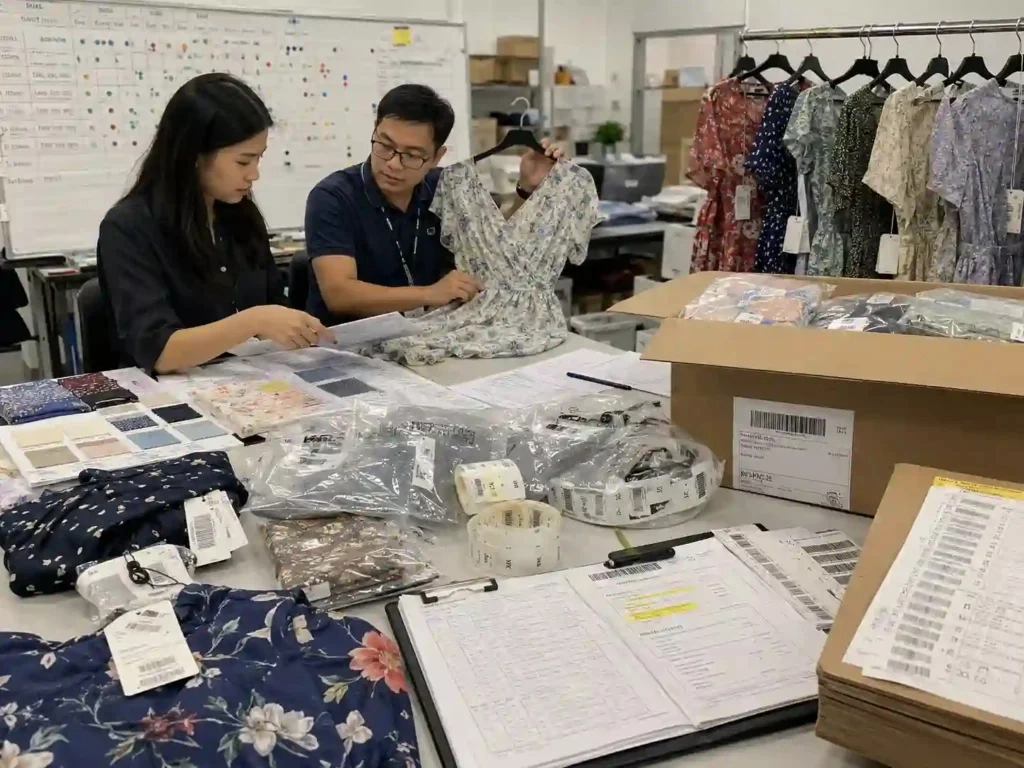
Fabric replacement is one of the more difficult parts of transferring an existing dress.
A replacement may look similar in a swatch book but behave differently once it is cut and sewn.
For example, a heavier fabric can make a gathered skirt look fuller. A fabric with lower stretch recovery may cause a fitted dress to lose its shape after wear. A softer material can also change the way a neckline or waist sits on the body.
Before approving a substitute, compare:
- Composition and fabric weight
- Usable width
- Stretch and recovery
- Drape and hand feel
- Shrinkage
- Surface finish
- Color under consistent lighting
If the replacement fabric behaves differently, the original pattern may need adjustment.
For a simple loose-fitting dress, the change may be manageable. For a fitted bodice, structured waist, or draped skirt, the pattern maker may need to review the garment more carefully.
Approve the replacement fabric before finalizing the production sample. Otherwise, you may approve a garment using one material and discover that the bulk fabric produces a different result.
5. Approve the PP Sample Before Bulk Cutting
After the fitting corrections are completed, the new factory should prepare a pre-production (PP) sample.
This is the final garment reference for bulk manufacturing. It should represent the approved fabric, color, construction, measurements, trims, and finishing.
Before signing off, check:
- Final garment measurements
- Fabric composition and color
- Lining and interlining
- Zipper and trim placement
- Stitching and seam construction
- Labels and branding
- Overall fit and appearance
Make sure the production pattern and measurement chart match the approved PP sample.
If a change is agreed during the PP review, update the written specifications as well. A correction recorded only in a chat message can easily be missed when the order moves from the sample room to the production floor.
This is where many avoidable bulk problems begin. The sample may be correct, but the cutting team is still working from an earlier measurement chart.
Bulk cutting should only start after the final production version has been confirmed.
6. Set a New Production Schedule After Changing Manufacturers
Your original delivery schedule may no longer be realistic once the order moves to another factory.
The new manufacturer needs time to review the garment, check the pattern, confirm materials, and complete sampling before bulk production can begin.
A typical production transfer follows this sequence:
Existing order review → Pattern review → Fabric confirmation → Sample development → Fitting corrections → PP sample → Approval → Bulk cutting → Sewing → Finishing → Final inspection → Packing
When discussing the timeline, separate development, material preparation, and bulk production.
Development: Pattern checking, sample making, and fitting corrections.
Material preparation: Fabric purchasing, color confirmation, printing, dyeing, and trim sourcing.
Bulk production: Cutting, sewing, finishing, inspection, and packing.
For straightforward styles, sample development may take around 3–7 days. Bulk production commonly takes 25–30 days after PP sample approval and fabric confirmation.
These are general production estimates rather than guaranteed transfer times. Complex designs, replacement fabrics, special trims, and large order quantities can extend the schedule.
If your collection has a fixed launch date, share the required shipment date before sampling begins. You can also discuss whether priority styles should be produced first or whether partial shipment is possible.
A realistic schedule gives your purchasing team a clearer basis for planning inventory and communicating with retailers.
7. What If the Previous Factory Will Not Release the Pattern?
You can still transfer your dress to another manufacturer without the original pattern.
The new pattern maker can use your approved physical sample to develop a replacement pattern. However, this takes more work than checking an existing file.
The finished garment does not show every detail of the original pattern. Seam allowances, internal construction, grading rules, and some technical details may need to be worked out again.
If the original pattern is unavailable, provide:
- Latest approved physical sample
- Measurement chart
- Front, back, and close-up photographs
- Fabric and lining details
- Construction specifications
- Previous fitting comments
- Available size range
If your brand sells several sizes, provide measurements or physical samples from more than one size whenever possible.
A base-size garment alone does not always show how the original pattern was graded. The new pattern maker may need to review the proportions across the size range before approving the production pattern.
Allow additional time for this work, particularly for structured dresses, complicated bodices, and styles with multiple panels.
8. What to Confirm Before the New Factory Starts Production
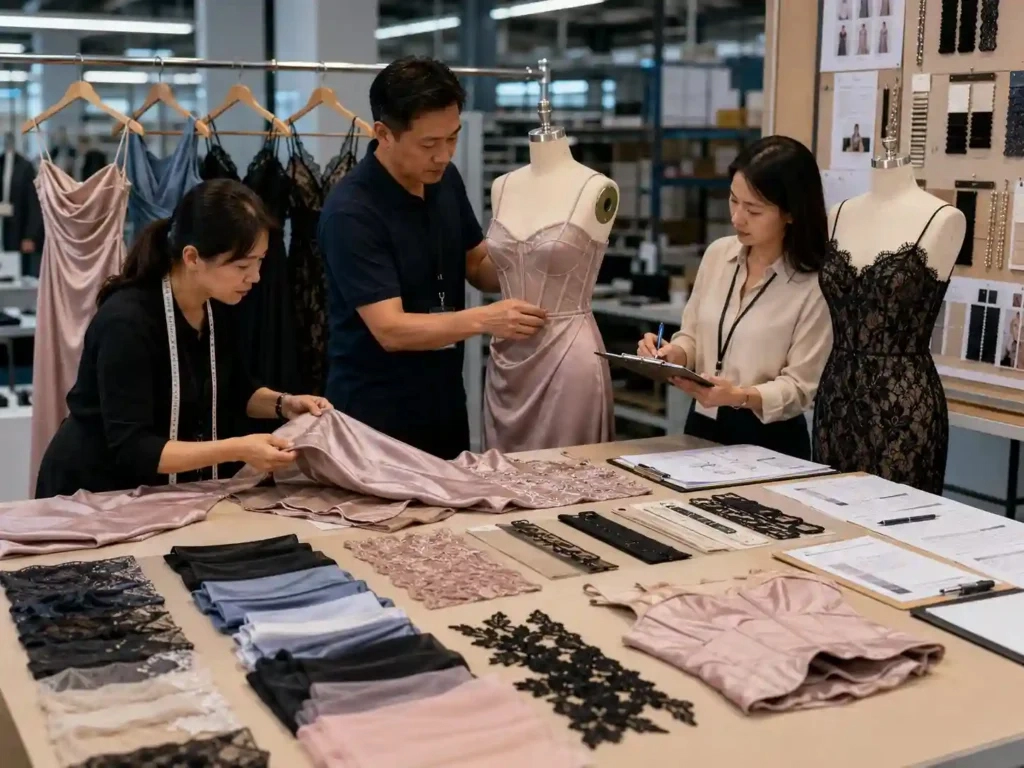
Before bulk cutting, review the complete order with the new manufacturer.
Product information
- Latest approved sample
- Final tech pack
- Measurement chart
- Production pattern and grading
Materials
- Fabric and color
- Lining and interlining
- Zippers, buttons, and trims
- Labels and packaging
Order details
- Total quantity
- Color breakdown
- Size ratio
- Packing requirements
- Delivery address
- Shipment deadline
Production approval
- First sample checked
- Fitting corrections completed
- PP sample approved
- Final pattern confirmed
- Bulk materials confirmed
If your designer, buyer, and production contact are handling different parts of the transfer, arrange one final review before cutting starts.
The designer should confirm the appearance, the buyer should confirm the order details, and the production team should have the correct technical documents.
Everyone needs to work from the same approved version.
Frequently Asked Questions
1. How do I know whether changing dress manufacturers is worth the cost?
Compare the cost of staying with your current supplier against the full cost of transferring the order. Include new sampling, material handling, transportation, and possible production delays. A lower quotation from another factory does not necessarily mean a lower total cost.
2. Should I explain the problems I had with my previous manufacturer?
Yes, especially if those problems involved workmanship, sizing consistency, communication, or delivery. You do not need to share private business disagreements, but the new factory should understand the quality issues you want to avoid. This helps establish expectations before production starts.
3. Can two manufacturers produce the same dress for my brand?
Yes, but you should compare their samples before splitting the order. Differences in fabric batches, sewing techniques, pressing, and finishing can affect the final appearance. Keep one approved sample and one set of production specifications as the reference for both factories.
4. Why might a new manufacturer quote a different price for the same dress?
The quotation may differ because of fabric consumption, sewing operations, labor costs, material sourcing, or order quantity. Ask both suppliers to quote against the same specifications. Otherwise, you may be comparing different fabric grades or construction requirements without realizing it.
5. How can I protect my designs when sending files to a new factory?
Keep dated copies of your tech packs, patterns, and approved samples. Use appropriate confidentiality and ownership agreements, and clarify how your technical files may be used. For commercially sensitive designs, seek legal advice on protecting your intellectual property in the relevant markets.
Conclusion
Changing dress manufacturers does not mean your development work has to start from zero. Your approved sample, pattern, material details, and fitting records can give the new factory a much clearer starting point. Allow time to check the first sample and approve the PP version before bulk cutting. At Xiuyu Apparel, our experience as a dress manufacturer helps us understand the technical details involved when an existing dress style moves into a new production environment.

