

When you develop a dress for bulk production, the wrong zipper length can create fitting problems, sewing adjustments and unnecessary changes to your original pattern. A fitted dress may look correct on the sample table but become difficult to put on because the opening is too short. As a clothing manufacturer, we check zipper length against the pattern, garment fit and fabric before confirming the final specification.
What Determines Zipper Length on a Dress?
The finished zipper opening is the starting point when determining zipper length. You should not select a zipper simply because another dress in your collection uses the same measurement.
During pattern development, several details affect the opening:
- Garment fit: A fitted bodice or skirt needs enough room for the wearer to put on and remove the dress.
- Zipper position: Center-back, side-seam and front zippers have different construction requirements.
- Neckline design: A narrow neckline or fitted shoulder area may affect how much the garment needs to open.
- Fabric properties: Stretch, thickness and fabric stability influence the zipper installation.
- Lining: The lining must open with the outer garment without pulling or bunching.
- Seam construction: Waist seams, facings and other joining points can affect where the zipper starts and ends.
Consider a fitted dress with a center-back zipper. Even when the bust and waist measurements are correct, the wearer may struggle to get into the garment if the opening does not extend far enough.
This is why the pattern opening needs to be checked together with the actual garment fit. A zipper measurement copied from an older style may not work for your new design.
How Long Should a Zipper Be for Different Dress Styles?
There is no fixed zipper length for mini, midi or maxi dresses. The opening depends more on the silhouette, wearing ease and construction than on the skirt length.
| Dress style | Zipper length considerations |
|---|---|
| Mini dress | Check whether the opening provides enough room through the bust and hips. |
| Midi dress | Consider the waist and hip fit rather than the skirt length. |
| Maxi dress | A fitted bodice may need a longer opening, even when the skirt is loose. |
| Bodycon dress | Check the opening carefully because the close fit can put additional stress on the zipper seam. |
| Satin dress | Pay attention to fabric movement and zipper alignment during sewing. |
| Chiffon dress | The zipper area may need additional support to prevent the fabric from stretching or gathering. |
| Evening dress | Check the zipper together with the lining, internal structure and neckline finish. |
For example, a loose maxi dress may only require a short back opening because the wearer has enough room to put it on. A fitted midi dress can require a longer opening because the garment needs to pass over the hips.
The same principle applies to dresses with different necklines. A wide neckline may make dressing easier, while a fitted neckline combined with a close-fitting bodice can require more opening space.
When you develop several styles for one collection, assess each pattern separately instead of using one standard zipper measurement across the range.
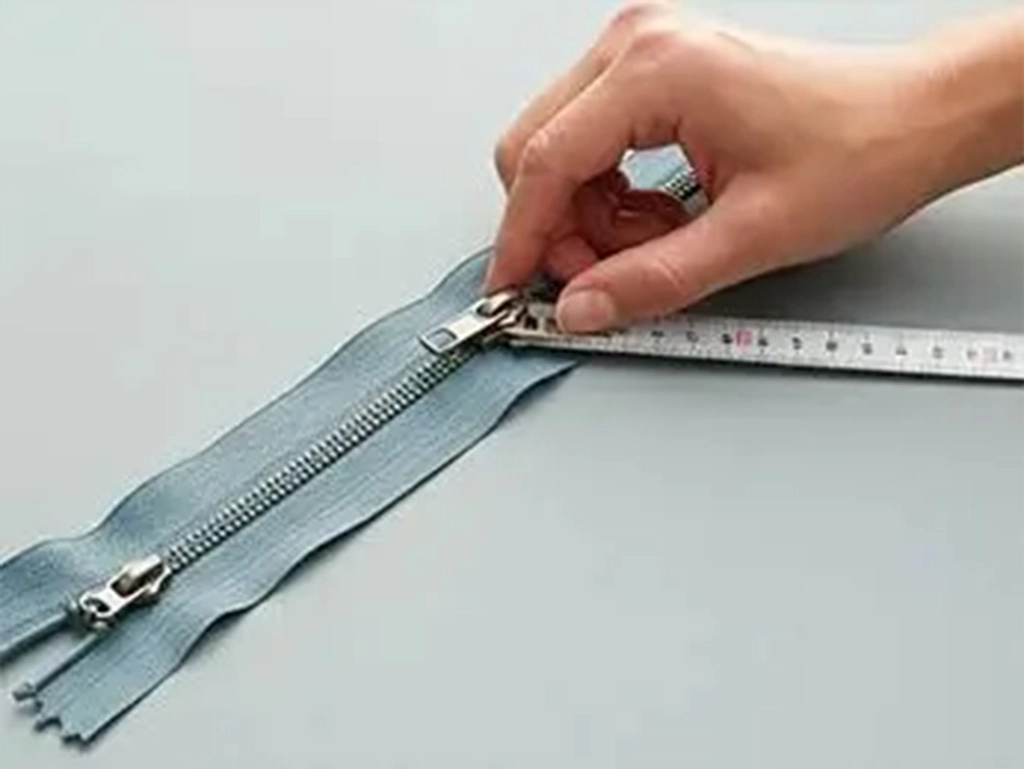
How to Measure Zipper Length for a Dress
When preparing your tech pack, identify the finished zipper opening on the pattern before specifying the zipper.
For a center-back zipper, measure the section intended to open, from the upper starting point to the lower endpoint. Do not automatically use the entire center-back seam measurement, as part of that seam may remain closed.
You should also distinguish between the following terms:
- Finished zipper opening: The section of the garment that can be opened.
- Zipper length: The specified length of the zipper, measured according to the supplier’s convention.
- Zipper tape: The fabric strips attached to both sides of the zipper teeth or coil.
- Seam allowance: The fabric reserved for joining and installing the zipper.
- Stop position: The location of the upper and lower zipper stops.
These measurements are related, but they are not necessarily interchangeable. Suppliers may use different measurement references, so confirm the method before placing a bulk trim order.
For example, your tech pack can include:
| Specification | Example |
|---|---|
| Zipper type | Invisible zipper |
| Required opening | 18 in |
| Position | Center back |
| Color | Match main fabric |
| Puller | Standard |
| Measurement reference | Finished zipper opening |
| Approval status | To be confirmed after fitting |
If your pattern is still under development, mark the zipper length as provisional. Once the sample has been fitted and the opening confirmed, update the measurement in the final specification.
A clear measurement reference helps prevent misunderstandings between your designer, pattern maker, purchasing team and zipper supplier.
Does Zipper Type Affect the Length?
Yes. The zipper construction affects how the opening is installed and finished.
Invisible zipper
An invisible zipper is commonly used for fitted dresses, evening dresses and styles where you want the closure to blend into the seam. During sewing, the zipper teeth need to sit correctly against the seam line. Poor alignment can leave part of the teeth visible or create an uneven finish.
Regular coil zipper
A regular coil zipper may be used when the construction requires a different closure or when the zipper is intended to remain visible. You should check the tape width, teeth and puller against the garment design.
Exposed zipper
An exposed zipper is also a design detail. Its visible tape, teeth and puller need to be considered when preparing the pattern and construction drawing.
Fabric selection matters just as much as zipper type.
On satin, the fabric can shift while the zipper is being sewn, making it difficult to keep both sides level. Chiffon may stretch around the opening if the area is not handled carefully. For stretch dresses, check that the selected zipper construction works with the fabric’s stretch and recovery.
Do not assume that a zipper suitable for one fabric will produce the same result on another, even when the pattern remains unchanged.
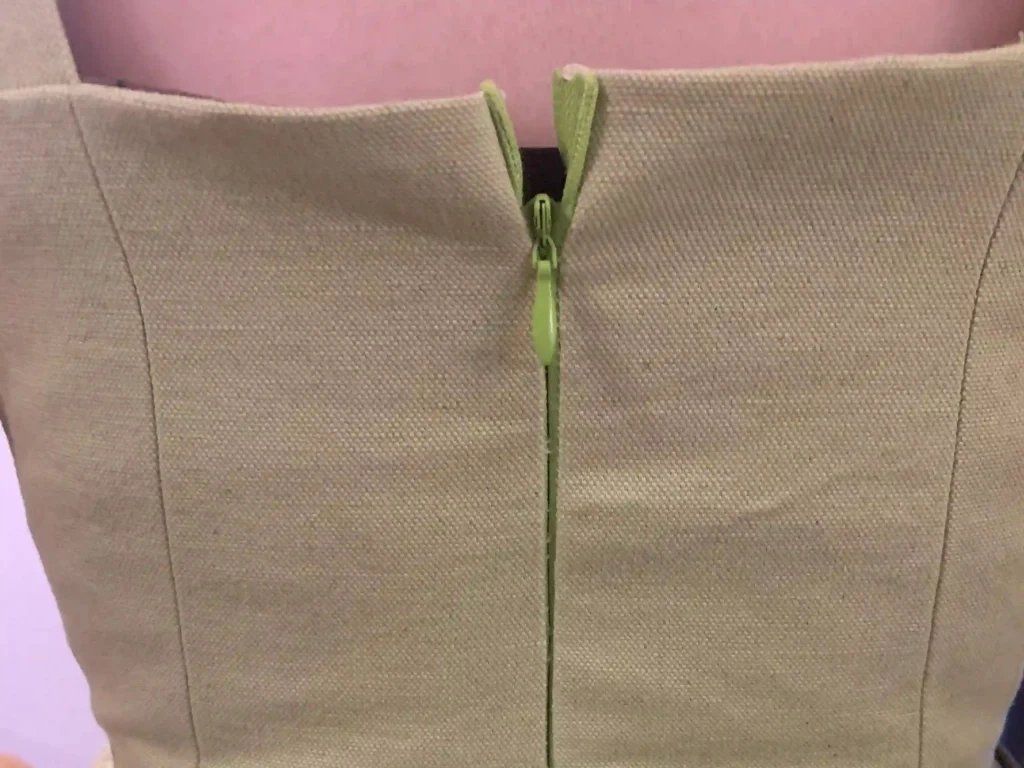
How Does Pattern Development Affect Zipper Length?
The zipper specification should follow the latest pattern version. Changes to the neckline, waist or garment fit can affect the opening, so the original zipper measurement may need to be revised.
Garment fit and wearing ease
A fitted dress can look fine on a mannequin but still be difficult to put on. If the bust or hip area has little wearing ease, the opening needs to provide sufficient room.
During fitting, check where the wearer experiences resistance. This helps determine whether the problem comes from the opening, the garment measurements or the overall pattern balance.
Zipper position
A center-back zipper is often used for fitted dresses, while a side-seam zipper may be selected to keep the back design uninterrupted.
With a side-seam zipper, you also need to consider its relationship with the underarm, waist and hip. The opening should not interfere with nearby construction points.
Neckline and top finishing
When the zipper extends close to the neckline, the upper stop, facing and neckline finish need to work together.
If these details are not considered during pattern development, the zipper top can become bulky or difficult to finish neatly.
Lining and internal construction
For lined dresses, check both layers during fitting. The outer fabric may sit correctly while the lining pulls against the zipper or creates unwanted bulk.
If your design includes boning, waist stays or internal support, these components should also be considered before finalizing the opening.
Seam allowance
The seam allowance must match the selected zipper installation method. If the pattern maker changes the seam allowance during development, the zipper position and finished opening may need to be reviewed.
For production, the pattern, construction drawing and trim specification should all refer to the same approved version.
What Problems Can the Wrong Zipper Length Cause?
When the zipper is too short
A short zipper is particularly troublesome on fitted dresses.
The garment may fit correctly once it is on the wearer, but getting into it can be difficult because the opening does not provide enough room. The wearer may need to pull harder, placing additional stress on the zipper and surrounding seam.
During sample fitting, check whether the opening needs to be extended. Simply replacing the zipper with a longer one will not always solve the problem if the pattern opening itself has not been adjusted.
When the zipper is too long
An unnecessarily long zipper can interfere with waist seams, hems or other construction details.
For example, a center-back zipper that extends beyond the planned opening can create difficulties when finishing the lower end. It may also add unwanted bulk where the zipper meets another seam.
Some zipper types can be shortened, but the lower stop must be secured properly. Cutting the zipper without considering its finishing method can create a problem during wear or after washing.
Before bulk production, check the finished sample rather than leaving the sewing team to decide how much of the zipper should be removed.
How Is Zipper Length Confirmed During Dress Sampling?
Zipper length should be checked during development, not left until final inspection.
In our manufacturing process, the zipper is reviewed alongside the pattern and garment construction at several stages.
1. Pattern development
The pattern maker establishes the opening according to the garment measurements, fit and design.
2. First sample
The zipper is installed according to the pattern. Check its position, length, top finishing and alignment with the seam.
3. Fitting and adjustment
Try the sample on the intended fit model. Check whether the dress can be put on and removed comfortably. Look for pulling around the zipper, uneven stitching and fabric distortion.
4. Pattern revision
If the opening changes, update the pattern and zipper specification together. The old measurement should not remain in the tech pack.
5. PP sample approval
The pre-production sample should use the confirmed zipper type, length, color and installation method.
6. Bulk production
The approved specification is used for trim purchasing, sewing and in-line quality checks.
One point that deserves attention is the difference between appearance and function. A zipper can look straight when the dress is laid flat but become difficult to operate when the garment is worn. Both need to be checked before you approve the sample.
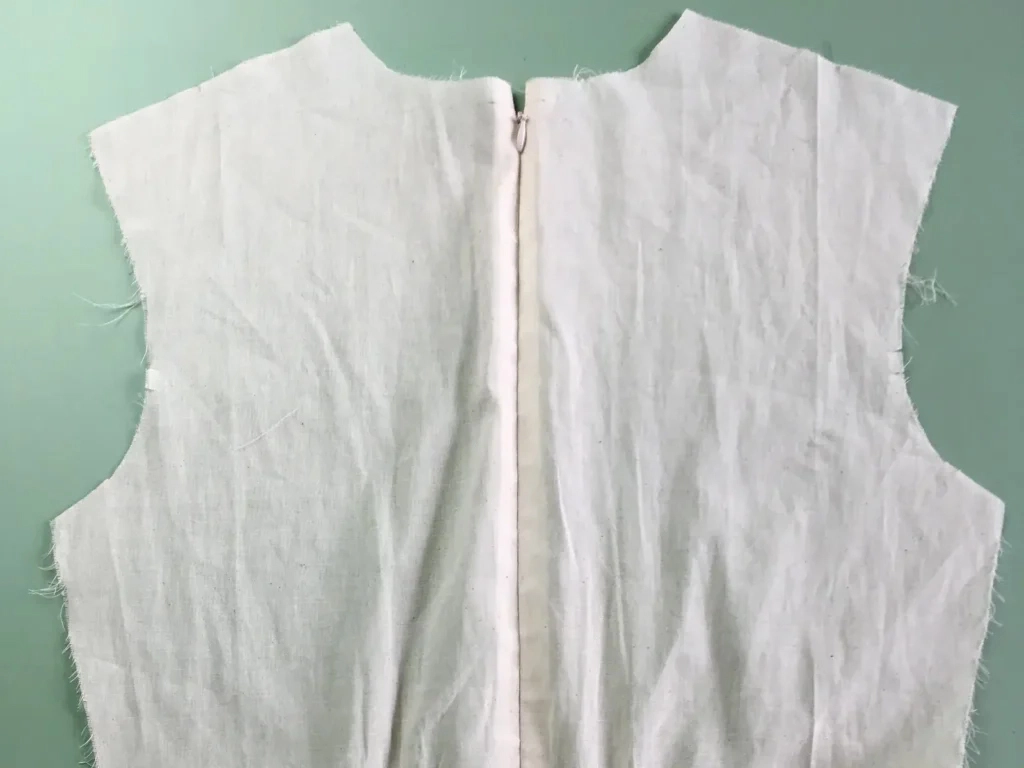
What Should You Include in a Dress Zipper Specification?
When sending a new style to a clothing manufacturer, give the factory enough information to identify the correct zipper without having to interpret the design.
Your tech pack or BOM should include:
| Detail | Information to provide |
|---|---|
| Zipper type | Invisible, regular coil or exposed |
| Length | Confirmed measurement |
| Position | Center back, side seam or front |
| Color | Pantone reference or fabric matching |
| Puller | Shape, size and finish |
| Supplier | Brand or supplier reference, if required |
| Construction | Installation or finishing reference |
| Approval status | Provisional or approved |
You can also attach a close-up photograph or construction drawing showing the zipper position.
If you are developing several dresses at the same time, keep a separate trim specification for each style. Two dresses may use the same zipper type but require different lengths, colors or pullers.
For purchasing managers, this is particularly important when preparing a bulk order. A clear BOM reduces the chance of ordering the wrong component or having the sewing team work from an outdated sample.
Once the PP sample is approved, make sure the final zipper information is included in the production file rather than recorded only in emails or sample comments.
FAQ
1. Can you use the same zipper specification for different colorways of one dress?
Usually, the length and construction can remain the same if the pattern and fabric are identical. However, the zipper color may need to change. Check each fabric color against the zipper tape under suitable lighting before confirming the trim order.
2. What should you do if the zipper supplier cannot provide the required length?
Ask the supplier for the nearest available size and confirm whether it can be shortened safely. Before accepting the substitution, have the factory check the top and bottom finishing. Do not approve an alternative based on length alone.
3. How can you prevent zipper problems when ordering several styles together?
Prepare a separate zipper specification for every style and identify each trim by its style number. If several styles use similar invisible zippers, label the lengths and colors clearly. This makes purchasing and trim distribution easier to control.
4. Who should approve a zipper substitution during production?
The buyer or authorized product developer should approve any change that affects the original specification. Ask the factory to provide the replacement details and, when necessary, a sample. Verbal approval on the production floor should not replace an updated BOM.
5. What should you check when inspecting a finished dress with a zipper?
Open and close the zipper several times, then inspect the surrounding fabric and seams. Look for catching, uneven stitching, exposed teeth, loose stops and puckering. On lined dresses, check the inside as well. A zipper should work smoothly without damaging the garment during normal use.
Conclusion
Choosing the right dress zipper length starts with the pattern opening, but the final decision also needs to account for fit, fabric and construction. Check the zipper during sample fitting and PP approval, then record the confirmed details for bulk production. When developing a collection with Xiuyu Apparel, an experienced dress manufacturer can help review these construction details before your order moves into production.

