

When you send a new dress collection to a clothing manufacturer, the first question is not always how quickly each design can be sampled. It is whether the collection makes sense as a whole.
Before sampling starts, look at the styles together: which ones are likely to become core products, where the silhouettes overlap, whether the fabrics suit the designs, and which styles may take more work to develop. Sorting these points out early can save sample revisions, fabric changes, and development costs later.
Start With the Collection, Not Individual Dresses
When a designer works on one dress at a time, it is easy for each style to look good on its own.
The overlap becomes much easier to see when all the styles are reviewed together.
You may have four dresses with very similar fitted shapes, several styles using almost the same neckline, or too many designs that depend on complicated construction. None of these issues may be obvious from individual sketches.
Before you send the designs for sampling, put the full collection together and review it as one range.
Ask what makes each style different and what role it is actually adding to the collection.
Decide What Each Style Needs to Do
Not every dress needs to be the main piece of your collection.
You might divide the range informally into core commercial styles, seasonal or trend-led pieces, occasion dresses, simpler supporting styles, and statement pieces.
These do not need to become formal merchandising categories. They are mainly a way to decide where your development time should go before sampling starts.
If one dress is expected to become a core style, you may want to spend more time getting its fit and construction right. A statement dress may justify more complicated development because it is meant to attract attention rather than carry the same volume as a core style.
Check the Silhouette Mix
Once the role of each style is clear, compare the silhouettes side by side. Repeated shapes are usually easier to spot at this stage.
Repetition is not necessarily a problem. If two styles are close in shape and construction, though, you need a clear reason to keep both.
Look at the main shape first:
- Fitted or relaxed
- Straight or flared
- Defined or dropped waist
- Narrow or fuller skirt
- Structured or soft
- Close-fitting or draped
You do not need every silhouette to be different. Repeating a shape can make sense when it is part of the brand’s identity.
What matters is whether the overlap is intentional. If the collection already contains several fitted styles, an A-line dress, halter dress, wrap, or softer slip silhouette may add more useful variety than another dress with almost the same body shape.
Use Length to Create More Variety
Mini, midi, and maxi lengths can also change how a collection is perceived.
A collection made mostly of mini dresses may have a very different commercial direction from one built around midi and maxi styles. Length also changes fabric consumption, lining requirements, hem construction, and the occasions the dress is likely to be worn for.
When reviewing your range, compare the lengths side by side.
You may find that two similar silhouettes become more useful when one is developed as a mini and another as a midi dress. But if the silhouette, construction, and overall proportion remain almost the same, changing only the length may not give you a strong enough reason to keep both styles.
For a brand developing a new collection, this comparison can help you avoid spending sampling costs on styles that will eventually compete too closely with each other.
Choose Fabric With the Silhouette in Mind
A common mistake is treating fabric selection as something that happens after the design has already been decided.
From the factory side, fabric and silhouette are closely connected. The same pattern can behave very differently when the fabric changes.
A soft chiffon dress will fall differently from satin, while stretch fabric brings different fitting considerations from a non-stretch woven fabric. Velvet can create extra fitting and pressing work, and mesh may need additional support in areas under tension.
Before confirming the fabric, check:
- Fabric weight
- Stretch
- Drape
- Width
- Shrinkage
- Opacity
- Surface finish
- Lining requirements
A soft, flowing skirt needs a fabric with enough drape to hold that shape. For a fitted dress, stretch and recovery become much more important.
Sometimes the sketch is not the part that needs changing. The fabric choice is.
It is much easier to make that decision before the pattern has gone through several rounds of sampling.
Look at Production Complexity Before You Sample
Some dresses look simple on a sketch but take considerably more work on the production floor.
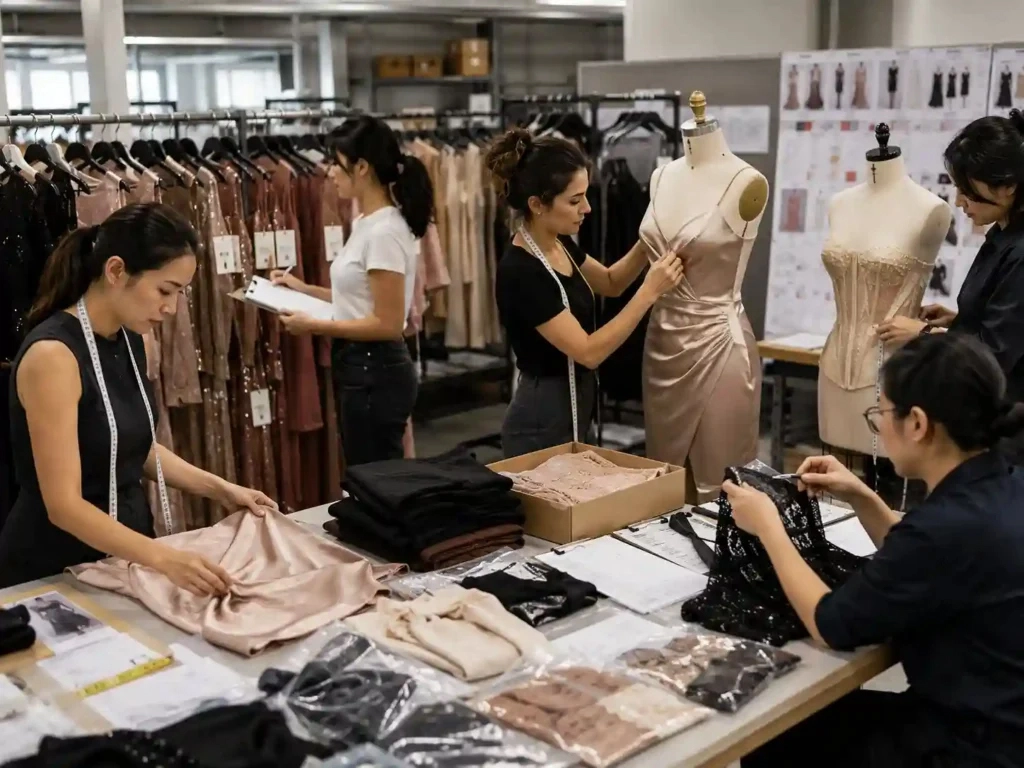
Corset dresses are a good example. The outside may look clean, but the inside can involve multiple panels, boning, cups, lining, seam control, and several rounds of fitting.
The same applies to:
- Heavy embellishment
- Sequins
- Beading
- Appliqué
- Pleating
- Draping
- Special closures
- Multiple lining layers
- Complicated seam lines
A complicated construction does not automatically make a style unsuitable.
Some styles will simply take more rounds of sampling than others.
If one dress has a relatively simple construction and another needs several fitting and construction checks, treating both as equal from the beginning may not be the most efficient way to develop the collection.
Decide Which Styles to Sample First
If you are launching a new collection, you may not need to develop every style at the same speed.
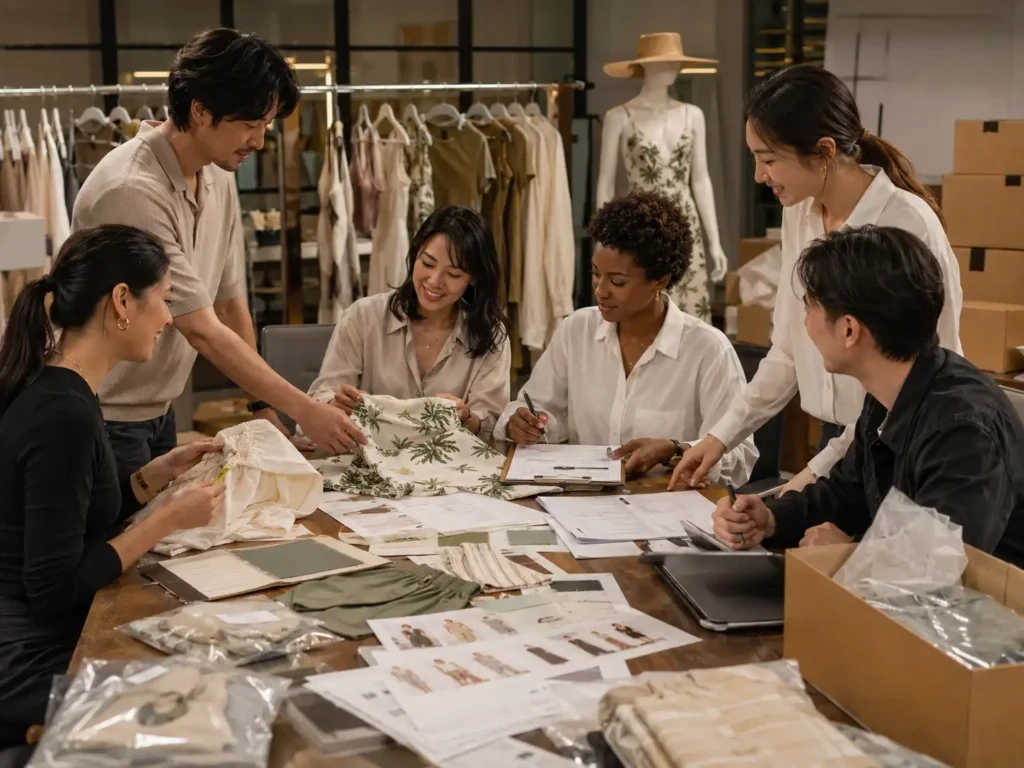
Start with the styles that can answer the biggest development questions. A key commercial silhouette can show whether the fit direction is working. If a new fabric or complicated construction will also be used elsewhere in the collection, that style may be worth sampling early too.
For a collection with five styles using related fabrics or construction, one representative style may also give you useful information for the others.
In practice, sample development rarely moves directly from the first design to approval.
The first sample often exposes fit, fabric, or construction issues that were difficult to see from the sketch.
Give the Manufacturer Clear Development Information
Once the styles for sampling are selected, give the manufacturer enough information to start pattern development without guessing.
You may provide a complete tech pack, a sketch, reference photos, an existing garment, measurements, fabric information, or a combination of these.
For each style, make the important points clear:
- Key measurements
- Fabric or fabric direction
- Lining
- Closure
- Trim details
- Artwork or print placement
- Construction details
- Size range
- Color requirements
Not every production detail needs to be finalized before you contact a factory.
What is still unclear should be flagged early, rather than left until the first sample exposes the problem.
A good reference garment can sometimes explain a fit or construction point more clearly than several paragraphs of description.
Consider MOQ Before Finalizing Too Many Variations
Collection planning also has to work with your actual order quantity.
Suppose you have eight dress styles and want four colors for each. On paper, eight styles in four colors can look like a strong collection. From a purchasing side, though, that is already 32 style-color combinations to plan, buy, produce, and stock.
That can affect:
- Fabric purchasing
- Trim quantities
- Color management
- Packaging
- Inventory
- Production planning
For a new brand, spreading a limited order quantity across too many variations can make the first production run harder to manage.
For a limited first order, concentrating on fewer styles or colors can make the budget easier to control.
The number of styles and colors should also make sense for the quantity you expect to sell.
Use the First Sample to Check the Real Garment
The first sample lets you judge the design as a garment, not just as a sketch.
Do not only check whether the garment looks similar to the sketch.
Look at the fit and proportions, but also check how the fabric behaves, whether the zipper sits correctly, whether the lining pulls, whether seams remain balanced, and whether the construction gives the intended shape.
Some issues are difficult to judge until the garment is actually on a form or a person.
A neckline may look correct on a drawing but sit differently once the fabric has weight. A long chiffon skirt can also need more control at the hem than expected, while a fitted satin dress may show pulling that was not obvious during design development.
Record these points during sample review so the next version is based on specific corrections rather than general comments such as “make it fit better.”
Move to Bulk Production Only After the Style Is Settled
Before bulk production, the approved sample becomes the production reference.
A typical development flow is:
Design information → Pattern development → Sample → Fit comments → Revision → PP sample → Bulk production
Major design decisions should already be settled at this point. Changes after cutting or sewing has begun can affect construction, QC, and consistency across the order.
Common Dress Collection Planning Mistakes
Developing too many similar dresses
Changing only the neckline, print, or color does not necessarily give you a new product. Put the silhouettes side by side first. If the customer would see little difference between two styles, reconsider whether both need to go into sampling.
Choosing fabric too late
A fabric can look right in a swatch and behave very differently once it is made into a dress. Check drape, stretch, weight, opacity, and recovery against the intended silhouette before the pattern is finalized.
Giving every style the same development priority
If you give every style the same sampling priority, the more difficult styles can end up holding up the collection. Prioritizing the difficult or important styles earlier can give you useful information for the rest of the collection.
Ignoring the order quantity
A large number of style-color combinations can make purchasing and inventory difficult, especially for a new brand working with a limited first order.
Approving a sample based only on appearance
A dress can look right in a photo and still have problems with fit, zipper operation, lining, seam balance, or construction. These details matter once the garment moves into bulk production.
Dress Collection Planning Checklist
Before you send your collection for sampling, review each style and ask:
- What role does this dress play in the collection?
- Is the silhouette different enough from the other styles?
- Does the length add useful variety?
- Does the fabric suit the intended shape?
- Are the construction details realistic?
- Which styles are likely to require more fitting work?
- Which styles should be sampled first?
- Is the target quantity realistic?
- Are the technical details clear enough for pattern development?
- What needs to be confirmed before PP approval?
A commercially useful collection does not have to be complicated. For a new brand, a smaller group of clearly differentiated styles is often easier to sample, produce, and manage than a large collection where several dresses compete for the same role.
FAQ
Can a small brand develop a collection with only a few dress styles?
Yes. A small first collection can be easier to manage when each style has a clear role. Rather than adding many similar designs, you can put more sampling and production budget into a few styles that cover the main customer occasions and give the collection enough variation.
Should you send sketches or finished tech packs to a manufacturer?
Both can work. What matters is how much information the manufacturer has before pattern development starts. If your tech pack is complete, it gives the pattern and production teams more precise information. If you are still at the design stage, sketches, reference garments, measurements, and fabric ideas can be used to discuss what needs to be clarified before sampling.
What if the sample does not look like the original sketch?
First separate a design problem from a fabric or construction problem. A different drape, seam position, or amount of ease can change the finished appearance. Sample comments are more useful when they identify the actual problem—such as neckline position, ease, zipper length, or seam placement—rather than simply asking for a remake.
Is it better to use the same fabric for several styles?
Using the same fabric across several styles can simplify purchasing, but it should not force a design into a fabric that does not suit it. Check whether the fabric works with each silhouette. Some styles may need a different weight, stretch, or drape even when they belong to the same collection.
When should you remove a style from a collection?
A style is worth reconsidering when it overlaps heavily with another product, requires disproportionate development work, does not fit the target customer, or creates purchasing problems without adding enough commercial value. Removing one weak style early can be easier than carrying it through sampling and production.
Conclusion
Before sampling starts, review the collection as one group rather than treating every dress as a separate project.
Check the silhouette mix, lengths, fabrics, construction difficulty, order quantity, and the information you are sending to the manufacturer. Then decide which styles need to be sampled first and which ones can wait.
From the factory side, this makes a real difference. A clear collection plan gives the pattern team fewer unanswered questions and gives you more useful information from the first samples.
Once the sample and PP sample are approved, the job changes. The focus is no longer deciding what the dress should be. It is making sure the approved specifications are followed consistently through bulk production.
Related Dress Manufacturing Services
If you are developing a new dress and need support with fabric selection, internal construction, sampling, and bulk production, an experienced clothing manufacturer can help you deal with these decisions before they become production problems.
At Xiuyu Apparel, we work with fashion brands, startups, designers, and private label companies from sample development through bulk production.
- Sequin Dress Manufacturer
- Floral Dress Manufacturer
- Evening Dress Manufacturer
- Velvet Dress Manufacturer
Get a Clothing Manufacturing Quote Based on Your Design
If you already have a garment design, send us the product photo, tech pack, or reference sample together with your target quantity.
As a dress manufacturer, we can review the fabric, lining, construction, trims, workmanship, and finishing requirements before preparing a quotation based on the actual garment rather than a general price range.

