

From the factory side, we often see fashion brands start manufacturer selection by comparing prices. However, the lowest quotation does not always create the smoothest production process. When you choose a dress manufacturer, you need to look at whether the factory can understand your designs, develop accurate samples, control quality during production, and support your brand from the first idea to bulk delivery.
Understand Your Production Needs Before Choosing a Manufacturer
Before you contact a dress manufacturer, you should first define what type of support you need from a production partner.
Some brands already have complete tech packs, measurements, fabric details, and construction instructions. In this case, you mainly need a manufacturer that can follow your specifications and maintain production consistency.
Other brands may only have sketches, reference garments, product images, or a general design direction. You may need a manufacturer that can support pattern development, fabric suggestions, sampling adjustments, and technical solutions.
For private label companies and growing fashion brands, it is also important to consider whether the manufacturer can handle additional requirements such as labels, packaging, size grading, and repeat production.
Understanding your own production needs first can help you choose a manufacturer that matches your business stage.
Check the Manufacturer’s Dress Development Experience
A dress is not only about appearance. The final result depends on how well the manufacturer understands construction details.
When brands evaluate a dress manufacturer, experience with similar dress categories, pattern development, and sample making often becomes one of the first things they check.
You should pay attention to whether the factory can handle details such as:
- Different fabric behaviors
- Complex silhouettes
- Lining and finishing methods
- Fit adjustments
- Construction changes during development
In many bulk production projects, problems that appear during manufacturing can often be traced back to decisions made during the development stage. A sample that looks acceptable but does not fully confirm construction details may create difficulties later when production volume increases.
Review the Sampling and Approval Process
The sample stage is where your design becomes a real garment. It is also the stage where most production decisions should be confirmed.
Before working with a manufacturer, you should understand how they manage:
- Pattern development
- First sample production
- Fit comments
- Revision process
- Pre-production sample approval
A well-managed sampling process helps identify issues before bulk cutting starts, when pattern changes or construction adjustments are still easier to make.
For example, a small change in neckline shape, waist position, or skirt structure may require pattern adjustments. These details should be reviewed during sampling rather than discovered after production starts.
Evaluate Factory Production Capability
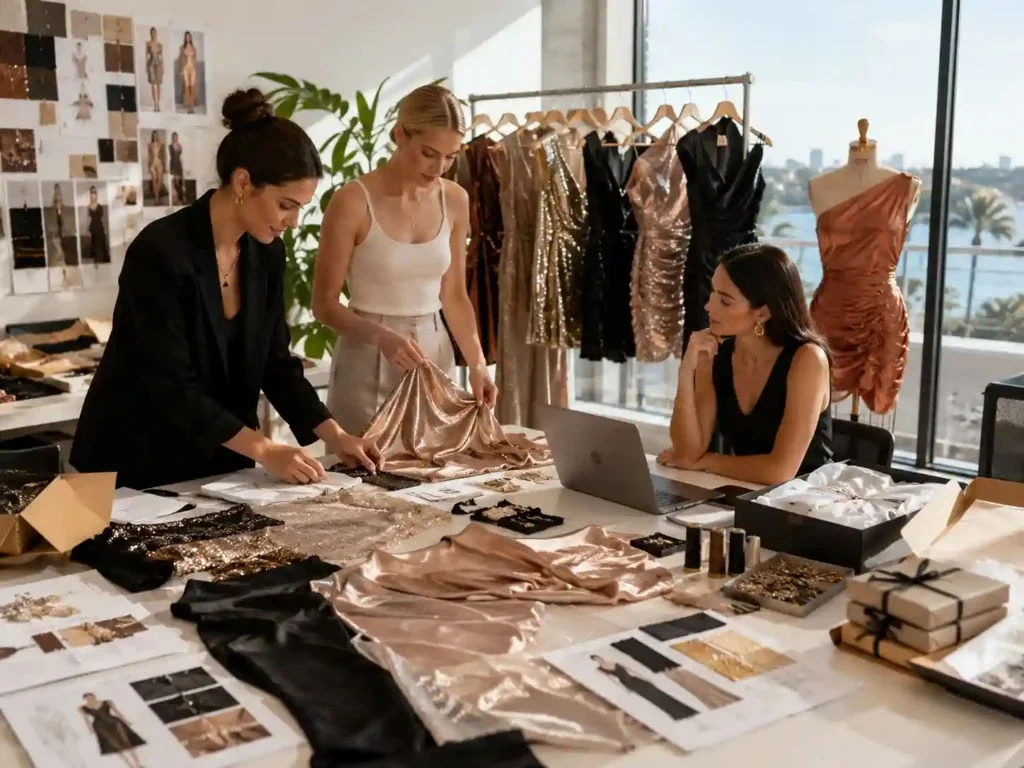
A manufacturer’s production capability should match your expected order volume and product requirements.
When reviewing production capability, brands usually need to look beyond factory size. Important details include:
- Whether pattern makers are involved during development
- How sample information is transferred to the production team
- Whether cutting, sewing, and finishing teams follow approved specifications
- How quality issues are recorded and corrected during production
Factory capacity is usually measured by output, but for dress production, maintaining consistency between approved samples and bulk orders is often the bigger challenge.
In dress production, consistency is often more important than producing one perfect sample. Bulk manufacturing requires stable processes, clear production instructions, and continuous quality checks.
Understand MOQ, Lead Time, and Production Planning
For startups and growing brands, MOQ is often one of the first questions when contacting a manufacturer. However, the lowest MOQ does not always mean the best production option.
Before placing an order, you should confirm:
- Minimum order requirements
- Sample development time
- Fabric preparation timeline
- Bulk production schedule
- Approval points before production
You should also understand when production lead time begins. In many cases, bulk production starts after fabric, measurements, construction details, and pre-production samples are confirmed.
Clear planning helps reduce delays caused by missing information or late design changes.
Check How the Manufacturer Controls Quality
Quality control should not only happen at the final inspection stage.
Quality control normally starts before production begins, including:
- Fabric inspection before cutting
- Pattern and cutting accuracy checks
- In-line sewing inspections
- Finishing and measurement checks
- Final inspection before packing
From the factory perspective, solving quality issues early is much easier than correcting problems after the entire order is completed.
A manufacturer with a clear inspection process can identify problems during production instead of waiting until shipment preparation.
Pay Attention to Communication During Development
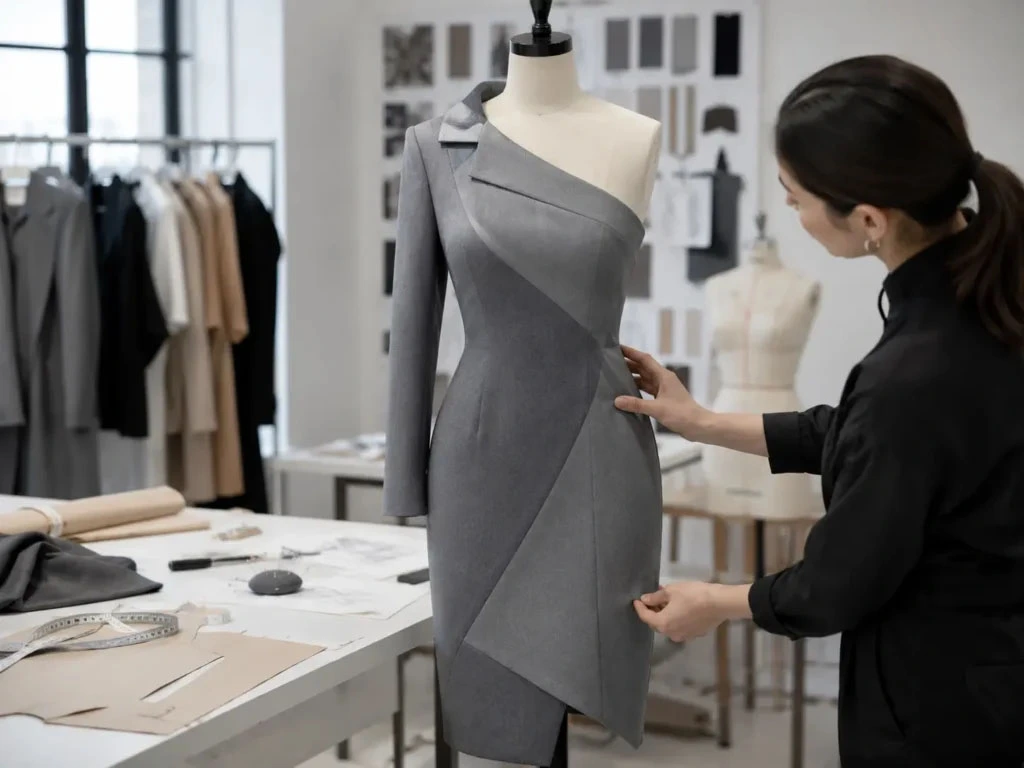
During dress development, communication affects many production decisions, especially when discussing fabrics, construction details, and sample revisions.
You should evaluate whether the manufacturer can provide clear feedback when discussing:
- Design feasibility
- Fabric selection
- Construction methods
- Sample revisions
- Production requirements
During dress development, some ideas may need technical adjustments to achieve the expected result. A manufacturer that understands production details can help you make practical decisions before they affect cost or timeline.
We often find that projects run more smoothly when both sides confirm details clearly before moving into bulk production.
Request Samples and Compare Before Long-Term Cooperation
Before committing to larger production quantities, you should carefully review samples and production standards.
Key points to review include:
- Fabric quality and performance
- Garment measurements
- Stitching and finishing
- Construction details
- Packaging requirements
A production sample should represent more than the overall appearance. It should confirm measurements, construction details, finishing standards, and whether the garment can be reproduced consistently in bulk production.
For brands planning multiple collections, the ability to maintain consistency across different styles and seasons is an important factor when choosing a long-term manufacturing partner.
Questions to Consider Before Choosing a Dress Manufacturer
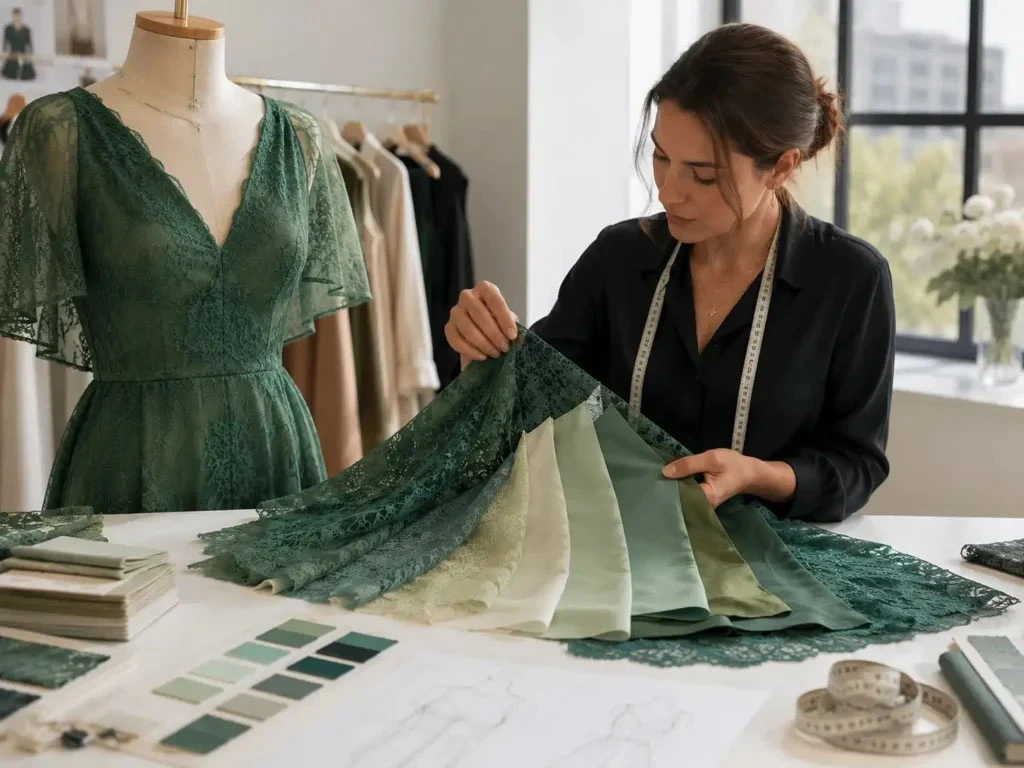
When you compare manufacturers, you should prepare questions that help you understand their actual production process.
Useful questions include:
- What types of dresses do you usually produce?
- Can you support design development and sample changes?
- How do you manage quality during bulk production?
- What information do you need before starting production?
- How do you handle changes after sampling?
These questions help you understand whether a manufacturer’s working process fits your expectations.
FAQ
How can a fashion brand reduce risks when working with a new dress manufacturer?
You can reduce risks by starting with clear product information, reviewing samples carefully, and confirming production details before bulk orders. Many brands start with sample development or a limited first production run to check communication, quality consistency, and delivery performance before expanding cooperation.
What should a brand prepare before contacting a dress manufacturer?
Before starting communication with a manufacturer, brands usually prepare basic product information such as design references, estimated quantities, fabric direction, measurements, and special requirements.
Why is factory communication important during dress development?
Dress production often involves many technical decisions that cannot be solved only through pictures. Clear communication helps both sides confirm construction details, avoid misunderstandings, and reduce unnecessary sample revisions.
Should new fashion brands choose a manufacturer based only on MOQ?
MOQ affects how easily a brand can start production, especially for new collections. However, production quality, development support, and repeat-order consistency usually become more important as the brand grows.
How can you evaluate whether a dress manufacturer is suitable for long-term cooperation?
You can evaluate consistency, response speed, production knowledge, and how the manufacturer handles problems during development. A suitable partner should be able to support repeated orders with stable quality rather than only complete one successful sample.
Conclusion
Choosing a dress manufacturer is not only a sourcing decision. It also affects how smoothly your designs move from development to bulk production. Price matters, but development ability, production control, and communication often determine whether a project can run smoothly from sampling to bulk delivery.
Related Dress Manufacturing Services
If your project involves a specific dress fabric or construction, you can also review our related manufacturing pages:
- Off Shoulder Dress Manufacturer
- A Line Dress Manufacturer
- Bridesmaid Dress Manufacturer
- Evening Dress Manufacturer
- Prom Dress Manufacturer
Get a Quote for an Existing Dress Style
If you are transferring an existing dress style to a new manufacturer, send us the latest approved sample, tech pack, product photos, or measurement chart together with your target quantity.
As a dress manufacturer, we can review the construction, fabric, trims, measurements, and current production status with you before confirming the sampling requirements.

