

A lining measurement can look correct in a tech pack and still need adjustment once the dress is sewn. We see this most often with satin, chiffon, bias-cut and fitted styles, where the lining and outer fabric do not always move in the same way. For production, we check the finished garment rather than relying on a fixed lining allowance alone.
How Much Shorter Should Dress Lining Be?
For many conventional dresses, a lining that finishes around 2–3 cm shorter than the outer dress is a reasonable starting point.
We use this as a starting measurement, not as a fixed factory rule. Once the fabric, pattern and construction are confirmed, the lining may need to be adjusted. A fitted satin dress, loose chiffon maxi and stretch bodycon dress can behave quite differently at the hem.
Here is a practical starting reference:
| Dress Type | Typical Starting Difference |
|---|---|
| Mini dress | 1.5–2.5 cm |
| Midi dress | 2–3.5 cm |
| Maxi dress | 3–5 cm |
| Fitted stretch dress | 1.5–3 cm |
| Lightweight chiffon | 2.5–5 cm |
| Bias-cut dress | Confirm after hanging and fitting |
These figures are useful when developing the first sample. The approved finished garment should determine the final measurement.
Why Is Dress Lining Shorter Than the Outer Dress?
The main reason is movement.
The outer fabric and lining do not always move together when the wearer walks, sits or changes position. If both hems finish at the same point, the lining can become visible or push against the outer layer.
A small difference gives the shell more room to move, which is especially noticeable on chiffon, satin and other lightweight fabrics.
Does Dress Length Affect the Lining Length?
It can, but dress length is not the only factor.
A short fitted dress and a long flowing dress behave differently around the hem. On a maxi dress, the outer layer may move away from the lining as the wearer walks, so a very small difference can become visible.
The shape of the dress matters too.
A loose A-line dress gives the shell more room to move. On a fitted style, the lining stays closer to the body, so the same 2 cm difference can look and behave differently.
A mini, midi or maxi label gives you a useful reference, but it does not tell the factory exactly where the lining should finish. Pattern shape and movement around the body still need to be checked.
How Does Fabric Affect Lining Length?
Fabric can change the answer more than many buyers expect.
A lightweight chiffon shell may float away from the lining when the wearer moves. Satin can slide differently against the lining, while a stretch fabric can change its effective length under body tension.
Shrinkage and fabric relaxation also need to be considered.
A fabric may measure correctly immediately after cutting but change slightly after pressing or finishing. Bias-cut garments are more sensitive because the shell can drop after hanging.
When we develop these styles, the lining measurement is checked on the sewn garment rather than confirmed from the pattern alone.
What Happens If the Lining Is Too Long?
The first thing you may notice is the lining showing below the outer hem. On lightweight dresses, however, a long lining can also push against the shell and make the hem look heavier.
Other signs include:
- The lining becomes visible when walking
- The outer hem does not fall cleanly
- Lightweight fabric looks slightly pushed out
- The bottom of the dress feels heavier than expected
Before shortening the lining, we normally check the outer hem, pressing result and whether the shell has relaxed or stretched.
Otherwise, the lining may be shortened to correct a problem that actually started somewhere else.
What Happens If the Lining Is Too Short?
This is particularly easy to notice on bodycon dresses, stretch styles, fitted woven dresses and bias-cut garments.
If the lining looks fine while the model is standing but rides up when walking or sitting, we would check the lining length again. On a fitted dress, we would also check the ease around the body before changing the measurement.
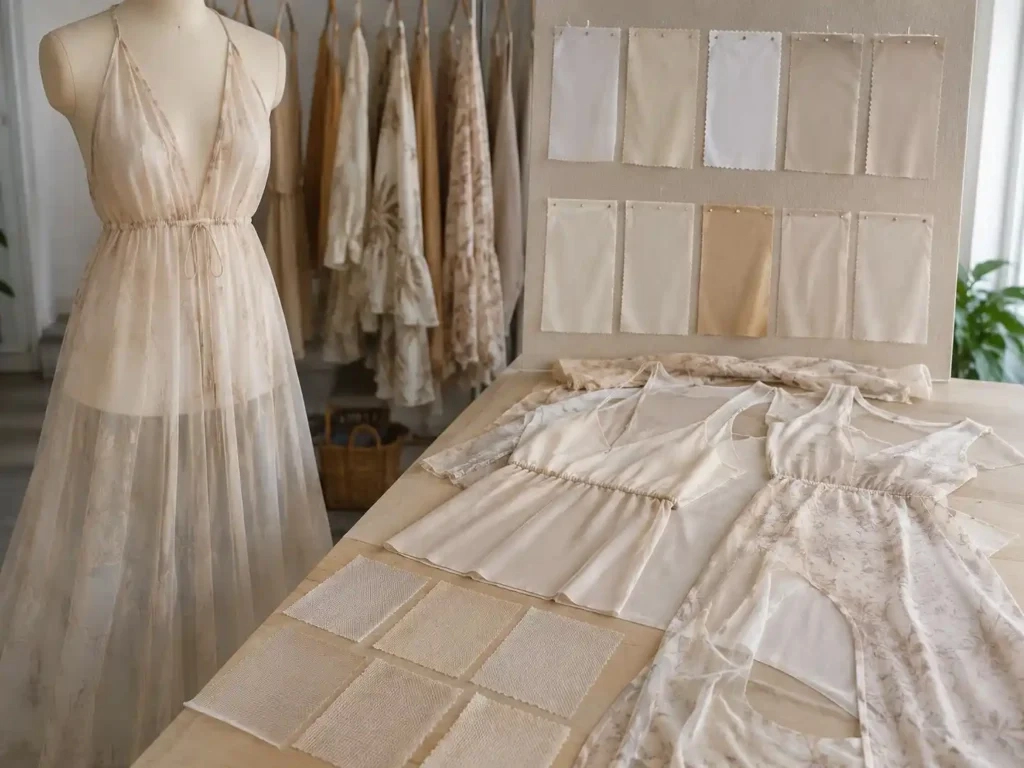
Should Lining Length Be Graded With the Dress?
Yes, but we would not automatically apply the same fixed difference to every size.
As body length, hip measurement and proportions change through grading, a 2 cm difference may not behave the same across the full size range. This is especially worth checking on fitted styles and dresses with significant length grading.
Does Hem Construction Change the Lining Length?
It can.
A narrow baby hem, rolled hem and folded hem do not consume fabric in exactly the same way. The finished measurement therefore needs to be distinguished from the pattern measurement.
This is why a tech pack should not simply say:
Dress length: 90 cm
Lining: 2 cm shorter
The factory still needs to know where the 90 cm is measured from and how the finished hem is constructed.
A clearer specification can include:
- Finished outer length
- Finished lining length
- Measurement point
- Hem construction
- Lining fabric
- Measurement tolerance
Pattern length and finished garment length should not be treated as the same measurement. If the style has a particular visual requirement, a construction drawing or approved sample reference is useful as well.
How Do We Check Dress Lining During Sampling?
Once the sample is sewn, we check the lining as part of the complete garment rather than measuring the two layers separately.
For a sample, our usual checks include:
- Finished outer length
- Finished lining length
- Hem appearance
- Lining visibility
- Lining tension
- Fabric movement
- Fit
- Pressing result
- Overall balance
The dress is checked flat and hanging.
For styles with more movement, we also check the garment while worn. Walking and sitting can reveal problems that are easy to miss when the dress is only inspected on a table.
With satin, chiffon and other lightweight fabrics, pressing is another important point. The relationship between the shell and lining can change after normal finishing.
A dress can look correct before pressing and behave differently afterward.
Should You Finalize Lining Length From the Pattern?
The pattern gives you the starting measurement, but the finished sample should have the final say.
A pattern can be technically correct and still produce a lining that rides up, shows at the hem or pulls against the outer fabric once the garment is sewn.
For this reason, the development process usually works better as:
Tech Pack → Pattern → First Sample → Fit Check → Adjustment → PP Sample → Bulk Production
If the lining needs to be changed, it is much easier to make that adjustment during sampling than after bulk cutting has started.
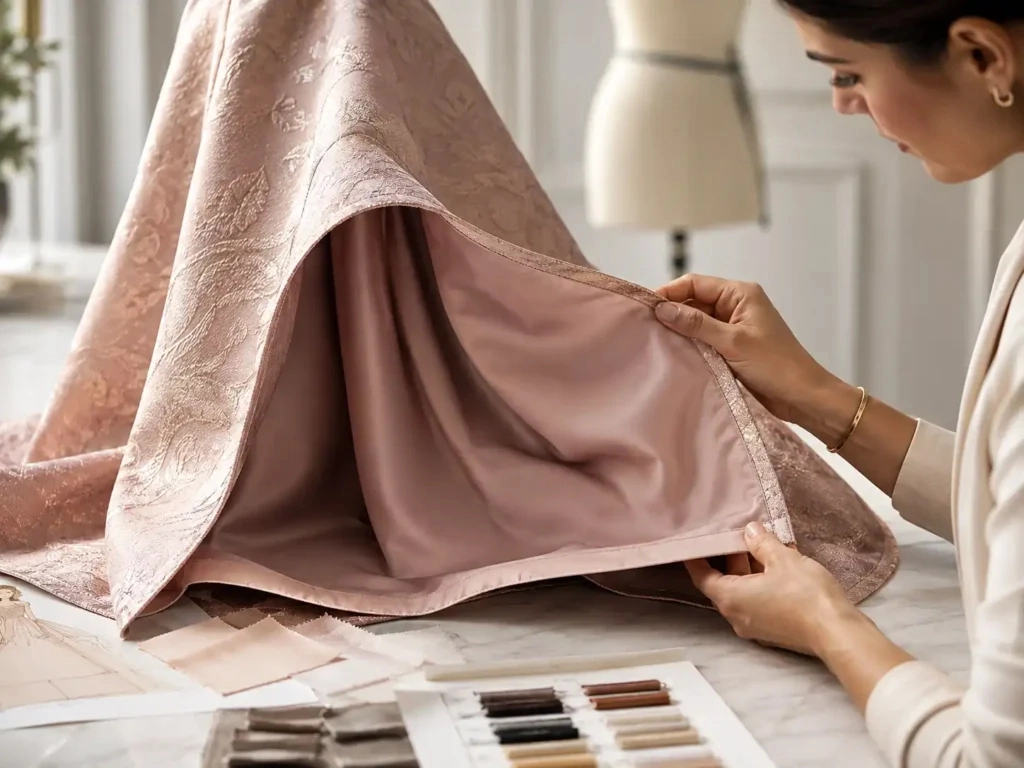
What Should Be Included in the Tech Pack?
If you are sending a dress to a clothing manufacturer, avoid specifying only:
“Lining 2 cm shorter.”
That instruction can still be interpreted differently at the pattern and sewing stages.
At minimum, we would want the tech pack to show:
- Finished dress length
- Finished lining length
- Measurement point
- Lining fabric composition
- Outer fabric
- Hem construction
- Size grading
- Measurement tolerance
- Construction drawing
- Approved sample reference
The more people involved in design, sourcing, sampling and production, the more useful these details become.
A clear tech pack saves time when the sample needs to be reviewed or adjusted.
When Should the Lining Length Be Confirmed?
You can put the intended lining measurement in the tech pack from the beginning, but the final measurement is better confirmed during sample development.
For B2B buyers, the important checkpoint is the PP sample approval.
At PP sample stage, the lining measurement should be treated as a production reference, not just a sample detail.
If the lining still needs to be shortened or lengthened after PP approval, the change should be documented before bulk production starts. The updated measurement then becomes the production reference.
This is especially important when the factory is producing several sizes or multiple colorways from the same style.
Factory Tip: Check the Whole Hem Before Changing the Lining
When the hem looks wrong, we do not measure the lining in isolation.
We first check the outer hem, then compare the lining position around the full hem. If needed, we check the dress again after pressing and on the model.
If the outer fabric has stretched, relaxed or been affected by pressing, changing the lining length alone may not solve the problem.
FAQ
Can the lining length affect my dress fit even if the measurements are correct?
Yes. A lining can affect how a dress sits even when the body measurements are correct. If it is too short, it may pull upward during movement. If it is too long, it can push against the outer fabric. We check both layers together during sample fitting.
Does the lining fabric need to match the outer fabric weight?
Not necessarily. What matters is whether the lining works with the shell. A heavy lining can pull down a lightweight dress, while a very thin lining may not provide enough coverage. During sampling, we check how both fabrics hang together before confirming the lining for bulk production.
Should lining length be included in the size spec?
Yes, especially when the lining has its own hem position. We recommend listing either the finished lining length or the intended difference from the outer hem. This gives the pattern and sewing teams a clear reference and helps keep the measurement consistent across sizes.
Can I use a standard 2 cm lining allowance for my whole collection?
2 cm is fine as a starting point. We would not use it as a rule for every style. Hem shape, fabric stretch, garment fit and construction can all change the required difference, so we review the measurement during pattern making and sampling.
What if my approved sample needs a lining change before bulk production?
If bulk cutting has not started, this is usually straightforward to correct. We can update the lining length, fabric or construction and confirm the revised details before releasing the order to production. If the change affects cost or lead time, that should also be confirmed at the same time.
Conclusion
For many dress styles, 2–3 cm shorter than the outer hem is a useful starting point, but the final measurement depends on the fabric, fit, hem construction and how the garment moves.
For bulk production, confirm the finished lining measurement on the approved sample and record it clearly before PP approval and bulk cutting. This gives the factory a clear production reference and helps avoid unnecessary changes after cutting begins.
If you are developing lined dresses for your brand, working with an experienced dress manufacturer can help identify lining and construction issues during sampling rather than after bulk production.
Explore Our Clothing Manufacturing Solutions At Xiuyu Apparel
- OEM Dress Manufacturer
- Bodycon Dress Manufacturer
- Velvet Dress Manufacturer
- A Line Dress Manufacturer
- Evening Dress Manufacturer
Get a Clothing Manufacturing Quote Based on Your Design
If you already have a garment design, send us the product photo, tech pack, or reference sample together with your target quantity.
We can review the fabric, lining, construction, trims, workmanship, and finishing requirements and prepare a quotation based on the actual garment rather than a general price range.