

When developing a dress, we usually start with the outer fabric, measurements and pattern. As a dress manufacturer, we also look at what is happening inside the garment during the first sample. The difference often shows up after the first sample is sewn. A dress can meet the measurement chart and still feel too tight, too soft or too heavy once the lining and internal support are added. This is something we pay close attention to during sampling. In many cases, the issue is not the pattern alone. The lining or internal support is changing how the garment behaves.
Why Internal Materials Matter in Dress Production
We normally choose the internal material based on the job it needs to do, rather than choosing the lining first and trying to make the garment fit around it.
A soft slip dress may need an inside layer mainly for coverage and comfort. A fitted bodycon dress may need controlled stretch and recovery. A strapless style may require support around the bust and upper body. A corset dress may depend on boning, interfacing and structured internal panels to maintain its shape.
In production, the effect usually shows up in a few areas:
- Finished garment measurements
- Stretch and recovery
- Bust and waist fit
- Drape and movement
- Neckline stability
- Bodice support
- Skirt volume
- Overall silhouette
- Wearing comfort
That is why we prefer to check the outer fabric, lining and internal construction together during sampling, before the garment is approved for bulk production. Your approved sample should show how those components work together before bulk production starts. A PP sample can then serve as the production reference for measurements, construction and appearance.
What Internal Materials Are Used in Dresses?
Not every dress needs all of these components. The construction depends on the fabric, the fit and the amount of support the style needs.
Lining
Lining is one of the most common internal materials in dress production. It can improve coverage, comfort and the appearance of the inside, but it can also change the fit.
Lining weight can also change the way a dress hangs. This is especially noticeable with lightweight satin, chiffon, silk and other fluid fabrics.
For a soft skirt, a lining that is too heavy may pull the outer fabric down. For a fitted bodice, a lining with the wrong amount of stretch may create tension around the bust or waist.
Lining length matters as well. A lining that is too long can show below the outer shell, while one that is too short may pull upward during movement. For a more detailed explanation, see our guide to how much shorter dress lining should be.
Underlining
Underlining is attached to the outer fabric and becomes part of the garment structure.
We usually consider underlining when the shell needs more body, stability or opacity. It can help a lightweight fabric hold a cleaner shape and can provide a more stable base for certain seams or construction details.
If the outer fabric is meant to move softly, an overly firm underlining can make the dress look heavier or more rigid. We sometimes see this when a lightweight fabric is given more structure than the original design needs.
The choice usually depends on the fabric weight, construction and how much structure the style actually needs.
Interfacing
Interfacing is normally used in selected areas rather than throughout the garment.
You may find it around waistbands, necklines, facings, plackets, closures or other areas that need additional stability.
During sampling, we first check whether the interfacing works with the fabric. On lightweight satin or chiffon, for example, a stiff interfacing can make a neckline or waistband look noticeably different from the rest of the garment.
Boning
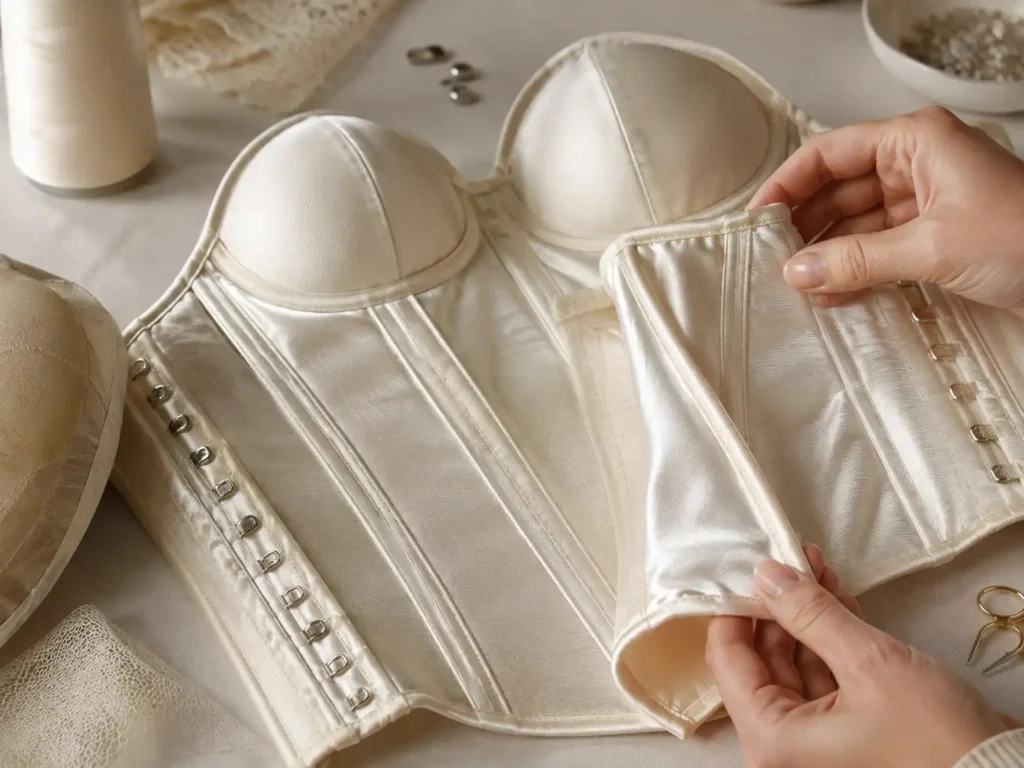
Boning is commonly used in corset dresses, strapless dresses and other structured bodices.
It helps prevent certain areas from collapsing, rolling or losing their shape. It can also help the bodice stay closer to the intended form during wear.
Its position is critical.
You cannot simply add boning wherever there is space inside the garment. During fitting, we normally check the boning while the garment is being worn, especially when the dress is strapless or closely fitted. The channel, length and position all need to work with the pattern and the body’s movement.
If the boning is too long, it can press into the body. If it stops in the wrong position, it may create a visible break in the silhouette. If the channel is poorly placed, the support may not work as intended.
Bra Cups
Cup thickness and shape can change the bust point, neckline appearance and balance of the upper bodice. This becomes particularly noticeable in fitted, strapless and evening dresses.
If the cup thickness changes after fitting, we normally check the neckline and bust shaping again before approving the construction. Even a small change in cup thickness can affect where the bust point sits, so we check the cup together with the bodice rather than treating it as a separate trim.
Power Mesh and Elastic Support
Power mesh and elastic components are useful when a dress needs controlled compression, recovery or additional body support.
They are often used in fitted dresses where the inside needs to stretch with the body without losing too much recovery.
However, too much compression can make a garment uncomfortable.
When choosing a stretch support material, we check both stretch and recovery. A mesh that stretches easily but does not recover well can affect the fit after the garment has been worn.

How Do Internal Materials Affect Dress Fit?
Stretch and Recovery
Stretch is easy to overlook when developing a fitted dress.
For example, the outer fabric may have comfortable two-way stretch while the lining has very little stretch. The shell can pass the measurement check, but the finished dress may still feel restrictive once the two layers are sewn together.
That is why the outer fabric and internal layer are checked together during sampling.
Bodycon and fitted evening dresses show this problem quickly because the lining has to move with the shell.
The same applies to recovery. A fabric can stretch sufficiently but fail to return to its original shape. If the shell and internal material recover at different rates, the garment may gradually lose its intended fit during wear.
Ease
You cannot decide ease from a generic size chart alone. Your brand’s fit block, target customer, fabric stretch, lining, closure and intended wearing experience all matter.
Too little ease can create:
- Horizontal tension
- Drag lines
- Armhole pulling
- Difficulty sitting or walking
- Pressure around the bust or hip
Too much ease creates a different problem. The garment may lose the fitted appearance you intended, and areas such as the neckline can become less stable.
Your lining needs to be included in this decision because it may restrict the garment even when the shell itself has enough ease. This is particularly relevant when a woven outer fabric is paired with a low-stretch lining.
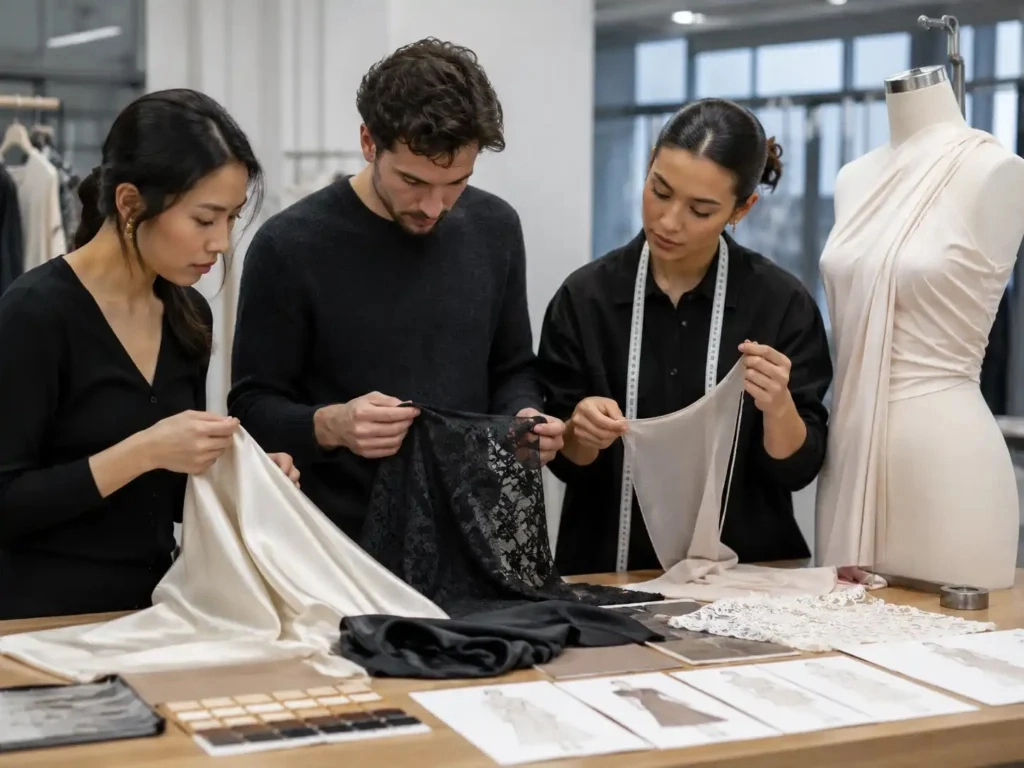
Bust and Waist Fit
Internal construction can change how the dress sits on the body.
For example, cups can alter the bust point, while boning can influence how the bodice holds the waist. Interfacing can change neckline stability, and a tight lining can pull the bodice upward.
When you are reviewing a sample, do not only look at the measurement sheet.
Look at the garment on a fit model or dress form and check whether the internal construction is creating tension lines, gaping, pulling or unexpected pressure.
A measurement can be technically correct while the garment still looks or feels wrong.
How Internal Materials Affect Dress Structure
Structured Bodices
A structured bodice depends on several layers working together. The shell, lining and support components all affect how the finished bodice holds its shape.
Change one layer, and the fit or support may change with it.
For example, changing from a medium-weight lining to a lighter lining may make the bodice softer. That can be useful for comfort, but it may also reduce the support that was helping the original sample hold its shape.
In production, we therefore treat a lining or support change as a construction change, not only a material substitution.
Strapless Dresses
Strapless dresses are particularly sensitive because there are no shoulder straps to help carry the garment.
The bodice needs to stay in position through its own construction, fit and internal support.
Depending on the design, a strapless dress manufacturer may need to consider several internal components:
- Boning
- Cups
- Elastic
- Power mesh
- Gripper or anti-slip tape
- Structured lining
- Accurate neckline shaping
If the upper bodice is too loose, the dress may slide down. If the internal support is too aggressive, the wearer may feel pressure around the bust.
For a strapless sample, we check the dress while it is being worn, not only when it is lying flat.
How Internal Materials Affect Dress Silhouette
A dress can have the right measurements and still have the wrong silhouette. The difference often comes from what is happening between the outer fabric and the body.
Fitted and Bodycon Dresses
For a bodycon style, the internal layer needs to follow the movement of the shell.
A lining that is too tight can create horizontal pulling. A lining with excessive looseness can create unwanted folds inside the garment.
The lining does not always need to match the shell measurement by measurement. You need to consider how both layers behave when the garment is worn.
A-Line Dresses
On an A-line dress, too much structure through the skirt can change the shape completely. A lining or underlining that is heavier than the approved sample may make the skirt stand wider at the waist or pull it down toward the hem.
A stiff internal layer can make a soft A-line skirt stand wider than expected. A heavier lining can pull the skirt down and reduce the amount of visible volume.
Slip Dresses
Slip dresses are usually more dependent on fabric behavior than heavy internal structure.
If you are working with satin, silk or another fluid fabric, the lining needs to move naturally with the shell.
The wrong lining can change the drape, add unnecessary weight or create visible tension around the body.
Bias-cut styles need particular attention because the fabric can settle after sewing. We let the sample hang before finalizing the hem.
Corset Dresses and Evening Dresses
Corset and formal dresses often rely more heavily on internal construction.
The bodice may combine several materials to create the intended shape. Small changes in boning, cups, interfacing or lining can affect the neckline, waist and bust.
For these styles, internal construction should be treated as part of the pattern and fit development, not as a separate finishing stage.
What Should You Check During Sample Development?
When reviewing a first sample, start with the obvious points—color, fabric, length and measurements—but also check what is happening inside the garment.
1. Check the lining against the shell
Check whether both layers move together.
If the shell stretches but the lining does not, identify where the restriction appears.
2. Check the internal support position
For boning, cups and elastic support, look at their actual position on the body rather than only their position on the tech pack.
A few centimeters can make a noticeable difference in a fitted bodice.
3. Check the garment in movement
Ask the wearer to sit, walk, raise the arms and move naturally.
Some fit problems only show up when the wearer moves.
4. Check the silhouette from different angles
Look at the front, side and back.
A garment can look correct from the front while the side view shows pulling around the bust or an uneven transition at the waist.
5. Check the hem after the fabric settles
Fluid fabrics can change length after hanging.
For bias-influenced styles, final leveling should be based on the fabric’s actual behavior rather than an assumption made before the sample was sewn.
Common Problems Caused by the Wrong Internal Material
The dress feels tighter than the approved sample
The lining may have less stretch or less ease than the shell. Before changing the outer pattern, we first check whether the lining is creating the restriction.
The skirt looks heavier than the reference sample
Check the lining and underlining first. If either layer is heavier than the approved sample, it can pull the skirt down and reduce its movement.
The neckline does not stay in position
The neckline measurement may be correct, but the fit can still be affected by the interfacing, elastic, cups or other internal support.
The bodice looks too stiff
Too much interfacing or underlining can change the hand feel and external appearance.
If your original design depends on softness, the internal material needs to preserve that quality.
The dress loses its shape during wear
This may be related to fabric recovery, internal support or the relationship between the shell and lining.
For stretch garments, checking recovery during sampling is more useful than relying only on the flat measurements.
How Should You Specify Internal Materials in a Tech Pack?
If you are preparing a tech pack for a clothing manufacturer, avoid writing only:
Lining: polyester
That is usually not enough for accurate sampling.
Where relevant, you should specify:
- Fiber composition
- Fabric type
- Stretch direction
- Stretch percentage
- Fabric weight
- Color
- Lining coverage
- Cup size or thickness
- Boning location
- Boning length
- Interfacing area
- Elastic width
- Support mesh placement
- Whether the internal material is approved or still open for development
If a component affects the fit, support or silhouette, mark it as a critical construction point in the tech pack.
For example, if the dress must maintain a particular bust shape, that should be clear before sampling. If the lining must stretch with the shell, that should also be stated.
This gives the pattern and sample team clearer information to work from.
What If the Internal Material Changes Before Bulk Production?
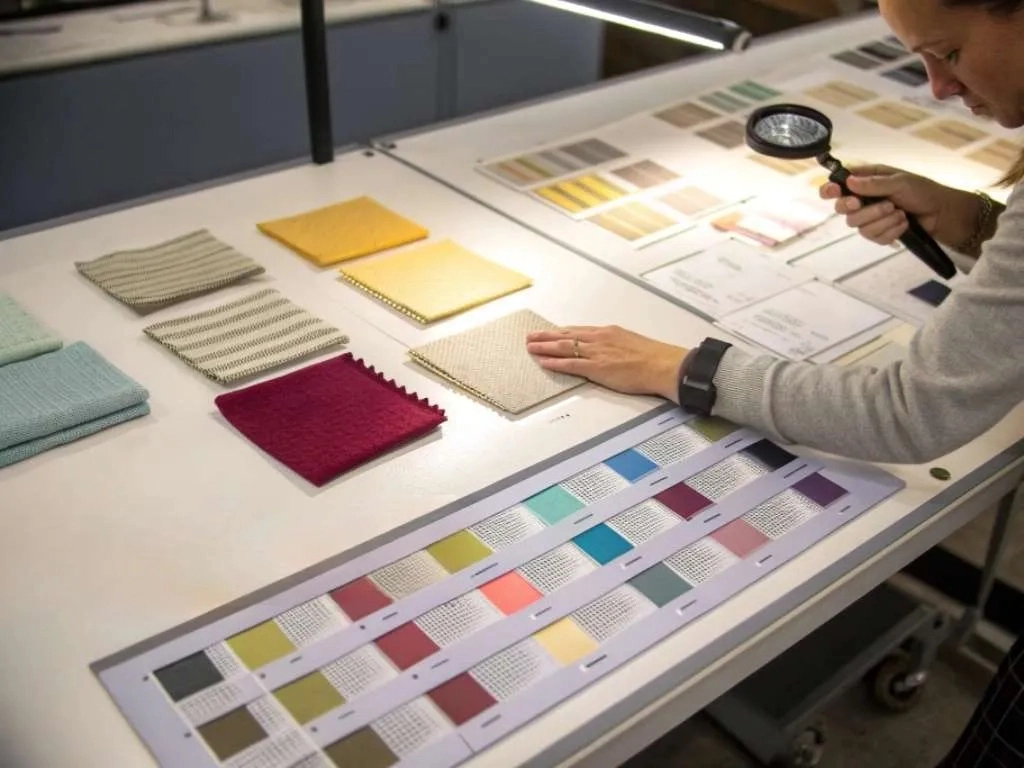
A material change is not necessarily a problem, but we prefer to test it before the fit is signed off. This is especially important when you are working with a dress manufacturer on a new style, because a change in lining, cup or support material can affect the approved sample.
If you change the lining, cup, interfacing or support mesh after sample approval, the finished garment may no longer behave exactly like the approved sample.
You may need to review:
- Finished measurements
- Stretch
- Ease
- Seam tension
- Neckline position
- Bust shape
- Waist fit
- Drape
- Finished length
This does not necessarily mean you need to remake the entire development process. A minor material change may only require a quick test on the existing construction. If it affects stretch, support or drape, we would recommend checking another sample before bulk cutting.
The important point is to test the change before the material is released into bulk production.
A Practical Way to Review Internal Construction
For your next dress development, you can review the garment in this order:
Outer fabric → Internal construction → First sample → Fit check → Construction adjustment → PP sample → Bulk production
Do not look at the lining separately from the garment.
Ask instead:
- Does the lining move with the shell?
- Does the support stay where it should?
- Does the internal layer restrict the body?
- Does it add too much weight?
- Does it change the intended silhouette?
- Does the finished garment still match the approved reference?
Before grading and bulk production, we use the approved base sample as the reference for construction and fit.
FAQ
Can I change the lining after the dress sample has been approved?
Yes, you can, but we normally recommend confirming the change before bulk cutting starts. A lining change can affect fit, weight, opacity, and how the outer fabric falls. We may make a quick revised sample or test the construction before moving into bulk production.
Should the lining specification be included in my tech pack?
Yes, we recommend including it. Please specify the lining fabric, weight or GSM, color, stretch, and where it should be used. If these details are missing, our production team may need to confirm them before sampling, which can slow the approval process or lead to a different fit.
What should I do if my reference dress has unknown internal construction?
Send us the reference dress, photos, or even a worn sample if available. Our pattern and sample team can inspect how the lining, seams, interfacing, and support pieces are built. If the original construction isn’t practical for bulk production, we’ll suggest a workable alternative before sampling.
Can a factory recommend a different internal material?
Yes. If the original lining, interfacing, or support material is difficult to source or doesn’t work well with the fabric, we can recommend another option. We normally compare the weight, hand feel, stretch, stability and cost first, then confirm the replacement with you before sampling or bulk production.
Do internal materials need to be checked again for bulk production?
Yes. We check the lining, interfacing, padding, and other internal materials again before bulk production. The approved sample is our reference, but fabric lots can vary. Checking the actual bulk materials helps us catch differences in weight, color, shrinkage, or hand feel before cutting starts.
Conclusion
Internal construction is something we recommend settling during sampling, not after bulk production has started. The lining, support materials and outer fabric need to work together before the fit is considered final.
If a lining or support material changes after approval, we recommend testing the replacement before bulk cutting. A small material change can sometimes be handled without changing the pattern, but that should be confirmed on the garment rather than assumed from the specification sheet.
Explore Our Clothing Manufacturing Solutions At Xiuyu Apparel
Get a Clothing Manufacturing Quote Based on Your Design
If you already have a garment design, send us the product photo, tech pack, or reference sample together with your target quantity.
We can review the fabric, lining, construction, trims, workmanship, and finishing requirements and prepare a quotation based on the actual garment rather than a general price range.