

When you receive a 25–30 day production quote, it is tempting to use that number as your delivery deadline. But as a clothing manufacturer, we know the sewing schedule is only part of the order. Your fabric may still need preparation, samples may need another fitting, and production cannot always start as soon as you place an order. Knowing what happens before and after bulk production helps you plan your collection without putting your launch date at risk.
How Long Does Dress Manufacturing Take?
For a straightforward dress development project, sample development usually takes around 3–7 days. Once the PP sample is approved and the bulk fabric is confirmed, bulk production generally takes another 25–30 days.
These figures cover different stages of the order.
If you are developing a new style, the timeline starts earlier with design review, pattern making and sample approval. After manufacturing, you still need to allow time for inspection, packing and shipping.
A typical order moves through the following stages:
Design Review → Pattern Making → Sampling → Fit Revision → PP Approval → Fabric Preparation → Bulk Cutting → Sewing → Finishing → QC → Packing → Shipping
When comparing dress manufacturers, ask which stages are included in the quoted lead time. A supplier quoting 30 days from PP approval is making a different commitment from one counting from the date you place your order.
What Needs to Be Ready Before Bulk Production?
Before your order reaches the sewing line, the factory needs a workable pattern, approved construction details and the correct materials. Three parts of development usually need attention.
Tech Pack and Design Review
Your tech pack gives the factory the information needed to develop the dress. We review measurements, fabric specifications, construction details, lining, closures, trims and finishing requirements before pattern work begins.
If you already have a complete tech pack, development can move forward with fewer questions.
If you are working from reference photos, sketches or an existing garment, the pattern team may need to clarify details that are not visible in the design. A photo, for example, cannot always show the internal construction, seam allowance or exact position of a waistline.
For your purchasing team, it is worth settling these details before asking for a confirmed production schedule. Unanswered technical questions can hold up the first sample.
Pattern Making and First Sample
The pattern team turns your design into garment pieces that can be cut and sewn.
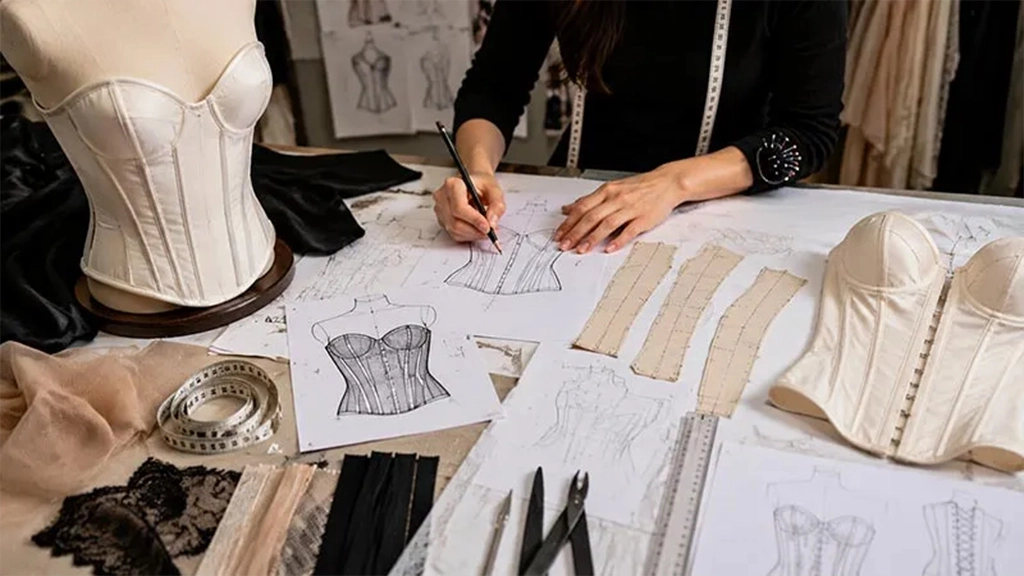
The amount of work depends on the style. A simple slip dress has relatively few construction details. A corset dress with boning, several panels and internal support requires more pattern work and fitting.
During the first sample, you can check whether the design works as an actual garment. The neckline may sit differently from the drawing, the waist may need adjustment, or the skirt may not fall as expected.
These are the kinds of issues that are easier to correct during development than after hundreds of pieces have been cut.
PP Sample Approval
After the necessary fitting changes, you review the pre-production sample, or PP sample.
This is the version the factory uses as the production reference. Measurements, construction, fabric, trims and finishing should be checked before approval.
If your team is still changing the neckline, lining or fabric at this stage, the production schedule should not be treated as final. Cutting against specifications that are still changing creates unnecessary risk for both the brand and the factory.
How Much Time Can Sample Revisions Add?
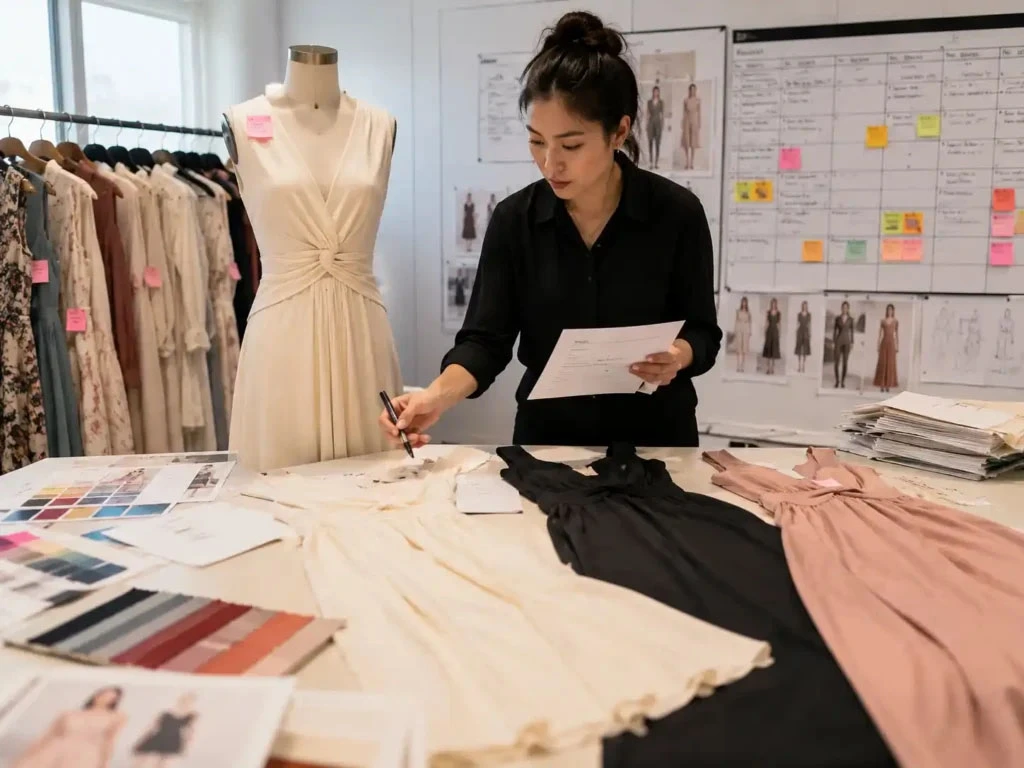
The number of revision rounds can make a noticeable difference to your development schedule.
You might receive a first sample that needs only a small waist adjustment. Another dress may require changes to the neckline, skirt length, lining and overall fit.
For example, asking for a smaller waist and a higher neckline may affect connected pattern measurements. The sample room needs to check how those changes work together rather than treating every request as an isolated alteration.
When reviewing samples, send one consolidated revision sheet with measurements, marked photos and clear instructions. A series of separate messages over several days makes it harder for the pattern team to work from one agreed set of comments.
Also confirm how many sample rounds are included in your development arrangement. The first sample and the final approved sample are not necessarily the same garment.
Why Fabric Availability Affects the Production Schedule
Fabric is one of the things that can hold up an order even when the pattern is ready.
If your selected material is available in the required color and quantity, preparation may be relatively straightforward. Custom dyeing, printing, special finishing or sourcing an unusual fabric can add time before bulk cutting.
Before approving the material, check its:
- Color and shade consistency
- Weight and hand feel
- Stretch and recovery
- Shrinkage
- Opacity
- Surface finish
- Print quality
This is particularly important for satin, chiffon, mesh and lace dresses. Two fabrics with similar compositions can behave differently when made into the same pattern.
We also pay attention to the difference between the sample fabric and the bulk fabric. If the bulk material has a different weight or drape, the approved sample may no longer be a reliable reference for the finished order.
If you are still deciding between fabric options, make that clear when requesting a quotation. The factory needs to know whether the material is confirmed or still under development.
When Does the Bulk Production Clock Start?
This is the point you should clarify before accepting a production quotation.
In our production planning, the usual 25–30 day bulk production period starts after the PP sample has been approved and the bulk fabric has been confirmed.
The factory may already have reviewed your order and arranged preliminary production planning, but that does not mean bulk cutting can begin.
Before production moves forward, the team also needs the relevant size specifications, grading, trims and construction details. Labels and packaging instructions should be confirmed early enough to avoid holding up the final stages.
If your collection needs to arrive in six weeks, a 30-day production quote does not automatically make the schedule workable. You still need to account for everything that happens before the production clock starts and after the garments leave the sewing line.

What Happens During Bulk Dress Production?
Once the approved specifications and materials are ready, the order moves into bulk manufacturing.
Bulk Cutting
The cutting team uses the approved patterns and size specifications to prepare the fabric for production.
Before cutting, fabric condition, usable width and potential defects need to be checked. Certain materials may also require pre-shrinking or other preparation.
Cutting accuracy matters because one mistake can be repeated across a large quantity. The factory checks the pattern, fabric and cutting layout before proceeding with the full order.
Sewing and Assembly
After cutting, garment components move through the sewing operations.
The workload depends on how the dress is constructed. A basic slip dress may involve panel joining, zipper installation and finishing. A structured gown may require lining attachment, boning, gathering, multiple panels and additional handwork.
This is why two orders with the same quantity can have very different production schedules.
Producing 1,000 pieces of one approved style is not the same as producing 1,000 pieces across ten styles with different patterns, fabrics and sewing requirements.
If you are planning a multi-style collection, provide the full style, color and size breakdown when requesting a quotation. It gives the production team a more useful picture of the actual workload.
Does Dress Style Affect Manufacturing Time?
Yes. The construction of the garment often matters more than its name or length.
| Dress Type | Main Production Considerations |
|---|---|
| Slip Dress | Fabric handling, fit and clean finishing |
| A-Line Dress | Bodice and skirt balance |
| Chiffon Dress | Lightweight fabric handling and lining |
| Corset Dress | Pattern structure, boning and internal support |
| Beaded Dress | Embellishment placement and additional handwork |
| Sequin Dress | Fabric handling and careful sewing |
| Pleated Dress | Pleat consistency and pressing |
| Ruched Dress | Gathering position and symmetry |
If your order contains several different styles, do not assume that the simplest dress determines the lead time for the entire collection.
A factory needs to consider the construction operations, available capacity and order arrangement for each style. A heavily embellished dress, for example, may require a different production arrangement from a straightforward woven dress.
What Happens After Sewing Is Finished?
Finishing, inspection and packing still need to be completed before the order is ready to ship.
The finished dresses are checked against the approved sample and production specifications. Typical inspection points include measurements, seam quality, fabric defects, stains, closures, lining and overall appearance.
In-line QC is also important. If a repeated sewing problem is found while production is underway, the team can correct it before the same issue affects more garments.
For your brand, this stage matters because a completed sewing quantity does not necessarily mean the order has passed final inspection.
How Packaging Can Affect Your Delivery Date
For private label brands, packaging is part of the order rather than an afterthought.
Your requirements may include:
- Main labels and care labels
- Hangtags and barcodes
- Size stickers
- Individual polybags
- Carton markings
- Custom packaging
If the label artwork or packing instructions arrive late, finished dresses may be waiting for the required materials before they can be packed.
For orders with several styles and size combinations, make sure the packing instructions are organized clearly. This helps the factory separate quantities correctly and reduces mistakes when cartons are prepared for shipment.
Factory Lead Time Is Not Shipping Time
The date your factory finishes production is not necessarily the date your dresses arrive at the warehouse.
After manufacturing, you still need to allow for final QC, packing, shipment, customs clearance and delivery to your destination.
The shipping period depends on the destination, transport method, shipment volume and customs arrangements. Your freight forwarder can provide a more accurate estimate once these details are known.
If you are preparing for a seasonal collection, store opening or photoshoot, use the required arrival date as your starting point.
Work backward through shipping and production rather than using the sewing completion date as your launch deadline.
What Commonly Delays a Dress Manufacturing Project?
From a production perspective, delays often happen when one stage is ready but something needed for the next stage is still missing.
Some common examples are:
Incomplete specifications: Missing measurements or unclear construction details can stop pattern development.
Fabric not ready: The pattern may be approved, but cutting cannot begin without the correct bulk material.
Late sample feedback: The sample room may finish its work on time, but the next revision cannot start until your team confirms the changes.
Changes after PP approval: Adjusting fabric, measurements or construction after approval can affect patterns and production arrangements already prepared.
Custom trims and accessories: Special buttons, hardware, embroidery or labels may have separate sourcing schedules.
Too many order variations: Different styles, colors and size combinations require more coordination than a concentrated order of one style.
One useful approach is to assign an approval deadline to each important decision. Your designer, buyer and production contact should know who is responsible for confirming fabric, fit, artwork and packaging.
How Should You Plan Your Dress Production Timeline?
If your launch date cannot move, start with the date the finished dresses need to arrive and work backward.
| Stage | What to Include |
|---|---|
| Final Arrival | Warehouse or retail delivery date |
| Shipping | Transit and customs clearance |
| QC and Packing | Inspection and packaging |
| Bulk Production | Cutting, sewing and finishing |
| PP Approval | Final sample and specifications |
| Sample Development | First sample and revisions |
| Initial Development | Tech pack, pattern and fabric decisions |
Do not plan every stage with no room for adjustment. A sample may need another fitting, a fabric supplier may take longer than expected, or your team may need additional time to approve a color.
We also recommend agreeing on how production updates will be shared. If you are managing a collection with several styles, regular updates on material readiness, cutting progress and sewing quantities make it easier to spot a problem before it affects the delivery date.
A realistic production schedule should show what needs to happen, who needs to approve it and when the next stage can begin.
FAQ
Can I reserve a production slot before the final order quantity is confirmed?
You can discuss a provisional production slot with the factory while your buying team finalizes quantities. However, the factory will need an estimated style breakdown and expected order volume. A major change in quantity may require a different capacity arrangement.
What happens if my sales forecast increases after I place the order?
Tell the factory as early as possible. Adding pieces before cutting may be manageable if fabric and capacity are available. Increasing quantities after production has started is more complicated, particularly when additional fabric needs to be sourced or the original line schedule is already committed.
Can I request different delivery dates for different retail markets?
Yes. If your order serves multiple markets, discuss the destination quantities and required dates before bulk production. The factory can review whether the order can be packed or dispatched in separate batches, while your shipping team checks the additional freight and handling costs.
Should I approve a counter-sample from a previous supplier as the new production reference?
It can be useful, but check its measurements, fabric composition and construction first. An old sample may have been altered or may not represent the latest approved version. Provide the current tech pack alongside it so the factory can identify any differences before development begins.
How should I handle a collection with a firm retail launch but uncertain buying quantities?
Separate the confirmed order from the quantities that are still under consideration. Give the factory your expected range and priority styles during initial planning. This makes capacity discussions more useful without treating an unconfirmed forecast as a final purchase order.
Conclusion
A 25–30 day bulk production period does not cover the entire journey of a dress order. You need to account for development, fabric readiness, approvals, inspection and shipping before setting a launch date. As a buyer, focus on the starting point of the production commitment and the decisions that could hold it up. If you are evaluating a dress manufacturer, Xiuyu Apparel is another place to explore when planning your next custom dress collection.

