

When developing a dress, most of the attention usually goes to the shell fabric, measurements and pattern. In our sampling work, however, some fit problems only become obvious after the first sample is sewn. The measurements may be correct, but once the lining, interfacing or support materials are added, the bodice can feel tighter, heavier or stiffer than expected.
Why Internal Materials Can Change the Finished Dress
A dress can be measured correctly and still fit differently from what you expected. We do not judge fit from the measurement chart alone, especially for fitted bodices, strapless styles and bias-cut dresses. The sewn sample shows how the fabric, pattern and internal construction actually behave together.
We often see this during sample development. A pattern can look correct on paper, but once the actual fabric, lining and internal support are sewn together, the balance of the garment can change.
Some common examples we see during sampling include:
- A lining restricts the movement of a lightweight shell.
- Interfacing makes a neckline cleaner but too firm.
- Underlining gives chiffon more body but reduces its softness.
- Boning improves support but creates pressure if the position is wrong.
- Elastic stabilizes a neckline but changes how tightly it sits on the body.
- Bust cups improve shape but need to match the neckline and size grading.
These are not always pattern problems. Sometimes the internal construction simply was not considered when the pattern was first developed.
During product development, we normally review the shell, pattern and internal construction together.
Which Internal Materials Are Used in Dress Construction?
Not every dress needs all of these internal materials. The combination depends on the fabric, silhouette, required fit and level of support.
Lining
Lining mainly affects the inside finish, opacity and wearing comfort, but it can also change the way the outer fabric falls.
With a lightweight or fluid shell, the lining needs to move well with the outer fabric. A lining that is too heavy or too restrictive can pull against the shell and affect the finished drape.
For fitted styles, lining length and ease also need to be checked. A lining that is slightly shorter than intended can pull the outer fabric upward, particularly around the hem, hip or side seams.
Interfacing
Interfacing is normally used in selected areas where you need additional stability.
Common applications include:
- Necklines
- Waistbands
- Plackets
- Cuffs
- Closures
- Structured bodices
The question is how much support the fabric actually needs. Too much interfacing can change the hand feel and make an otherwise soft fabric look or feel too stiff.
This becomes more noticeable with satin, silk blends, lightweight crepe and other fabrics where excessive stiffness can be visible from the outside.
Underlining
Underlining is different from a conventional lining because it is attached directly to the shell and works with it as part of the garment structure.
Underlining is often considered when a fabric is too transparent, too soft or not stable enough for the intended design.
It can improve body and coverage, but it also adds weight. If the design depends on a soft drape, we test the underlining with the actual shell fabric first. Adding more structure is not always better if it makes the finished dress too heavy or stiff.
Boning
Boning is commonly used in corset, strapless and structured bodices.
It helps the garment maintain its shape and supports the bodice against the body. However, the result depends on more than the boning itself.
During sampling, we normally check:
- Boning position
- Boning length
- Channel construction
- Bodice panel shape
- Bust placement
- Waist shaping
- Fabric stiffness
A softer shell may need stronger internal support, while a firm fabric may need less. Changing one of these parts can affect the others, so we check them together during sampling.
Bust Cups
Bust cups can change both the support and appearance of a fitted bodice.
If the cup is too large, too small or positioned incorrectly, the neckline can look uneven even when the outer pattern is correct.
Grading also needs to be checked. A cup position that works in the base size may need adjustment in other sizes rather than being scaled up or down automatically.
Stay Tape and Elastic
Stay tape is useful where you want to control unwanted stretching, particularly around necklines, shoulders and waist areas.
Elastic works differently because it needs controlled tension and recovery.
This matters in stretch dresses, halter styles, off-shoulder dresses and other designs where the garment depends on tension to stay in position.
If the elastic is too tight, you may create distortion. If it is too loose, the neckline or waist may move during wear.
How Does Lining Affect Dress Fit?
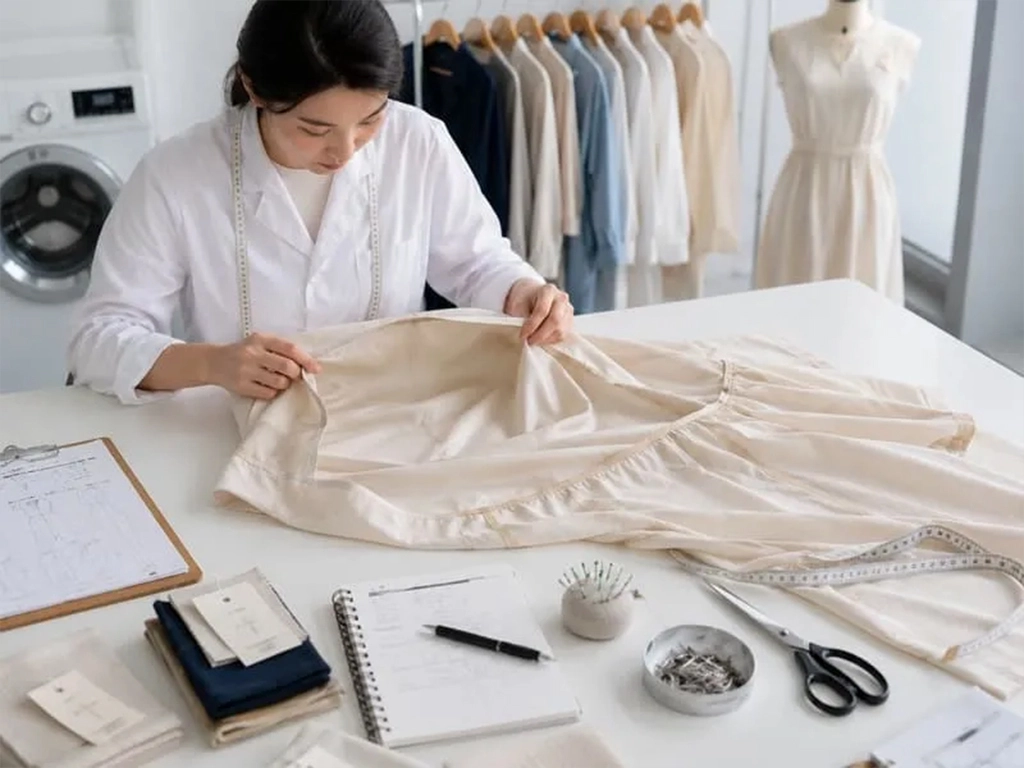
A dress can feel tighter after lining even when the shell measurements have not changed.
This usually happens because the lining has its own measurements and movement characteristics.
For example, a fluid satin shell may need room to move independently, while a tight polyester lining can restrict that movement. The finished garment may then pull around the bust, hip or armhole.
We normally check the lining during fitting rather than treating it as a final finishing detail.
Pay attention to:
- Lining ease
- Lining length
- Stretch and recovery
- Armhole clearance
- Neckline tension
- Seam matching
- Movement when worn
The same principle applies to bias-cut dresses. A bias-cut shell can settle and change after sewing, so confirming the finished length too early can lead to inaccurate production references.
How Does Interfacing Affect Dress Structure?
Interfacing is one of the easiest internal materials to underestimate.
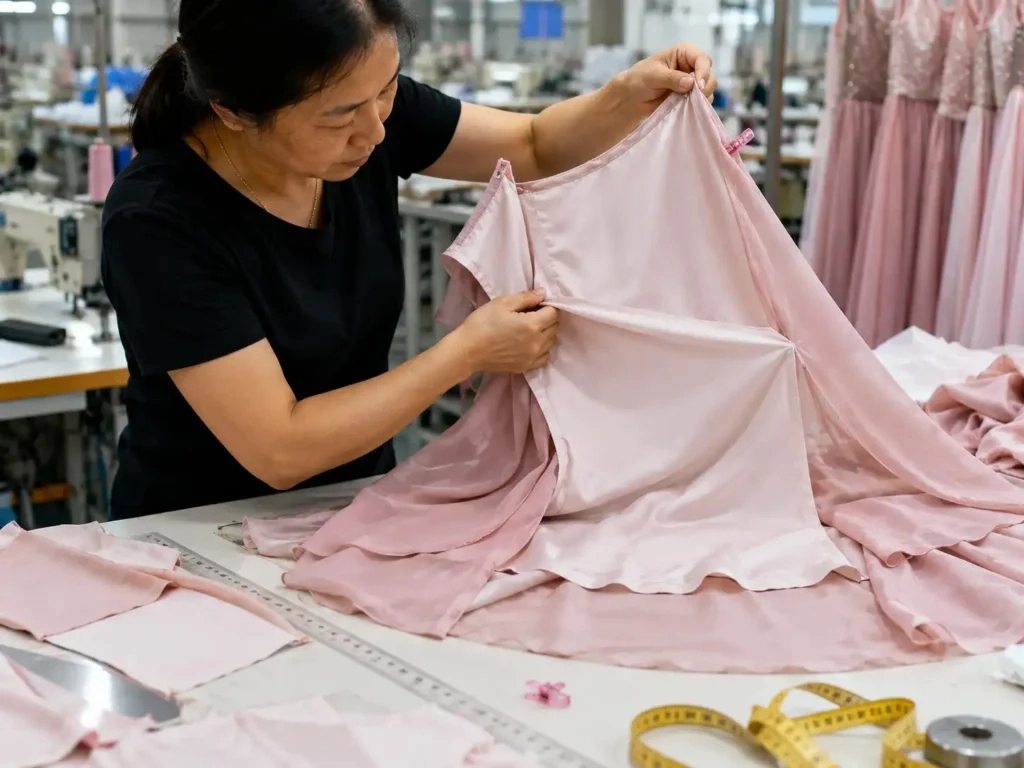
A stronger interfacing can seem like an easy way to stabilize a neckline. During sampling, though, it may make the neckline noticeably harder than the rest of the garment.
This is particularly visible when the outer fabric is soft.
We normally choose the reinforcement based on both the fabric and the job it needs to do.
For example, a neckline that only needs light stabilization does not necessarily need the same support as a structured waistband or bodice.
We compare the actual sample rather than choosing interfacing by thickness alone.
Fusible or Sew-In Interfacing?
Both methods can work. The choice depends on the fabric and the construction.
Fusible interfacing works well when the fabric can handle the required heat and pressure. For delicate, textured or heat-sensitive fabrics, sew-in interfacing may be safer and easier to control during production.
During development, the important checks are:
- Fabric reaction to heat
- Surface appearance
- Adhesion
- Flexibility
- Added thickness
- Edge behavior
- Washing or care requirements
A method that works well on one fabric should not automatically be transferred to another fabric in the same collection.
When Does a Dress Need Underlining?
Underlining becomes useful when the outer fabric itself cannot provide the required coverage, stability or body.
You may consider it for:
- Sheer chiffon
- Lace
- Lightweight satin
- Soft crepe
- Delicate woven fabrics
- Structured bodices
We choose the underlining based on the result we need from the finished garment.
If you add a heavy underlining simply to make a soft fabric easier to handle, you may solve one production problem while creating another. The dress can become heavier, less fluid and less comfortable.
For a brand developing a collection, this is also a cost consideration. More internal material means additional material consumption, sewing operations and handling time.
How Do Internal Materials Affect Different Dress Silhouettes?
The same internal material can produce very different results depending on the silhouette.
A-Line Dresses
A-line dresses generally need less internal support in the skirt, but the bodice may still require stabilization.
The main concern is keeping the waist and upper body clean without making the skirt unnecessarily stiff. In many A-line styles, most of the internal support is needed around the bodice rather than throughout the skirt.
Bodycon Dresses
Bodycon styles are much more sensitive to internal construction.
Lining, elastic, stretch interfacing and seam reinforcement can all change how closely the garment follows the body.
Bodycon styles need to be checked for stretch and recovery, not just finished measurements. A pattern developed for one stretch fabric may need adjustment when the fabric has different recovery. We normally confirm the fit during sampling.
Slip Dresses
Slip dresses usually depend on fabric movement and drape rather than heavy internal structure.
A lining that is too firm can work against the design. For satin or silk styles, the inside construction should preserve the intended fluid movement.
Corset and Strapless Dresses
These styles usually need more internal support.
Boning, cups, interfacing, lining and waist construction all affect the final result. For this type of dress, we fit the complete bodice rather than checking the shell by itself.
Sheer and Lace Dresses
The challenge is often balancing appearance and support.
You may need underlining, a separate lining or selected reinforcement in specific areas. The solution depends on how much of the original transparency and lace pattern you want to preserve.
Why Can the Same Pattern Fit Differently After Internal Materials Are Added?
This is a common source of confusion during product development.
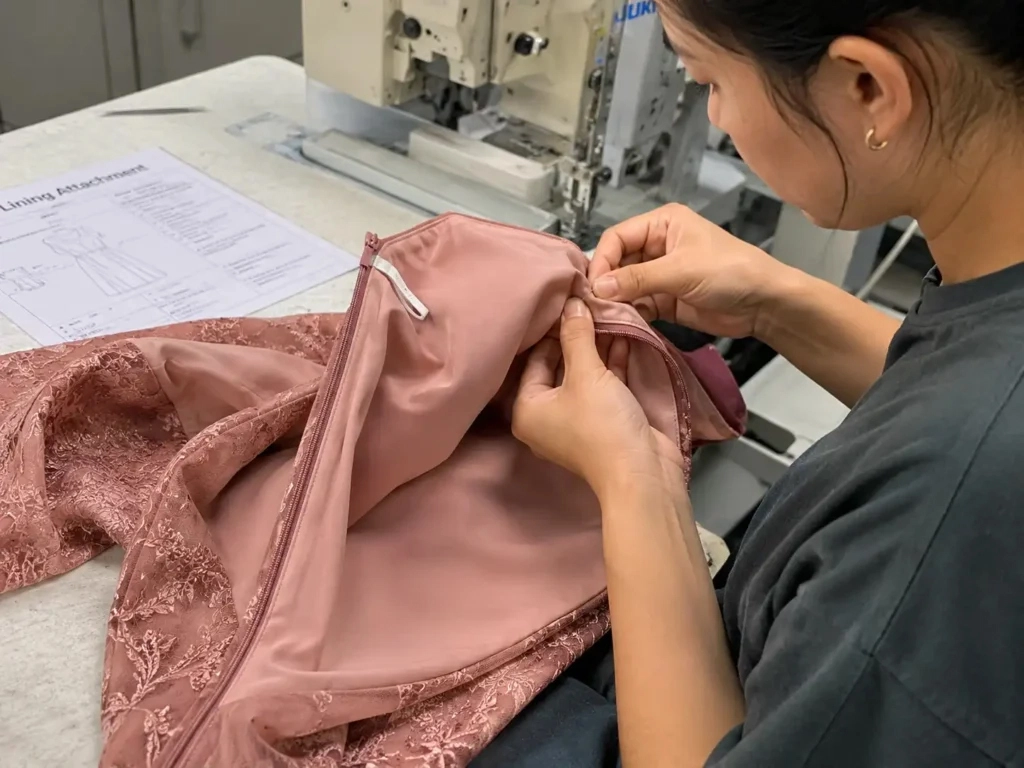
You may send a pattern with clear measurements and expect the finished garment to follow those numbers exactly. But measurements alone do not describe how different layers interact.
For example, a fitted bodice may include:
- A satin shell
- A lining
- Interfacing at the neckline
- Bust cups
- Boning at the side seams
- A concealed zipper
Every layer occupies some space and creates its own tension.
The shell pattern is only part of the final fit. The other layers can change how the finished bodice sits on the body. This is something we often see during first-sample fitting.
We normally make that judgment from the sewn sample, not from the pattern alone. The first fitting often shows whether the issue is really the pattern or comes from the way the internal layers are interacting.
What Should You Check During Sample Development?
When reviewing a sample, we do more than compare the garment measurements with the tech pack. We also check how the dress behaves on the body.
A practical review can include:
| Area | What to Check |
|---|---|
| Fit | Bust, waist, hip and overall balance |
| Lining | Ease, length and pulling |
| Interfacing | Stiffness and edge behavior |
| Underlining | Added body and weight |
| Boning | Position, support and comfort |
| Cups | Size, position and neckline balance |
| Elastic | Tension and recovery |
| Drape | Natural movement of the shell |
| Silhouette | Whether the intended shape remains intact |
| Movement | Sitting, walking, lifting arms and normal wear |
We also check the dress from the front, side and back, since some problems are not obvious when the garment is laid flat. Some problems are not obvious when the garment is laid flat.
For fitted styles, movement testing is especially useful because a dress can look correct while standing and still pull, ride up or gape when the wearer moves.
How Should Internal Materials Be Controlled Before Bulk Production?
Once you approve a sample, the internal construction should be documented clearly.
The production reference needs to cover more than just the lining or interfacing name.
Your production reference should ideally identify:
- Shell fabric
- Lining fabric
- Interfacing type
- Interfacing placement
- Underlining
- Boning type and position
- Cup specification
- Elastic width and tension
- Construction method
- Finished measurements
- Tolerances
Bulk production follows the approved reference. If the sample uses one interfacing but the production instruction only says “add interfacing,” the result can vary from the approved garment.
The approved PP sample should represent the materials, construction and workmanship intended for bulk production.
What Happens When an Internal Material Needs to Change?
Sometimes you discover during sampling that the selected material is not working.
For example, the lining may be too restrictive, the interfacing may be too stiff, or the cups may not sit correctly.
We would not treat this as a simple trim substitution, because even a small material change can affect the finished fit.
A material change can require another fitting check because it may affect:
- Finished measurements
- Drape
- Garment weight
- Neckline position
- Bust shape
- Waist balance
- Comfort
- Overall silhouette
The revised sample should confirm that the original problem has actually been solved without creating a new one elsewhere.
This is particularly important before bulk cutting. Problems are much cheaper to correct during development than after hundreds of garments have been assembled.
How Can You Reduce Fit Problems Caused by Internal Construction?
If you are developing a new dress collection, several practical steps can reduce unnecessary sample revisions.
1. Confirm the full material package
Before we release a style for sampling, we try to confirm the complete material package, especially when the lining or support can affect fit.
2. Test the actual fabric combination
A substitute fabric may be useful for an early prototype, but the final shell and internal materials should be tested together before production approval.
3. Review construction and measurements at the same time
If the neckline is tight, for example, check the pattern, seam allowance, interfacing, lining and support before simply increasing the neckline measurement.
4. Keep the approved version documented
Record changes on the pattern, measurement sheet and construction instructions. The physical sample alone is not enough to control a bulk order.
5. Test movement
A dress should be checked while worn, not only on a table or mannequin. This is especially important for fitted, strapless and stretch styles.

What Should Brands Discuss With a Dress Manufacturer?
When sending a new style to a dress manufacturer, it helps to provide:
- The intended silhouette
- Target fit
- Fabric composition and weight
- Lining preference
- Required support
- Areas that must remain flexible
- Areas that need reinforcement
- Reference samples or images
- Size range
- Measurement specifications
- Special construction requirements
If you are not sure which internal material is appropriate, the development discussion should focus on the result you need rather than simply asking for the “strongest” or “best” material.
For example, you may want a neckline to remain flat without making it rigid, or a corset bodice to provide support without creating excessive pressure. This gives the production team a much clearer starting point for choosing and testing the internal construction.
FAQ
1. Can changing the lining after sample approval affect the fit?
Yes. Changing the lining after sample approval can affect the fit, especially in fitted or structured dresses. Different lining fabrics have different weight, stretch, and friction, so the garment may sit differently on the body. We normally test the replacement lining on a sample before confirming it for bulk production.
2. What should you do if the approved sample fabric becomes unavailable?
If the approved fabric becomes unavailable, we normally stop before bulk cutting and check suitable alternatives with the buyer. We compare weight, stretch, hand feel, color, and performance against the approved sample. We also make a replacement swatch or sample for approval rather than changing the fabric without confirmation.
3. How can you keep internal construction consistent across different sizes?
We adjust internal construction during grading instead of simply increasing every component by the same amount. Our pattern and sampling teams check the placement of lining, boning, padding, and support points across key sizes. This helps keep the fit and silhouette consistent without making larger sizes unnecessarily heavy or stiff.
4. Should internal materials be included in the tech pack?
Yes. We recommend listing the internal materials in the tech pack, especially lining, interfacing, boning, padding, and other support components. If these details are missing, the first sample may be made with the wrong construction, which can affect fit and create unnecessary revisions before bulk production.
5. What is the best way to compare two internal construction options?
We usually compare two construction options on the actual sample rather than deciding from the sketch alone. We check how each option affects fit, weight, support, drape, and sewing time. After a sample fitting, our pattern and production teams can see which construction is more practical for bulk production.
Conclusion
In dress production, the inside of the garment can be just as important as the outer fabric. Lining, interfacing, underlining and support components can all affect the final fit and silhouette. We normally check these details during sampling and again before bulk production, so the approved sample, pattern and construction instructions all follow the same production reference.
Explore More Dress Manufacturing Services
If you are developing a new dress and need support with fabric selection, internal construction, sampling, and bulk production, working with an experienced clothing manufacturer can help reduce unnecessary development changes.
At Xiuyu Apparel, we work with fashion brands, startups, designers, and private label companies from sample development through bulk production.
Get a Clothing Manufacturing Quote Based on Your Design
If you already have a garment design, send us the product photo, tech pack, or reference sample together with your target quantity.
As a clothing manufacturer, we can review the fabric, lining, construction, trims, workmanship, and finishing requirements and prepare a quotation based on the actual garment rather than a general price range.

