

When you develop a maxi dress for your brand, the difficult part is rarely the length of the skirt itself. Problems usually show up in the details: finished length, fabric drape, shrinkage, lining, fit, and hem balance.
From the factory side, these details can look fine during development and still cause trouble when bulk production starts, especially when the specifications are not fully settled before cutting. As a clothing manufacturer, we see these issues most clearly when a style moves from sampling to bulk production. A few clear decisions at the beginning can prevent sample revisions, re-cutting, and differences between the approved sample and the finished order.
What Makes Maxi Dress Manufacturing Different?
A maxi dress gives production problems more room to show.
A 1 cm difference at the hem may not be obvious on a short dress, but it can become noticeable on an ankle-length or floor-length style. Fabric weight, lining length, seam tension, and shrinkage can have the same effect. With more fabric hanging below the waist, small changes are easier to see.
A design can also look straightforward in a drawing but require more work once it reaches the pattern department. A fitted bodice with a flowing skirt is different from a loose cotton maxi dress. Add a side slit, gathered waist, several skirt panels, or a placement print, and the pattern and cutting requirements change again.
Before sampling, you should pay particular attention to:
- Finished garment length
- Bust, waist, and hip measurements
- Fabric width and weight
- Fabric drape
- Shrinkage
- Lining length
- Slit height
- Seam construction
- Hem shape
- Print placement
- Zipper and trim specifications
With these points confirmed, the pattern and sample teams have something specific to work from instead of having to make assumptions.
How Is a Maxi Dress Manufactured?
1. Review the Design and Production Information
Your starting point might be a complete tech pack, a sketch, a reference photo, an existing garment, or a physical sample.
The pattern team starts by checking what can be confirmed from the information you provide. Measurements, construction, fabric, seam details, lining, closures, and finishing requirements all need to make sense together.
If you specify a finished length but do not provide enough information about the waist or hip fit, the pattern cannot be finalized properly. The same problem occurs when a reference image shows a slit or gathered section but does not explain its dimensions.
Questions at this stage are useful. They are cheaper to answer before a sample is made.
2. Source and Check the Fabric
The fabric choice will change how the finished maxi dress hangs.
Chiffon, satin, cotton, linen blends, and mesh each behave differently during pattern making and production. Even two fabrics with a similar composition may not give the same result once they are cut and sewn. Fabric width, weight, finishing, and drape all need to be checked against the design before the bulk fabric is released.
Printed styles need another check. If a flower, stripe, or other motif has to sit at the center front or line up across panels, the requirement should be clear before the marker is prepared.
Before bulk production, the fabric should be checked for practical production issues such as:
- Width consistency
- Shade variation
- Surface defects
- Shrinkage
- Stretch and recovery
- Hand feel
- Weight
- Color consistency between lots
3. Build the Production Pattern
The pattern turns your measurements and design into pieces that can actually be cut and sewn.
The pattern maker checks the main measurements, grainline, seam allowance, neckline, armhole, waist, hip, skirt volume, and hem. With a long skirt, the lower section deserves particular attention because the fabric will hang differently once the garment is assembled.
This matters even more when the style has several panels, gathers, pleats, or a fitted upper body. The pieces need to work together, not just match their individual measurements.
A pattern correction at this stage is much easier to handle than changing hundreds of cut pieces later.
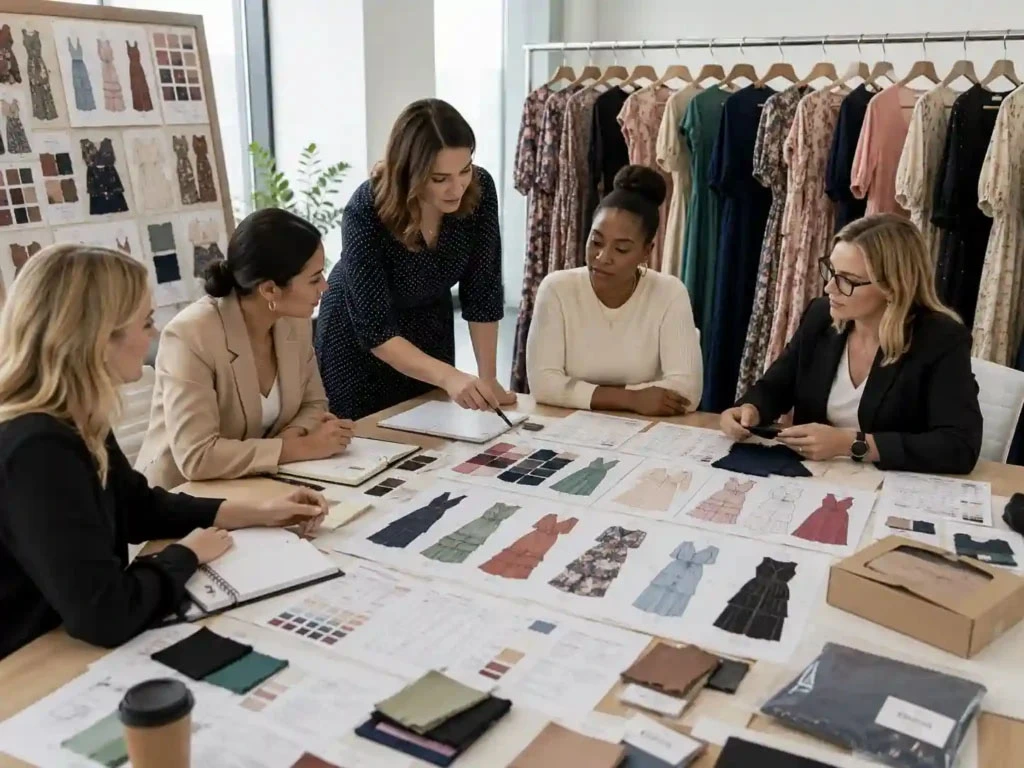
4. Make the First Sample
The first sample is where the design meets the actual fabric.
You can check whether the fabric gives you the expected drape and whether the proportions work on a real body rather than on a drawing.
Checking only the bust and waist is not enough. With a maxi dress, we also look at the garment while standing and walking.
You may notice that:
- The skirt is pulling upward at the sides
- The hem is not level
- The slit opens too high when walking
- The lining restricts movement
- The waist sits differently from the drawing
- The fabric creates more volume than expected
Some fit problems only become obvious once the sample is on a person.
5. Record Fit Changes Clearly
After fitting, your comments should be specific enough for the pattern team to act on them.
Instead of saying:
Make the dress slightly longer.
It is better to specify:
Add 2 cm to finished length from waist seam to hem.
The same principle applies to bust, waist, hip, slit height, sleeve length, shoulder position, and other measurements.
When you are working through several sample revisions, clear measurement-based comments reduce misunderstandings between the buyer, pattern maker, and sample room.
6. Confirm the PP Sample
Once the fitting and construction are approved, the PP sample becomes the reference for bulk production.
Your approved information should cover the points that affect the finished garment, including:
- Fabric and color
- Measurements
- Construction
- Trims
- Labels
- Artwork or prints
- Lining
- Finishing
- Packing requirements
The production floor should not be working from an earlier sample while the buyer is working from a revised measurement sheet. One approved version needs to control the bulk order.
7. Prepare for Bulk Cutting
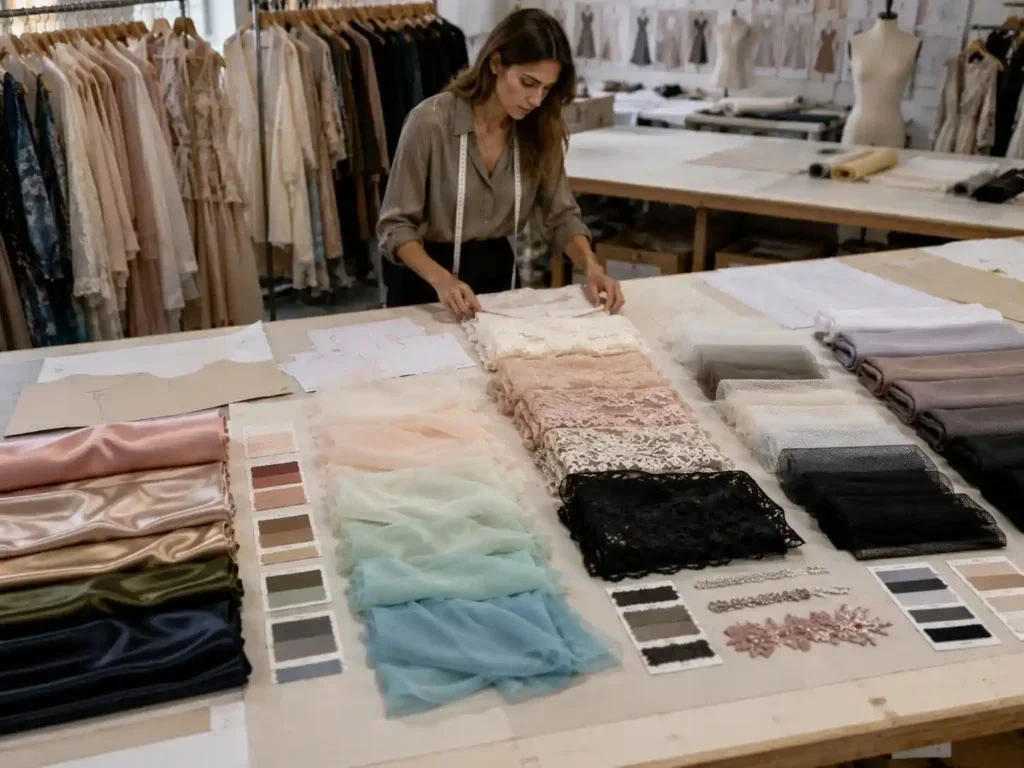
Before cutting starts, the fabric is spread and checked for issues that could affect the order.
Marker efficiency matters, but it is not the only consideration. Grain direction, fabric defects, print direction, and panel placement may affect how the pieces are laid out.
With a printed maxi dress, some fabric efficiency may have to be given up to keep an important motif in the right position.
Long skirt panels also need attention during spreading. If the fabric shifts or is not relaxed properly, the finished length can vary after sewing.
8. Sew the Garments and Check Them During Production
Once the cut panels reach the sewing line, quality control does not need to wait until the entire order is finished.
In-line checks give the team a chance to catch the problem while the line is still running.
Typical points include:
- Seam construction
- Stitch consistency
- Zipper installation
- Lining attachment
- Gather distribution
- Waist joining
- Slit construction
- Hem width
- Finished measurements
If the same issue appears on several pieces, it is better to stop and correct the operation than continue producing the same mistake.
This is particularly important for long dresses because a small construction problem can become obvious across the full length of the garment.
9. Finish, Inspect, and Pack
After sewing, the garment goes through finishing before final inspection.
Thread trimming and pressing are routine operations, but both can change the final appearance.
Some fabrics respond strongly to heat and pressure. Satin can show pressing marks, while lightweight fabrics may lose their shape if handled incorrectly.
Final inspection should compare the finished garment with the approved specifications. Measurements, appearance, construction, labels, trims, and packing should be checked before the order leaves production.
Which Fabrics Work Well for Maxi Dresses?
There is no single fabric that works for every maxi dress. Your intended silhouette and price point usually narrow the options.
Chiffon
Chiffon is often chosen for maxi dresses where movement and a softer drape are important. It is lightweight and can shift during spreading and cutting, so handling becomes more important.
For layered styles, the lining also needs to be considered carefully. A lining that is too short or too tight can change the way the outer chiffon falls.
Satin
For evening and occasion maxi dresses, satin is a common choice. Its smooth surface makes construction and finishing issues easier to see.
Seam puckering, pressing marks, uneven hems, and incorrect tension can stand out under light, particularly on photographs and showroom samples.
Cotton
Cotton is more common in casual, summer, and everyday maxi collections.
If the garment is expected to be washed before retail sale, shrinkage needs to be considered before the final measurements are locked. A length that is correct before washing may not remain correct afterward.
Linen Blends
Resort and warm-weather collections often use linen or linen blends.
Their natural texture is part of the look, but shrinkage and fabric relaxation need to be considered. The fabric may also behave differently after washing or finishing.
Mesh
Mesh can be used for fitted, layered, or semi-sheer maxi dresses.
Stretch and recovery become important around fitted areas. If the fabric stretches more than expected, the finished measurements and overall silhouette can change.
What Should You Check Before Approving Bulk Production?
Before bulk production starts, check these points one more time.
Is the fabric specification clear?
You should know the approved composition, color, weight or other relevant fabric requirements. “Similar fabric” is not a useful bulk-production specification.
Are finished measurements confirmed?
Make sure the size chart identifies the important points clearly. For a maxi dress, finished length deserves particular attention.
Are construction details documented?
If the dress has a slit, lining, gathers, pleats, zipper, special seam, or decorative detail, the production team needs a clear reference.
Is there one approved PP sample?
The sample, measurement sheet, and production comments should agree with each other. Conflicting versions create unnecessary problems once cutting begins.
Are packaging requirements settled?
Labels, hangtags, barcodes, polybags, cartons, and folding requirements should not be left until the last few days before shipment.
Common Problems in Maxi Dress Production
The Hem Is Uneven
A long hem can become uneven because of fabric relaxation, cutting variation, sewing tension, or the way the garment is pressed.
For some fabrics, it helps to allow the garment to hang before the final hem is checked.
The Lining Pulls the Dress Up
When the lining is too short or has insufficient ease, it can pull against the outer layer.
The outer pattern may be correct, but the finished dress still hangs incorrectly because the two layers are not working together.
The Bulk Dress Looks Different From the Sample
Fabric lots can vary slightly in weight, finishing, shade, or hand feel. Even a small change can affect a flowing maxi dress more than a structured garment.
Check the bulk fabric before cutting instead of assuming it will behave exactly like the sample fabric.
The Slit Position Changes
A slit can appear different after fitting if the side seam, hip measurement, or skirt construction changes.
Its finished height should be recorded as a measurable production specification instead of being left as a visual reference.
The Print Does Not Sit Where Expected
A printed fabric can create problems when artwork placement has not been considered during cutting.
If a particular flower, stripe, logo, or motif needs to appear in a specific location, that requirement should be communicated before the marker is prepared.
How Can You Reduce Problems Before Production Starts?
Start with the clearest information you have. If you only have a reference image, say which parts of the image are important and which can be changed.
During sampling, focus on the details that affect how customers will see and wear the garment. For a flowing maxi dress, that may be the drape, length, and hem. For a fitted style, waist, hip, lining, and zipper construction may matter more.
Keep one current version of the measurements and comments. When a revision is approved, remove outdated information from the working file.
From the production side, this makes the handover much cleaner. It also gives you a clearer basis for checking whether the bulk garments match what you approved.
What Information Should You Send to a Maxi Dress Manufacturer?
You do not necessarily need a complete tech pack to start development.
You can begin with a reference photo, sketch, existing garment, or physical sample. The factory can then identify what additional information is needed before sampling.
In practice, the factory will usually need some combination of the following:
- Reference images or technical drawings
- Size chart
- Fabric preference
- Color reference
- Construction details
- Print or artwork files
- Label requirements
- Packaging requirements
- Expected order quantity
- Target delivery date
If some details are not decided yet, mark them as open points.
That is better than allowing the factory to make assumptions that later need to be reversed.
FAQ
1. Can a factory develop a maxi dress if we only have a reference image?
Yes. A reference image is enough to start the conversation. We would still need to confirm the measurements, fabric, lining, construction, and fit before making the sample. If the image does not show a detail clearly, it is better to confirm it during development rather than have the factory guess.
2. What if our target fabric has a high minimum order quantity?
Ask the factory whether the same fabric is available from another mill or whether a similar quality can be sourced at a lower MOQ. Before approving a substitute, compare its weight, drape, composition, and appearance with the original fabric. A cheaper fabric is not useful if it changes the way the dress fits or hangs.
3. How can a small fashion brand control costs during development?
Look first at the parts of the design that are important to the product and the parts that can be simplified. Panel count, special trims, lining, fabric width, and extra sewing operations can all add cost. In some cases, simplifying the construction is more effective than asking for a lower unit price.
4. What should we do if the sample is approved but the delivery date is getting tight?
Lock the specifications as soon as possible and avoid adding non-essential changes after PP approval. You should also confirm fabric availability and production timing before committing to a retail launch date. Late changes can affect cutting, sewing, and material preparation at the same time.
5. How should you compare quotations from different maxi dress manufacturers?
Look at the specifications behind the price, not only the unit price. Check whether the quotation includes the same fabric quality, lining, trims, packaging, sample charges, and special construction. If one factory has excluded an item that another factory has included, the two prices are not really being compared on the same basis.
Conclusion
A maxi dress can look simple on a sketch and still require careful control once it reaches production. Length, fabric behavior, lining, pattern balance, sample revisions, and bulk cutting all have a visible effect on the finished garment.
The most useful step is to settle the important specifications before cutting starts and keep the approved sample and measurement information consistent throughout production. That gives your team and the factory the same reference when the bulk order is checked.
For a fashion brand, the goal is straightforward: the bulk dresses should look and fit like the version you approved, not like a new interpretation of it.
Related Dress Manufacturing Services
If your project involves a specific dress fabric or construction, you can also review our related manufacturing pages:
- Mermaid Dress Manufacturer
- Mesh Dress Manufacturer
- Sequin Dress Manufacturer
- Floral Dress Manufacturer
- Bodycon Dress Manufacturer
Get a Quote for an Existing Dress Style
If you are transferring an existing dress style to a new manufacturer, send us the latest approved sample, tech pack, product photos, or measurement chart together with your target quantity.
As a dress manufacturer, we can review the construction, fabric, trims, measurements, and current production status with you before confirming the sampling requirements.

