

A dress can look complete on a sketch and still raise production questions once it reaches the factory. These decisions also help separate the details that need to be fixed before sampling from those that can still be adjusted during development.
What Do You Need to Start a Dress Manufacturing Project?
You do not necessarily need a finished tech pack before speaking with a clothing manufacturer.
You may have a technical sketch, a reference photo, an existing garment, a physical sample, or simply an early design idea. At this stage, separate the details that are already fixed from those that still need to be worked out.
For example, you may already know the silhouette and target fabric but have not decided on the lining or closure. Or you may have a reference garment but want to change the length, neckline or sleeve.
Before sampling starts, the factory will need as much of the following as possible:
- Design sketch or reference image
- Measurements or size chart
- Fabric requirements
- Color references
- Construction details
- Trim or embellishment requirements
- Estimated order quantity
- Label and packaging requirements
You do not need to have every detail perfect. Any missing details are better discussed before the first sample than after it is on the fitting table.
How Does a Clothing Manufacturer Review Your Dress Design?
When a new dress reaches the factory, the pattern team looks beyond whether the garment can technically be made.
The pattern team first looks at how the garment should sit on the body and what construction will be needed to hold that shape.
A fitted dress may require careful control around the bust, waist, hip and armhole. A flowing dress may depend more heavily on fabric drape and skirt volume. A dress with pleats, gathers or multiple panels can create a different set of pattern and sewing requirements.
Fabric is part of this review as well.
A design that works well in a stable woven fabric may need changes when made in stretch jersey. Lightweight chiffon, for example, behaves differently during cutting and sewing from a heavier satin. Sequin fabric brings additional concerns around surface direction, weight and seam construction.
This early review is also where many production issues can be caught before fabric is cut. Once the fabric has been cut, changing the design becomes much more expensive.
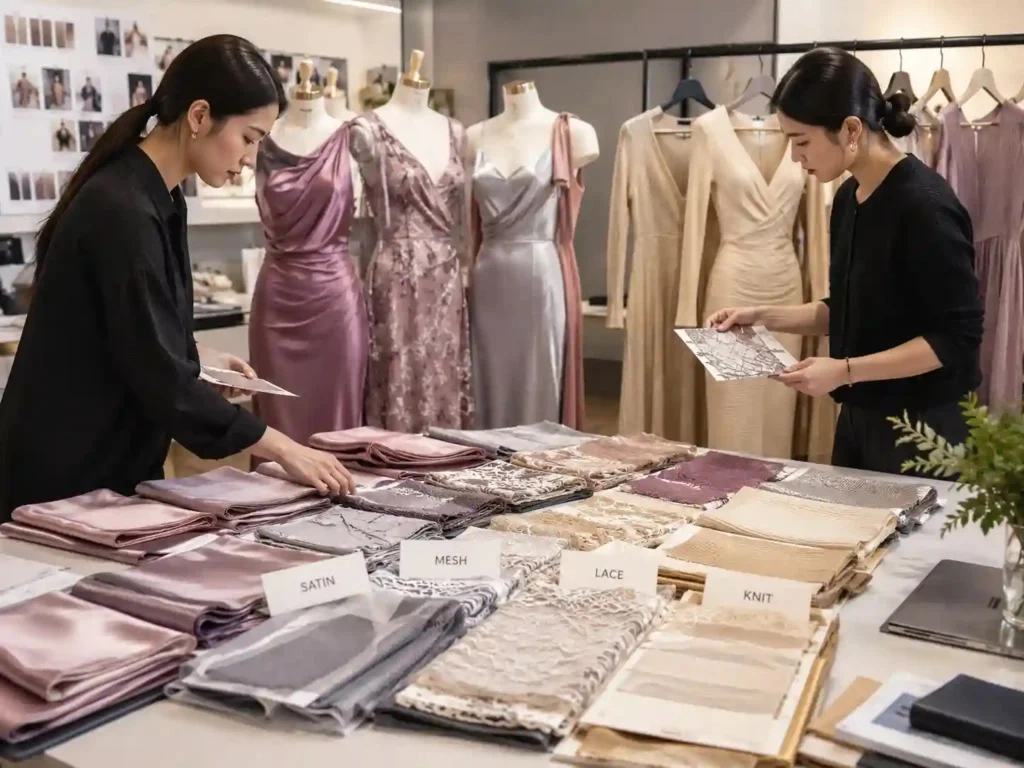
Fabric Selection for Dress Development
The fabric should support the shape you are trying to achieve, not simply match the color or appearance of your reference.
The factory will normally check several fabric properties before the pattern is finalized:
- Fabric weight
- Stretch and recovery
- Drape
- Width
- Shrinkage
- Transparency
- Surface texture
- Hand feel
- Sewing behavior
Suppose you are developing a fitted dress and choose a fabric with more stretch than the original reference. The finished garment may need different measurements and ease. If you use a lighter fabric for a full skirt, the volume may fall differently from the original sample.
The production pattern should therefore be based on the fabric that will actually be used.
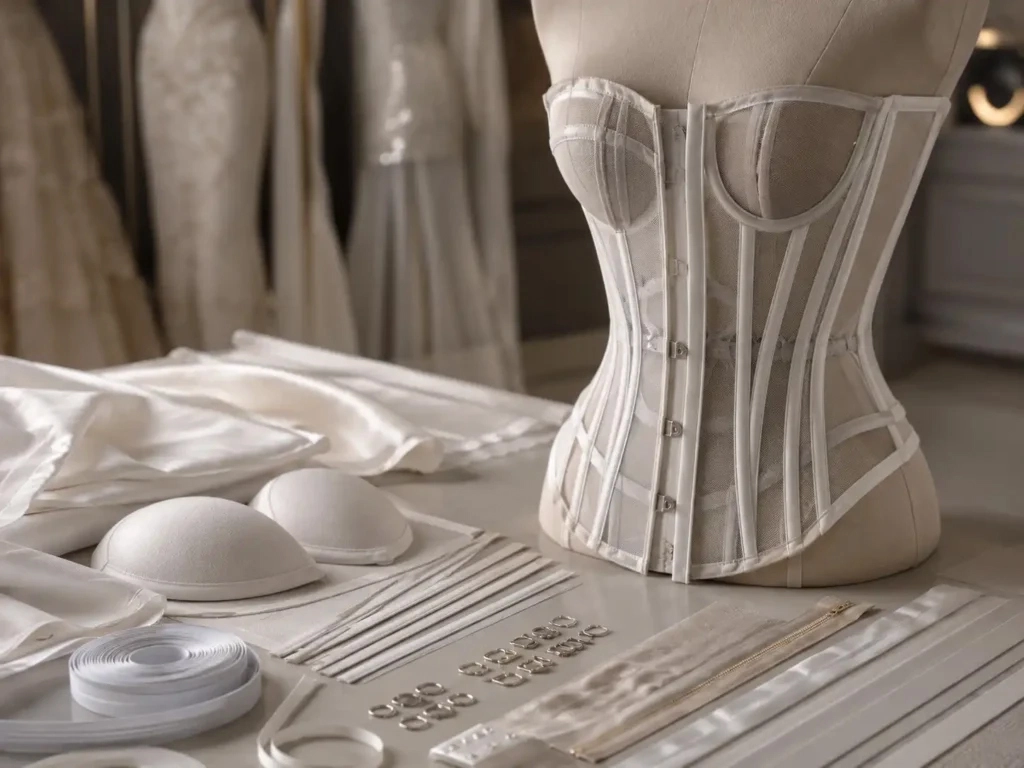
For some styles, you may also need to consider lining, interfacing, elastic, boning or other supporting materials. These are small decisions individually, but together they can change how the finished dress feels and looks.
Pattern Making: Turning the Design Into Production Pieces
With the design and fabric requirements confirmed, the pattern team starts translating the design into pieces that can be marked, cut and assembled on the production floor.
The pattern needs to account for measurements, ease, seam allowances, darts, neckline shape, armholes, waist position and the intended silhouette. The fabric also has to be considered because the same pattern will not behave identically in different materials.
For a fitted dress, pattern balance becomes particularly important. If the bust, waist and hip areas are not balanced correctly in the base size, later grading will not solve the underlying fit problem.
The pattern also has to work on the production floor. A design can look correct on paper but create awkward seams, difficult sewing operations or unnecessary fabric waste. It is better to resolve these issues while the pattern is still being developed.
What Happens During the First Dress Sample?
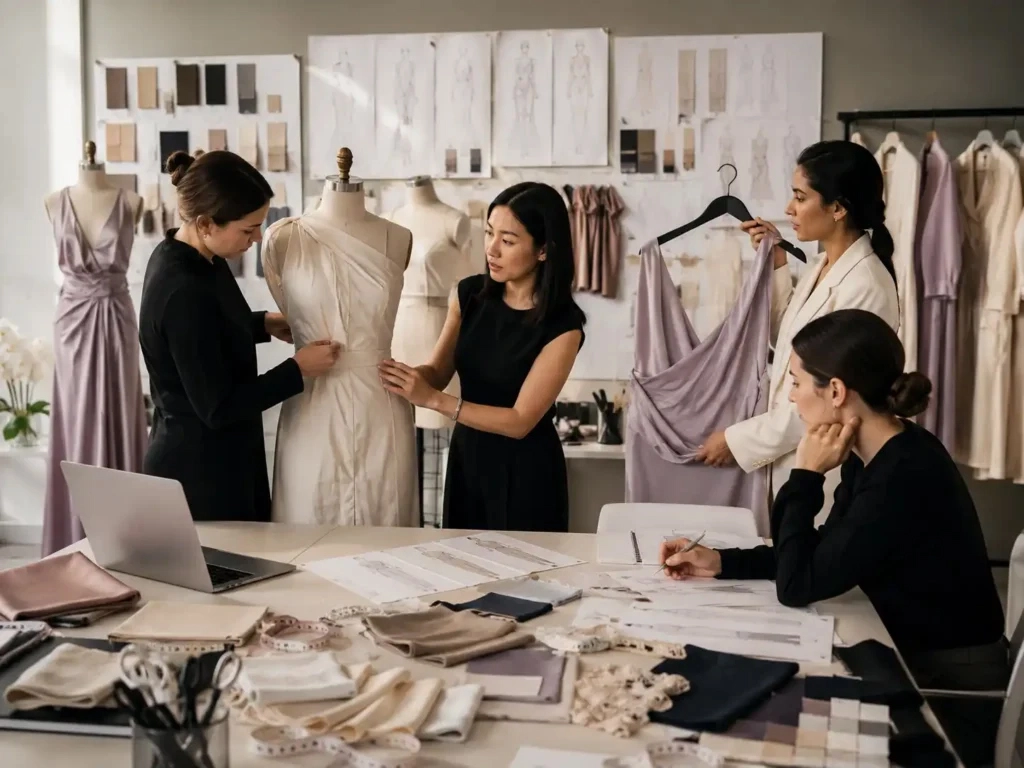
The first sample shows how the design actually works in fabric.
The fabric, silhouette, proportions and construction can now be checked on the garment itself.
The factory may review details such as:
- Overall proportions
- Bust and waist fit
- Armhole position
- Neckline shape
- Garment length
- Skirt volume
- Seam placement
- Closure position
- Lining
- Finishing details
You may notice that something looks correct from the front but does not sit properly from the side. A neckline may need to be raised. The waist may sit slightly too high. The skirt may need more or less volume.
Those changes then need to be recorded and transferred back to the pattern.
What Happens When the First Sample Does Not Fit?
You should not expect every new dress design to be correct on the first sample.
The first sample gives the factory a chance to find these problems before they affect bulk production.
If the bust is too tight, the factory needs to determine whether the problem comes from the bust measurement, dart position, fabric stretch, armhole or another part of the pattern. Simply adding width to one area may create a different problem somewhere else.
The same applies to length and balance. Moving a waistline, changing the skirt length or adjusting the shoulder can affect the proportions of the rest of the garment.
Fit changes should then be transferred back to the pattern rather than left as temporary fixes on the sample.
For buyers and designers, clear comments are helpful. Instead of saying “the dress is too tight,” identify the area, measurement and desired change whenever possible.
When Is the Dress Ready for PP Approval?
The PP sample comes after the major development decisions have been settled.
Before approval, check the measurements, construction, fabric, color, trims, lining and finishing against the agreed specifications.
The PP sample then becomes a practical production reference.
Once PP is approved, the production floor should be working from a fixed set of specifications rather than a design that is still changing.
If you change the neckline, fabric, measurements or construction after bulk production has started, the impact can extend beyond one sewing operation. Patterns, cutting, material usage and production instructions may all need to be reconsidered.
These changes are much easier to handle before bulk cutting starts.
From PP Approval to Bulk Production
Once the production version is confirmed, the order moves from development into bulk preparation.
The fabric is checked before cutting. Depending on the material, preparation such as pre-shrinking may be required.
The approved pattern is then used for bulk cutting. Marker planning is important because the way pattern pieces are arranged affects fabric consumption.
After cutting, the pieces move to the sewing line, where the garment is assembled according to the approved construction.
Inline checks allow the team to catch repeated measurement or construction issues while the line is still running. This is useful because a measurement or construction issue found early is easier to correct than the same issue discovered after the entire order has been completed.
The general flow is:
Fabric Inspection → Fabric Preparation → Bulk Cutting → Sewing → Inline Inspection → Pressing → Final Inspection → Packing
The sequence can change from one dress style to another.
How Do You Keep Bulk Dresses Consistent With the Approved Sample?
The approved sample needs to be supported by clear production specifications.
Your production reference may include:
- Finished measurements
- Fabric information
- Construction details
- Seam and finishing requirements
- Trim specifications
- Label requirements
- Packing instructions
For complicated styles, marked photos or sample details can be added to the production reference.
By the time a repeated problem is found at the end of production, there may be too many finished pieces to correct efficiently.
During sewing, key measurements and construction points can be checked as the operation moves through the line. If an issue appears repeatedly, production can be reviewed before more pieces are affected.
The finished garments are then checked again during final inspection before packing.
This becomes more noticeable when an order includes several sizes or colors. A small difference that is difficult to notice on one garment can become much more obvious across a full production run.
Dress Production Cost and Lead Time
The final production cost is not determined by sewing alone.
You need to consider fabric consumption, fabric price, construction complexity, lining, trims, embellishments, order quantity, sampling requirements and packaging.
A simple cotton dress and a heavily embellished sequin dress may both be called “dresses,” but the production work behind them can be very different.
If your design requires several sample revisions, special fabric sourcing or complicated embellishment, development may take longer before bulk production can begin.
Confirming the main design, fabric and quantity early also gives the factory a clearer basis for material purchasing and production planning.
When planning a collection launch, keep sample development time separate from the bulk production lead time.
What Should Be Checked Before Bulk Cutting?
The biggest problem is that a production issue becomes a quantity issue.
If you discover during the first sample that the neckline is incorrect, you may need to correct one garment. If the same problem is discovered after bulk cutting, the pattern and dozens or hundreds of cut pieces may already be involved.
Other common problems include:
- Fabric approved too late
- Measurements changing after cutting
- Construction details left undecided
- Grading started before the base size was approved
- Packaging specifications added at the last minute
- Different people giving conflicting sample comments
Treat sample approval as a production checkpoint. Once bulk cutting starts, changes can affect patterns, materials and cut pieces rather than just one sample.
How Does Size Grading Fit Into the Manufacturing Process?
Once the base size has been approved, the pattern needs to be developed across the required size range.
Simply increasing or decreasing measurements does not guarantee that the original fit will carry across the size range.
Different parts of the body change at different rates between sizes. A fitted dress therefore needs grading that considers the relationship between bust, waist, hip, shoulder, armhole and length.
This becomes especially important for bodycon dresses, sheath dresses, mermaid dresses and other close-fitting styles.
If the base pattern already has a balance problem, grading can carry that problem into the other sizes.
Grading should start only after the base size has been settled.
Final Inspection and Packing
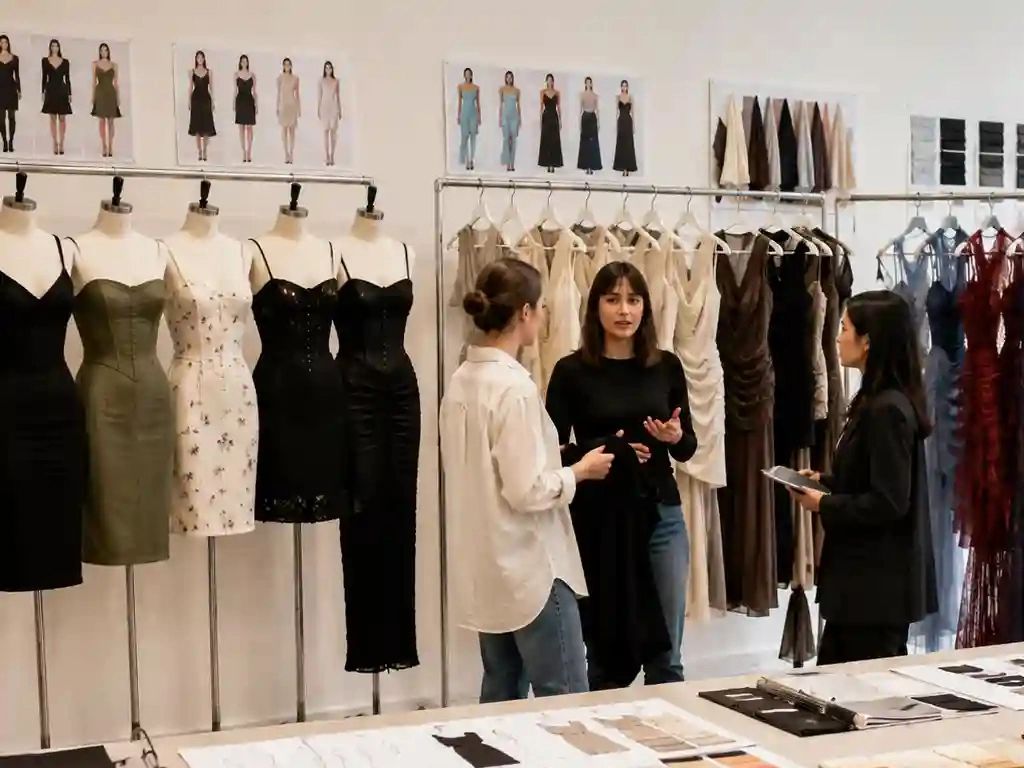
Once sewing and finishing are complete, the finished dresses are checked against the approved requirements.
Final inspection normally covers measurements, stitching, construction, appearance, finishing and any specified trims.
For private label orders, packaging also needs to match the agreed requirements.
This may include:
- Woven or printed labels
- Care labels
- Hangtags
- Barcodes
- Individual polybags
- Cartons
- Custom packaging
Packaging should be confirmed before production reaches the final stage. Leaving these details until the garments are ready to ship can create unnecessary delays.
5 Questions to Ask Before Starting Dress Production
Can you develop a dress from a sketch or reference photo?
Yes. A sketch or reference photo is enough to start the discussion, but details such as measurements, fabric, lining, closures and construction still need to be confirmed before sampling. The factory can then prepare the first sample with fewer open points to clarify later.
What should you do if your sample looks right but feels wrong when worn?
Check where the garment pulls, shifts or restricts movement before asking for a general fit adjustment. The pattern team can then compare the problem with the relevant measurements, seam positions and pattern pieces instead of changing areas that are already working.
How should you handle feedback when several people review the same sample?
Have one person collect and confirm the comments before they are sent back to the factory. When several people send changes separately, the pattern team can receive conflicting instructions. A single revision list is easier to check against the next sample.
What if your target quantity changes during development?
A quantity change can affect fabric purchasing, cutting plans and production scheduling. If the change comes after materials have been ordered or the production slot has been arranged, the factory may need to review the material requirement and production schedule before confirming the new quantity.
When should packaging requirements be confirmed?
Confirm packaging together with the product specifications. Labels, hangtags, barcodes, polybags and cartons may need separate preparation, so leaving them until shipment can hold up the final packing stage.
Conclusion
Dress production becomes much easier to control when the fabric, base pattern, fit, construction and PP sample are settled before bulk cutting. Once production starts, changes can affect materials, patterns, production instructions and finished quantities rather than just one sample. The approved specifications then give the production team a clear reference for the full order.
Related Dress Manufacturing Services
If you are developing a specific dress style, the same manufacturing process applies to fabric selection, pattern development, sampling, fit approval and bulk production. You can also explore our product-specific manufacturing pages below.
At Xiuyu Apparel, we work with fashion brands, startups, designers, and private label companies from sample development through bulk production.
- A Line Dress Manufacturer
- Midi Dress Manufacturer
- Ruffle Dress Manufacturer
- Floral Dress Manufacturer
- Halter Dress Manufacturer
Get a Clothing Manufacturing Quote Based on Your Design
If you already have a garment design, send us the product photo, tech pack, or reference sample together with your target quantity.
As a dress manufacturer, our team can review the fabric, lining, construction, trims and finishing requirements before preparing a quotation based on the actual garment rather than a general price range.

