

When a sequin dress reaches the sample room, the fabric can affect much more than the appearance. Weight, stretch, sequin direction, usable width, and motif placement can change the way the pattern is cut and how the finished dress fits.
This is particularly important when a fabric looks right on a swatch but behaves differently once it is cut and sewn into the dress. A material that works well for one silhouette may create problems on another. Checking these points before pattern approval can avoid another round of sampling or a fabric change later.
Embroidered Sequin vs All-Over Sequin Fabric
The main difference is how the sequins are arranged on the fabric.
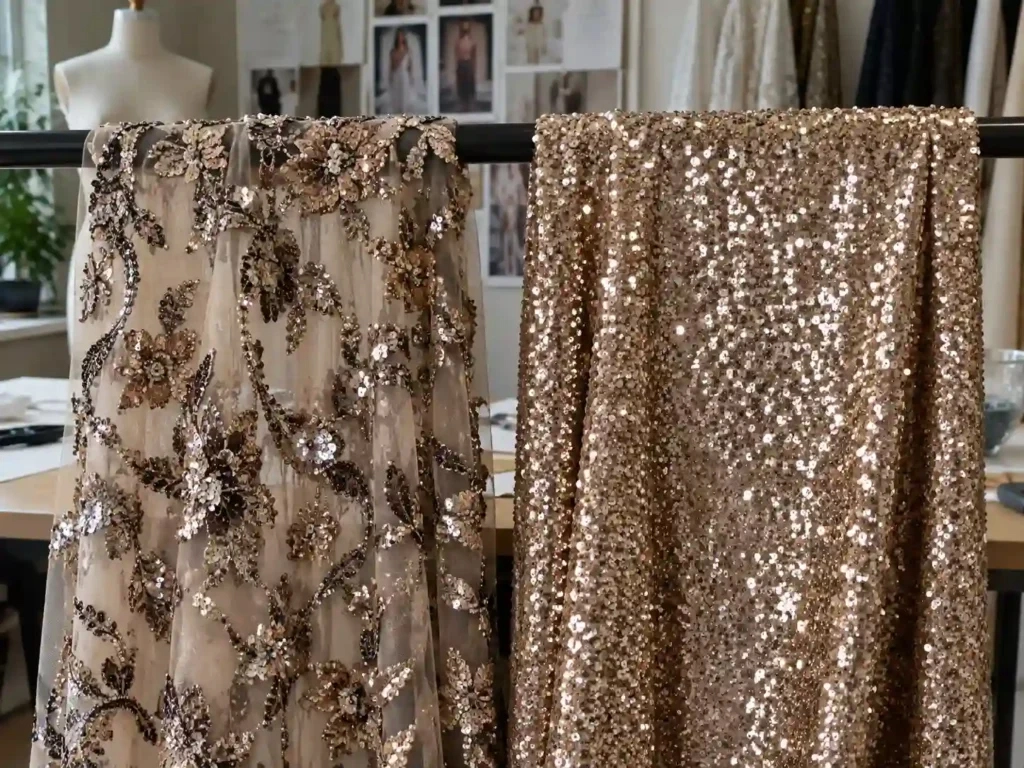
Embroidered sequin fabric has sequins worked into a particular pattern, motif, stripe, border, or decorative area. Some parts of the base fabric may remain visible.
All-over sequin fabric has sequins distributed across most or all of the fabric surface. The appearance is more consistent from one area to another, although the weight and surface effect still depend on the sequin size and density.
Appearance is only the first check. In production, the same type of sequin fabric can give very different results on a bodycon dress, a loose mini, and a full-length gown.
| Point to Check | Embroidered Sequin | All-Over Sequin |
|---|---|---|
| Surface | Defined pattern or motif | More continuous coverage |
| Visual effect | Decorative and directional | Consistent shine |
| Pattern placement | Often needs more planning | Usually less motif-dependent |
| Cutting | May create additional fabric loss | Direction and seam areas still need checking |
| Weight | Can vary across the fabric | Depends heavily on sequin density |
| Best suited to | Detailed or statement designs | Full-sequin party and evening styles |
The fabric description is only the starting point. Two fabrics sold under the same category can behave very differently once they are made into a dress.
Start With the Dress Silhouette
The dress silhouette should be considered before comparing sequin fabrics.
A fabric that works for a loose mini dress may not be suitable for a close-fitting bodycon style. Likewise, a fabric that looks attractive on a short dress may become too heavy when used for a full-length evening dress.
For Bodycon Dresses
For a dress fitted through the bust, waist, and hip, stretch and recovery become the first checks.
The fabric needs enough stretch for movement while still returning to its original shape after fitting. A backing fabric may feel stretchy in your hand, while the attached sequins restrict the actual movement of the finished material.
During sampling, the main checks are bust and hip fit, side seams, armholes, zipper areas, and how well the fabric recovers after fitting.
If the fabric does not recover well, the problem may become more obvious after the garment has been worn.
For A-Line and Loose Dresses
With a looser silhouette, stretch may be less important, but weight becomes more noticeable.
Dense sequins can pull down the skirt, especially when you add gathers, multiple panels, or extra length.
If the design calls for a fuller skirt, the fabric also needs enough body to hold the intended shape. A soft base with heavy sequin coverage may fall much flatter than you expected from the original design sketch.
For Maxi and Evening Dresses
For a long dress, don’t judge the fabric weight from a small swatch.
A few extra grams per meter can become a substantial difference when the garment uses several meters of fabric.
Before the material is approved, check how the fabric weight works with the dress length, skirt volume, lining, and construction.
Check the Fabric Weight, Not Just the GSM
When you compare sequin fabrics, the base fabric weight does not tell you the whole story.
The finished material can become considerably heavier because of:
- Sequin size
- Sequin density
- Coverage
- Embroidery
- Base fabric construction
- Backing material
This matters when you are developing narrow straps, fitted bodices, gathered skirts, or garments with several layers.
A narrow strap that works on lightweight satin may not provide enough support once heavy sequin fabric is added.
For production, the more useful figure is the weight of the finished sequin fabric, not the GSM of the base fabric alone. On a new style, an actual sample will also show how that weight affects the way the dress hangs and moves.
Check Stretch and Recovery Before Pattern Approval
This is one of the points that can easily be missed when you are working from photos or fabric swatches.
If you are developing a fitted sequin dress, test the fabric across the width and along the length.
Stretch is only part of the test. What matters on a fitted dress is how quickly the fabric returns after being stretched.
A material can have good initial stretch but poor recovery. Another may recover well but have too little stretch for the intended fit.
The sequin layer can also change how the base fabric behaves.
A supplier’s stretch specification is useful for comparison, but it is not enough to approve the final pattern. The production fabric should be tested during sampling before the pattern is locked.
Sequin Direction Can Affect the Finished Appearance
Some sequin fabrics have a noticeable direction.
When you turn the fabric around, the sequins may catch the light differently. This can make two panels appear to have slightly different shades even though they came from the same roll.
Before cutting, the following points need to be clear:
- Sequin direction
- Nap direction, if applicable
- Face and back
- Usable width
- Panel orientation
- Seam placement
If the dress has several large panels, keep the sequin direction consistent across the garment.
The difference may not be obvious under normal room lighting, but it can become visible once the finished dress is viewed under stronger lighting.
Embroidered Sequins Need More Attention to Pattern Placement
Embroidered sequin fabrics create another production issue: where the motif lands on the garment.
A large floral or geometric sequin pattern needs to be considered together with the garment pattern. The main motif may need to sit at the center of the front bodice, while the side panels need to remain visually balanced.
That becomes more difficult once the actual pattern pieces are placed on the fabric. Usable width can limit the layout, and motif matching can increase cutting loss.
The fabric layout should be reviewed with the garment pattern before cutting. For small orders, this can have a noticeable effect on fabric consumption.
Don’t Forget the Lining
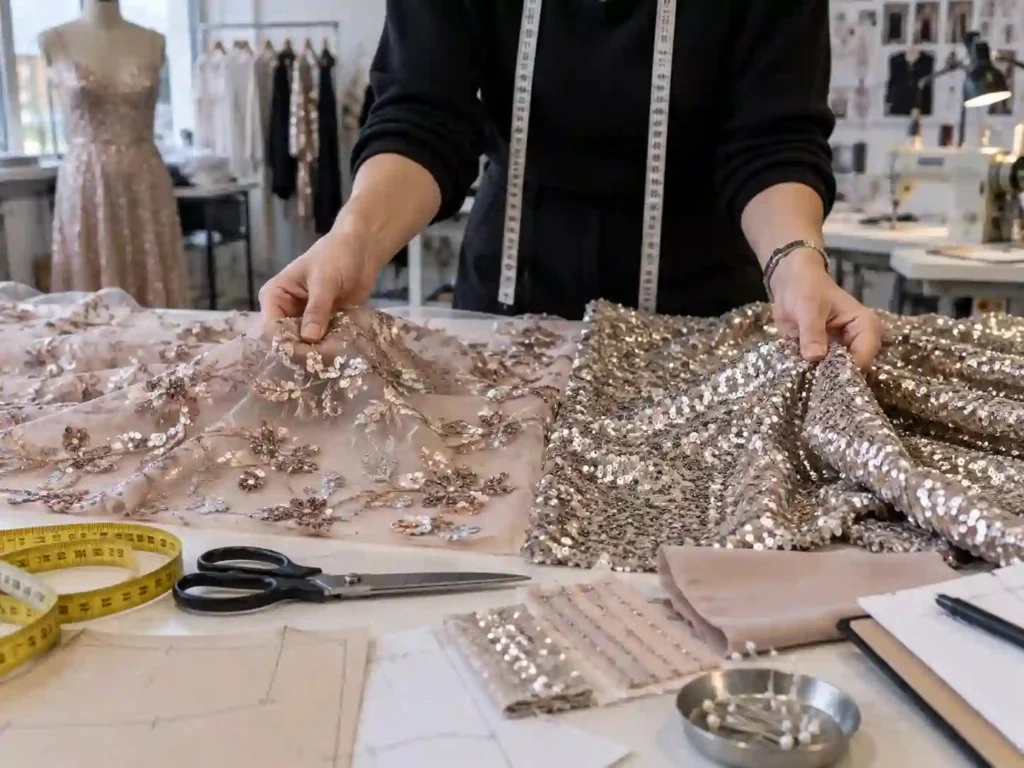
The lining should be checked with the outer fabric during development.
Sequins can create rough areas around the inside of the garment, particularly near:
- Armholes
- Necklines
- Side seams
- Waist seams
- Hem edges
The lining also needs to work with the movement of the outer fabric.
If the outer sequin fabric has stretch but the lining is stable, the lining can restrict the garment even though the outer fabric itself appears suitable.
The outer fabric and lining should be tested together rather than approved separately.
How Sequin Fabric Changes Cutting
Sequin fabric can require more careful cutting than ordinary woven fabric.
With all-over sequins, surface direction needs to stay consistent across the garment. With embroidered sequins, motif placement can become the bigger issue.
Before bulk cutting, confirm:
- Actual usable width
- Fabric direction
- Motif placement
- Pattern matching
- Seam allowances
- Areas where sequins may interfere with construction
- Expected cutting loss
Don’t estimate consumption from garment length alone. The actual pattern layout can change the requirement once seam allowances, motif matching, direction, and usable width are taken into account.
We check this during sampling, before the production order is released.
How Fabric Choice Affects Dress Cost
When comparing two sequin fabrics, the price per meter is only one part of the calculation.
The finished garment cost can also change because of:
Fabric consumption → cutting loss → sewing time → lining → finishing → construction
An embroidered fabric may require additional fabric because the motifs need to be positioned carefully.
A dense all-over sequin fabric may require more handling during sewing and finishing.
A heavier fabric may also require stronger construction around straps, waist seams, closures, or other load-bearing areas.
For costing, the fabric quotation is only part of the calculation. The finished garment cost also reflects consumption, cutting, sewing, lining, and finishing.
What Should You Check Before Ordering the Fabric?
Before you confirm a sequin fabric, ask for the actual specifications you will need for production.
Fabric Composition
Check the base fabric composition and whether the material contains stretch.
Fabric Weight
Confirm the weight of the material, including how the sequin coverage affects the finished fabric.
Usable Width
Don’t assume the stated width is the same as the width you can use efficiently for your pattern. Sequin edges, embroidery margins, or damaged areas can reduce the usable width.
Stretch and Recovery
For fitted dresses, test both. A stretch percentage by itself doesn’t tell you how the garment will behave.
Sequin Size and Density
These affect surface appearance, weight, handling, and sometimes sewing.
Sequin Attachment
Check whether the sequins are securely attached and whether loose sequins are likely to create problems around seams or during handling.
Color and Surface Consistency
Compare the actual fabric rather than relying only on digital images.
Bulk Availability
A supplier may have enough material for sampling but not enough for your planned production quantity.
Fabric Lot
If the order will be repeated later, keep the approved fabric information and compare new lots with the original material.
How We Check Sequin Fabric Before Sampling
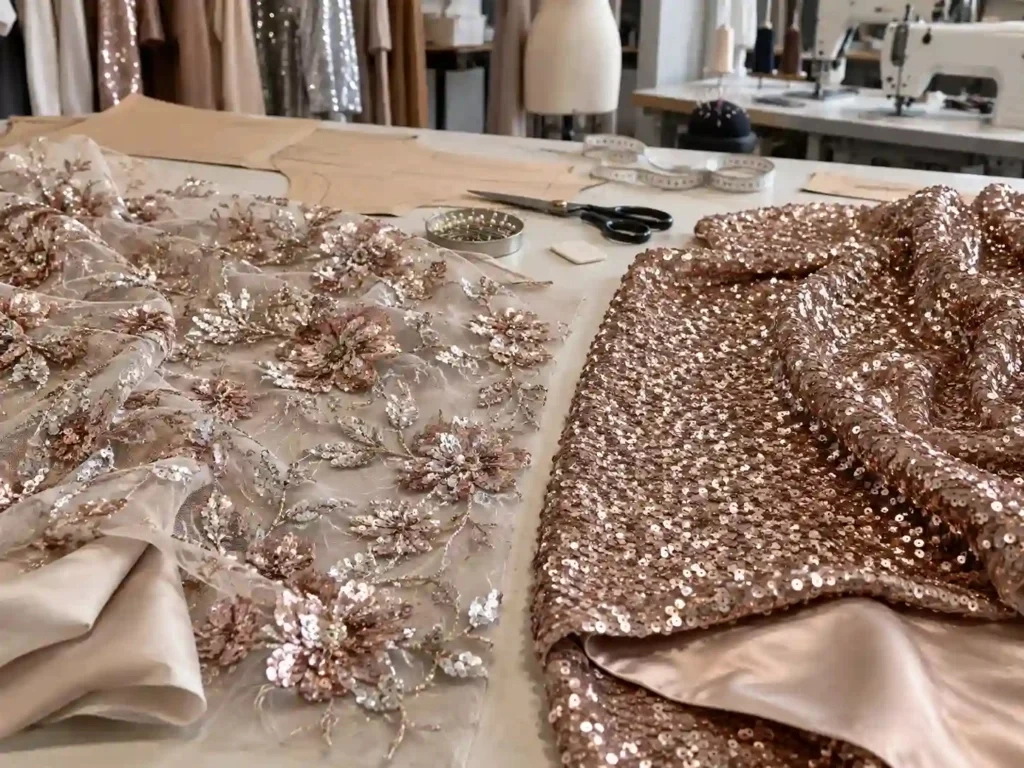
In our sample room, we try to identify material problems before the pattern is fully locked.
A fabric can look perfectly suitable on the roll and still create problems during the first sample. The fabric may be heavier than expected, the stretch may not match the specification, or the usable width may make the planned pattern layout inefficient.
During development, our clothing manufacturing team reviews the fabric together with the dress construction rather than treating it as a separate material decision.
The process in our sample room is:
Fabric Review → Pattern Review → Sample Cutting → Sewing → Fit Check → Construction Adjustment → Approved Sample → Bulk Production
The sample is where the fabric really gets tested. We can see how the skirt hangs, whether the fitted areas have enough movement, how the lining behaves, and whether different panels show a change in sequin direction. If the fabric is embroidered, the sample also shows whether the motif sits where the pattern layout intended.
If a problem appears at this stage, changing the construction is normally much easier than discovering it after bulk cutting.
Common Sequin Fabric Problems During Dress Development
The Fabric Looks Different After Cutting
A sequin surface can reflect light differently depending on direction. If panels are cut in different directions, the finished dress may show visible differences between sections.
The Dress Becomes Heavier Than Expected
The weight of the full sequin surface can be easy to underestimate from a small swatch. This becomes more noticeable on maxi dresses or designs with multiple layers.
The Fitted Areas Feel Too Tight
The base fabric may have enough stretch, but dense sequins can restrict movement. This can affect the bust, waist, hip, and armhole areas.
Motifs Do Not Sit Where You Expected
With embroidered fabrics, the pattern layout needs to be considered before cutting. Otherwise, a prominent motif can fall across an unwanted seam or appear off-center.
Bulk Fabric Does Not Match the Sample
Differences between fabric lots can affect color, weight, stretch, finish, or surface appearance. This is particularly important when a style will be reordered.
Which Sequin Fabric Should You Choose?
The better option depends on how the fabric needs to work with the dress. The silhouette, fabric weight, sequin density, and cutting layout all need to work together.
For a design built around a specific decorative pattern, embroidered sequin fabric offers more control over motif placement and visual effect.
For a continuous sequin surface, all-over sequin fabric can simplify the layout because there is less motif matching to consider.
Before approval, compare the fabrics for:
- Silhouette
- Weight
- Stretch and recovery
- Sequin density
- Direction
- Lining
- Usable width
- Pattern layout
- Fabric consumption
- Production quantity
When several styles use the same sequin fabric, we prefer to test it first on the style with the tightest fit, longest length, or most complicated construction. If the material performs well on that style, the same fabric can then be reviewed against the requirements of the other designs.
FAQ
Can you use the same sequin fabric for different dress sizes?
The same fabric can be used across a size range, but the fit should be reviewed after grading. On fitted sequin dresses, larger sizes can place more demand on stretch and recovery, while the graded pattern also changes fabric consumption. For larger production runs, reviewing the graded pattern with the actual fabric can help prevent unexpected fit differences.
How should you store sequin fabric before production?
Keep the fabric protected from excessive pressure, moisture, and rough handling. If the sequins are directional, keep the roll orientation clear for the cutting team. For a repeat order or larger production run, keep the fabric identification and lot information with the material so it can be checked against the approved sample.
Can sequin fabric be used without a lining?
Sometimes, but it depends on the base fabric, sequin attachment, garment construction, and where the dress touches the body. Before removing the lining, check the inside surface around seams and openings. What feels acceptable on a fabric swatch may become uncomfortable after the garment is worn.
How can you reduce cutting waste with embroidered sequin fabric?
Start with the actual production pattern and lay the pieces against the usable fabric width. If the motif needs matching or a specific placement, account for that before confirming consumption. Changing the motif position slightly may improve the layout, but it should be checked against the intended appearance of the finished dress.
What should you do if the sequin fabric changes after sampling?
Don’t assume the approved pattern will produce the same result. Compare the new fabric with the approved material for weight, stretch, recovery, color, surface, and usable width. If there is a meaningful difference, make a quick construction or fit check before committing the new fabric to bulk cutting.
Conclusion
Sequin fabric should be approved together with the dress pattern, not separately from it. Weight, stretch, recovery, direction, usable width, and motif placement can all affect the finished dress.
A sample made with the actual production fabric gives the clearest check before bulk cutting. It also gives the pattern and production teams a chance to adjust construction before the material is committed to the full order.
Related Dress Manufacturing Services
Sequin dress development often involves fabric selection, pattern adjustment, sampling, lining, and bulk production decisions at the same time.
At Xiuyu Apparel, we work with fashion brands, startups, designers, and private label companies from sample development through bulk production.
- Sequin Dress Manufacturer
- Satin Dress Manufacturer
- Bridesmaid Dress Manufacturer
- Corset Dress Manufacturer
- Bodycon Dress Manufacturer
Get a Clothing Manufacturing Quote Based on Your Design
If you already have a garment design, send us the product photo, tech pack, or reference sample together with your target quantity.
As a dress manufacturer, our team can review the fabric, lining, construction, trims, workmanship, and finishing requirements before preparing a quotation based on the actual garment rather than a general price range.

