

A garment can look right on a sketch and still cause problems once the factory starts making it. Fabric behavior, pattern balance, seam construction, trims, and measurements all affect how the finished garment comes together. In our experience, many of these issues can be spotted during development, before they become bulk production problems. A design may look right on paper but still need changes before it can be produced consistently.
What Is Design for Manufacturing in Fashion?
In fashion manufacturing, Design for Manufacturing (DFM) means considering how a garment will actually be made while the design is still being developed.
The question is not only whether the garment looks right. The factory also needs to know whether the pattern, sewing construction, finishing, and quality requirements can be repeated reliably in production.
This matters because a sketch does not show everything a factory needs to make a garment.
For example, your sketch may show a fitted satin dress with a clean neckline and invisible zipper. It does not necessarily show how much ease is needed, how the neckline should be stabilized, how the zipper should be attached, or how the lining should be finished.
These details normally become clear during pattern making and sampling. Reviewing them earlier gives you a chance to solve problems while the design can still be changed without affecting bulk production.
Why Does DFM Matter When You Develop Clothing?
When you are building a collection, changes made during development are usually manageable.
The same changes become much more difficult after fabric has been purchased, patterns have been graded, or bulk production has started.
You may run into problems such as:
- The fabric does not behave as expected.
- The garment needs more fabric than your initial costing allowed.
- A neckline stretches during sewing.
- The lining pulls against the outer fabric.
- A zipper area does not sit flat.
- A decorative detail takes much longer to sew than expected.
- The fit works in one size but changes noticeably after grading.
- A construction detail is difficult to reproduce consistently.
These problems do not necessarily mean the design needs to be changed completely. More often, the pattern, construction, fabric, or sewing method needs to be adjusted so the original design can be reproduced more reliably.
That distinction is important. DFM is not about making your garment less interesting just because it is easier to manufacture. It is about finding a practical way to keep the design intent while making the garment workable in production.
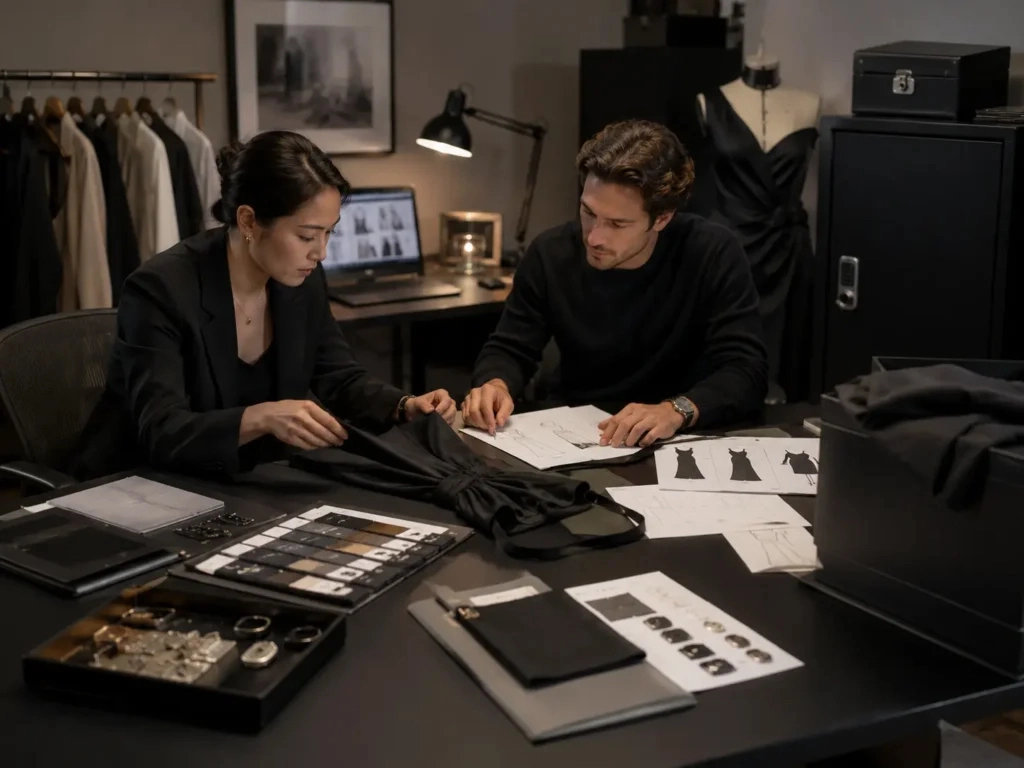
What Parts of a Garment Should You Review for Manufacturing?
A garment rarely fails because of one isolated detail. More often, the fabric, pattern, and construction are fine individually but do not work well together.
Fabric
Fabric is usually one of the first things we look at because it affects pattern making, cutting, sewing, pressing, and even final costing.
The fabric review normally starts with:
- Weight
- Stretch
- Recovery
- Drape
- Shrinkage
- Transparency
- Fraying
- Surface finish
- Fabric width
- Stability during cutting and sewing
A lightweight chiffon, for example, will not behave like a medium-weight woven fabric during cutting. Satin may give you the smooth appearance you want, but it can also make seam puckering and handling issues more visible.
Velvet brings another consideration: nap direction.
If you are developing a garment with a brushed or directional fabric, the cutting layout needs to take that direction into account. Otherwise, different garment panels can appear to have slightly different shades even though they came from the same fabric.
These are not usually problems you want to discover after bulk cutting.
Pattern
The pattern is where the sketch starts becoming an actual garment. It determines the shape of each panel, how the pieces fit together, and how efficiently the fabric can be cut.
You need to review:
- Grainline
- Seam allowance
- Notches
- Ease
- Panel proportions
- Shape of curves
- Fabric utilization
- Construction sequence
For a fitted garment, small pattern changes can have a noticeable effect.
A difference around the armhole can change how the sleeve sits. A change at the waist can affect the position of a zipper. A change in ease can alter the whole feeling of a dress even when the finished measurements appear close to the original specification.
Construction
Construction is where the design meets the sewing process.
You should look at how each part will actually be assembled.
Some areas usually need closer attention during sampling:
Necklines
Deep V-necks, curved necklines, and lightweight fabrics may need additional support to maintain their shape.
Sleeves
A sleeve can look correct in a flat drawing but still twist, pull, or restrict movement when attached to the bodice.
Zippers
The zipper type, placement, seam construction, and fabric weight can all affect the finished result.
Lining
The lining should work with the outer fabric rather than fight against it. If the lining dimensions or construction are not right, you may see pulling or unwanted tension after the garment is finished.
Hems
The hem method depends on the fabric and garment shape. A curved hem in a lightweight fabric can require a different approach from a straight hem on a stable woven fabric.
These details may seem small individually. During bulk production, however, a small construction problem can be repeated hundreds of times.
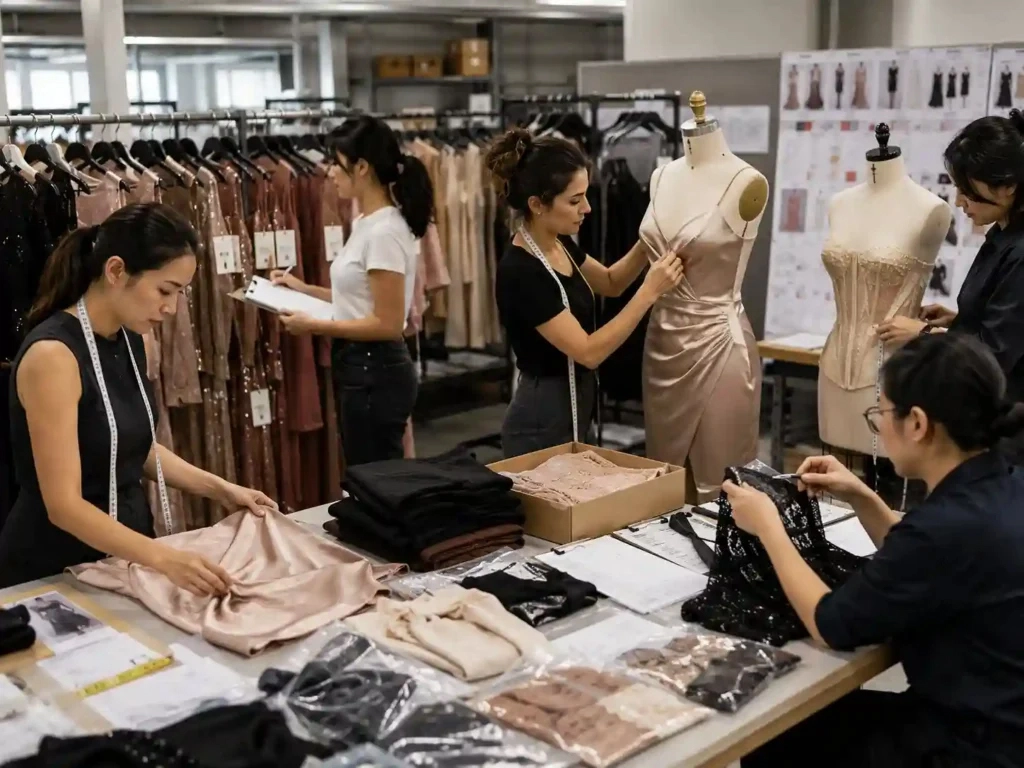
How Does Fabric Choice Affect DFM?
Fabric selection deserves more attention than simply choosing a color and composition.
Two fabrics can have similar fiber content and still behave differently during production.
Before you finalize the fabric, you should consider how it will respond to:
- Cutting
- Sewing
- Pressing
- Washing
- Stretching
- Handling
- Finishing
For example, if you are developing a bodycon dress, the stretch and recovery of the fabric will affect the fit. If you are developing a silk or satin dress, drape and surface sensitivity become more important.
You should also consider fabric consumption.
A fuller skirt, bias-cut design, additional panels, or large gathers may require significantly more fabric than a simple straight silhouette.
This is one reason costing should happen alongside product development rather than after the design has already been finalized.
How Does Pattern Grading Affect Manufacturing?
If you are selling more than one size, the base pattern is only the beginning.
The pattern needs to be graded into the required size range, and the proportions do not always increase in exactly the same way from one size to the next.
For example, a fitted dress may require different consideration around:
- Bust
- Waist
- Hip
- Armhole
- Sleeve
- Shoulder
- Garment length
You should review the graded pattern as a complete garment rather than checking only individual measurements.
For example, a fitted dress may look balanced in size S but become noticeably different in the bust or armhole when graded into larger sizes. The measurement chart may still be correct, but the visual proportion can change.
This becomes especially important for fitted dresses, structured bodices, and garments with specific waist or bust shaping.
What Should Be Included in a Tech Pack?
Your tech pack gives the manufacturer the information needed to turn your design into a measurable product.
Depending on the garment, you may include:
- Technical flats
- Measurement chart
- Point of measurement details
- Fabric information
- Color references
- Bill of materials
- Construction notes
- Stitching requirements
- Trim specifications
- Label placement
- Artwork
- Packaging requirements
- Size grading information
You do not necessarily need every detail completed before the first discussion with a manufacturer.
If you are still developing the product, a sketch, reference garment, photos, measurements, or an existing sample can be enough to start evaluating the project.
However, unclear information usually creates assumptions.
And assumptions are one of the common reasons why the first sample does not match what you expected.

How Does DFM Work During Sampling?
Sampling is where many DFM decisions become visible.
A typical development process may look like:
Design → Tech Pack → Pattern → First Sample → Fit Review → Revision → PP Sample → Bulk Production
First Sample
The first sample gives you something physical to evaluate.
You can check the silhouette, proportions, fabric behavior, construction, and overall fit.
The first sample is normally a working sample, not the final production standard.
What matters at this stage is finding the issues that need to be corrected before the PP sample.
Fit Review
During fitting, do not only compare the garment with the measurement chart.
Look at how it sits on the body.
Check whether the shoulder stays in position, whether the armhole pulls, whether the bust area is smooth, whether the waist sits where intended, and whether the garment still looks right when the wearer moves.
A measurement can be correct while the garment still feels wrong.
Pattern Revision
Once fitting comments are clear, the pattern can be adjusted.
Sometimes the change is small.
Other times, one adjustment affects several connected measurements, so the pattern needs to be reviewed as a whole.
PP Sample
The pre-production sample is an important checkpoint before bulk production.
At this stage, you want the approved fabric, trims, construction, measurements, finishing, and other production details to be aligned.
The approved sample then gives the production team a physical reference for what the finished garment should look and feel like.
How Can DFM Affect Clothing Manufacturing Cost?
Your target price should be considered before the design is completely locked.
Several choices can affect manufacturing cost.
Fabric Consumption
More panels, fuller shapes, larger gathers, or directional cutting can increase material usage.
Sewing Operations
A construction that requires several additional sewing steps takes more production time than a straightforward seam.
Trims
Buttons, zippers, hooks, elastic, lace, labels, hardware, and other trims add both material and handling costs.
Lining
A lined garment requires additional fabric, cutting, sewing, and finishing.
Special Workmanship
Sequins, pleating, embroidery, hand finishing, unusual closures, and complicated decorative details may require additional operations or specialized handling.
If you already have a target FOB or factory price, share it during development. It gives the manufacturer a practical cost target when reviewing fabric, trims, construction, and production time.
It gives the production team another constraint to consider while reviewing the design.
If the target price is only discussed after sampling, there may be fewer practical options for reducing cost without changing the garment.
How Does DFM Help With Bulk Production?
A sample only represents one garment.
Bulk production means repeating that garment many times while keeping the result within the agreed requirements.
That is where manufacturability becomes particularly important.
If a construction detail is difficult to control, the problem may appear repeatedly during production.
For example:
- One zipper may sit flat while another shows slight waviness.
- One neckline may remain stable while another stretches.
- One sleeve may have the correct shape while another develops twisting.
- Small differences in pressing may change the appearance of a delicate fabric.
The more sensitive the garment is, the more important it becomes to have clear construction requirements and an approved sample.
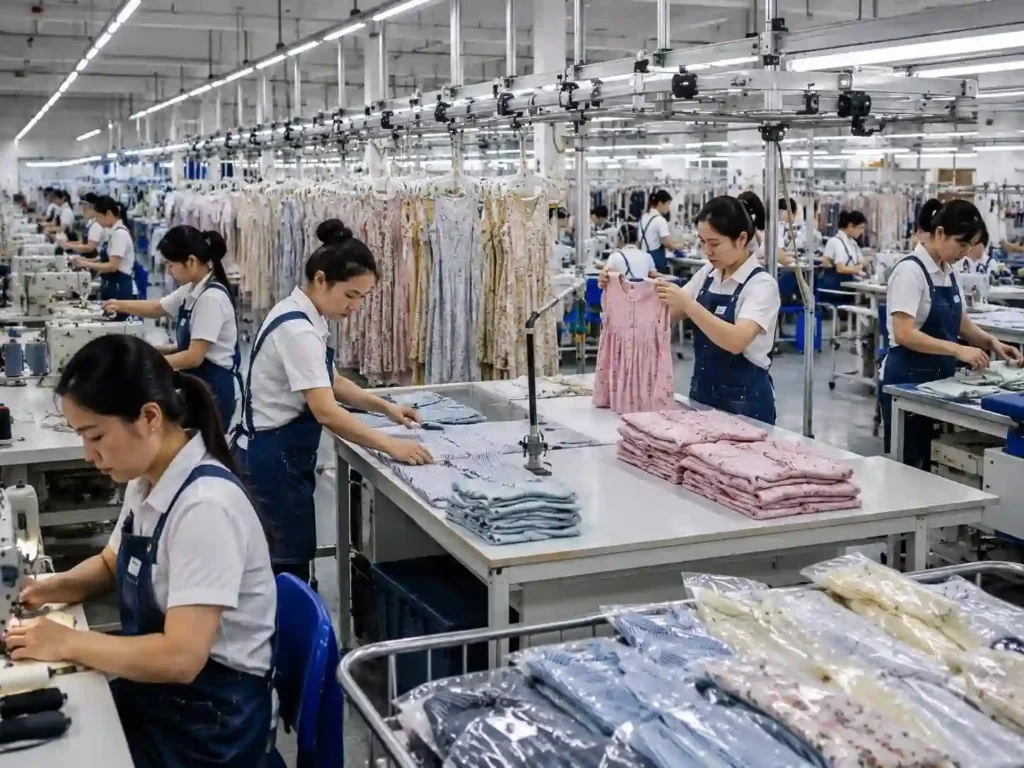
You want the production method to be repeatable, not dependent on one experienced operator getting the result right by eye.
Common Design for Manufacturing Problems
A Design Is Approved Before the Fabric Is Properly Tested
The silhouette may be approved first, but the selected fabric later proves unsuitable for the intended construction.
What we normally do: test the actual fabric before finalizing the construction.
The First Sample Is Judged Only by Appearance
A sample may look good in photographs but still have construction or fit problems.
Better approach: check measurements, fit, seams, fabric behavior, finishing, and movement.
The Same Construction Is Used Across Different Fabrics
A construction method that works well for a stable woven fabric may not work equally well for chiffon or stretch fabric.
Better approach: allow the construction to respond to the fabric.
Cost Is Considered Too Late
By the time a sample is approved, changing the design may require another round of development.
Better approach: review material consumption, trims, and sewing complexity while the design is still flexible.
Size Grading Is Treated as a Simple Scaling Exercise
A fitted garment can change considerably across sizes if grading is not reviewed carefully.
Better approach: check the proportions and fit of the full size range.
How Can You Review a Garment Before Bulk Production?
Before approving production, go through the garment in a practical order.
Design
Check whether the final sample still represents the original design.
Fabric
Confirm composition, weight, color, width, hand feel, and any relevant shrinkage or performance requirements.
Pattern
Review measurements, grading, seam allowance, grainline, and fabric utilization.
Construction
Check seams, neckline, sleeves, closures, lining, hems, and decorative details.
Fit
Review the garment on the intended body measurements or fit model.
Trims
Confirm the actual zipper, buttons, labels, elastic, lace, or other components being used.
Finishing
Check pressing, loose threads, seam appearance, labels, and final presentation.
Production Reference
Make sure the approved sample and production specifications are clearly identified before bulk production starts.
The goal is not to create more paperwork.
The goal is to remove uncertainty before the cutting room and sewing lines begin working on the full order.
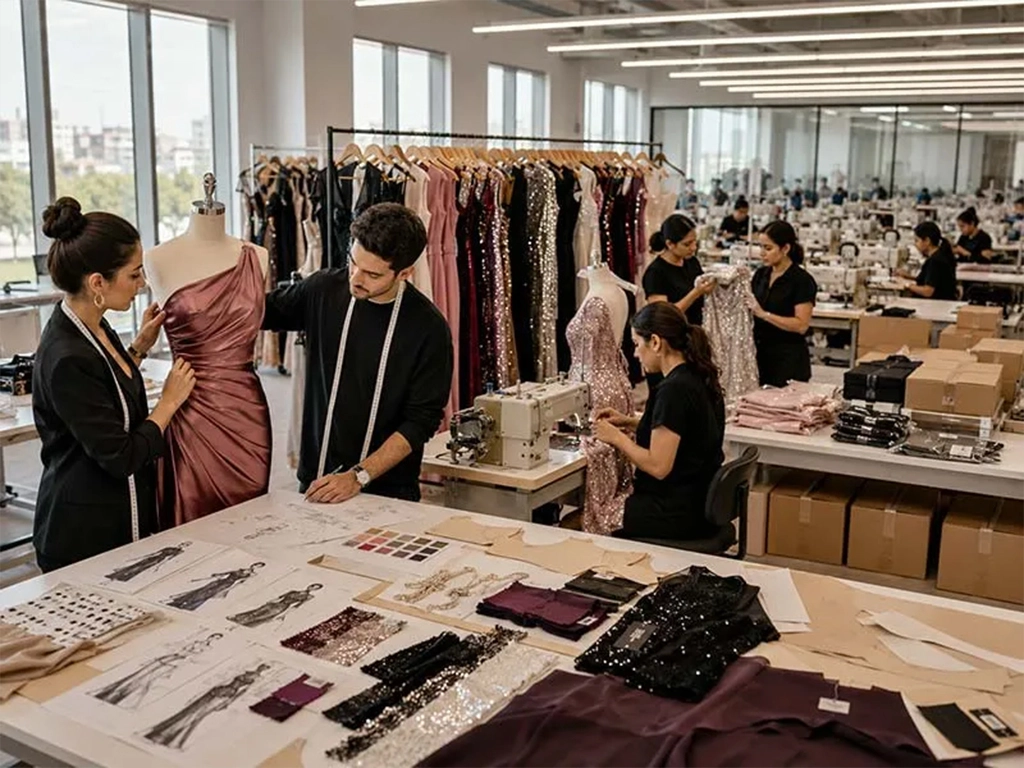
A Realistic DFM Example: Developing a Satin Dress
Imagine you are developing a fitted satin dress with a low neckline, side zipper, lining, and a shaped waist.
On the sketch, the design looks relatively simple.
During sampling, you may find that the neckline stretches slightly and the zipper area does not remain completely flat. The lining also creates some tension around the waist.
In this situation, we would normally check the neckline support, zipper construction, lining measurements, and pattern balance before changing the overall design.
The pattern and construction can then be revised, followed by another sample to confirm whether the changes have solved the problem. This type of development process is especially useful when working with a dress manufacturer on fitted or more construction-sensitive styles.
This is what DFM looks like in practice.
You are not changing the concept simply to make production easier. You are adjusting the technical side of the garment so the finished product stays close to the original intention.
What Should You Discuss With a Clothing Manufacturer Before Sampling?
Before you start sampling, make sure both sides understand the important points of the project. If you are working with a clothing manufacturer for the first time, it is also useful to clarify which details are already confirmed and which are still open for discussion.
Before sampling, we normally confirm a few basic points with the buyer:
- Target quantity
- Target fabric
- Size range
- Measurements
- Construction details
- Trim requirements
- Branding requirements
- Target price, if available
- Expected sample timing
- Bulk production requirements
If some information is not final yet, say so.
For example, if you are deciding between two fabrics, it is better to identify that during development than to assume the manufacturer will automatically use the same construction for both.
The earlier these decisions are discussed, the fewer surprises you are likely to have later.
When Should You Start DFM?
DFM should start before the first sample, not after it. Even at the sketch stage, you can already review the fabric, construction, trims, target price, and likely production challenges. The tech pack then adds the measurements and technical details, while sampling confirms whether those decisions work on the actual garment.
In other words, DFM is not one single inspection.
It is a series of decisions made throughout product development.
DFM Checklist for Fashion Brands
Before you move your garment into bulk production, ask yourself:
Design
- Is the silhouette final?
- Are the construction details clear?
- Does the sample still match the design intent?
Fabric
- Is the actual production fabric approved?
- Have shrinkage and fabric behavior been considered?
- Is the fabric suitable for the construction?
Pattern
- Are measurements finalized?
- Has grading been reviewed?
- Are grainlines and seam allowances correct?
Sampling
- Has the fit been checked?
- Have sample comments been completed?
- Is the PP sample approved?
Production
- Are trims confirmed?
- Are production specifications clear?
- Is the approved sample available as the reference?
- Are quality requirements understood?
If you can answer these questions clearly, you have removed many of the uncertainties that can cause problems later.
Frequently Asked Questions About Design for Manufacturing in Fashion
1. Does DFM limit the creativity of a fashion design?
No. A complicated neckline, special sleeve, hand-finished detail, or unusual closure can still be produced. The important point is understanding the extra fabric, workmanship, sewing time, and quality-control requirements before the style moves into bulk production.
2. Does DFM make sense for a small clothing brand?
Yes. For a small collection, avoiding unnecessary sample rounds can be especially important because development costs are spread over fewer pieces. Reviewing construction, fabric choices, and production requirements early can help you make better use of your sampling budget without simplifying the collection unnecessarily.
3. What if your design is still only a sketch?
You can still discuss manufacturing considerations at that stage. A sketch is enough to start talking about the silhouette, fabric direction, construction, trims, and likely production challenges. You do not need a completely finished technical package before a manufacturer can give you initial production feedback.
4. Who is responsible for DFM decisions?
DFM is usually a shared process. You know the intended design, customer, price position, and brand requirements, while the manufacturing side can identify production limitations and practical alternatives. The best results usually come from discussing these points before a decision becomes expensive to change.
5. Can a manufacturer suggest changes without changing the original design?
Yes. A manufacturer may suggest changing a seam construction, reinforcement method, lining detail, trim, or sewing sequence while keeping the overall appearance unchanged. The useful question is whether the proposed change affects what your customer sees and experiences, rather than whether the internal construction is identical to the first idea.
Conclusion
A good DFM process does not make a fashion design less creative. It gives the factory a clearer way to reproduce that design in bulk. When fabric, pattern, construction, fit, costing, and production requirements are reviewed before bulk starts, there are fewer surprises on the production line and fewer expensive changes later.
Before you place the bulk order, make sure the factory understands not only what the garment should look like, but also how it needs to be made repeatedly. That is where DFM becomes useful.
Related Dress Manufacturing Services
If you are developing a new dress and need support with fabric selection, internal construction, sampling, and bulk production, an experienced clothing manufacturer can help you deal with these decisions before they become production problems.
At Xiuyu Apparel, we work with fashion brands, startups, designers, and private label companies from sample development through bulk production.
Get a Clothing Manufacturing Quote Based on Your Design
If you already have a garment design, send us the product photo, tech pack, or reference sample together with your target quantity.
As a dress manufacturer, we can review the fabric, lining, construction, trims, workmanship, and finishing requirements before preparing a quotation based on the actual garment rather than a general price range.

