

When you source dresses from China, shipping needs to be considered before the bulk order reaches the packing stage. Your order volume, garment construction, carton size, destination, and delivery deadline can all change the final landed cost. From a clothing manufacturer’s side, we normally look at production, packing, and shipping together so you can avoid problems that only become visible when the cartons are already ready to leave the factory.
How Does Shipping Dresses from China Work?
For a typical B2B dress order, shipping comes after bulk production and final inspection, but the preparation starts earlier.
For a bulk dress order, the shipment usually moves through these stages:
Bulk Production → Final Inspection → Packing → Carton Measurement → Shipping Documents → Pickup → International Freight → Customs Clearance → Local Delivery
You may already have a freight forwarder, or you may ask the manufacturer to help arrange the shipment. Either way, the factory needs accurate information about the finished goods.
This normally includes:
- Number of cartons
- Carton dimensions
- Gross weight
- Net weight
- Shipping destination
- Packing requirements
- Delivery deadline
Your final shipping cost depends on the actual shipment rather than simply the number of dresses in the order.
A lightweight dress does not necessarily mean a low shipping volume. Folding method, polybag size and pieces per carton can make a noticeable difference once the order is packed.
We normally discuss shipping while the order is still in production, especially when carton volume or special packing may affect the freight cost.
What Shipping Methods Can You Use for Dress Orders?
When you ship dresses from China, the most common options are express delivery, air freight, sea freight LCL, and sea freight FCL.
For a small sample shipment, we normally use express. Once the order becomes several cartons, air freight or LCL usually becomes more practical. Larger repeat orders may justify FCL.
Express Shipping
Express delivery is normally used for samples, replacement garments, or very small shipments.
If you are waiting for a sample before approving a production decision, speed may matter more than freight cost.
For bulk dress orders, however, express shipping is usually too expensive on a per-piece basis.
Air Freight
Air freight is useful when you need a relatively fast delivery without sending a full container.
We usually see air freight used when a brand is close to a launch date, needs a small replenishment, or cannot afford a long sea-freight transit time.
The higher freight cost needs to be compared with the cost of delaying your launch or missing a selling period.
Sea Freight LCL
LCL means Less than Container Load.
If your order only occupies part of a container, you can share container space with other shipments.
For a smaller fashion brand importing several cartons, LCL is often a practical starting point.
LCL also involves more handling because the shipment is consolidated with other cargo. For that reason, we do not recommend choosing LCL only because the quoted ocean freight looks lower.
Sea Freight FCL
FCL means Full Container Load.
If you are shipping a larger production order, several dress styles together, or repeat orders with substantial volume, FCL may give you a better cost per unit.
We normally look at the final carton volume before deciding whether FCL is worthwhile.
Air Freight vs. Sea Freight for Dress Orders
For most dress orders, the basic comparison looks like this:
| Shipping Method | Best For | Speed | Cost Level | Typical B2B Use |
|---|---|---|---|---|
| Express | Samples and urgent small shipments | Fastest | High | Samples, replacements |
| Air Freight | Small to medium orders | Fast | Medium–High | Launch orders, urgent replenishment |
| Sea LCL | Smaller bulk shipments | Slower | Lower | Several cartons |
| Sea FCL | Larger production orders | Slower | Lower per unit | Large or repeat orders |
A lower freight quote is not always the cheaper option once duties, destination charges and delivery to your warehouse are included.
If you are launching a seasonal collection, for example, receiving the goods two weeks earlier may be worth more than the freight savings from choosing the slowest option.
On the other hand, if your inventory is for regular replenishment and you have enough stock, paying a premium for air freight may not make much sense.
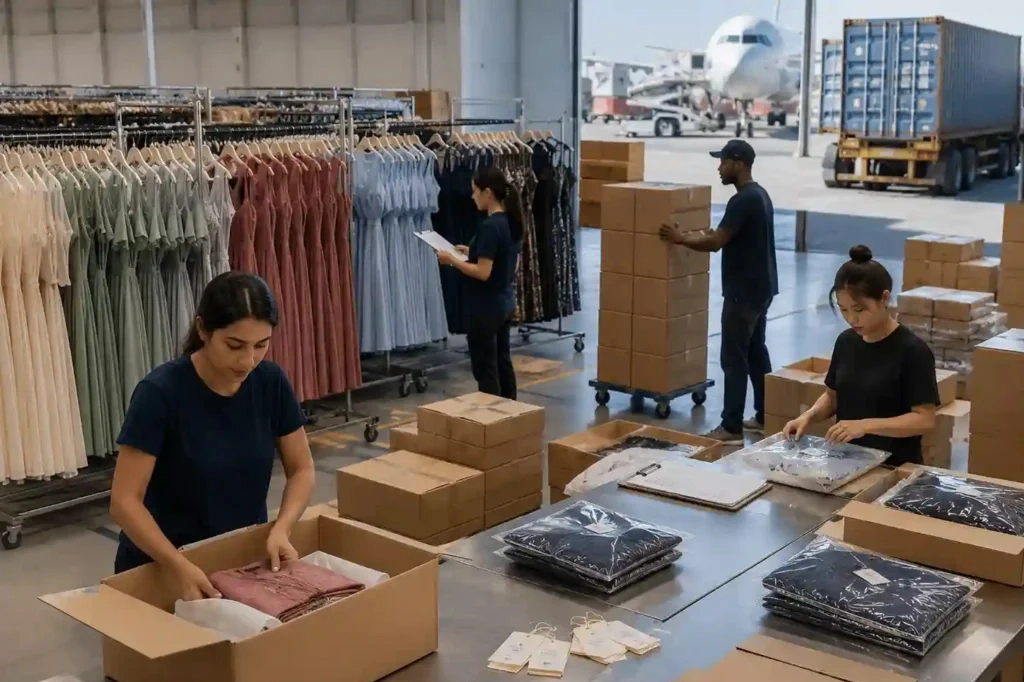
What Affects the Cost of Shipping Dresses from China?
When you ask for a shipping quote, the number of dresses is only one part of the calculation.
Carton Volume
For clothing shipments, volume can be just as important as weight.
A dress with a light fabric may have a low actual weight but still occupy considerable space inside a carton.
Your folding method also matters. A structured dress with boning, heavy embellishment, or a fuller skirt may require more space than a simple lightweight dress.
Gross Weight
Freight providers may calculate charges using actual weight, dimensional weight, or both, depending on the shipping method.
We normally confirm carton dimensions and weights after packing. Estimates made from garment weight alone can be quite different from the final shipping charge.
Destination
The freight rate is only part of the destination cost.
You also need to consider:
- Local delivery
- Customs clearance
- Import duties and taxes
- Port or terminal charges
- Warehouse location
- Final-mile delivery
A cheap freight rate to the port does not necessarily mean a cheap delivery to your warehouse.
Delivery Schedule
Your target delivery date should be considered before production is finished.
If you have a fixed campaign, fashion launch, trade show, or retail delivery window, you need enough time for both production and transportation.
A common mistake is to calculate only the factory production time and forget the days needed after the garments leave the sewing line.
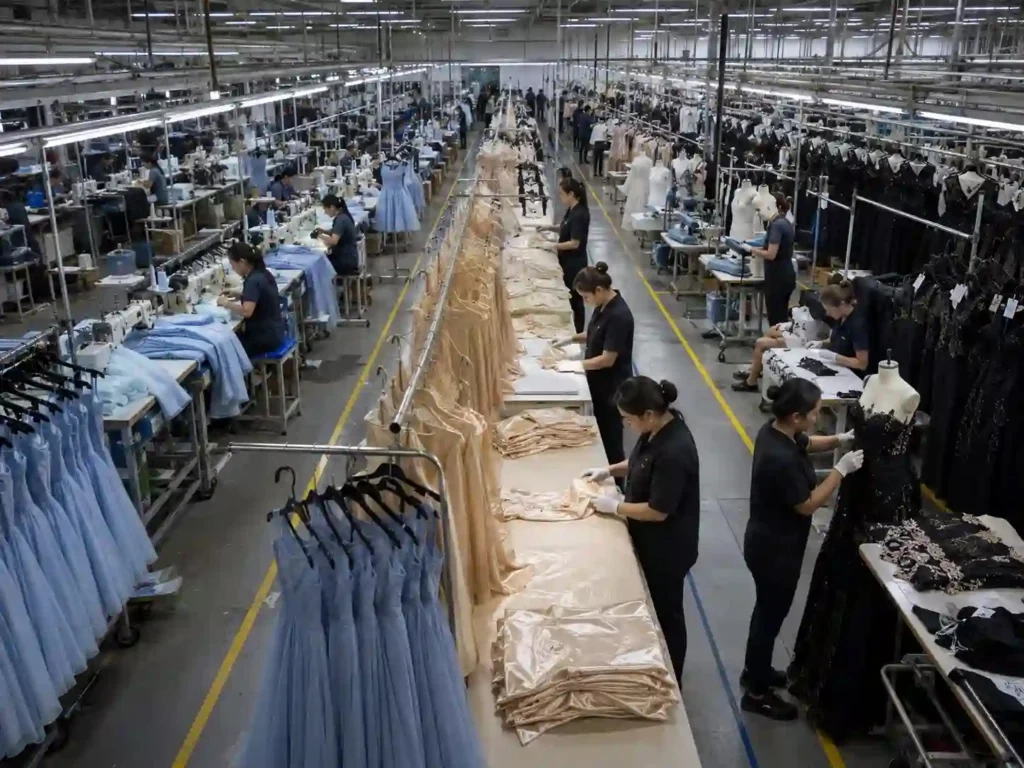
How Does Dress Packaging Affect International Shipping?
Packaging needs to protect the garment without taking up unnecessary carton space.
If you compress garments too much, you may reduce carton volume but create excessive wrinkles or affect the appearance of the finished dress.
If you use too much protective packaging, the garments may arrive safely but occupy unnecessary space.
Satin and Silk Dresses
Smooth fabrics can show pressure marks and wrinkles easily.
You should pay attention to folding points and avoid creating unnecessary compression during packing.
Lace Dresses
Lace can catch on other garments or packaging materials.
The folding method and protective layer should prevent exposed lace edges from being pulled during handling.
Sequin Dresses
Sequins can rub against the surface of other garments during transportation.
For heavily embellished styles, the packing method should reduce unnecessary friction.
Velvet Dresses
Velvet can develop visible pressure marks when compressed for long periods.
The way the garment is folded and stacked can therefore affect its appearance when unpacked.
Structured Dresses
Corset-style or heavily structured dresses may need more careful packing because cups, boning, or internal construction can lose their intended shape under pressure.
What Documents Are Needed to Ship Dresses Internationally?
Your exact documentation depends on the destination, shipping method, and trade terms, but international dress shipments commonly involve documents such as:
- Commercial invoice
- Packing list
- Bill of lading or air waybill
- Shipping instructions
- HS code information
- Certificate of origin when required
- Customs information
The information on these documents should match the actual shipment.
For example, carton quantities, product descriptions, weights, and declared values should be checked before the shipment leaves the factory.
Small documentation errors can create unnecessary questions during customs clearance.
For a first China import, confirm in advance who prepares each document and who handles customs clearance.
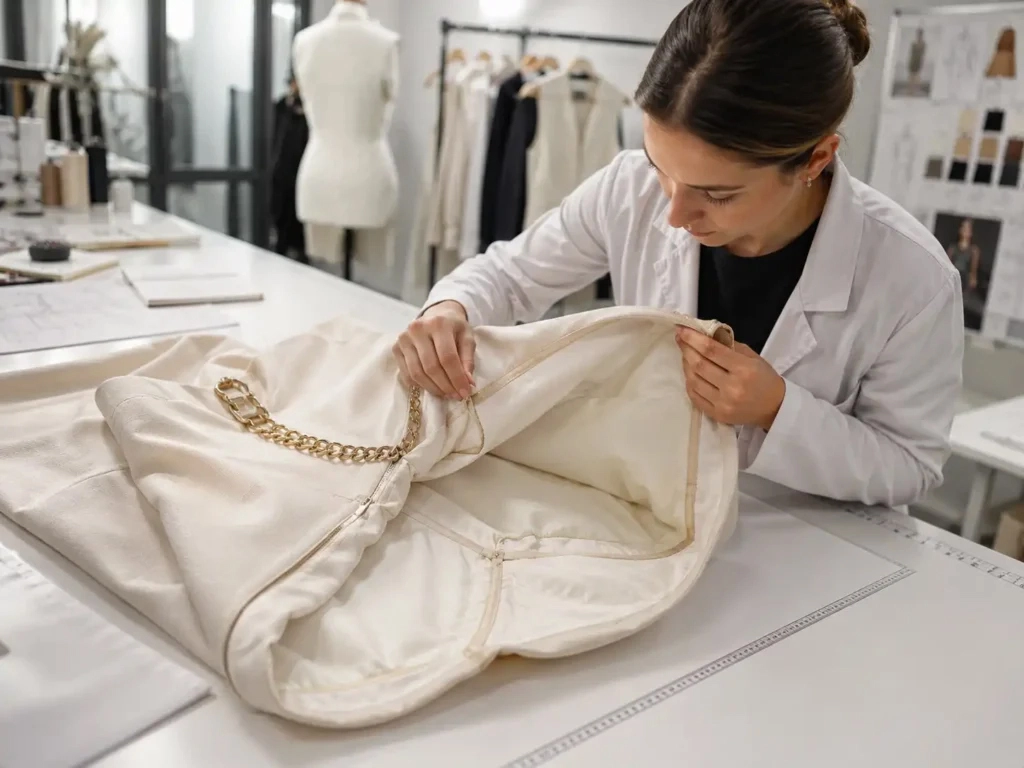
What Are FOB, CIF, DAP and DDP for Dress Orders?
The shipping term you choose affects who handles different parts of the transportation process and where your responsibility begins.
FOB
FOB is commonly used when the buyer has its own freight forwarder or import setup. The seller handles the agreed export-side responsibilities, while the buyer arranges the main international transportation.
CIF
CIF includes the ocean freight and insurance to the agreed destination port. Import clearance, duties, taxes and destination charges should still be checked separately.
DAP
Under DAP, the seller arranges delivery to the agreed destination, while the buyer generally handles import clearance, duties and taxes.
DDP
Under DDP, the seller generally takes responsibility for import clearance, duties and taxes as well as delivery to the agreed destination.
Because Incoterms can involve different cost and responsibility arrangements, always check the exact quotation rather than relying on the term alone.
Should You Choose the Cheapest Shipping Option?
Not necessarily.
When you compare suppliers, it is tempting to look at the factory price and shipping quote separately.
For a B2B dress order, it is more useful to consider the landed cost.
That can include:
Product Cost + Packing + Freight + Duties/Taxes + Destination Charges + Local Delivery
For example, a supplier with a slightly higher factory price may still give you a better overall result if the garments are packed efficiently, the shipment is organized properly, and the delivery route suits your warehouse.
You should also consider the cost of delays, especially if your collection is tied to a specific season or launch date.
How Can You Prepare Your Dress Order for International Shipping?
You can reduce many shipping problems before production starts.
1. Confirm the destination
Provide the actual delivery country and, when possible, the warehouse or delivery location.
2. Confirm the packing method
Decide whether you need individual polybags, size stickers, barcodes, carton markings, or special retail packaging.
3. Set the delivery deadline
Tell your manufacturer when the goods need to arrive, not only when you want production to finish.
4. Check the trade term
Make sure you understand whether the quotation is FOB, CIF, DAP, DDP, or another arrangement.
5. Leave time for customs
Do not plan your inventory around the estimated ocean or air transit time alone.
The complete route includes export handling, international transportation, customs clearance, and final delivery.
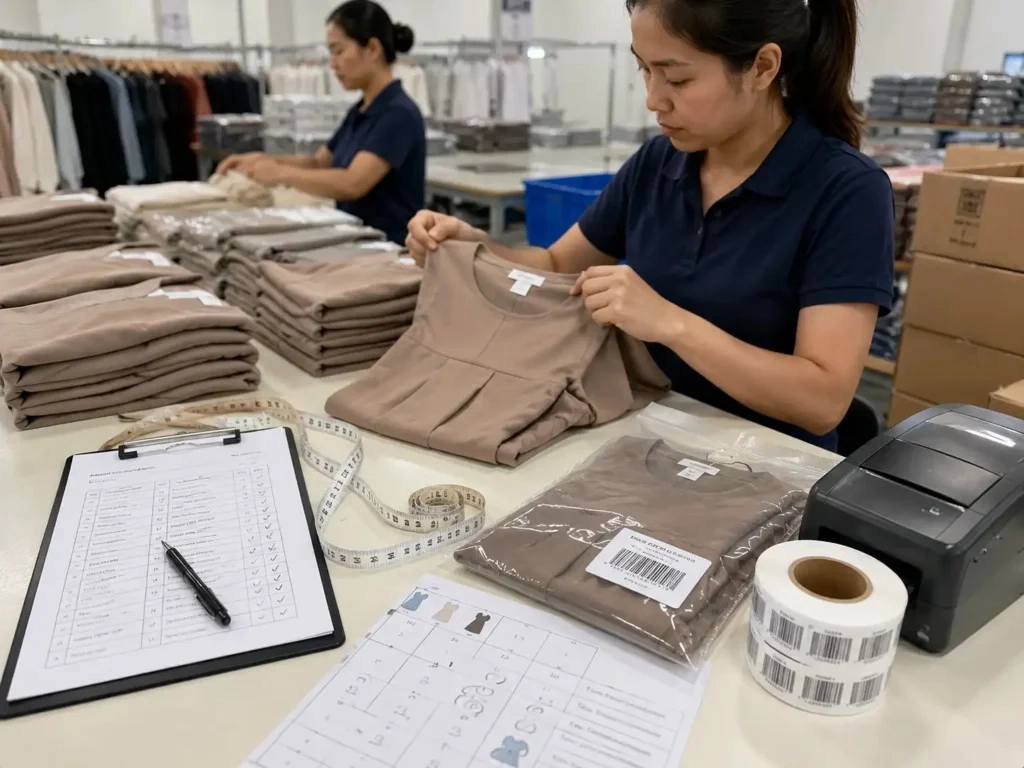
What Should You Check Before the Dresses Leave the Factory?
Before shipment, you should make sure the final goods match the approved production requirements.
From the factory side, a dress manufacturer normally checks:
- Style and color
- Size breakdown
- Measurements
- Labels and tags
- Garment appearance
- Packing method
- Carton quantity
- Carton markings
- Gross and net weight
The approved sample should remain the reference for the bulk order.
Once the cartons leave the factory, correcting a packing or product issue becomes much more difficult.
Common Shipping Problems When Importing Dresses from China
In production, the shipping problems we see most often are not always caused by the freight carrier. They often start earlier, when packing and delivery requirements are not confirmed clearly.
Carton volume was estimated too early
An initial estimate may be based on a sample or an assumed packing method. The final volume can change once bulk garments are folded and packed.
Production finished on time, but the shipment still arrived late
Finishing sewing on the planned date does not mean the goods will arrive at your warehouse on that date. Export handling, transit, customs and local delivery still need to be included.
How Should Fashion Brands Plan Shipping for Repeat Orders?
After a successful shipment, keep the actual carton and freight data with the style record. For repeat orders, this gives you a much better starting point than using a new estimate every time.
- Carton dimensions
- Pieces per carton
- Gross weight
- Net weight
- Packing method
- Shipping method
- Transit time
- Destination
- Actual landed cost
This gives you a much better reference for the next production run.
If your brand grows from a few hundred pieces to several thousand, the best shipping method may also change. What worked for your first order does not automatically remain the most economical option at a larger volume.
Frequently Asked Questions
Can I ship dresses from China directly to my warehouse?
Yes, depending on the shipping arrangement and destination. Before production is completed, you should provide the correct delivery address and confirm whether the shipment is going to a warehouse, fulfillment center, retail location, or another destination. The final delivery requirements can affect the shipping plan.
Can I combine different dress styles in one shipment?
Yes. Different styles can often be packed and shipped together, provided the carton markings, packing lists, quantities, and size breakdowns are clearly organized. For mixed orders, it helps to keep each style and color easy to identify when the cartons arrive at your warehouse.
What happens if my dresses arrive with shipping damage?
Document the condition as soon as the shipment arrives. Take photos of damaged cartons and garments, keep the packing information, and compare the affected quantity with the shipment records. Early evidence makes it easier to determine whether the problem happened during packing, transportation, or handling at the destination.
Should I use my own freight forwarder or the factory’s shipping partner?
Either can work. If you already have a reliable forwarder and import process, using your own partner may give you more control. If you are new to importing, using a factory’s experienced shipping contact can reduce coordination work. Compare the complete service and final cost rather than only the freight rate.
When should I discuss shipping with the manufacturer?
Ideally, discuss it when you confirm the bulk order rather than waiting until production is almost finished. Your destination, packing requirements, delivery date, and shipping term can affect carton planning and the production schedule. Early confirmation gives both sides more time to adjust if the shipment requirements change.
Conclusion
For a dress order, shipping decisions start before the cartons are packed. Fabric, garment construction, packing method, carton volume and delivery requirements can all affect the final cost and timing.
When we work with fashion brands on bulk production, we prefer to discuss these points before the order reaches the packing stage. It gives both sides a clearer shipping plan and reduces the chance of unexpected charges or delays after production is finished.
Related Dress Manufacturing Services
If you are developing a new dress and need support with fabric selection, internal construction, sampling, and bulk production, working with an experienced clothing manufacturer can help you deal with these decisions before they become production problems.
At Xiuyu Apparel, we work with fashion brands, startups, designers, and private label companies from sample development through bulk production. As a dress manufacturer, we can also support different dress categories depending on your collection and production requirements.
Get a Clothing Manufacturing Quote Based on Your Design
If you already have a garment design, send us the product photo, tech pack, or reference sample together with your target quantity.
As a dress manufacturer, we can review the fabric, lining, construction, trims, workmanship, and finishing requirements before preparing a quotation based on the actual garment rather than a general price range.

