

When you develop a maxi dress for your brand, the original sketch is only the starting point. The fabric, skirt volume, pattern, construction, and production method can all affect the final cost and how the dress looks in bulk. Below is how we normally look at these points before a maxi dress moves into bulk production.
What Do You Need to Confirm Before Manufacturing a Maxi Dress?
Before a maxi dress reaches the cutting table, several decisions need to be settled.
Before sampling, we normally confirm the main specifications:
- Overall silhouette and length
- Fabric composition and weight
- Fabric width and usable width
- Lining requirements
- Size range
- Closure type
- Pocket or slit construction
- Pleats, gathers, panels, or other details
- Label and packaging requirements
These details are connected.
For example, changing from a stable woven fabric to a softer material can change the fit and drape. Increasing the skirt volume can also change the fabric consumption.
This is why we usually review the design, fabric, and construction together before making the first sample.
How Are Maxi Dresses Manufactured?
A typical maxi dress goes through several stages:
Design review → Fabric preparation → Pattern making → Sampling → Cutting → Sewing → Finishing → Quality control → Final inspection → Packing
The exact sequence can change depending on the style.
A simple cotton maxi dress is usually easier to handle than a bias-cut satin dress, a tiered chiffon style, or a fully lined silk dress. These styles need more control because the fabric and construction leave less room for error.
01. Design and Tech Pack Review
You can start with a tech pack, sketch, reference garment, or existing sample.
The first job is to turn the design into something that can actually be produced.
Before making the first sample, we need to understand how the garment is meant to be constructed. That usually means checking the measurements, seam lines, neckline, sleeve shape, skirt panels, waist construction, lining, closures, trims, and finishing details.
A sketch can show the overall look, but it does not always explain how the garment should be constructed. Those details need to be worked out before sampling.
This is also when we look for details that may affect the production cost.
A large skirt sweep, for example, may look like a small design detail, but it can increase fabric consumption considerably. A long slit may require reinforcement and a different finishing method. A lightweight fabric may need lining even if the original sketch does not show one.
It is much easier to solve these issues before the first sample than after bulk production has started.
02. Fabric Selection and Inspection
Fabric selection can change how the finished dress looks, fits, and costs to produce.
Satin, chiffon, silk, viscose, and cotton can all work for maxi dresses, but each behaves differently during production.
But composition alone does not tell you whether a fabric will work.
Fabric composition is only the starting point. During development, we normally look at the weight, usable width, drape, hand feel, shrinkage, color consistency, surface condition, stretch and recovery, and opacity.
Usable width is particularly important for maxi dresses. A fabric may look reasonably priced by the yard, but if the usable width is narrow, a wide skirt can create more waste and push the actual garment cost up.
The same fabric should also be tested against the silhouette. A quality that works well for a loose maxi dress may behave quite differently in a fitted bodice or bias-cut skirt.
When several styles use the same fabric, it is worth checking the material across the different silhouettes rather than approving it from one sample alone.
For bulk production, the production fabric should also be checked before cutting. Small differences between the approved sample fabric and bulk fabric can become visible once the garments are assembled.
03. Pattern Making and Size Grading
Once the design and fabric are confirmed, the pattern can be developed.
For a maxi dress, this may include:
- Front and back bodice
- Sleeves
- Skirt panels
- Waist sections
- Lining
- Facings
- Pockets
- Collar or cuffs
- Special construction pieces
The pattern also needs to be developed around the actual fabric rather than the fabric name alone.
A fluid fabric, a structured woven fabric, and a stretch fabric will not behave the same way in the pattern. Bias-cut skirts also need to be handled differently from straight-grain styles.
After the base size is approved, the pattern can be graded into your required size range.
Grading is not simply a matter of increasing every measurement. The proportions still need to work across the size range.
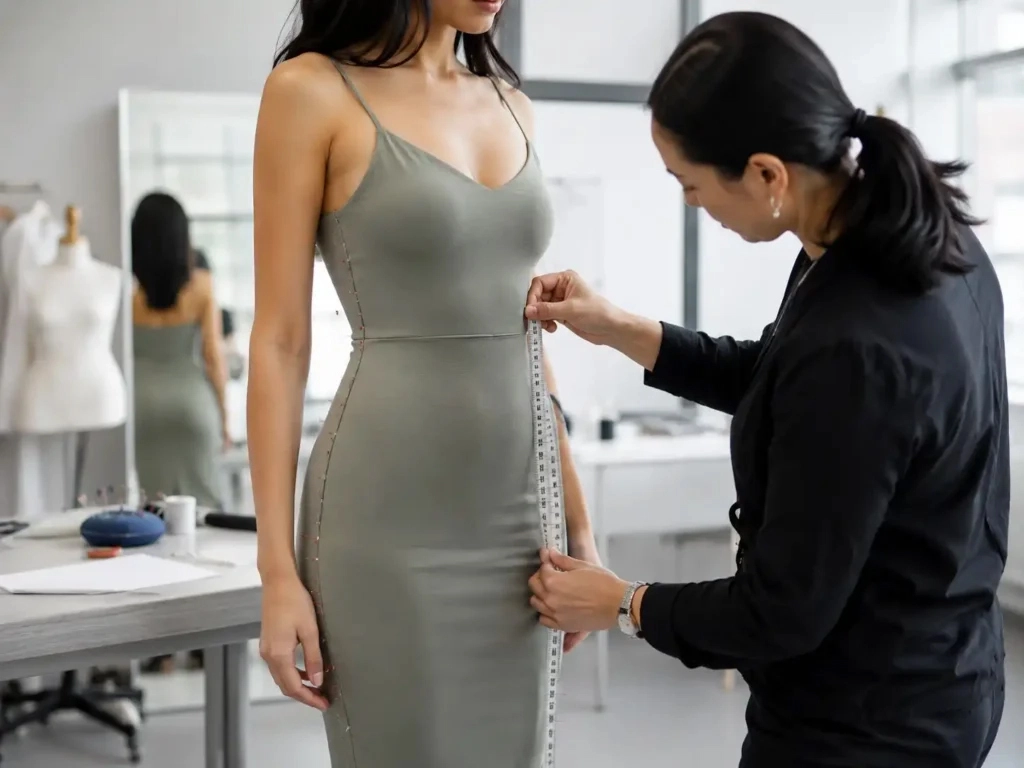
04. Sample Development and Fitting
The sample is where the design meets the actual material.
At this stage, you can check:
- Bust and waist fit
- Dress length
- Skirt volume
- Shoulder position
- Sleeve fit
- Neckline
- Lining
- Closure position
- Seam appearance
- Fabric drape
One sample is not always enough. New silhouettes often need another round of fitting or construction adjustments.
That is particularly common when you are developing a new silhouette rather than reproducing an existing style.
If the skirt hangs differently from the original reference, for example, you first need to determine whether the cause is the fabric, pattern, construction, or measurement before making another adjustment.
Once the final sample is approved, it becomes an important reference for bulk production.
05. Fabric Relaxation, Spreading and Cutting
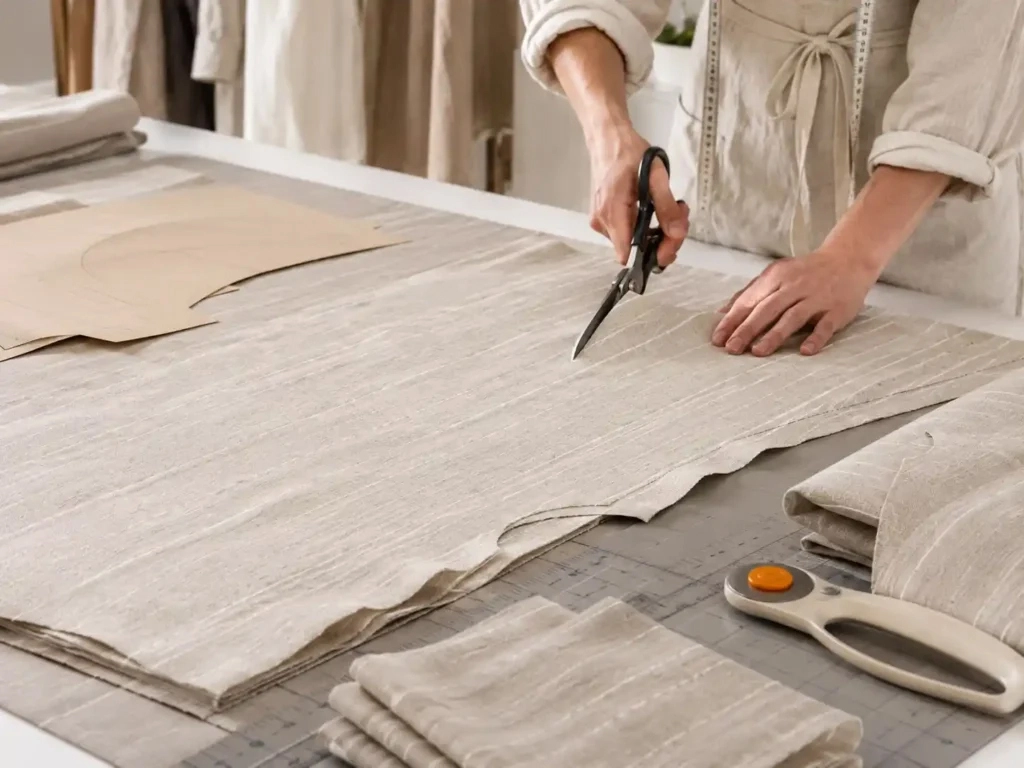
After the fabric is approved, bulk cutting can begin.
Some fabrics need to relax after they are unrolled and before cutting. This helps reduce unexpected changes in the finished measurements.
During marker making and spreading, the production team also considers:
- Grain direction
- Fabric width
- Defect areas
- Print direction
- Stripe matching
- Pattern placement
- Fabric utilization
Maxi dresses can have relatively high fabric consumption because of their length and skirt volume.
A full-volume skirt, tiered construction, or bias-cut design can require considerably more material than a simple straight silhouette.
For this reason, fabric cost should be reviewed together with the pattern and overall garment construction.
06. Sewing and Garment Assembly
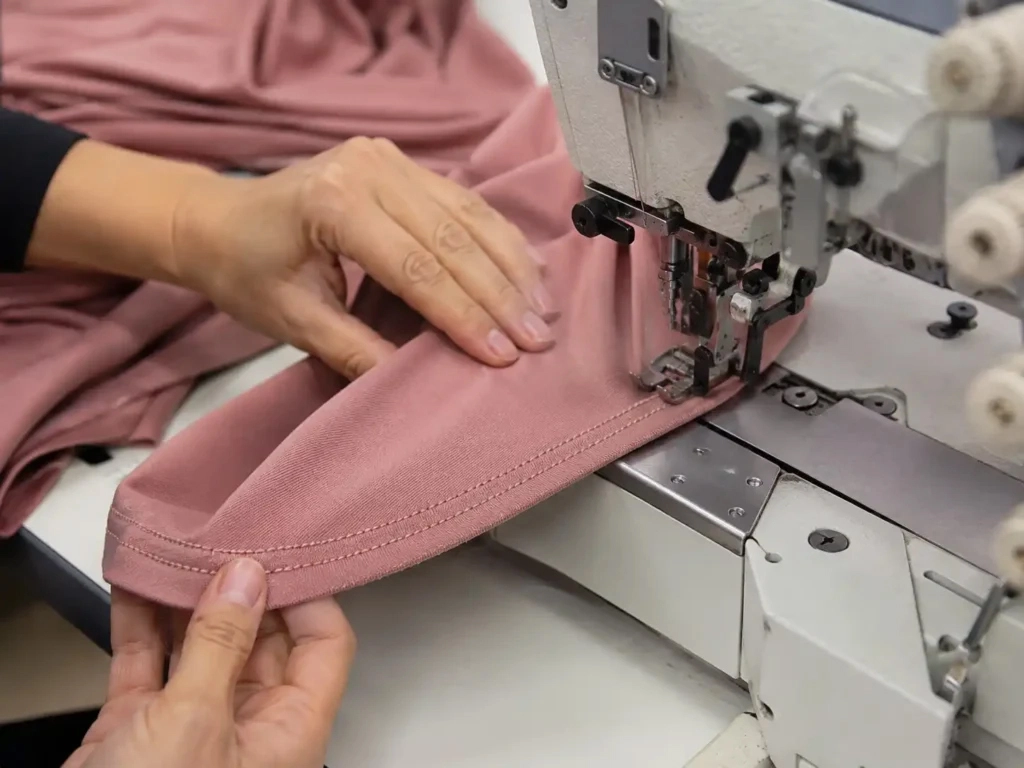
After cutting, the pieces move into sewing.
The exact operation sequence depends on the construction, but a typical maxi dress may include:
- Bodice assembly
- Shoulder and side seams
- Sleeve construction
- Skirt panel joining
- Waist joining
- Lining attachment
- Zipper or closure installation
- Pocket construction
- Slit finishing
- Hem finishing
The sewing method needs to match the fabric.
Satin can show puckering or needle marks, while chiffon needs careful handling because of its lightweight structure. With stretch fabrics, seam elasticity and recovery also need to be controlled.
Once production starts, the approved sample gives the sewing team a physical reference to work from. Operators need a clear production reference rather than relying only on a drawing or measurement sheet.
07. Pressing and Garment Finishing
Pressing can affect how the finished maxi dress looks almost as much as sewing.
The amount of heat and pressure needs to be adjusted according to the fabric.
For delicate fabrics, excessive heat can affect the surface. Incorrect pressing can also flatten the intended drape or leave unwanted marks.
Finishing normally includes:
- Thread trimming
- Seam cleaning
- Hem checking
- Label attachment
- Button or trim checking
- Loose-thread removal
- Final pressing
For a long dress, the hem deserves particular attention because even a small unevenness can become noticeable across the full circumference.
08. In-Line Quality Control
Quality control should not be left until every garment is finished.
During production, in-line inspection allows problems to be found while they are still manageable.
During in-line inspection, we normally check:
- Measurements
- Seam quality
- Stitch density
- Construction details
- Fabric defects
- Color consistency
- Zipper operation
- Lining attachment
- Hem appearance
- Label position
If the same issue appears on several pieces, production can be adjusted before the entire order is completed.
From a factory perspective, this is one of the practical differences between simply checking finished garments and actually controlling production.
09. Final Inspection and Packing
Once sewing and finishing are complete, the finished garments go through final inspection.
Final inspection covers the quality points agreed during development and production, including:
- Measurements
- Appearance
- Workmanship
- Fabric condition
- Trims
- Labels
- Packaging
- Quantity
For private label orders, you may also have specific requirements for hangtags, labels, polybags, cartons, folding methods, or other packaging details.
These requirements should be confirmed before production rather than added when the garments are already packed.
What Are the Most Common Production Problems With Maxi Dresses?
Some problems appear repeatedly during maxi dress development.
Uneven Hem Length
Because maxi dresses are long, a small difference in length can become obvious. The cause may come from pattern balance, fabric behavior, cutting, or the way the garment is handled during production.
Unexpected Fabric Consumption
A skirt can use much more fabric than expected when the hem becomes wider, panels are added, or the design requires directional cutting.
Different Drape From the Sample
If bulk fabric has different weight, finish, or hand feel from the approved material, the finished dress may not hang the same way.
Fit Changes After Fabric Substitution
Replacing the approved fabric with another quality can affect stretch, shrinkage, weight, and drape. The original pattern may therefore need to be reviewed.
Inconsistent Bulk Production
A sample can be correct while bulk garments vary in measurements or workmanship. This is why the approved sample, production specifications, and in-line inspection need to work together.
How Does Maxi Dress Fabric Choice Affect Production Cost?
Fabric is often one of the largest components of a maxi dress cost, but the fabric price alone does not determine the final unit price.
The final cost also depends on:
- Fabric consumption
- Fabric width
- Skirt volume
- Pattern efficiency
- Lining
- Construction complexity
- Sewing operations
- Trims
- Finishing
- Order quantity
A lower-priced fabric does not always result in a lower-cost dress. If the usable width creates more waste on a wide maxi skirt, the extra consumption can offset the lower fabric price.
The opposite can also happen. A slightly more expensive fabric with a suitable width and better cutting efficiency may work more efficiently for a particular design.
If your target price is fixed, it is usually better to discuss the complete garment cost with the manufacturer rather than asking only for the cheapest fabric.
How Long Does It Take to Manufacture Maxi Dresses?
The production time depends on the style, fabric availability, sample revisions, order quantity, and our production schedule.
- Design review
- Fabric sourcing
- Pattern development
- Sample making
- Fitting adjustments
- Fabric approval
- Bulk cutting
- Sewing
- Finishing
- Inspection
- Packing
Simple styles can move faster. Detailed dresses with multiple panels, special fabrics, lining, embroidery, pleating, or complicated construction may take longer.
If you are planning a seasonal launch, build the sampling and approval stages into your schedule instead of counting only the bulk sewing days.
What Should You Ask a Maxi Dress Manufacturer Before Placing an Order?
When comparing factories, price is only one part of the decision. It is also useful to understand how a dress manufacturer handles development, quality control, and production changes.
Consider asking:
- Can you work from a tech pack or reference sample?
- How do you handle fabric sourcing and approval?
- How are pattern changes managed after fitting?
- What happens if bulk fabric differs from the approved sample?
- How is quality checked during production?
- How is the final inspection handled?
- What is the MOQ by style and color?
- What is the expected sample timeline?
- What is the bulk production lead time?
- Can labels and packaging be customized?
The answers are often more useful than simply comparing factory quotations.
A manufacturer that can explain where production risks occur is usually easier to work with than one that only gives you a unit price.
Custom Maxi Dress Manufacturing for Fashion Brands
If you are developing your own maxi dress rather than buying an existing style, the production process normally starts with your design requirements.
You may provide:
- Sketches
- Tech packs
- Reference garments
- Fabric references
- Measurement specifications
- Trim details
- Label requirements
- Packaging instructions
From there, the development process can move through pattern making, sample production, fitting adjustments, fabric confirmation, and bulk manufacturing.
For startups and smaller fashion brands, it is particularly important to settle the key production details before placing a large order. A small issue in one sample can become an expensive problem when multiplied across hundreds of garments.
For established brands, the focus may shift toward repeatability, production capacity, consistent materials, and maintaining the same fit across seasonal collections.
How Can You Reduce Production Problems Before Bulk Manufacturing?
Not every production risk can be removed before bulk production. The main goal is to catch the problems that would be costly to fix after bulk cutting or sewing has started.
For a maxi dress, that usually means checking the fabric, measurements, consumption, construction, approved sample, and packaging requirements before the order moves into full production.
You can reduce risk by:
- Confirming the fabric before final sample approval.
- Checking measurements on the physical sample.
- Reviewing fabric consumption against the actual pattern.
- Confirming construction details in writing.
- Keeping an approved sample as the production reference.
- Confirming packaging requirements before production.
- Agreeing on quality standards before bulk manufacturing.
- Checking the first production pieces before the whole order is completed.
Once hundreds of pieces have been cut, even a small pattern or fabric issue becomes expensive to correct. That is why the sample approval stage matters so much before bulk cutting starts.
Frequently Asked Questions
1. Can you manufacture a maxi dress from a reference photo?
A reference photo is enough to start the discussion, but it normally does not contain everything needed for production. We still need to confirm measurements, fabric, construction, lining, closures, and finishing details. If the photo shows the front only, for example, we may need additional information for the back construction before making the sample.
2. What happens if you need to change the design after sampling?
Changes can usually be made after the first sample, but the impact depends on the detail being changed. A small neckline adjustment may be straightforward, while changing the fabric, skirt volume, or construction can affect the pattern and production cost. Confirm the revised details before approving the final sample.
3. Can you use one maxi dress pattern for different fabrics?
Not always. Two fabrics with the same composition can still have different weight, stretch, drape, or recovery. If you change from one fabric quality to another, the pattern may need to be reviewed. Otherwise, the finished dress may not have the same fit or silhouette as the approved sample.
4. How should you prepare a maxi dress for a seasonal launch?
Start with the delivery date and work backward from there. Allow time for fabric sourcing, sample revisions, approvals, bulk production, inspection, and shipping rather than planning only for sewing. If your launch date is fixed, confirm material availability and production capacity before you finalize the order quantity.
5. What should you do when the first bulk pieces do not match the approved sample?
Stop and identify the difference before continuing full production. Compare the fabric, measurements, pattern, construction, and finishing against the approved sample. If the cause is found early, the production method can usually be corrected before the same problem spreads across the remaining order.
Conclusion
A maxi dress can look simple on a sketch but become much more demanding once fabric, length, skirt volume, and construction are brought into production.
Most production problems are easier to solve during development than after hundreds of pieces have been cut. Confirming the fabric, pattern, sample, construction, and production reference before bulk cutting gives you a much better chance of keeping the finished order consistent.
Related Dress Manufacturing Services
If you are developing a new dress and need support with fabric selection, internal construction, sampling, and bulk production, an experienced clothing manufacturer can help you deal with these decisions before they become production problems.
At Xiuyu Apparel, we work with fashion brands, startups, designers, and private label companies from sample development through bulk production.
- Mini Dress Manufacturer
- Party Dress Manufacturer
- Off Shoulder Dress Manufacturer
- Ruffle Dress Manufacturer
Get a Clothing Manufacturing Quote Based on Your Design
If you already have a garment design, send us the product photo, tech pack, or reference sample together with your target quantity.
As a dress manufacturer, we can review the fabric, lining, construction, trims, workmanship, and finishing requirements before preparing a quotation based on the actual garment rather than a general price range.

