

When you send a new style to a clothing manufacturer, a BOM and a tech pack are often used together, but they do not do the same job. The BOM tells you what materials and components the garment needs. The tech pack gives the factory the measurements, construction and other technical details needed to make it. Knowing where the two documents differ can prevent unclear quotations, sample changes and production mistakes.
What Is a BOM in Clothing Manufacturing?
A BOM, or Bill of Materials, is the material list for your garment.
For a dress, it can include the main fabric, lining, zipper, buttons, elastic, thread, labels, hangtags and other trims or components.
A simple dress may have a short BOM. A corset dress, sequin dress or structured evening dress can have a much longer one.
For example, if your BOM says:
- Main fabric: polyester satin
- Lining: polyester
- Closure: invisible zipper
- Label: woven brand label
the factory knows which main components need to be considered.
But that information may still not be enough to make the garment.
The fabric may need a specific weight, width, finish or color. The zipper may need a certain length and color. The lining may need to work with the stretch or drape of the outer fabric.
This is where the tech pack becomes important.
What Is a Tech Pack?
A tech pack brings together the technical details the factory needs to develop and sample the garment.
Depending on the product, your tech pack may include:
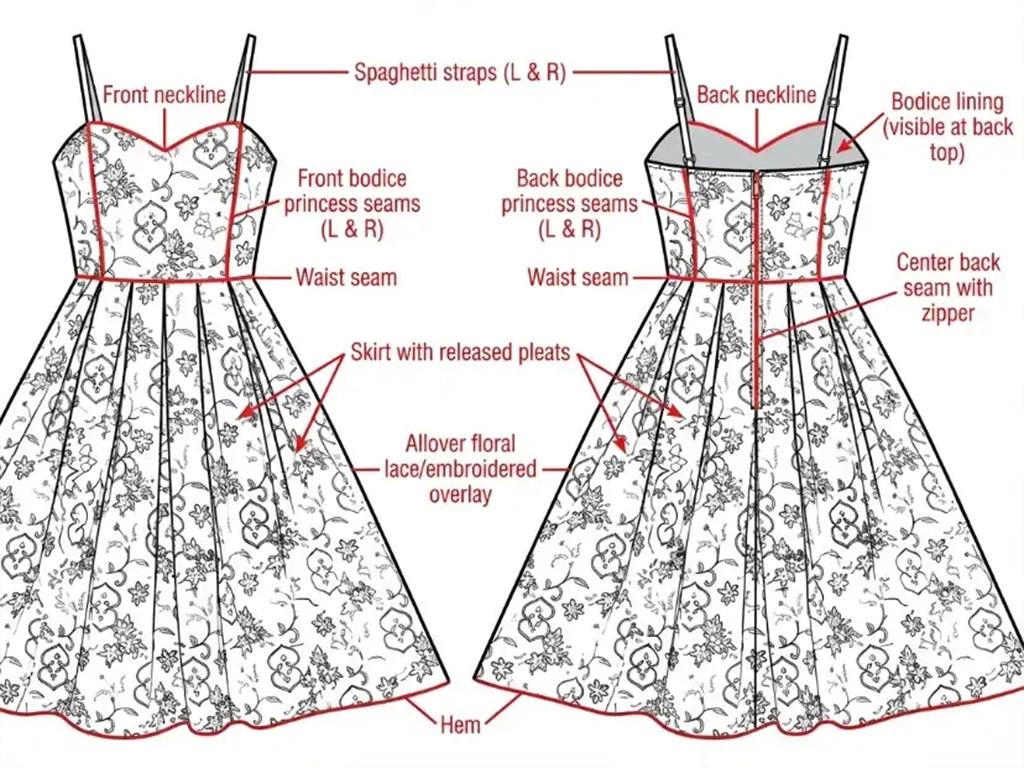
- Technical sketches
- Front and back views
- Finished measurements
- Size specifications
- Construction details
- Stitching requirements
- Fabric specifications
- BOM
- Colorways
- Print or artwork placement
- Label placement
- Special workmanship
- Packaging requirements
For example, you may already know the silhouette, measurements and fabric direction but still be deciding between two lining options. Or you may have an existing garment that shows the fit clearly but do not yet have a complete measurement chart.
A tech pack does not have to be 100% complete when you first contact a factory. The factory mainly needs enough information to review the style and tell you what still needs to be confirmed.
BOM vs Tech Pack: What Is the Main Difference?
The basic difference is:
The BOM tells the factory what goes into the garment. The tech pack tells the factory how the garment should be developed and made.
| Production Information | BOM | Tech Pack |
|---|---|---|
| Main fabric | ✓ | ✓ |
| Lining | ✓ | ✓ |
| Zipper and trims | ✓ | ✓ |
| Thread and components | ✓ | ✓ |
| Garment measurements | — | ✓ |
| Construction details | — | ✓ |
| Stitching requirements | — | ✓ |
| Size grading | — | ✓ |
| Artwork placement | Sometimes | ✓ |
| Colorways | Sometimes | ✓ |
| Packaging instructions | Sometimes | ✓ |
There can be some overlap. A tech pack often contains the BOM as one section.
During production, these details need to match the same style and approved version.
If the BOM specifies a stretch fabric but the measurement and construction pages were prepared for a stable woven fabric, the documents may look complete while still creating a problem during sampling.
Is a BOM Part of a Tech Pack?
In many clothing projects, yes.
A BOM can sit inside the tech pack as the section that lists the materials and components.
A typical tech pack may include:
Tech Pack
→ Technical Sketch
→ Measurements
→ Construction Details
→ BOM
→ Color Information
→ Artwork
→ Labels
→ Packaging
→ Production Notes
The exact format varies between brands and factories.
Keep these details connected to the same style and version throughout development. If you change the fabric or zipper after the first sample, the BOM should not continue showing the old specification.
That sounds simple, but version changes are a common source of confusion when a style goes through several rounds of sampling.
What Does a Clothing Manufacturer Check in a BOM?
When we receive a BOM, we check more than whether every material is listed. We also check whether the materials are suitable for the garment and its construction.
For a clothing manufacturer, the BOM is not simply a purchasing list. The material information also affects costing, pattern development, sampling and production.
Main Fabric
A fabric description such as “chiffon” or “satin” gives our costing team a starting point, but it is not enough to finalize a sample or quotation.
For the fabric section, the factory may need:
- Composition
- GSM or fabric weight
- Usable width
- Color
- Finish
- Stretch
- Hand feel
- Other performance requirements
Two fabrics can have the same general name and still behave differently during cutting and sewing.
For a flowing chiffon dress, for example, fabric width and drape can affect both the finished appearance and fabric consumption.
Lining
The lining needs to work with the outer fabric.
If you are making a fitted stretch dress, a lining with little or no stretch can restrict the garment even when the outer fabric has enough stretch.
For a lightweight chiffon dress, the lining can affect transparency, weight and drape.
We check the lining together with the outer fabric and construction, not as a separate item on the BOM.
Zippers, Buttons and Other Trims
A description such as “metal zipper” may still leave several details open.
The factory may need to know the zipper type, length, color, finish and placement.
The same applies to buttons, hooks, elastic, boning, cups and decorative trims.
When those details are unclear, the quotation can be based on an assumption that you did not intend.
What Does the Factory Check in a Tech Pack?
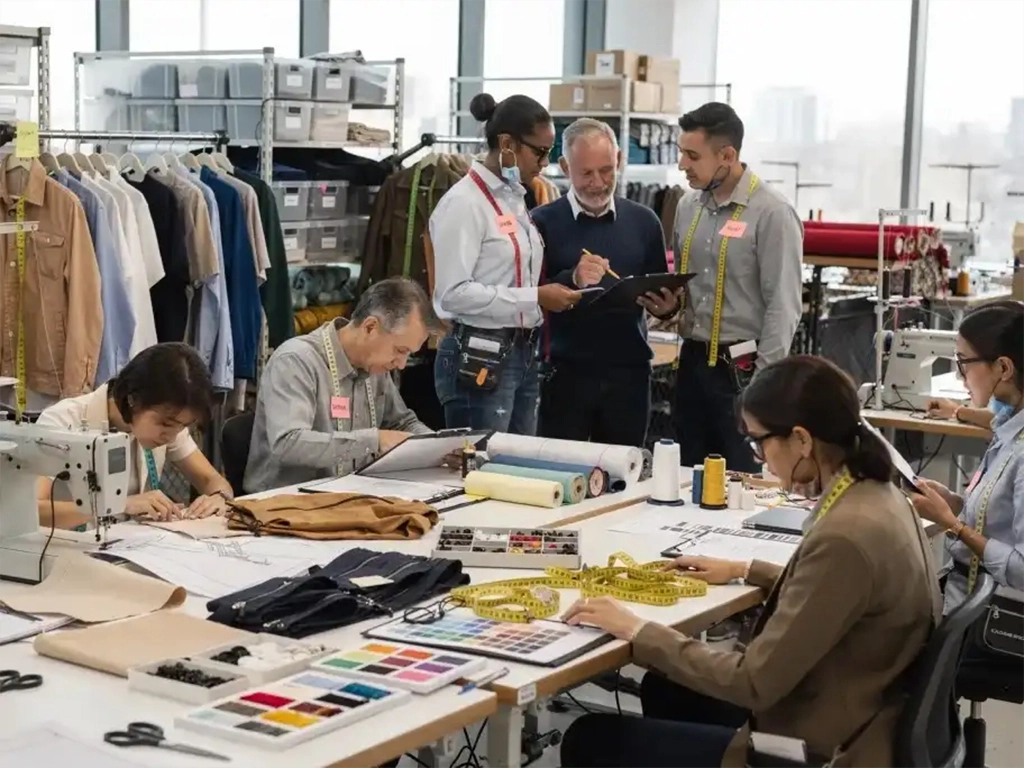
The tech pack lets the production team review the garment beyond the material list.
As a dress manufacturing factory, we need to understand how the measurements, fabric and construction work together.
A fitted dress may need:
Bust and waist measurements
Ease requirements
Seam construction
Zipper position
Lining construction
Stretch requirements
A problem can appear when one part of the specification does not match another.
You might specify a stretch fabric but use measurements based on a non-stretch version. Or the sketch may show a close-fitting sleeve while the measurement chart allows much more ease.
These differences are easier to find during technical review than after the bulk order has been cut.
What Happens If Your BOM or Tech Pack Is Incomplete?
An incomplete tech pack does not necessarily stop us from quoting or making a sample. The problem starts when the missing details are left open to interpretation.
If the fabric is only listed as “satin,” one factory may quote a lightweight polyester satin while another uses a heavier quality.
If the zipper specification is missing, each factory may choose a different option.
If the lining is not defined, one quotation may include full lining while another uses partial lining.
This is one reason two quotations can look very different even when the garment sketches appear almost identical.
Before comparing prices, make sure the factories are working from the same basic specifications.
You should compare:
- Main fabric
- Fabric weight and width
- Lining
- Fabric consumption
- Trims
- Construction
- Quantity
- Labels
- Packaging
- Special workmanship
If the specifications are different, the two quotations are not directly comparable. A lower quotation may simply include a different fabric, lining, trim or workmanship requirement.
Can You Get a Clothing Manufacturing Quote Without a Complete Tech Pack?
Yes.
If you are a startup brand or developing your first collection, you may not have a complete tech pack yet.
You can start with what you have:
- Sketch
- Product photos
- Reference garment
- Fabric swatch
- Basic measurements
- Target quantity
- Size range
- Color reference
- Product idea
For an initial quotation, we can review the style and tell you which details still need to be confirmed before the price can be finalized.
The price can be adjusted once the missing specifications are confirmed.
This is particularly useful when you are still comparing materials. A fabric change can affect consumption, lining, sewing and even pattern development, so it is better to confirm the material before treating an early price as final.
How Are BOM and Tech Packs Used During Sampling?
Once sampling starts, we use the BOM and tech pack together with the physical sample. The documents tell us what to make; the sample shows whether the specifications actually work on the garment.
A typical development process can look like:
Tech Pack → Fabric Confirmation → Pattern → First Sample → Fit Comments → Revision → PP Sample → Bulk Production
The BOM tells our team which materials need to be prepared. The tech pack gives the pattern maker and sample room the specifications to work from.
The first sample may still show things that were difficult to see on paper.
For example:
- The skirt does not fall as expected
- The sleeve has too much volume
- The neckline needs more support
- The zipper affects the garment’s shape
- The lining pulls against the shell
- The fabric is heavier than expected
- The finished measurements need adjustment
These issues are often easier to judge on the first sample than from drawings and specifications alone.
The first sample lets you and the factory check the actual fabric, pattern and construction before bulk production.
When Should You Finalize the BOM and Tech Pack?
Not every detail needs to be finalized when you first contact a clothing manufacturer.
The remaining details should be confirmed as the style moves from quotation to sampling and production.
Before quotation
The factory needs enough information to understand the garment, materials, quantity and major construction requirements.
Before sampling
Fabric, measurements, construction and important trims should be clear enough for pattern and sample development.
Before PP sample approval
The approved fabric, construction, measurements and components should be confirmed.
Before bulk production
The production team should be working from the approved specifications and sample.
If you change a material after approval, update the BOM and other affected documents instead of relying on an email or message from an earlier stage.
Otherwise, purchasing, pattern and production may end up working from different versions of the same style.
What Information Should You Send a Clothing Manufacturer?
You do not need to prepare a perfect package before asking a factory to review your idea.
Send the information you already have.
A useful starting package can include:
- Tech pack
- BOM
- Sketch or design drawing
- Reference photos
- Existing garment
- Fabric details or swatch
- Target quantity
- Size range
- Color requirements
- Label requirements
- Packaging requirements
- Target delivery date
If you are developing dresses specifically, you can also send the information to a dress manufacturer for review of the fabric, construction, measurements and sampling requirements.
A photo can show the appearance of a garment, but a physical sample can also show the hand feel, weight, stretch, construction and finishing details that are difficult to judge from an image.
This gives the factory more information to review the style before sampling starts.
FAQ
Can a clothing manufacturer create the BOM for my new style?
Yes. If you have the design, fabric direction, reference sample or tech pack, we can review the style and help identify the materials and components needed for production.
What if I change the fabric after the first sample?
A fabric change should be treated as a development change, not just a material replacement. A different fabric can change the drape, stretch, measurements, lining requirements and consumption. We would normally review the affected construction and make another sample if the change could alter the approved fit or appearance.
How can you tell whether a factory is quoting the same product?
Ask the factory to confirm the main specifications behind the price. Check fabric composition, weight, width, lining, trims, construction, quantity, packaging and special workmanship. If one quotation is based on a different fabric or less lining, the two prices are not really for the same product.
What should you do if your designer and factory interpret the tech pack differently?
Do not leave the difference to be resolved during bulk production. Mark the unclear point and confirm it with a drawing, measurement, physical sample or written production note. Once the decision is made, update the relevant specification so the approved version is clear to everyone working on the style.
Is a tech pack enough to guarantee the first sample will be correct?
No. A detailed tech pack reduces uncertainty, but the actual fabric and construction can behave differently from what you expect on paper. The first sample is where you can check fit, drape, measurements, sewing and finishing together and make corrections before approving the production version.
Conclusion
A BOM and a tech pack are connected, but they are not interchangeable. The BOM records the materials and components, while the tech pack gives the wider technical instructions for developing the garment. If you are preparing a new style, keep the two documents consistent as the product changes. Keep the BOM, tech pack and approved sample on the same version before bulk production starts. Purchasing, pattern making and production should all be working from the same approved information.
Related Dress Manufacturing Services
If you are developing a new dress and need support with fabric selection, internal construction, sampling, and bulk production, an experienced clothing manufacturer can help you deal with these decisions before they become production problems.
At Xiuyu Apparel, we work with fashion brands, startups, designers, and private label companies from sample development through bulk production.
- Formal Dress Manufacturer
- Maxi Dress Manufacturer
- Velvet Dress Manufacturer
- Bodycon Dress Manufacturer
- Wrap Dress Manufacturer
Get a Clothing Manufacturing Quote Based on Your Design
If you already have a garment design, send us the product photo, tech pack, or reference sample together with your target quantity.
As a dress manufacturer, we can review the fabric, lining, construction, trims, workmanship, and finishing requirements before preparing a quotation based on the actual garment rather than a general price range.

