

When you source dresses overseas, the manufacturing country you choose can influence your sampling process, production communication, and final product consistency, not only the unit price. In dress manufacturing, many buyers start by comparing factory quotations between China and Bangladesh. However, during actual production, factors such as design complexity, sampling requirements, and order flexibility often become equally important.
China vs Bangladesh for Dress Manufacturing: What Should Brands Consider?
China and Bangladesh both have strong apparel manufacturing capabilities, but the production experience can be very different depending on the type of dresses you want to make.
For fashion brands, choosing a production country is rarely only about the lowest price. The way a factory handles development, sampling, materials, and bulk production can directly influence the final result. You also need to consider how your manufacturer handles product development, fabric sourcing, sample adjustments, production communication, and quality control.
A basic repeat dress and a detailed fashion dress may require completely different manufacturing capabilities. Before selecting a production country, you should first understand what your collection actually requires.
| Production Factor | China | Bangladesh |
|---|---|---|
| Suitable for | Fashion collections, customized dresses, complex designs | Large-volume and repeat production |
| Development stage | Strong support for sampling and design adjustments | More focused on bulk production efficiency |
| Dress complexity | Suitable for detailed construction and special finishes | Better suited for standardized styles |
| Fabric options | Wide range of fabrics, trims, and accessories | Strong textile base for volume manufacturing |
| Order flexibility | Often suitable for small to medium production runs | Usually more focused on larger quantities |
| Production model | Flexible development and manufacturing | Scale-focused production |
When China May Be a Better Fit for Dress Manufacturing
1. You Need More Flexibility During Product Development
When you develop a new dress collection, the first sample is rarely the final version.
You may need to adjust the neckline, change the fabric, improve the fit, or modify construction details after reviewing the sample.
This stage requires close communication between your design team and the factory. Pattern makers, sample teams, and production staff need to understand the original design intention before moving into bulk production.
For brands launching seasonal collections or testing new styles, this process helps you identify fitting or construction issues before bulk production begins.
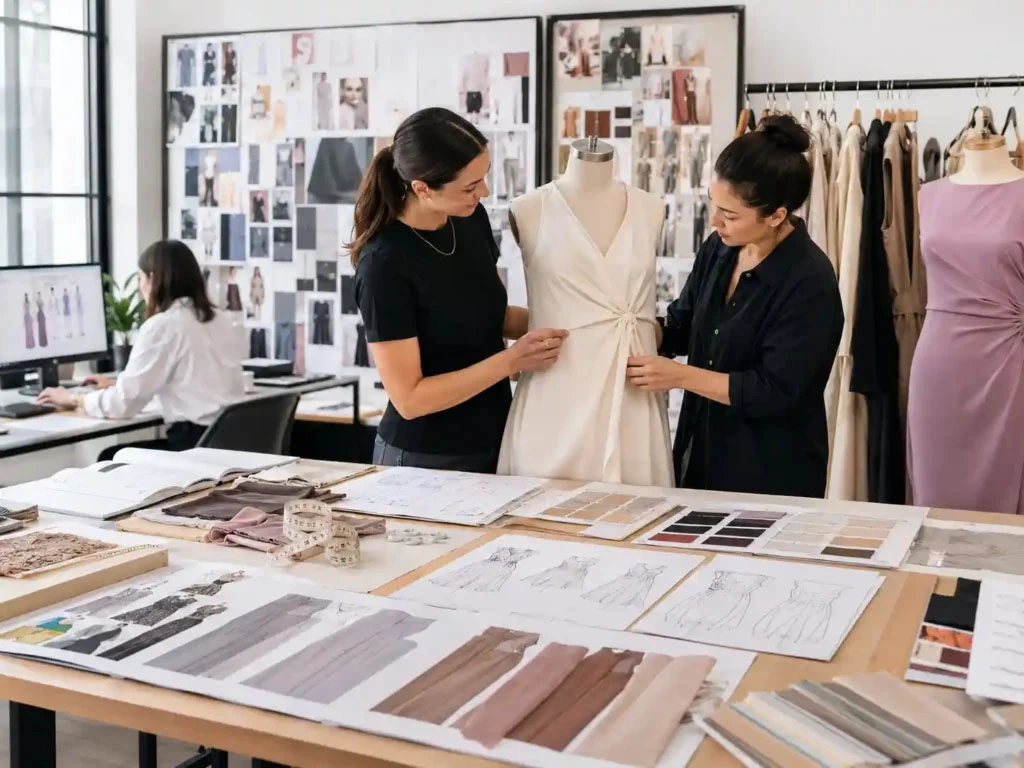
2. Your Dresses Require More Complex Construction
Many fashion dresses involve details that require more than basic sewing skills.
Examples include:
- fitted corset structures
- layered skirts
- embroidery and embellishment
- special sleeves
- draping techniques
- lining and finishing details
For these styles, the factory needs to understand how each design detail affects pattern making, sewing steps, and finishing during production.
In actual production, many problems happen before sewing even starts. If the pattern, construction method, or fabric behavior is not confirmed properly during development, issues are often found after bulk production begins.
3. You Need Different Fabrics and Materials for Your Collection
Dress collections often include different materials across multiple styles.
One collection may require satin for evening dresses, chiffon for lightweight designs, stretch fabrics for fitted silhouettes, or decorative trims for special occasions.
One advantage of China’s apparel supply chain is that fabrics, trims, printing, embroidery, and finishing suppliers are usually easier to coordinate during the development stage.
This can be useful when your brand needs multiple styles developed within a limited timeline.
When Bangladesh May Be Suitable for Dress Manufacturing
1. You Have Stable High-Volume Orders
Bangladesh has built a strong apparel industry around large-volume manufacturing.
If your brand already has proven styles, stable demand, and larger order quantities, production scale can become a major consideration.
For repeat products with fewer design changes, manufacturers focused on volume production may match your business model.
2. Your Collection Focuses on Simpler Production Requirements
Some dress programs require fewer development changes and more production consistency.
For example, if you mainly produce basic silhouettes, repeat the same designs, and place larger orders, your priority may be production capacity and cost efficiency.
However, you should still evaluate the complete process, including communication, quality management, shipping arrangements, and production reliability.
Key Differences You Should Check Before Choosing a Dress Manufacturer
Sampling Capability
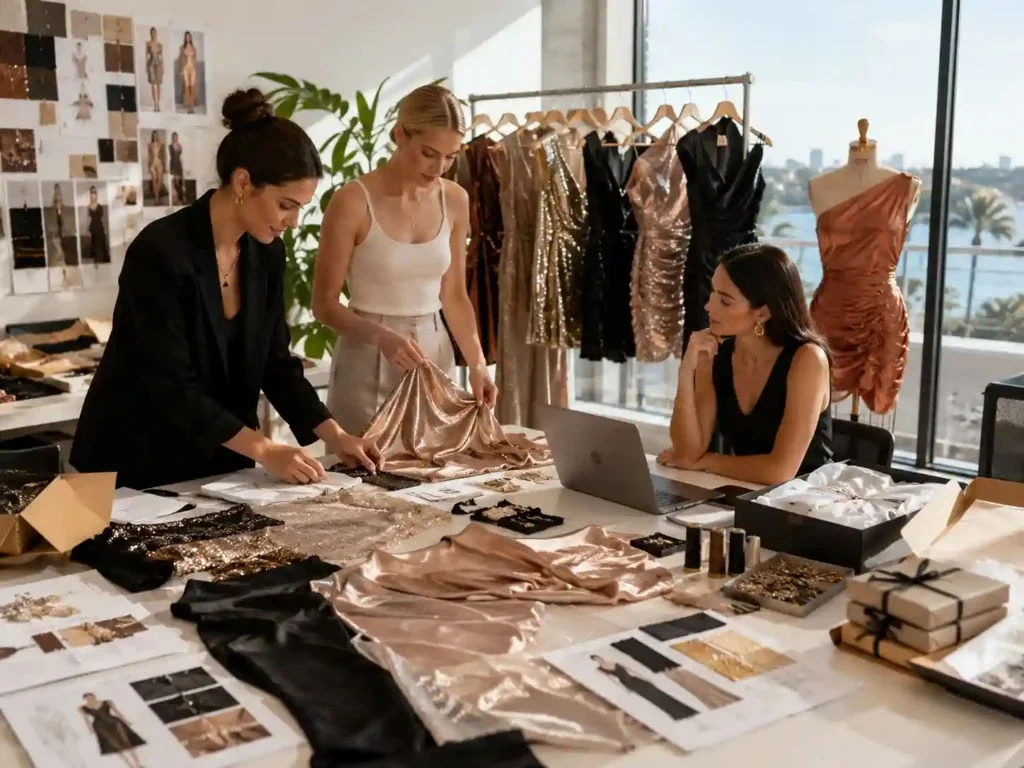
The sample stage is often where you can see how a factory handles your product before moving into bulk production.
Before working with a manufacturer, you should understand:
- Who develops patterns?
- How are fitting corrections handled?
- How many sample revisions are included?
- How does the factory prepare for bulk production after approval?
A good sample process helps prevent problems from appearing after production starts.
MOQ and Production Planning
Your order quantity should match your current business stage.
A new fashion brand may prefer smaller quantities while testing the market, while established buyers may focus more on production efficiency and repeat orders.
Before confirming a supplier, you should discuss MOQ, production capacity, and whether the factory can support future collection expansion.
Quality Control During Production
Quality control should not only happen at the final inspection stage.
A reliable production process usually includes checks during:
- fabric inspection
- cutting
- sewing
- finishing
- final packing
Asking how quality is controlled during production gives you a clearer idea of whether the factory can keep the same standard across a larger order.
China or Bangladesh: Which One Fits Your Brand?
The right choice starts with your product requirements, not only the manufacturing country.
China may be a better match if you:
- develop multiple dress styles
- need frequent sampling
- work with detailed designs
- require flexible production quantities
- source different fabrics and trims
Bangladesh may be suitable if you:
- place large repeat orders
- focus on stable designs
- prioritize production scale
- have predictable demand
Before selecting a manufacturing country, you should evaluate the whole supply chain rather than only comparing the quoted price per piece.
FAQ About China vs Bangladesh Dress Manufacturing
1. How early should I contact a dress manufacturer before launching a collection?
It is better to start communication early, especially for new styles. Before bulk production, you may need time for pattern development, sample revisions, fabric confirmation, and production planning.
2. Can a manufacturer help if I only have a design idea?
Yes, some manufacturers can work from an early idea. You may provide a sketch, reference image, or existing garment, and the factory can discuss possible fabrics, construction methods, and sample development.
3. What causes delays when producing dresses overseas?
Production delays usually come from unclear product details, late approvals, fabric availability issues, or repeated sample changes. Clear communication before production can help avoid many of these problems.
4. Should fashion startups choose smaller or larger manufacturers?
The right factory size depends on your business model. A growing brand may value flexibility and communication, while larger buyers may need stronger production capacity and stable delivery.
5. How can I compare quotations from different countries?
Comparing quotations only by price can create problems later. You should also check sample quality, MOQ, production timeline, included services, and how the factory manages quality during production.
Conclusion
China and Bangladesh can both support dress production, but they are often suitable for different sourcing situations. If your collection requires frequent development, detailed construction, or flexible production, you should evaluate the factory’s development and production capability carefully. The right manufacturing choice should match your product, order volume, and long-term business plans.
Related Dress Manufacturing Services
If your project involves a specific dress fabric or construction, you can also review our related manufacturing pages:
- Velvet Dress Manufacturer
- Corset Dress Manufacturer
- Evening Dress Manufacturer
- Cocktail Dress Manufacturer
- Satin Dress Manufacturer
Get a Quote for an Existing Dress Style
If you are transferring an existing dress style to a new manufacturer, send us the latest approved sample, tech pack, product photos, or measurement chart together with your target quantity.
As a dress manufacturer, we can review the construction, fabric, trims, measurements, and current production status with you before confirming the sampling requirements.

