

From the factory side, we often receive inquiries where buyers first compare prices, product photos, and MOQ. These factors are important, but they do not always show whether a supplier can handle the complete production process behind a dress. You need to know whether the factory can understand your designs, develop accurate samples, manage production details, and keep quality consistent when your order moves from sample stage to bulk manufacturing.
Start With How the Supplier Understands Your Product
When you contact a dress supplier, the first conversation often reveals how the factory approaches product development. The questions they ask can show whether they understand your designs and production requirements.
Pay attention to the questions they ask. A factory with its own development team will usually discuss details like fabric weight, lining requirements, pattern structure, measurements, finishing methods, and expected order quantity before giving a final quotation.
A supplier who only focuses on price may quickly provide a quotation but miss important production details. A fitted satin dress may require more attention to pattern balance and seam construction, while a layered chiffon dress often involves fabric handling and finishing details.
From our experience, many production problems can be avoided when both sides discuss these details before sampling begins.
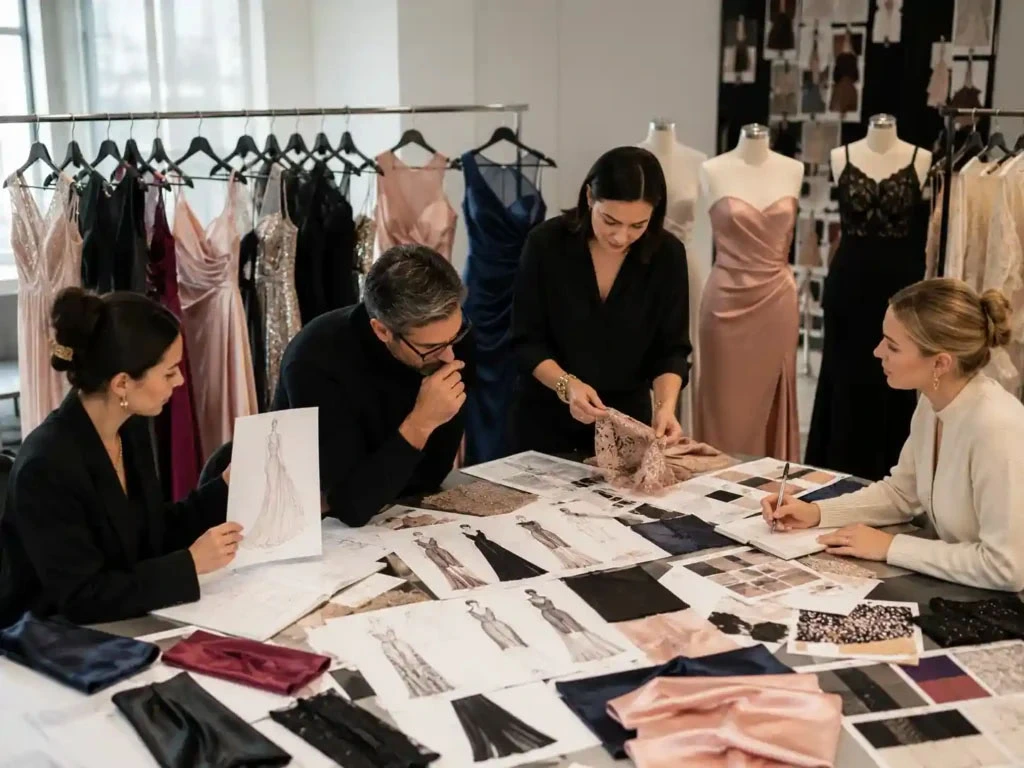
Look at the Sample Development Process
For most fashion brands, the sample stage is where you can see how a supplier actually works.
A sample is not simply a copy of a reference image. It needs to confirm whether the design can be produced correctly with the selected fabric, pattern, and construction method.
During development, buyers usually need to confirm:
- How the supplier converts designs into patterns
- How fitting feedback is handled
- How many adjustments may be needed before approval
- Whether the final sample can be used as the production standard
In real production, the first sample is often not the final answer. Fit comments, fabric behavior, and construction adjustments are normal parts of development. The important point is whether the supplier can identify problems and make accurate revisions.
Check Whether the Supplier Can Handle Your Dress Categories
Dress production experience can vary significantly between suppliers. A factory that mainly produces basic casual dresses may not have the same capabilities as one working with structured or detailed styles.
Before cooperation, you should review whether the supplier has experience with products similar to yours, such as:
- Satin dresses requiring clean finishing
- Chiffon dresses with delicate layers
- Corset dresses requiring structure support
- Beaded or embellished dresses with complex workmanship
Understanding product experience helps you avoid unnecessary development issues. The supplier’s previous work can show whether they are familiar with the fabrics, sewing techniques, and production challenges related to your collection.
Evaluate Production Management Before Bulk Orders
Sample quality is important, but bulk production is where supplier capability is truly tested.
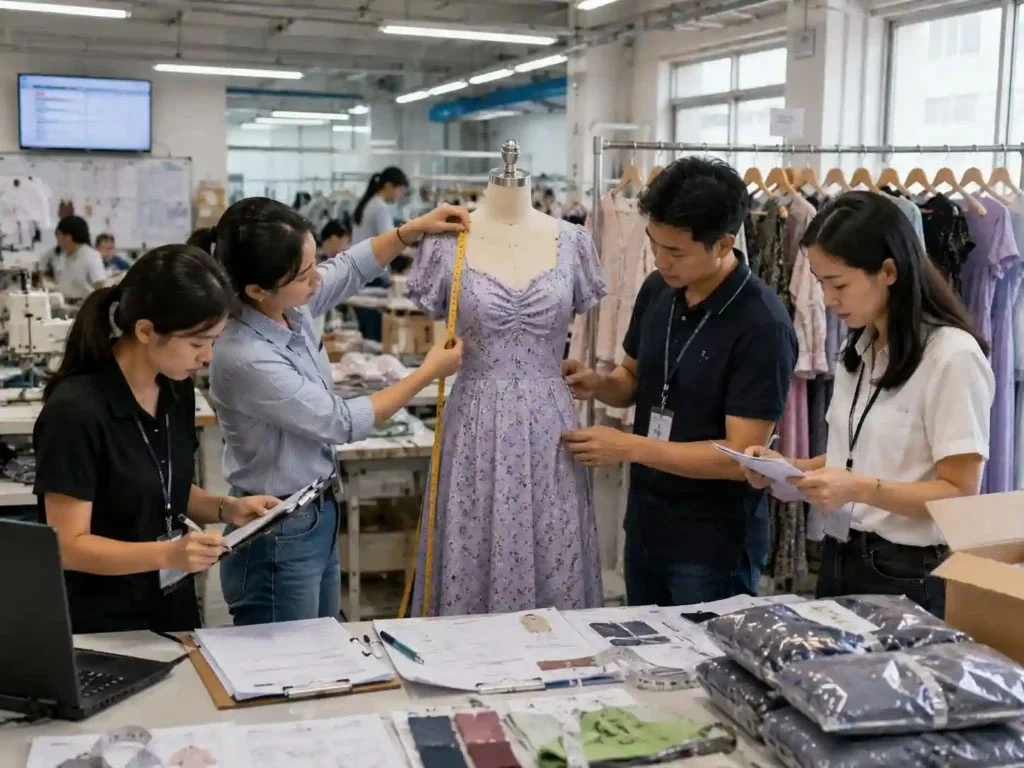
When evaluating a dress supplier, you should understand how the factory manages production after sample approval.
Important areas include:
- Fabric inspection before bulk cutting
- Marker planning and cutting accuracy
- Sewing line arrangement and production follow-up
- Pressing, finishing, and packing control
- Final quantity and quality checks before shipment
A supplier may create one good sample, but maintaining the same quality across hundreds or thousands of pieces requires a controlled production process.
For buying teams, the key question is not only “Can they make this dress?” but also “Can they make this dress consistently?”
Understand the Supplier’s Quality Control Process
Quality control should not only happen at the end of production. In most production facilities, quality checks are carried out at different stages instead of waiting until final inspection.
You can ask how the supplier manages:
- Fabric inspection before cutting
- Measurement checking during sewing
- Workmanship inspection during production
- Final inspection before shipment
For dresses, small details can affect the overall appearance. Uneven seams, incorrect measurements, loose threads, poor pressing, or inconsistent finishing may become bigger problems when products reach customers.
A supplier with a clear QC process can help reduce quality risks before shipment.
Pay Attention to Communication During Development
For overseas buyers, communication is part of production management.
During the early stages, you can evaluate whether the supplier understands your questions and provides useful feedback. Fast replies are helpful, but production communication is more about whether the supplier can identify possible issues before they affect the timeline.
For example, if a fabric is difficult to work with or a design detail may increase production difficulty, an experienced supplier should explain the situation and discuss possible solutions.
This type of communication helps both sides make better decisions during product development.
Review Information Beyond the Quotation
Quotation is an important reference, but it does not show the complete production capability of a supplier.
When reviewing suppliers, It is also worth checking:
- Similar products they have produced
- Production experience with your target styles
- Sample development ability
- Quality management methods
- Communication during the quotation stage
A lower price may look attractive at the beginning, but unexpected sample revisions, quality problems, or production delays can affect the total project cost.
Build a Supplier Evaluation Process for Future Collections
For fashion brands, choosing a dress supplier is usually not a one-time decision. Many buyers need factories that can support multiple collections and repeat orders.
After completing your first project, you can evaluate whether the supplier can maintain product consistency, understand your brand requirements, and support future development.
A supplier relationship becomes stronger when both sides understand the production process and expectations clearly.
FAQ
What information should buyers prepare before contacting a dress supplier?
Buyers can prepare design sketches, reference images, tech packs, target quantities, fabric requirements, and expected delivery schedules. The more production information available, the easier it is for suppliers to provide accurate feedback and quotations.
Should buyers visit a dress supplier’s factory before placing an order?
A factory visit can provide more confidence by allowing you to see production conditions and workflow. If visiting is not possible, buyers can also review factory information, production photos, samples, and previous project experience.
What makes a dress supplier suitable for small fashion brands?
Small brands often need suppliers that can support lower starting quantities, flexible sampling, and clear communication during product development.
How can buyers judge if a supplier understands fashion products?
You can observe the questions they ask during development. Suppliers with garment experience usually discuss construction details, fabric performance, fitting issues, and possible production challenges instead of only discussing price.
Why do some dress samples look different from bulk production?
Differences may happen when production teams do not follow the approved sample, specifications, or quality standards. Confirming the final sample and production requirements before bulk manufacturing helps reduce these issues.
Conclusion
The right dress supplier is not only defined by the quotation. Sampling ability, production control, quality management, and communication all affect whether a collection can move smoothly from design to bulk production.
Related Dress Manufacturing Services
If your project involves a specific dress fabric or construction, you can also review our related manufacturing pages:
- Maxi Dress Manufacturer
- Halter Dress Manufacturer
- Party Dress Manufacturer
- Wrap Dress Manufacturer
- Slip Dress Manufacturer
Get a Quote for an Existing Dress Style
If you are transferring an existing dress style to a new manufacturer, send us the latest approved sample, tech pack, product photos, or measurement chart together with your target quantity.
As a dress manufacturer, we can review the construction, fabric, trims, measurements, and current production status with you before confirming the sampling requirements.

