

When you develop clothing for the EU market, the fabric listed in your tech pack is not always the fabric used in the finished order. Supplier changes, trim substitutions, and sample revisions can leave your product records out of date. As a clothing manufacturer, we see these differences during sourcing, sampling, and bulk production. If you are preparing for the EU Digital Product Passport (DPP), the first step is making sure your production information matches the garments you actually receive.
What Is a Digital Product Passport in the Fashion Industry?
A Digital Product Passport (DPP) is a digital record that provides information about a product throughout its lifecycle. Depending on the applicable requirements, it may cover product identification, material composition, origin, manufacturing information, care, repair, and recycling.
For fashion brands, DPP is closely connected to how product information moves through the supply chain.
You may receive fabric specifications from a mill, trim details from separate suppliers, and production records from your clothing manufacturer. Your own team then uses these documents to prepare product descriptions, labels, and other information for the market.
The European Union introduced the Ecodesign for Sustainable Products Regulation (ESPR), which provides the legal framework for introducing DPP requirements across selected product groups. Textiles and apparel are included in its priority working plan.
However, being included in the working plan does not mean every clothing product already needs a DPP. The textile-specific requirements, including the information to be provided and the responsibilities of different supply-chain participants, will be established through a future delegated act.
For your business, it makes sense to start organizing product information before those detailed requirements take effect.
A QR code on a garment label may eventually provide access to a product passport, but adding a code is the easier part. You first need accurate information behind it.
Why Does Product Traceability Matter to Fashion Brands?
You may already have the documents needed to describe your clothing products.
Your tech pack contains the fibre composition and measurements. Your fabric supplier provides a specification sheet. The sample room keeps fitting comments, and your purchase order records the approved colour and quantity.
These documents become less useful when they refer to different versions of the same style.
Consider a dress you developed for a new collection. The original sample uses a particular satin fabric, but the supplier cannot provide enough material when you place the bulk order. Your manufacturer proposes another fabric with a similar appearance. You approve the replacement, and production moves forward.
The finished dress may look almost identical to the approved sample. However, the material reference in your original tech pack is no longer correct.
The same situation can happen with lining, zippers, buttons, elastic, lace, and decorative components.
If you manage several styles and colourways, it becomes easy to lose track of these changes. A product specification created at the beginning of development may not describe the version eventually delivered to your warehouse.
For a brand selling in the EU, that creates an information gap. You need to know which material and product details belong to each finished style, rather than relying on the first specification received from a supplier.
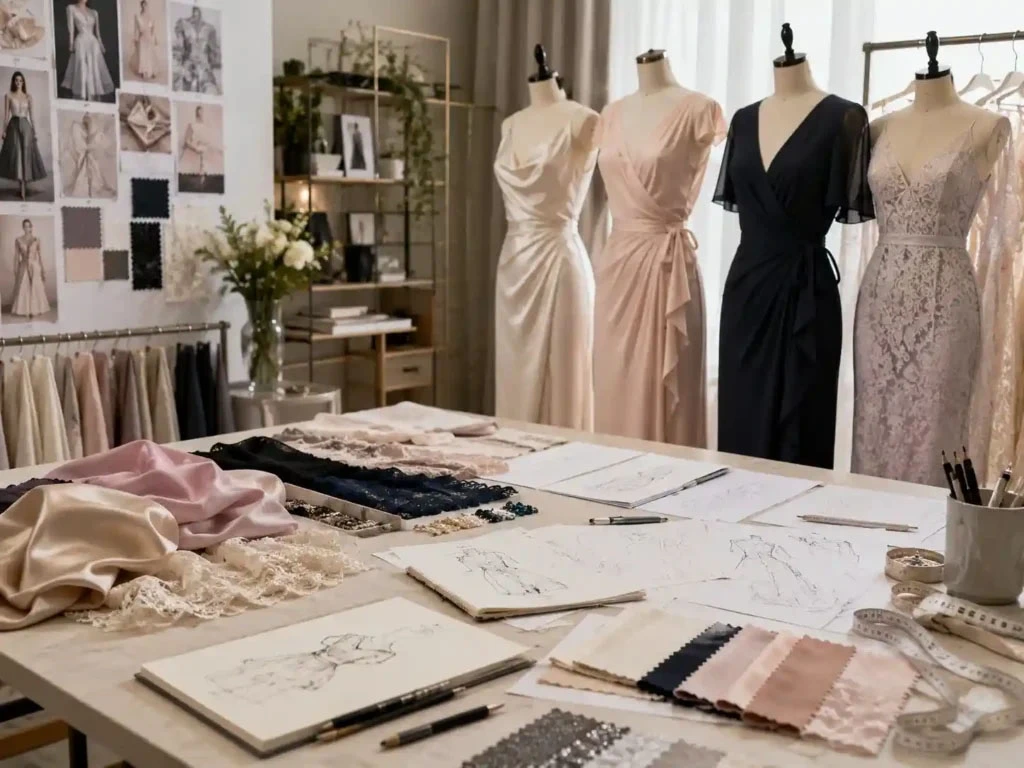
What Product Information Should You Collect Before Production?
The exact information required for a textile DPP will depend on the final EU rules. The following records are useful for organizing your clothing production and preparing for future traceability needs. They should not be treated as a complete list of legally mandatory DPP fields.
1. Main Fabric Specifications
Start with the main fabric because it usually represents the largest share of the garment’s material content.
For each fabric, keep the available information, such as:
- Fibre composition
- Fabric type and reference number
- Fabric weight
- Colour and colour code
- Supplier or mill information
- Relevant test reports
- Approved bulk fabric reference
One detail worth checking is whether your development sample and bulk order use the same fabric.
For example, you may develop a dress using a small quantity of available stock before confirming the order. The bulk fabric may come from a new production lot. Although the composition is unchanged, the weight, shrinkage, or surface finish may differ.
Keep the sample fabric and approved bulk fabric references separate when necessary.
2. Lining, Trims, and Other Components
A garment can contain several materials that do not appear in the main fabric specification.
Depending on your design, you may use:
- Lining and interfacing
- Zippers and buttons
- Elastic and drawstrings
- Lace and mesh
- Embroidery and appliqué materials
- Beading, sequins, and decorative trims
- Main labels and care labels
You do not necessarily need the same documents for every component. Start by identifying which materials are used and which supplier can confirm their specifications.
For instance, your fabric mill may provide the shell composition, while your trim supplier provides information about the zipper or decorative components. Your clothing manufacturer can confirm which approved components were assembled into the finished garment.
This distinction becomes useful when you need to check the information for a particular style or order.
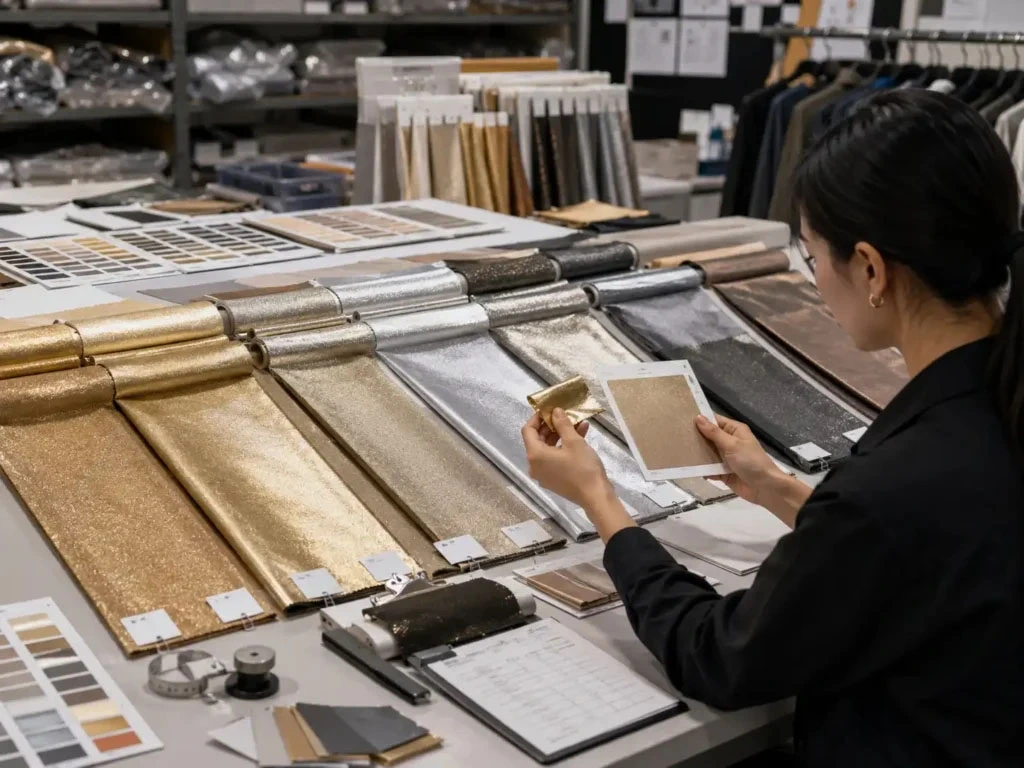
3. Style and Order Identification
Material information needs to be connected to the correct product.
Your internal style number is a practical starting point. Keep it together with the colourway, size range, purchase order, and approved production reference.
For larger collections, you may also need to distinguish different production batches or repeat orders.
Imagine ordering the same dress twice in one year. The design and style number remain unchanged, but the second order uses a different fabric supplier. If both orders share one product record without any revision history, your team may struggle to identify which materials were used for each delivery.
A clear style and order reference helps prevent that confusion.
Where Do Product Details Change During Clothing Manufacturing?
Product specifications can change at several points between the original design and final packing. These changes are not unusual in garment production. The problem is leaving the old information in place after a revision has been approved.
Fabric Sourcing and Material Substitution
The fabric in your original tech pack may not be available when the bulk order is ready.
A supplier may have insufficient stock, a colour may be discontinued, or the available material may not pass the required shrinkage or colourfastness test.
Your manufacturer may suggest an alternative, but you should review the replacement before bulk cutting.
Once approved, record the new fabric reference and any relevant supporting information against the purchase order. Do not let the original fabric specification remain the only reference for the finished order.
Sample Development and Fit Changes
Changes during sampling can affect more than measurements.
A revised neckline may require another facing or lining construction. A change in sleeve shape may affect the interfacing or elastic. Adjusting the body silhouette can also require changes to the lining pattern.
In the sample room, these revisions are part of normal development work.
For your purchasing team, however, the important point is knowing which revision was approved. If the pattern department has updated the sample but the tech pack still shows the previous construction, the production team may receive conflicting instructions.
Keep the latest approved comments and specifications together.
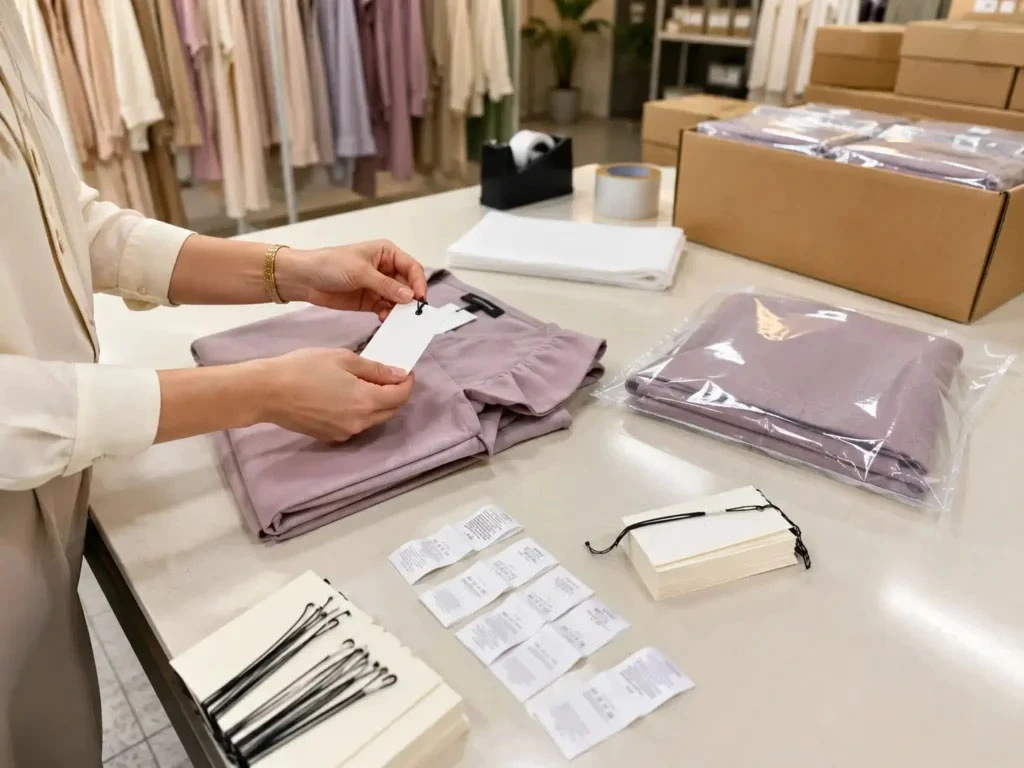
PP Sample Approval
The pre-production (PP) sample gives your team a physical reference before bulk production starts.
It should represent the approved version of the garment, including the fabric, colour, lining, trims, measurements, and construction details.
If you approve a material or construction change after PP approval, record it separately. A simple email confirmation may be enough for the immediate discussion, but the final production specification should also be updated.
This is particularly important when the change affects the material information associated with the product.
Bulk Production and Quality Inspection
Some differences only become visible after bulk materials arrive at the factory.
The new fabric lot may feel slightly different. A zipper may have a colour variation, or the trim supplier may deliver a substitute because the original component is unavailable.
These details need to be checked before they move through cutting and sewing.
Your manufacturer should be able to identify the materials used for the order and communicate relevant changes. Your brand should also have a record of the approvals given during production.
The information associated with the finished garment should reflect what was actually used, not simply what appeared in the first sample specification.
What If the Bulk Fabric Is Different From the Approved Sample?
This is worth discussing with your clothing manufacturer before confirming a large order.
A development sample is sometimes made with a small quantity of fabric from available stock. The bulk order may use a later production lot or another approved supplier.
Even when the fibre composition is identical, the fabric may behave differently during production.
For a fitted dress, a change in stretch and recovery can affect the fit around the waist or bust. For a long satin dress, a difference in weight or drape can change how the skirt falls. Fabric shrinkage can also affect finished measurements after washing.
Before approving a replacement, check:
- Whether the fibre composition is unchanged
- Whether the weight meets your specification
- Whether the colour has been approved
- Whether the relevant fabric tests are acceptable
- Whether the finished garment still meets your fit requirements
If the replacement is approved, keep its reference and supporting documents with the order.
You should also make sure the final product specification reflects the approved bulk fabric. This gives your team a more reliable record when handling repeat orders or future product-information requests.
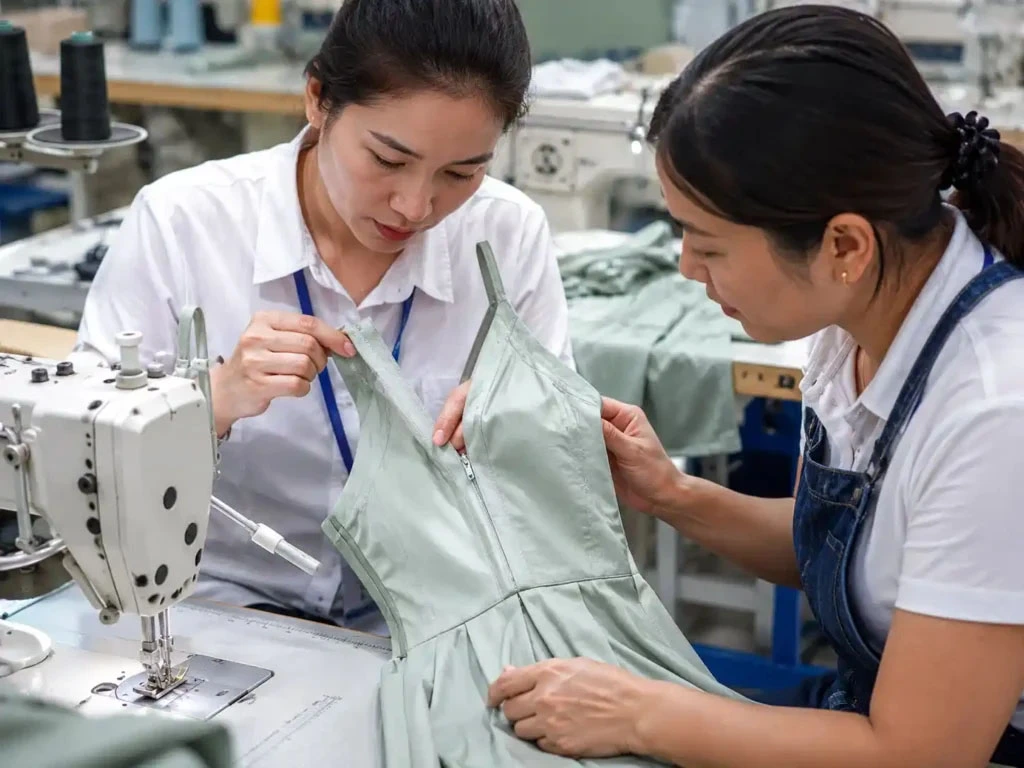
How Should You Organize Production Records for DPP Preparation?
You do not need to introduce a complicated information system before developing your next collection. Start with the documents already used between your design team, purchasing department, suppliers, and manufacturer.
Use One Current Tech Pack
Your working tech pack should contain the latest agreed product details:
- Main fabric and composition
- Fabric colour and reference
- Lining and trims
- Measurements and size specifications
- Construction details
- Label requirements
- Packaging instructions
If you start with a sketch, reference photo, or physical sample, the missing information can be confirmed during development.
Make sure everyone knows which file is current. Having several PDFs with similar filenames but different specifications is a common source of confusion when an order moves between departments.
Record Changes During Sampling
When you approve a revision, update the working specification.
This includes changes to the fabric, lining, neckline, sleeve, closure, or other construction details.
A revision date or version number helps your team distinguish the latest tech pack from earlier copies. It is particularly useful when the designer, buyer, and factory are working in different locations.
Match the PP Sample With Bulk Materials
Before bulk cutting, check that the approved PP sample and the materials prepared for production match the final specification.
If the fabric or trim is different, confirm whether the change has been approved and whether the product information needs updating.
This check can also be included in your normal pre-production meeting, rather than treated as a separate administrative task.
Keep a Record of Approved Substitutions
When a supplier cannot provide the original material, record the replacement before it enters production.
At a minimum, keep the original reference, replacement reference, approval date, and affected purchase order.
If a style has several colourways, identify which versions are affected. A trim substitution on one colourway does not necessarily mean the other colourways have changed.
These details make it easier to reconstruct the production history when your team revisits a style months later.
Who Is Responsible for Providing DPP Information?
If you work with several suppliers, do not assume your clothing manufacturer has every piece of information required for a complete product record.
Different parties hold different documents.
| Information | Possible source |
|---|---|
| Fibre composition | Fabric mill or supplier |
| Fabric weight and reference | Fabric supplier |
| Lining specifications | Lining supplier / manufacturer |
| Trim details | Trim supplier / manufacturer |
| Garment measurements | Clothing manufacturer |
| Production location | Clothing manufacturer |
| Testing reports | Testing laboratory |
| Product description and care information | Brand / relevant suppliers |
| Packaging specifications | Brand / packaging supplier |
For example, your manufacturer may know which fabric was used for bulk production but may not have full information about the upstream fibre source.
The fabric supplier may have that information, while a testing laboratory holds the relevant test report.
Your brand may be responsible for bringing these details together for the final product record. The precise legal responsibilities will depend on the applicable legislation and the role each business plays in placing the product on the EU market.
Before starting production, agree on who will provide each document, when it needs to be available, and how updated information will be shared.
How Can DPP Preparation Affect Your Production Schedule?
DPP preparation itself does not necessarily add time to garment manufacturing. The bigger problem is discovering missing or inconsistent information when production is already scheduled.
For example, your bulk fabric may have arrived, but the reference on the purchase order does not match the latest approved sample.
The purchasing team needs to check the supplier’s delivery. The sample room needs to confirm the approved version, and production needs to know whether cutting can proceed.
If nobody has kept the approval record, the order may have to wait while the team searches through emails and previous documents.
You can avoid much of this by checking the product information during the normal manufacturing process:
Tech Pack → Fabric Confirmation → Sample Development → Fit Revision → PP Approval → Bulk Material Check → Cutting → Sewing → Final QC → Packing
The important point is to resolve material and specification differences before they reach the production floor.
For brands managing multiple collections, this approach also makes repeat orders easier to handle. Your team can refer to the previous production record instead of rebuilding the product information from the beginning.
Frequently Asked Questions
1. Does DPP apply to clothing brands outside the EU?
If your products are placed on the EU market, your business may be affected regardless of where your brand is based. The applicable obligations will depend on the final rules and your role in the supply chain. A US or UK brand selling clothing into the EU should therefore monitor the requirements rather than assume they only apply to European manufacturers.
2. Can I use my existing ERP or product information system for DPP preparation?
Your existing system may help if it can store material specifications, supplier documents, product versions, and order references in a structured way. However, storing information internally does not automatically make your system DPP-compliant. Check its ability to export and share the data required by the final technical rules.
3. What should I do if a supplier provides inconsistent fibre composition documents?
Do not choose one document without checking the difference. Ask the supplier to confirm the correct composition for the material supplied and provide an updated specification where necessary. Keep the relevant document linked to the fabric reference and purchase order so your product team does not use conflicting information.
4. Will DPP information need to be available in different languages?
The language and accessibility requirements will depend on the final product-specific rules and the information intended for different users. If you sell across several EU markets, it is sensible to keep your original product data structured and consistent so that the necessary information can be prepared for different markets later.
5. Should small fashion startups prepare for DPP now?
You do not need to invest in an expensive DPP platform before the textile-specific rules are finalized. Start by collecting reliable supplier specifications, organizing your tech packs, and recording approved production changes. These practices also help you control quality and manage manufacturers when your brand begins handling more styles and repeat orders.
Conclusion
Preparing for the EU Digital Product Passport starts with better control of your clothing production information. Keep fabric specifications, approved samples, material changes, and bulk order records connected to each style. This gives your team a clearer picture of what went into the finished garment and makes future traceability requests easier to handle. At Xiuyu Apparel, we understand why accurate production records matter when working with a dress manufacturer on custom clothing orders.

