

A factory may quote 30 days for dress production, but that does not mean the order will be delivered 30 days after you place it.
Before bulk sewing starts, you may still need to complete fabric confirmation, pattern development, sampling, fit revisions, PP approval and other production details. The quoted bulk production time usually covers only part of the order timeline.
The important date is when the finished dresses need to arrive, not simply when bulk sewing starts.
How Long Does Dress Manufacturing Take?
The timeline looks different for a ready-to-produce style and a dress that still needs pattern and fit development.
For a straightforward development, sample work may take around 3–7 days. Once the PP sample is approved and the fabric is confirmed, bulk production is usually around 25–30 days.
The overall timeline can also include:
Tech Pack Review → Pattern Making → Sample → Fit Revision → PP Sample → Fabric Preparation → Bulk Cutting → Sewing → Finishing → QC → Packing → Shipping
This matters when you are planning a collection around a fixed launch date. A factory’s quoted bulk production lead time and your total order lead time are two different things.
If you are comparing suppliers, ask when their production clock starts. Otherwise, two factories can quote “30 days” while counting from different points in the process.
What Happens Before Bulk Production Starts?
A production line does not normally start with a pile of fabric and a tech pack.
Before cutting or sewing can start, the factory still needs the specifications, pattern, sample and materials to be settled.
Tech Pack and Design Review
The tech pack gives the pattern and production teams the measurements, construction details and material information they need to start development.
Before pattern making starts, the production team checks details such as:
- Measurements and size specifications
- Fabric composition and weight
- Construction details
- Lining
- Closures and trims
- Print or embroidery placement
- Finishing requirements
- Labels and packaging
If you already have a complete tech pack, this stage can be relatively straightforward.
If you are sending a sketch, reference garment, or a few design images instead, the factory may need to clarify more details before pattern making starts. Those discussions and decisions are part of the project timeline.
Pattern Making
The pattern team turns the design into garment pieces that can actually be cut and sewn.
A slip dress with a simple construction may move through pattern development quickly. A corset dress with multiple panels, boning and internal support usually requires more fitting and pattern work.
Details such as:
- neckline shape
- seam placement
- waist position
- gathers or pleats
- sleeve construction
- lining and closures
can all affect the pattern.
A design can look simple on screen and still take several rounds of work in the sample room.
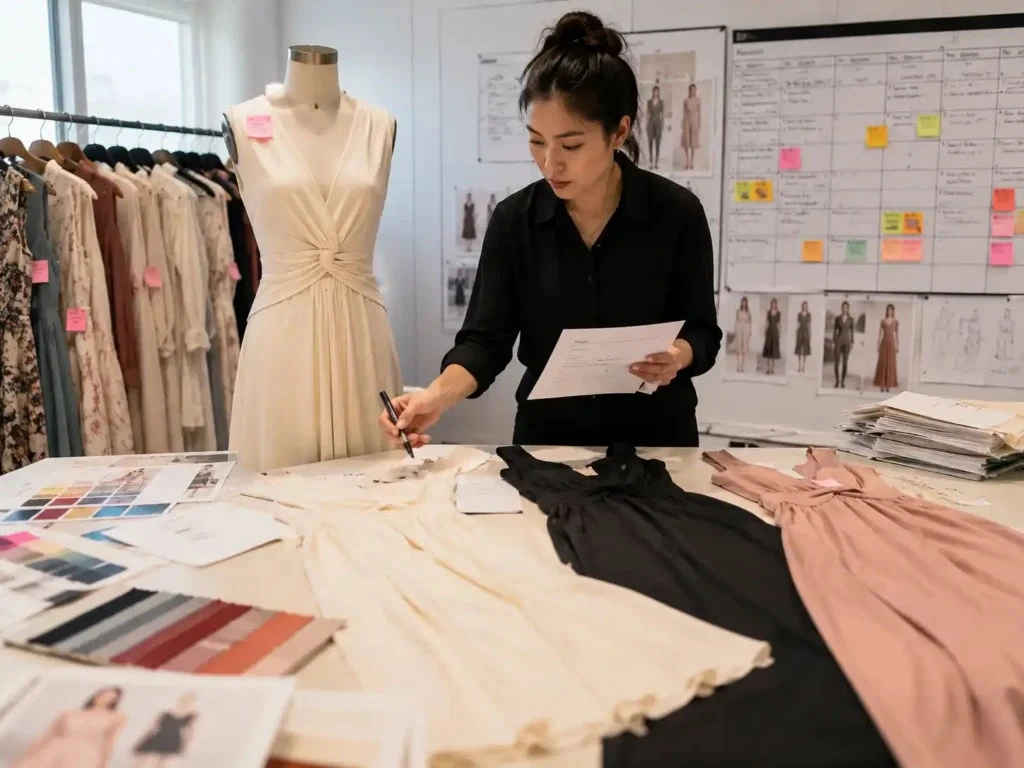
First Sample
The first sample is where you see how the design behaves as a real garment.
You may notice that the waist sits differently from the drawing, the neckline needs adjustment, the skirt does not fall as expected, or the fabric behaves differently from what you had in mind.
Sampling is where these issues are identified before they reach bulk production.
How Much Time Do Sample Revisions Add?
Sample revisions are easy to leave out when you are working backward from a launch date.
You may receive the first sample and find that only one measurement needs changing. Another project may require changes to the fit, fabric, construction, lining, and proportions at the same time.
For example, you might ask for:
- 1 cm less at the waist
- a higher neckline
- a shorter skirt
- different lining
- adjusted ruching
Those changes may require another pattern adjustment and another sample.
So when you ask about sample timing, ask how many revision rounds are included as well. One sample can take a few days; several rounds of fitting take longer.
When you review a sample, try to send consolidated comments. Ten separate messages over several days can be harder for a factory to work from than one revision sheet with measurements, marked photos and a clear list of changes.
Why Fabric Can Change the Timeline
Fabric decisions can affect the schedule well before sewing starts.
If you are using an available fabric, preparation may be relatively quick. Custom dyeing, printing, special finishing, or sourcing a less common fabric can add another stage before bulk production is ready.
You may also need to confirm:
- Color
- Fabric weight
- Stretch
- Hand feel
- Shrinkage
- Opacity
- Surface finish
- Print quality
The effect is more noticeable with fabrics such as chiffon, satin, mesh and lace, where weight and drape can change the way the finished dress looks and fits.
If the fabric is approved during sampling but the bulk fabric is different in weight, color, or hand feel, you may end up revisiting decisions that were already made.
Confirming the bulk fabric early avoids having to revisit an approved sample later.
When Does the Bulk Production Clock Start?
When a factory quotes 25–30 days, ask exactly where those 25–30 days begin.
In our production planning, the 25–30 days of bulk production starts after the PP sample is approved and the fabric is confirmed.
Before that point, the factory may still be working on:
- Pattern adjustments
- Sample revisions
- Fabric preparation
- Size grading
- Production specifications
- Trims
- Labels
- Packaging information
So if you have a launch date six weeks away, you cannot simply subtract 30 production days and assume the order will be ready.
You need to allow time for the work that happens before the bulk order enters production.
What Happens During Bulk Production?
Once the specifications are approved and the required materials are ready, bulk work can move forward.
Bulk Cutting
The approved pattern is used to prepare the cutting layout for the required sizes and quantities.
Fabric inspection and preparation are important before cutting. Depending on the material, pre-shrinking or other fabric preparation may also be required.
A cutting error can be repeated across the whole order, so the pattern, fabric and cutting layout need to be checked before bulk cutting starts.
Sewing
After cutting, the garment components move into sewing.
The workload changes considerably from one style to another.
A basic slip dress has relatively few construction operations. A beaded evening dress, corset dress, heavily ruched style or structured gown involves much more handling.
The number of operations can include:
- Panel joining
- Lining attachment
- Zipper installation
- Boning
- Gathering
- Pleating
- Embellishment
- Pressing between operations
- Final finishing
Producing 1,000 pieces of one approved style is a different production plan from producing 1,000 pieces across ten styles with different fabrics and construction methods.

Does Dress Style Affect Production Time?
Yes. What matters on the production floor is how the dress is constructed and how many operations are involved.
| Dress Type | Production Considerations |
|---|---|
| Slip Dress | Fabric handling, fit and clean finishing |
| A-Line Dress | Bodice and skirt balance |
| Chiffon Dress | Lightweight fabric handling and lining |
| Corset Dress | Structured pattern, fitting and internal construction |
| Beaded Dress | Embellishment placement and additional labor |
| Sequin Dress | Fabric handling, sewing and finishing |
| Pleated Dress | Pleat consistency and pressing |
| Ruched Dress | Gathering position and symmetry |
A factory’s general “days per order” figure tells you less than the production time for the actual styles in your order.
What Happens After Sewing?
After sewing, the garments move through finishing and inspection. Thread trimming, pressing and final appearance checks are completed before packing. In-line QC can catch production issues while sewing is still underway, while final inspection checks the finished garments against the approved specifications.
Typical checks include measurements, sewing quality, fabric defects, stains, closures, embellishment placement, and overall appearance.
How Packing Can Affect the Delivery Schedule
The garments may be finished, but the order is not ready to ship until the required labels and packaging are in place.
For a retail or private label order, packing may involve more than putting dresses into cartons. You may need:
- Woven labels
- Care labels
- Hangtags
- Barcodes
- Size stickers
- Individual polybags
- Carton markings
- Custom packaging
If these details are not confirmed before the final stage, finished garments may be waiting for packaging materials or instructions.
It is better to treat packaging as part of the production plan rather than something to decide after sewing is complete.
Factory Lead Time Is Not Shipping Time
The factory completion date is not the same as the date the goods arrive at your warehouse.
After production is completed, you still need to account for:
QC → Packing → Shipment → Customs / Clearance → Final Delivery
The shipping method and destination can make a substantial difference.
If you need dresses for a store launch, photoshoot, fashion week, or seasonal collection, plan around the date the garments need to be in your hands, not simply the date the factory expects to finish production.
What Can Delay a Dress Manufacturing Project?
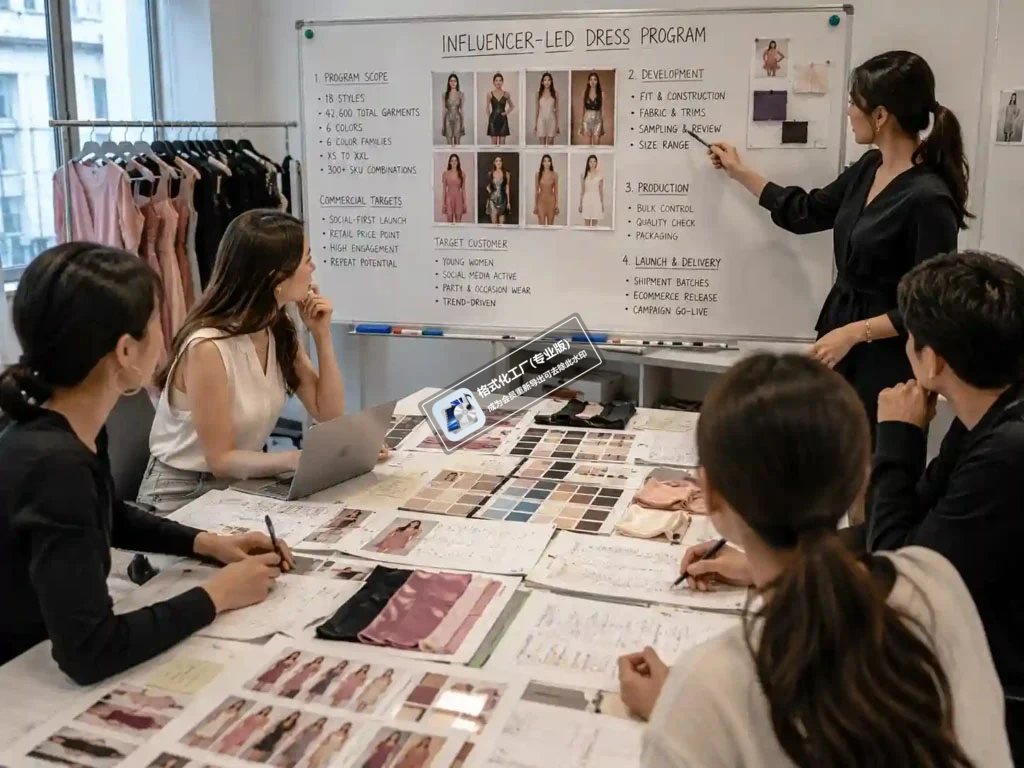
In many orders, delays come from several small items that were not confirmed early enough.
Common examples include:
Incomplete Specifications
If measurements or construction details are unclear, pattern development may need to pause while questions are resolved.
Fabric Not Ready
Bulk cutting cannot proceed without the correct approved fabric.
Too Many Revision Rounds
Every additional sample round can push the approval date further back.
Changes After Approval
Changing measurements, fabric, construction, or trims after the PP sample has been approved can affect work that has already been prepared for bulk production.
Custom Trims
Special hardware, labels, beads, buttons, or packaging may require their own sourcing time.
Large Number of SKUs
Many styles, colors, and size combinations can make production planning more involved than a concentrated order.
Slow Feedback
If the factory is waiting several days for each approval, those days become part of the project timeline whether the sewing line is running or not.
How Should You Plan Your Dress Manufacturing Timeline?
If you have a fixed launch date, work backward from the date the finished garments need to arrive.
For example:
Required Delivery Date
↓
Shipping Time
↓
QC & Packing
↓
Bulk Production
↓
PP Sample Approval
↓
Sample Revision
↓
First Sample
↓
Pattern Development
↓
Tech Pack / Design Review
This is the timeline you should use when working backward from a fixed launch date—not the 30-day bulk production figure alone.
The timeline also needs some room for changes during development.
The first sample may fit well, but it can also come back with several changes. The fabric may already be available while a custom color still needs to be developed. The sewing line may be ready while labels or packaging are still being prepared.
A workable timeline needs some room for these situations.
Questions to Ask Your Dress Manufacturer About Lead Time
Before you place a bulk order, get the production timeline in writing.
Ask:
- When does your quoted production lead time start?
- Does the quoted time include sample development?
- What needs to be approved before bulk cutting?
- When does the fabric need to be ready?
- What happens if the PP sample needs a revision?
- Are QC and packing included in the quoted production time?
- When should labels, hangtags, and packaging be ready?
- How should I calculate shipping time after production?
These questions are more useful than asking only:
“How many days does production take?”
The important question is not only “How many days does production take?” It is what has to be completed before those days begin.
FAQ
Can I reserve production capacity before my PP sample is approved?
Yes. Tell the factory about a fixed launch date at the beginning of the project. This gives the production team time to review capacity and material requirements before PP approval. Preliminary planning can start before approval, but bulk production still follows the approved specifications.
What if my collection contains several dress styles?
Tell the factory the complete style breakdown at the quotation stage rather than discussing each style separately later. Ten styles with different fabrics and construction methods create a different workload from ten colors of the same dress, so the factory needs the actual SKU structure to plan properly.
Is air shipping always necessary for a tight deadline?
Not always. For a tight deadline, compare the full door-to-door transit time for the available shipping options. The best choice depends on your quantity, destination and required arrival date. If your deadline is tight, compare the complete door-to-door schedule rather than looking only at the factory completion date or the transport cost.
Should I approve a fabric before the sample is made?
Ideally, the fabric direction should be clear before development. If the exact bulk fabric is not available, you should tell the factory what is confirmed and what is still being tested. Changing the fabric after fitting can affect drape, measurements, appearance, and sometimes the pattern itself.
What should I do if my launch date cannot move?
Tell the factory the required arrival date at the beginning of the project. Then work backward through sampling, approvals, fabric preparation, bulk production, QC, packing, and shipping. If the schedule is already tight, focus first on anything that can stop the next stage from starting, such as fabric approval, pattern changes or packaging specifications.
Conclusion
When a factory quotes 25–30 days for bulk production, treat that as one part of the order timeline rather than the entire schedule.
Before confirming a launch date, check what has already been completed, what still needs approval, when the bulk fabric will be ready, and how much time shipping will require after production.
For a fixed launch date, work backward from the date the finished dresses need to arrive—not from the factory’s sewing start date alone.
Related Dress Manufacturing Services
If your project involves a specific dress fabric or construction, you can also review our related manufacturing pages:
- Midi Dress Manufacturer
- Satin Dress Manufacturer
- Ruffle Dress Manufacturer
- Mermaid Dress Manufacturer
- Mesh Dress Manufacturer
Get a Quote for an Existing Dress Style
If you are transferring an existing dress style to a new manufacturer, send us the latest approved sample, tech pack, product photos, or measurement chart together with your target quantity.
As a dress manufacturer, we can review the construction, fabric, trims, measurements, and current production status with you before confirming the sampling requirements.

