

A dress design can look complete on paper, but the first sample often reveals problems that were not obvious during the design stage. As a clothing manufacturer, we check more than appearance before accepting a style for production. Fabric behavior, pattern balance, seam construction and fit all affect the final garment. If you are developing a new collection, addressing these details early can prevent repeated sampling, material waste and production delays.
What Information Should You Prepare Before Developing a Custom Dress?
You do not need a complete tech pack to contact a dress manufacturer. Some brands provide detailed technical drawings, while others start with reference photos, sketches or an existing garment they want to reproduce.
What matters is giving the factory enough information to understand the design and identify what still needs to be confirmed.
For an initial review, prepare:
- Design sketches or reference photos
- Physical sample, if available
- Preferred fabric or fabric swatch
- Available measurements or size chart
- Color references
- Construction details, including lining and closures
- Intended size range
- Estimated order quantity
- Target delivery date
You may already know exactly how you want the dress to look but have not decided on every construction detail. That is common with new collections.
For example, you might want a fitted bodice, a defined waist and a fuller skirt. The pattern team still needs to understand how much volume you expect, where the waistline should sit and whether the bodice requires additional support.
Point out the details that must remain unchanged. Other construction decisions can be discussed with the manufacturer.
This first discussion helps both sides identify missing information before pattern work begins.
How Does a Clothing Manufacturer Review Your Dress Design?
When a new dress project reaches the factory, the first review focuses on whether the design can be translated into a workable garment.
A fashion sketch may show the neckline and silhouette clearly, but it rarely explains every sewing detail.
Consider a fitted bodice. The pattern maker needs to work out the dart or seam placement, internal support, lining and closure. A backless dress presents different questions about strap positioning, coverage and how the garment stays in place.
The initial review generally covers:
- Bust, waist and hip proportions
- Neckline and armhole shape
- Shoulder and strap positioning
- Front and back garment length
- Seam placement
- Skirt fullness and gathering
- Zippers, buttons and other closures
- Lining and internal construction
- Decorative details and embellishments
You should distinguish between design requirements and construction preferences.
If the neckline must follow your reference precisely, make that clear. If the factory can adjust the internal construction while keeping the outside appearance unchanged, mention that as well.
This gives the pattern maker room to solve technical problems without changing the features that define your design.
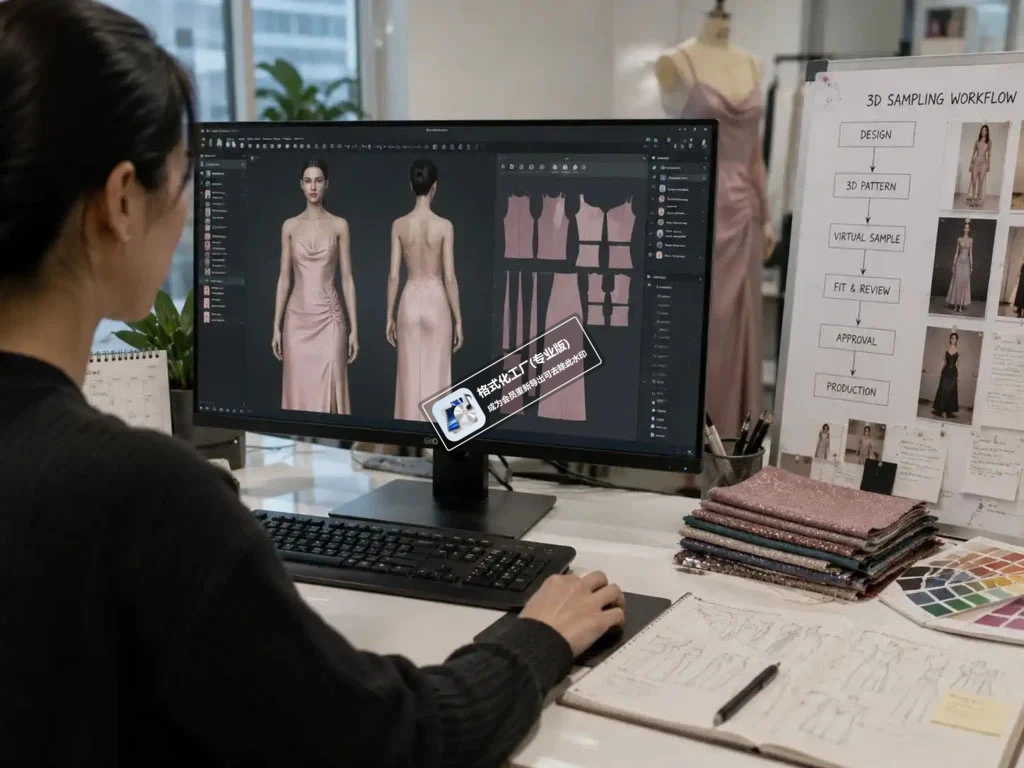
How Does Fabric Selection Affect Custom Dress Development?
Fabric can change the appearance and fit of a dress even when the pattern measurements remain the same.
A lightweight chiffon, for example, falls differently from a heavier satin. A stretch jersey may fit closely around the body, while a woven rayon dress needs enough wearing ease to allow comfortable movement.
When reviewing a fabric, the development team needs to consider:
- Weight and thickness
- Drape and surface texture
- Stretch and recovery
- Transparency
- Shrinkage
- Fabric width
- Sewing behavior
- Pressing requirements
The amount of gathering, seam allowance and internal support may also need adjustment to suit the selected material.
One issue worth addressing before sampling is fabric availability. A material may be easy to obtain for a single sample but difficult to source in the quantity required for your order. Color availability and repeat supply can also affect the production schedule.
If you already have a fabric supplier, share the composition, weight and physical swatch with the factory. If you need the manufacturer to source the material, provide a clear reference rather than relying on a general description such as soft satin or lightweight chiffon.
Try to confirm the intended bulk fabric before finalizing the production pattern. Changing materials after fitting can mean revisiting measurements, construction and the overall silhouette.
What Happens During Dress Pattern Development?
Once the main design and fabric requirements are understood, the pattern team starts developing the first pattern.
The pattern determines how individual garment sections are shaped and joined. For a dress, this may include the bodice, skirt, sleeves, facings, lining and other components.
Different silhouettes require different adjustments.
A fitted dress needs careful balance between the bust, waist and hip. A loose dress requires enough ease without losing its intended shape. For a slip dress, small changes around the neckline or straps can noticeably affect how the garment sits.
If you provide an existing garment, the pattern maker can measure it and use those measurements as a starting point. However, copying the outside appearance does not automatically reproduce the internal construction.
Two dresses may look almost identical but use different seam allowances, lining arrangements or finishing methods.
Tell your manufacturer whether the sample is intended for close reproduction or simply serves as a design reference. If you want certain construction details changed, identify them before the first pattern is completed.
This is particularly useful when you are transferring an existing style from another supplier and want to maintain its original fit.
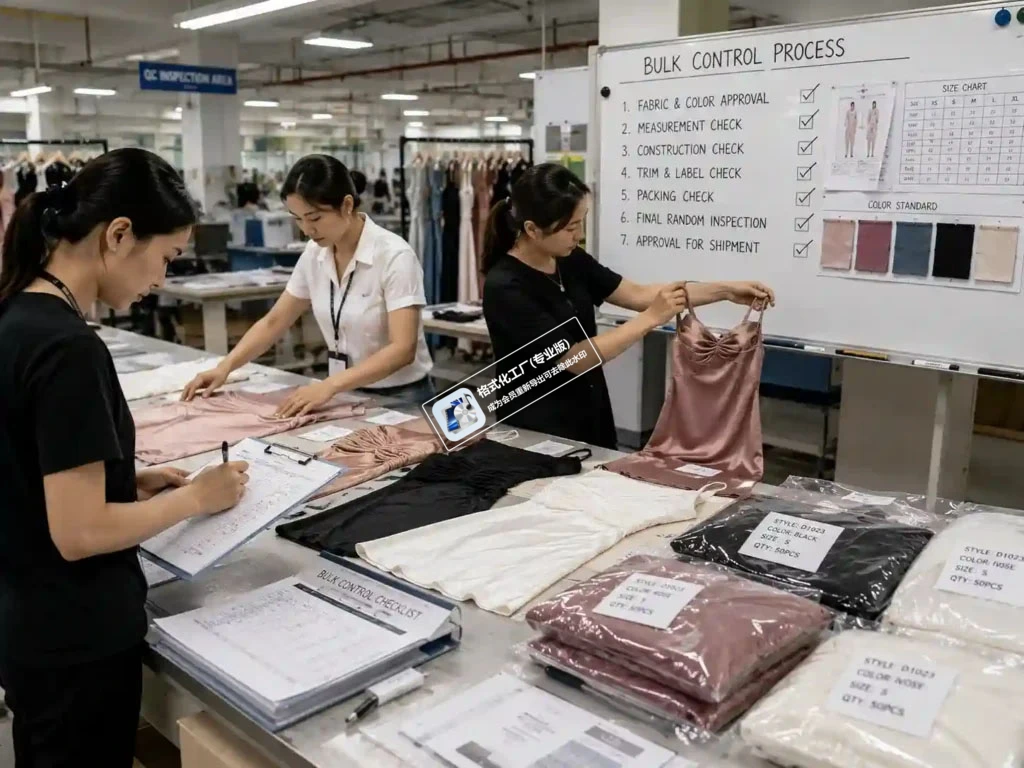
What Should You Check on the First Dress Sample?
The first sample gives you something much more useful than a sketch: a physical garment that can be measured, fitted and inspected.
Start by checking the overall proportions, then look at the individual sections.
For most dress styles, review:
- Bust and waist fit
- Hip allowance
- Neckline and armhole shape
- Shoulder and strap position
- Front and back length
- Skirt volume and hem balance
- Lining and closure
- Seam appearance and finishing
Do not rely only on how the dress looks on a hanger.
Have the sample worn by an appropriate fit model. Ask them to sit, walk, raise their arms and move naturally. A dress can look correct while standing but pull across the back, ride up at the waist or restrict movement around the hips.
For a fitted dress, pay attention to how the seams follow the body. For a flowing style, check whether the skirt hangs evenly and whether the fabric creates the movement you expected.
If your target customers will wear the dress for long periods, comfort and ease of movement deserve the same attention as appearance.
These observations give you a much clearer basis for requesting the next correction.
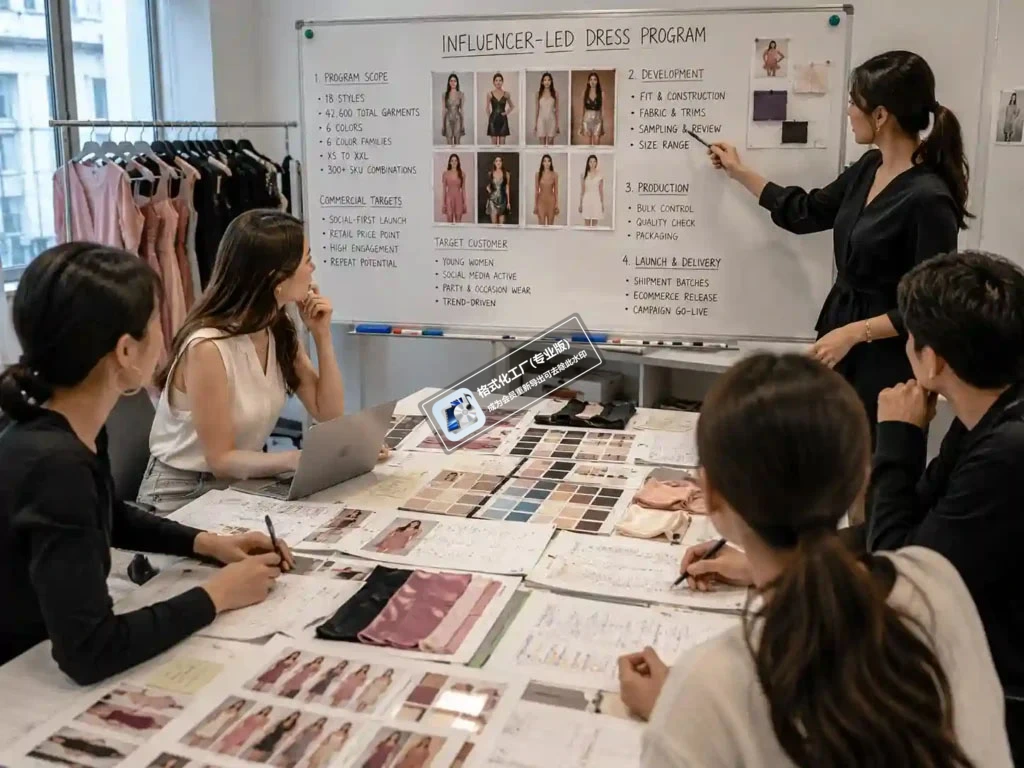
How Should You Communicate Sample Corrections to the Factory?
A sample correction should tell the pattern maker exactly what needs to change.
Comments such as “the waist is too loose” or “the neckline does not look right” identify a problem but leave too much room for interpretation.
Whenever possible, provide a measurement and mark the affected area.
For example:
- Reduce waist circumference by 2 cm
- Raise neckline depth by 1 cm
- Shorten front length by 2 cm
- Move shoulder strap inward
- Reduce hip ease
- Increase skirt fullness below the waist
Photos are particularly helpful when you mark the problem directly. Front, back and side views can show how a correction affects the garment.
If you are developing several styles together, keep feedback under the correct style number. A comment intended for one dress should never be mixed with another simply because the two designs look similar.
From the factory side, measurable instructions are easier to translate into pattern changes. If you are unsure whether the issue comes from the pattern or the fabric, explain what you see rather than prescribing a correction that may not solve the problem.
For example, if the skirt looks too heavy, describe how it falls and where the problem appears. The pattern maker can then review the fabric weight, gathering distribution and skirt construction before deciding what to change.
How Many Sample Rounds Does a Custom Dress Need?
The number of sample rounds depends on the design and how close the first version is to your requirements.
A straightforward dress may need only a small adjustment. A fitted bodice, complicated draping, stretch fabric, beading or several lining layers can require additional development.
The main factors include:
- Pattern complexity
- Fabric characteristics
- Fit expectations
- Construction details
- Number of design changes
- Accuracy of the original references
Avoid changing several unrelated features in every round. If you change the fabric, neckline, waist and skirt length together, it becomes difficult to identify which adjustment improved the result.
For a collection with several styles, consider developing the more complicated designs first. They often reveal issues with fabric, construction or fit that can inform the remaining styles.
You should also discuss the expected sampling scope and any additional sample charges with the manufacturer before development begins. This helps your buying team plan the budget without assuming every revision is included in the initial quotation.
What Is a PP Sample in Dress Manufacturing?
A PP sample, short for pre-production sample, is the approved garment used as a reference before bulk manufacturing begins.
Unlike an early development sample, the PP sample should represent the final production requirements as closely as possible.
Before approval, check:
- Fabric and color
- Final measurements
- Pattern and construction
- Lining and internal finishing
- Trims and closures
- Labels and branding details
- Decorative elements
- Overall garment appearance
If your order includes multiple colors, make sure the fabric and color requirements for each version are clearly documented.
The PP sample also needs to match the latest approved measurement chart and production pattern. If a waist correction was agreed during fitting, that correction must be reflected in the production information.
Do not treat PP approval as a formality. It is the last major opportunity to identify discrepancies before bulk manufacturing moves forward.
What Must Be Confirmed Before Bulk Cutting?
Before fabric reaches the cutting table, the factory needs one clear and current version of the production specifications.
Your final review should include:
- Approved PP sample
- Updated measurement chart
- Final production pattern
- Fabric composition and specifications
- Color and shade requirements
- Lining and trims
- Size range and size ratio
- Labels and branding
- Packaging instructions
- Order quantity
- Delivery schedule
One common source of confusion is outdated information.
For example, your designer may have approved a shorter dress length during the second fitting, but the original measurement chart is still attached to the production email. If the updated information does not reach the pattern and cutting teams, the correction can easily be missed.
Material consumption should also be reviewed if the design has changed. Additional skirt fullness, wider hems or extra lining can affect how much fabric is needed.
Once bulk fabric has been cut, correcting the pattern may mean replacing entire panels rather than making a simple adjustment.
A final check of the approved sample, measurements and production files is therefore worth the extra time.
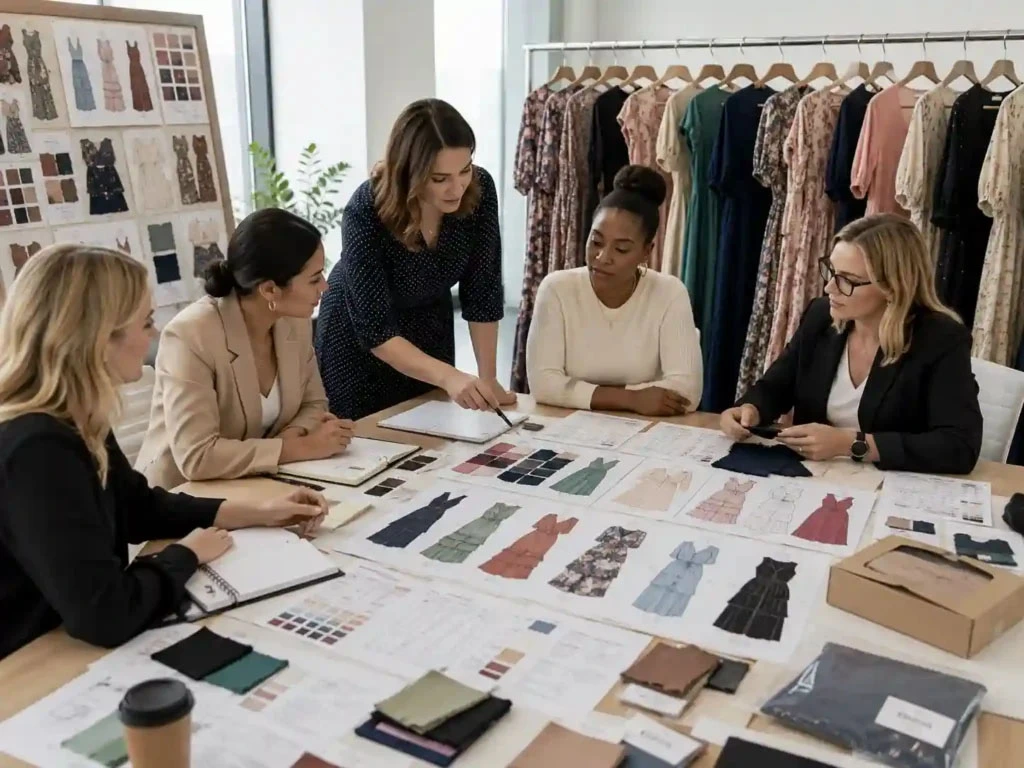
What Happens After PP Approval?
Once the production version is confirmed, the style can move into bulk manufacturing.
A typical dress manufacturing sequence includes:
PP Sample Approval
↓
Final Pattern Confirmation
↓
Bulk Fabric Inspection
↓
Fabric Preparation
↓
Bulk Cutting
↓
Sewing
↓
In-Line QC
↓
Pressing and Finishing
↓
Final Inspection
↓
Packing
Each stage has a different responsibility.
During fabric inspection, the team checks material width, shade variation and visible defects before cutting. For printed fabrics, print direction and placement also need attention.
After cutting, the sewing team follows the approved construction details. Particular care may be needed around fitted bodices, gathered sections, zippers and decorative components.
In-line QC helps identify sewing or measurement problems while garments are still moving through production. It is easier to correct an issue when a small number of pieces are involved than after the entire order has been completed.
The approved PP sample remains a useful physical reference throughout this process. It gives production and QC teams a consistent standard for checking the finished garments.
How Can You Keep Multiple Dress Development Projects Organized?
When you are developing a collection, managing the information for each style can become almost as demanding as the sampling itself.
Keep a separate development record for every style, using the same style number across all documents.
Your records should include:
- Latest design reference
- Current measurement chart
- Fabric and trim specifications
- Sample photos and comments
- Pattern revision information
- Approval status
- Final bulk production specifications
Avoid file names such as “Dress Final”, “Dress Final 2” or “New Final Version”. Use the style number, document type and revision date so your team and the manufacturer can identify the correct file.
This is especially useful when several people are involved in product development. A designer may handle appearance, a buyer may manage costs, and a production coordinator may follow delivery dates. All three need access to the same approved information.
For repeat orders, these records also help the factory reproduce the original style without relying on someone’s memory or searching through old email conversations.
Frequently Asked Questions
Can you develop a custom dress if you only have a reference photo?
Yes. A reference photo can be used to start a development discussion, although it may not show the internal construction or exact measurements. Explain which details you want to reproduce and which ones can be changed. The manufacturer can then identify what additional information is needed before sampling.
How should you plan dress development around a seasonal launch?
Work backward from your intended launch date rather than starting with the expected bulk delivery date. Allow time for fabric sourcing, sample reviews, possible corrections, production and shipping. If your collection has several styles, prioritize the designs that need more technical development.
Who should approve the final sample when several people manage the project?
Your brand should appoint one person to collect feedback and provide the final approval. Designers, buyers and founders may have different priorities, but the factory needs one agreed set of instructions. This avoids conflicting revisions and makes responsibility for the approved version clear.
Can you request ownership of the patterns developed by the manufacturer?
Pattern ownership should be discussed before development starts. Clarify whether the agreement covers physical patterns, digital pattern files, grading information and future access. If you plan to transfer production or work with another supplier later, these details can affect your sourcing decisions.
What should you clarify about sampling charges before placing an order?
Ask whether the quotation covers the first sample only or includes additional revisions. Also clarify whether fabric, special trims, embroidery or other development materials are charged separately. Understanding these costs beforehand helps you compare manufacturer quotations more accurately and avoid unexpected development expenses.
Conclusion
Custom dress development requires more than turning a sketch into a sample. Fabric, pattern, fit and construction decisions all affect whether a design can move into consistent bulk production. Keeping these details clear from the first review makes development easier to manage and reduces avoidable corrections. If you are preparing a new collection, Xiuyu Apparel can support your project as a dress manufacturer with custom dress development and OEM production services.

