

When a dress moves from the first sample to bulk production, the pattern has to move with it.
If the waist was reduced during fitting, the sleeve was changed, or the skirt length was adjusted, those changes need to be reflected in the production pattern. Keeping them only on the sample, in an email, or in fitting comments can create problems later in cutting and bulk production.
Digital pattern making keeps those changes in the production pattern instead of leaving them only on the sample or in fitting comments. This becomes especially important when you are working with a clothing manufacturer on repeated samples, size grading, and bulk production.
What Is Digital Pattern Making in Dress Manufacturing?
Digital pattern making is the development and adjustment of garment patterns using CAD software.
A digital pattern is not simply a drawing of each garment panel. It contains the measurements and construction information needed to cut and assemble the dress correctly.
Depending on the style, this may include the bodice, skirt, sleeves, lining, facings, waistband, pockets, and other components.
You may send a tech pack, sketch, reference garment, measurements, or a combination of these. The pattern maker then develops the first version based on the information available.
The first pattern is normally treated as a starting point. The fit of the actual sample tells you what still needs to change.
Why Does the Pattern Matter When a Dress Moves Into Bulk?
A sample and a production pattern do different jobs.
Your sample lets you judge the appearance, fit, proportions, fabric behavior, and construction of the dress. The pattern is what allows the factory to reproduce those decisions across sizes and production quantities.
Problems are more likely after several rounds of fitting comments.
For example, you may approve a sample after reducing the waist by 1 cm, lowering the neckline, and changing the sleeve opening. If those corrections remain only on the sample or in an email, there is a chance that an earlier pattern version will still be used.
It becomes harder to manage when the style is being graded into several sizes.
A controlled digital pattern gives the factory a clear version to work from before grading and bulk cutting.
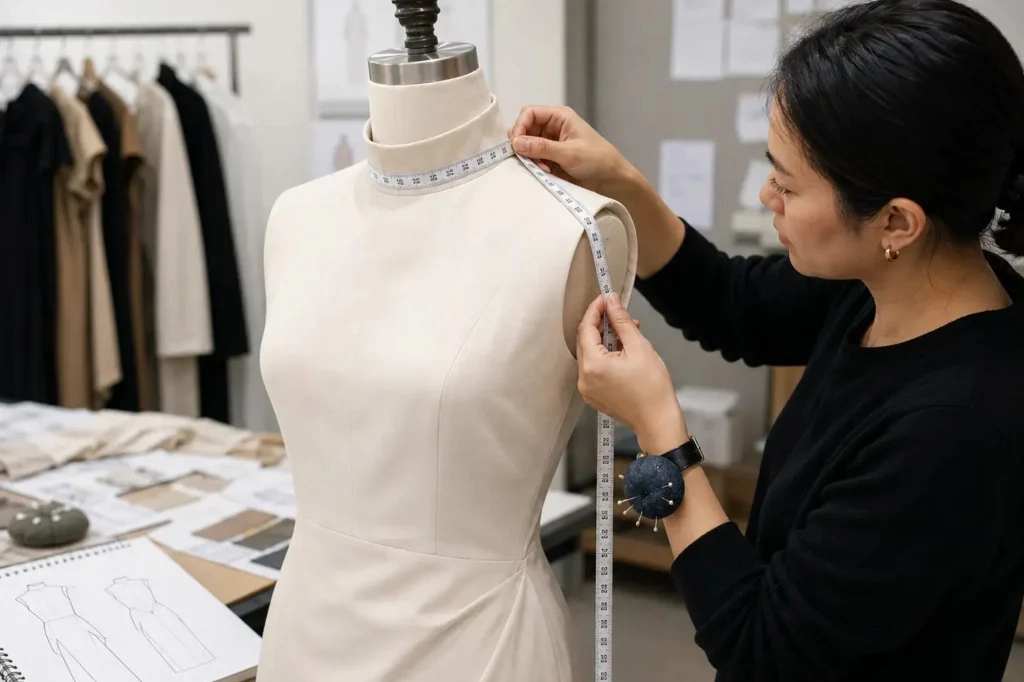
How Does Digital Pattern Making Support the Sample-to-Bulk Process?
Moving from an approved sample to bulk production requires more than simply reproducing the sample. A dress manufacturer needs a controlled pattern, confirmed measurements, grading information, and production specifications before the style goes into bulk.
1. Start With the Information You Provide
Your starting information can vary considerably.
Some brands provide a complete tech pack with measurements, construction drawings, fabric information, and trim details. Others may have a sketch and a physical sample. Newer brands sometimes have reference photos and a basic measurement chart but need the factory to help develop the production details.
2. Develop the First Digital Pattern
The initial pattern is created from the agreed measurements and design details.
At this stage, the pattern maker considers how the individual pieces will actually be sewn together, rather than looking only at the finished drawing.
For example, a fitted dress, a loose maxi dress, and a bias-cut slip dress may have completely different pattern requirements even when they share similar basic measurements.
The first pattern needs to reflect how that particular dress will actually be constructed.
3. Make the First Sample
The first sample gives you something much more useful than a measurement chart alone: an actual garment you can inspect and wear.
You can check the bust, waist, hip, shoulder, armhole, sleeve, neckline, skirt length, and overall balance.
You may also discover issues that were difficult to see from the original design.
A skirt may not fall as expected. A sleeve may pull when the arm moves. A neckline may sit differently once the actual fabric is used.
Issues like these are usually found during sampling. They need to be corrected before the approved pattern is released for bulk.
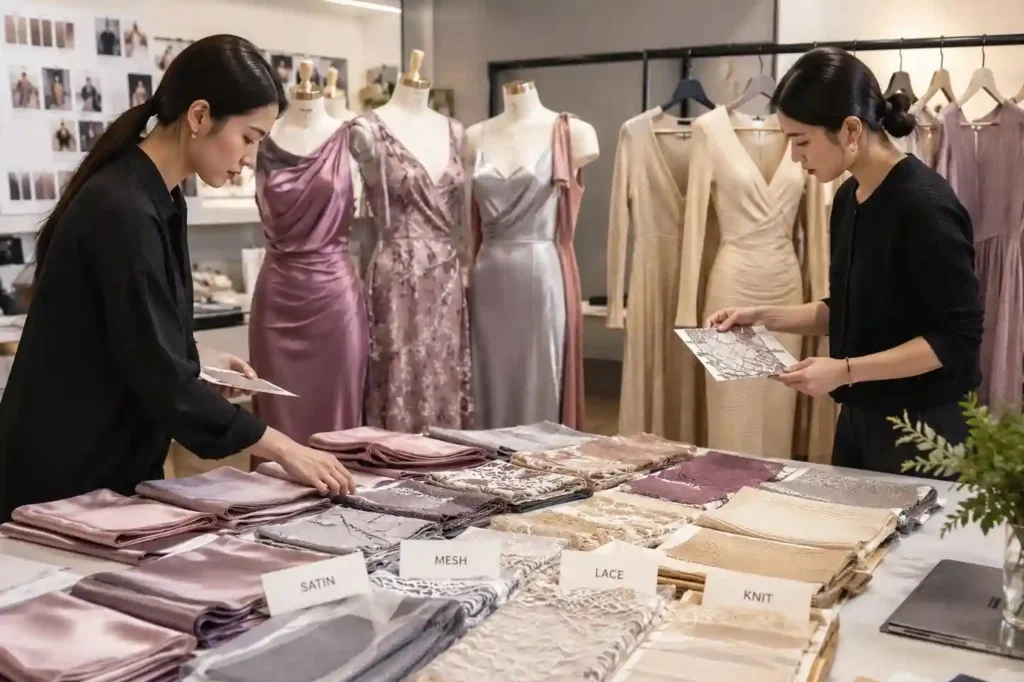
4. Turn Fit Comments Into Pattern Changes
Your fitting comments need to become measurable changes in the pattern.
“Make the body a little slimmer” is useful as a starting comment, but the pattern maker still needs to determine where the adjustment should happen and how it affects the rest of the garment.
A change around the waist can affect the side seam, dart, skirt connection, or overall balance.
Once the correction is agreed, the digital pattern is revised rather than leaving the change only on the physical sample.
5. Compare the Revised Sample With the Approved Version
If another sample is needed, the revised pattern is used for the next round.
The next sample should show whether the correction actually fixed the fit issue. A change can sometimes solve one problem and create another.
For example, reducing the bust width may remove excess fabric but create tension around the armhole. Shortening a skirt may improve the proportion on one size but still need to be checked across the full size range.
6. Grade the Approved Pattern Into Your Size Range
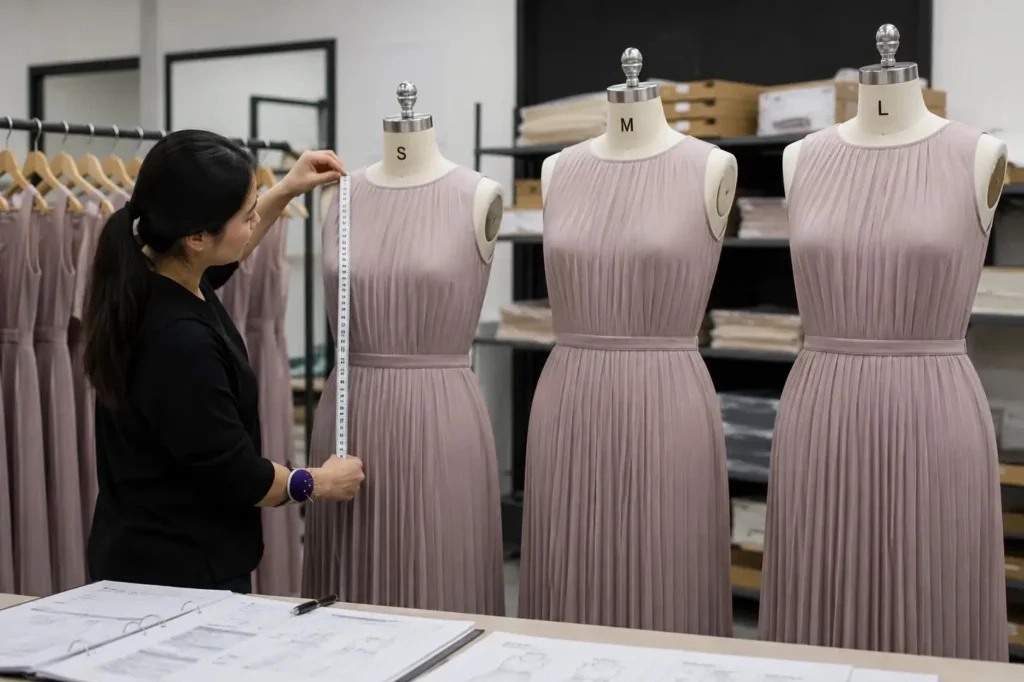
Once the fit is approved, the pattern can be graded into the sizes you plan to produce.
A good base pattern still needs careful grading.
A larger size is not simply a scaled-up version of the sample. Body proportions change between sizes, so different parts of the garment need their own grading rules.
For a dress, you may need to review bust, waist, hip, shoulder, armhole, sleeve, and length changes separately.
If your brand sells several sizes, this stage can have a direct effect on whether the garment keeps the intended shape across the range.
7. Prepare the Production Pattern
After grading, the pattern is prepared for manufacturing.
The production version may include:
- Final seam allowances
- Notches
- Grainlines
- Piece names
- Size information
- Cutting instructions
- Lining pieces
- Construction details
Before the pattern reaches cutting, make sure everyone is working from the same approved version.
If you have revised the pattern three times during sampling, the cutting room should not have to guess which file is correct. The latest approved version should be clearly identified before bulk production starts.
8. Prepare the Pattern for Cutting
The graded pattern is then used to create the cutting marker.
How the pieces are arranged depends on the pattern, fabric width, grain direction, print placement, and production requirements.
Pattern development can also affect fabric consumption at this stage.
A small change to a pattern piece may change how the pieces fit on the marker. With directional fabrics, stripes, plaids, large prints, or fabrics that need matching, the calculation becomes even more important.
Some dress styles need extra attention during marker planning. With a bias-cut dress, for example, the pieces cannot be laid out in the same way as a standard straight-grain style.
The same applies to stripes, plaids, large prints, and fabrics where pattern matching is required.
9. Release the Approved Pattern for Bulk Production
Once the sample, measurements, pattern, grading, fabric, and construction details are confirmed, the approved production pattern can be released for bulk.
The cutting team uses the production files to reproduce the garment pieces across the order quantity.
The pattern does not control every part of bulk quality. Fabric shrinkage, cutting accuracy, sewing tension, pressing, and workmanship can still affect the finished dress.
But without a controlled production pattern, it becomes much harder to identify whether a difference came from the material, sewing process, or the pattern itself.
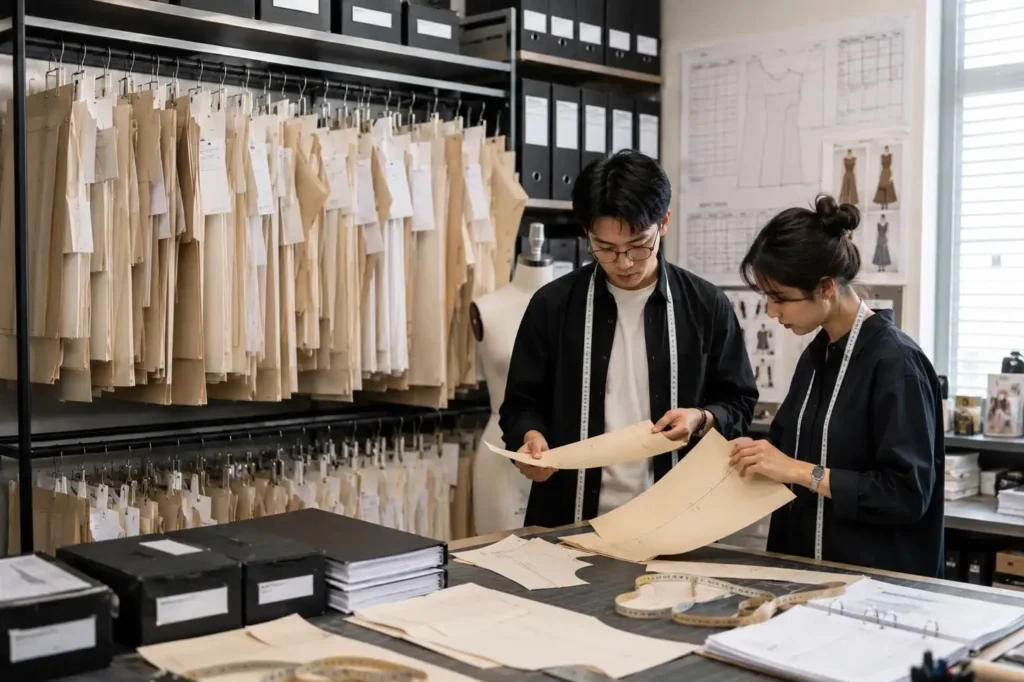
What Problems Can Happen If the Pattern Is Not Updated?
The problem usually appears after several rounds of sample revisions.
A common situation is that the physical sample has been corrected, but the pattern file has not been updated properly.
You may then see:
- Bulk garments following an older measurement
- Different proportions between sizes
- Sleeve or armhole measurements changing unexpectedly
- Skirt lengths varying from the approved sample
- Lining pieces no longer matching the outer garment
- Cutting files being prepared from an outdated pattern
These problems are especially frustrating because the sample may have already been approved.
Making another sample will not fix the problem if the production pattern is still based on an old revision. The approved corrections need to be carried through into the production documents.
What Should You Confirm Before Bulk Dress Production?
Before you give final approval, check the complete set rather than looking at the sample by itself.
Final Measurements
Make sure the points of measurement and tolerances are clear.
Approved Sample
The factory should know exactly which sample represents the final fit and construction.
Pattern Version
Confirm that the pattern being used is the latest approved revision.
Size Range
Check that all required sizes have been graded from the approved base pattern.
Fabric Behavior
Review shrinkage, stretch, drape, fabric width, and grain direction where relevant.
Construction Details
Check details such as seam finishes, lining, zippers, gathers, pleats, pockets, and other components that can affect the final fit.
Cutting Requirements
For printed, striped, plaid, directional, or bias-cut dresses, make sure the cutting requirements are understood before production begins.
PP Sample
If your production process includes a pre-production sample, use it to confirm that the bulk setup matches the approved specifications before the main order is cut.
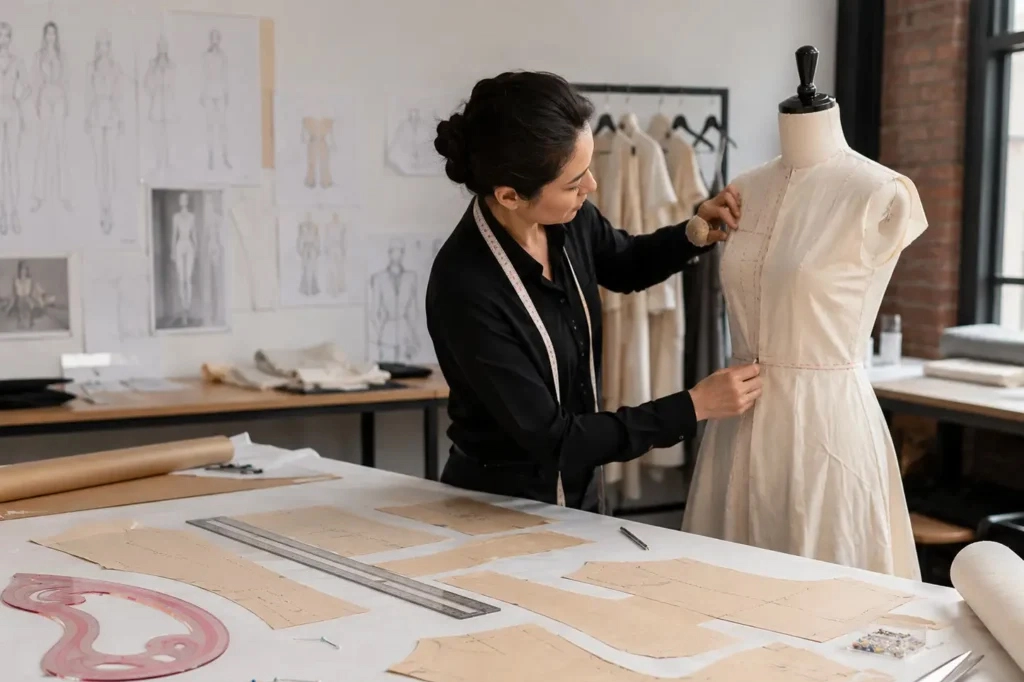
How Does Digital Pattern Making Help B2B Dress Buyers?
For brands buying dresses from an overseas factory, the main benefit is having a clear production reference.
You may not be in the factory when your bulk order is being cut. A properly maintained digital pattern gives you and the dress manufacturer the same reference for measurements, construction, grading, and cutting.
This becomes even more useful when you reorder a successful style months later.
Instead of rebuilding the pattern from the finished garment, the factory can work from the approved production files and review whether anything has changed in fabric, measurements, trims, or construction.
It also makes repeat orders easier to manage as your brand grows.
Digital Pattern Making vs. Paper Pattern Development
Paper patterns can still be useful during certain stages of garment development, particularly when a pattern maker is making direct adjustments during fitting.
The difference becomes more noticeable when a style needs multiple sizes, repeated revisions, or future production.
With a digital pattern, revisions can be saved, compared, graded, and prepared for production without having to recreate the entire pattern manually.
For a B2B order, that makes the pattern easier to manage as part of the wider production file rather than treating it as a one-time development piece.
What Should You Give Your Clothing Manufacturer Before Pattern Development?
Clear information at the beginning usually means fewer questions and fewer corrections later.
Ideally, provide:
- Tech pack
- Reference images or sketches
- Measurement chart
- Fabric information
- Size range
- Construction details
- Trim information
- Label requirements
- Reference sample, if available
- Comments on fit or previous samples
You do not necessarily need to have every detail finalized before contacting a manufacturer.
If some information is missing, identify it clearly. It is better for the factory to ask about an open point than to make an assumption that later has to be corrected.
When Should You Involve a Manufacturer in Pattern Development?
You should involve the manufacturer early when the design contains construction details that may affect production cost, fabric consumption, or fit.
This is particularly relevant for dresses with:
- Complicated draping
- Bias cutting
- Multiple panels
- Corset construction
- Structured bodices
- Heavy embellishment
- Special sleeves
- Large gathers or pleats
- Unusual neckline construction
A design can look simple in a sketch and still require more work once the pattern is developed.
That is why it is useful to discuss construction details with the manufacturer before sampling, especially when they may affect fabric consumption, sewing operations, or the final fit.
FAQ
Can a manufacturer create a dress pattern from a sketch?
Yes. A sketch can be used as the starting point, but the factory will still need measurements, construction information, or reference details to develop an accurate pattern. If important dimensions are missing, you should expect some clarification before sampling rather than assuming the sketch contains enough information by itself.
Can I change the measurements after the pattern has been created?
Yes, and this happens regularly during product development. Make sure the revised measurements are reflected in the current pattern version and, when necessary, the next sample. You should avoid approving changes only through scattered comments or marked-up photos.
Who should approve the final pattern before bulk production?
The brand or buyer normally approves the garment specifications and sample, while the manufacturer prepares the production pattern. For complicated styles, it is useful for both sides to review the final measurements and construction details before the pattern is released for bulk.
Does a digital pattern guarantee that every bulk dress will be identical?
No. The pattern controls the shape and measurements of the cut pieces, but fabric shrinkage, cutting accuracy, sewing, pressing, and workmanship can still create variation. You should therefore treat the pattern as one part of the production control process, not as a guarantee of identical garments.
What happens if the approved sample and production pattern do not match?
You should stop and clarify which version is correct before bulk cutting continues. If the sample was approved after pattern changes but the production file was not updated, the factory needs to reconcile the two versions first. Otherwise, the bulk order may follow specifications that you no longer intend to produce.
Conclusion
Digital pattern making gives you a practical link between the dress you approve and the dress you order in bulk. The useful part is keeping the approved fit and construction information consistent all the way into bulk production. When the approved sample and production pattern stay aligned, you have a much clearer reference for both the factory and your next reorder.
Related Dress Manufacturing Services
If you are developing a new dress and need support with fabric selection, internal construction, sampling, and bulk production, an experienced clothing manufacturer can help you deal with these decisions before they become production problems.
At Xiuyu Apparel, we work with fashion brands, startups, designers, and private label companies from sample development through bulk production.
Get a Clothing Manufacturing Quote Based on Your Design
If you already have a garment design, send us the product photo, tech pack, or reference sample together with your target quantity.
As a dress manufacturer, we can review the fabric, lining, construction, trims, workmanship, and finishing requirements before preparing a quotation based on the actual garment rather than a general price range.

