

When fashion brands start looking for a dress manufacturer, production cost is usually the first thing they compare. However, after years of working with overseas brands, we have learned that the manufacturing country affects much more than the factory quotation. Fabric availability, sample adjustments, communication efficiency, and the ability to solve production issues often decide whether a project moves smoothly from sampling to bulk production.
Our customers include fashion startups, private label brands, retailers, and designers from different markets. Their requirements are usually different — some focus on flexible MOQ and sampling speed, while others care more about production capacity and delivery stability.
For dress brands, the decision is usually not only about finding the lowest production cost. It is about choosing a supply chain that can support the way they develop and sell their collections.
China vs Cambodia Dress Manufacturing: The Main Differences
Both China and Cambodia are important apparel manufacturing countries, but brands usually choose them for different production needs.
Cambodia is often considered by brands looking for cost-efficient production for repeat styles. However, for fashion companies developing new collections every season, production flexibility and supplier response speed can become equally important as labor cost.
China has developed a broader garment supply chain, with access to fabric markets, trim suppliers, pattern makers, and manufacturers covering different production stages.
For fashion brands creating dresses, especially collections with multiple styles or custom details, supply chain flexibility often becomes as important as production cost.
| Comparison Factor | China Dress Manufacturing | Cambodia Dress Manufacturing |
|---|---|---|
| Fabric sourcing | Wide range of fabrics and suppliers | More dependent on imported materials |
| Custom dress development | Strong experience with complex styles | Better for standardized styles |
| Sample modification | Faster adjustment process | Depends on factory capability |
| Production flexibility | Suitable for changing collections | Better for stable programs |
| Labor cost | Higher | Lower |
| Supply chain support | Complete garment ecosystem | Mainly focused on assembly production |
Production Cost: Why Lowest Price Is Not Always Lowest Cost
When fashion brands compare manufacturing countries, the first comparison is usually the factory quotation.
In dress manufacturing, the quoted unit price is only one part of the total production cost. Before bulk production begins, brands may need several rounds of sampling, fabric testing, pattern adjustments, and fitting corrections.
In actual production, the final cost can also change because of:
- Fabric sourcing efficiency
- Number of sample revisions
- Pattern adjustments
- Production delays
- Quality problems
- Additional communication time
We often see this situation with dresses using silk, lace, or special constructions. The first sample may reveal issues with fabric behavior, fitting, or sewing details, which need to be adjusted before bulk production.
Cambodia can be a good option for brands producing simple designs in larger quantities.
China is often considered by brands that need more flexibility during product development, especially when fabrics, patterns, and construction details require frequent adjustments.
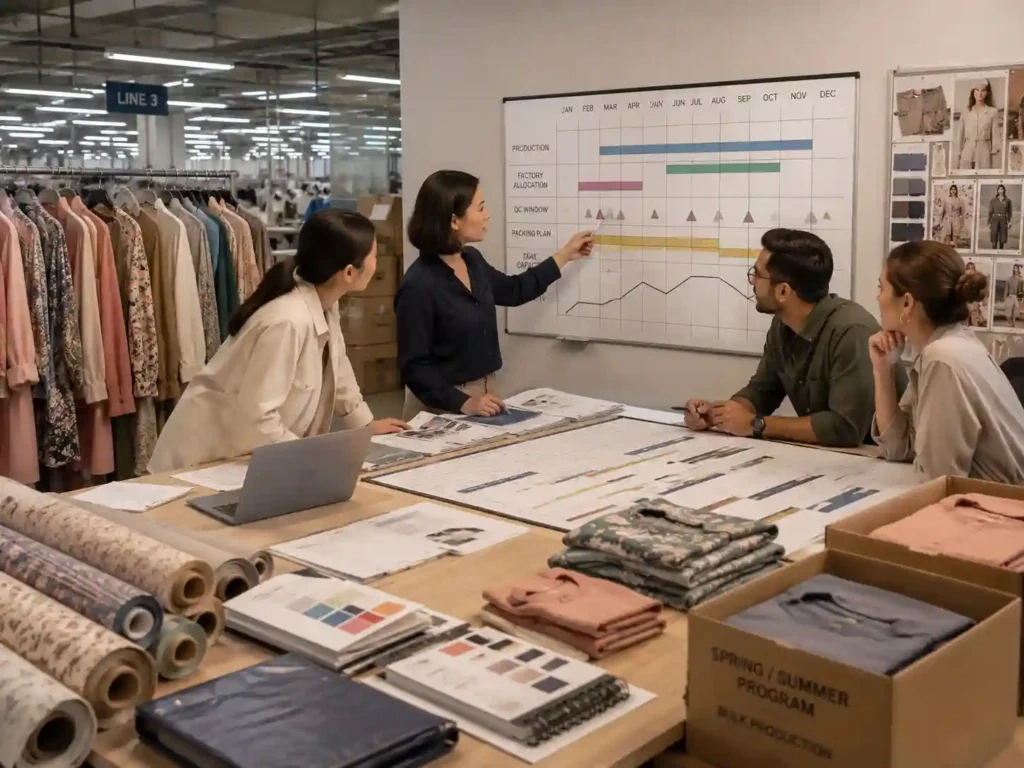
Fabric Supply Chain: A Key Difference for Dress Brands
For dress manufacturing, fabric is often one of the most important decisions.
A dress design may look simple from a sketch, but the final result depends heavily on fabric behavior.
Different fabrics require different production experience:
- Silk dresses require more attention during cutting because the fabric can shift easily. Small mistakes in grain direction or cutting accuracy can affect the final drape of the garment.
- Satin requires careful pressing control because excessive heat or pressure may leave unwanted marks on the fabric surface.
- Lace needs proper matching and positioning during cutting.
- Velvet production requires operators who understand fabric pile direction. Incorrect cutting direction can change the appearance of the finished dress.
From our experience, silk, satin, and velvet are usually the fabrics where manufacturing experience makes the biggest difference.
One advantage of working with Chinese suppliers is that brands can usually access more fabric choices, trims, and finishing options during product development.
This gives designers more flexibility when developing seasonal collections or premium dress lines.
Cambodia has growing garment production capabilities, but many specialized materials still need to be sourced through international suppliers.
Which Country Is Better for Custom Dress Production?
In reality, different brands need different manufacturing support. A startup developing its first collection usually has very different requirements from an established retailer repeating an existing style.
For basic dresses with simple construction and repeat orders, Cambodia can provide competitive production advantages.
However, many fashion brands need more than sewing capacity. They need a manufacturing partner that can help turn a design idea into a production-ready garment.
Based on our experience, China is usually preferred for:
Silk Dresses
Silk requires experienced handling during cutting, sewing, and finishing. Small mistakes in fabric handling can affect the final appearance.
Evening Dresses
Formal dresses often involve more development work, including lining, structure, decoration, and fitting adjustments.
Sequin Dresses
Sequins require careful sewing techniques because the surface material can easily be damaged during production.
Designer Dresses
Brands launching new collections usually need more communication during sampling and development.
From our production experience, the ability to solve problems during sampling is one of the biggest differences between suppliers.
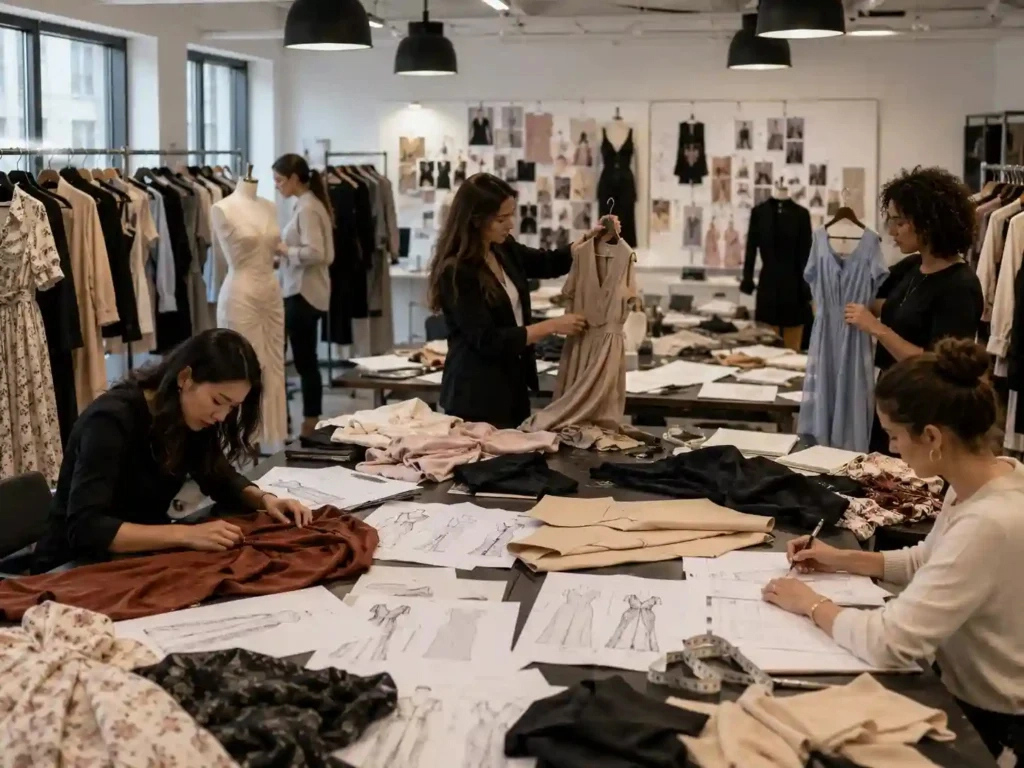
Lead Time and Product Development Flexibility
Fashion brands often work with seasonal deadlines. A delay during sampling can affect the entire launch schedule.
In our factory, depending on the fabric availability and construction complexity, standard dress samples can usually be developed within 3–7 days after receiving complete design information, such as design drawings, tech packs, or reference samples.
This is especially useful when you need:
- Multiple sample rounds
- Fabric alternatives
- Design modifications
- Quick production decisions
Cambodia can work well when the product design is already finalized and production requirements are stable.
For brands that frequently launch new styles, flexibility during development is usually more valuable than saving a small amount on production cost.
Quality Control During Dress Manufacturing
Choosing the right country does not automatically guarantee good quality. In most cases, the factory’s own quality management system has a bigger impact than the manufacturing location itself.
In our production process, quality control starts before sewing begins. Many problems found during final inspection actually come from earlier stages such as fabric checking, pattern approval, or incorrect measurements.
Before Production
- Fabric inspection
- Measurement confirmation
- Pattern checking
- Sample approval
During Production
- Cutting inspection
- Sewing quality checks
- Construction checking
Before Shipment
- Final garment inspection
- Packing confirmation
In our experience, most production issues are easier and cheaper to solve before bulk manufacturing begins.
Clear communication between the brand and manufacturer can prevent many problems.
China vs Cambodia: Which Country Should Your Fashion Brand Choose?
The right choice depends on your product positioning, order volume, and development requirements.
China may be suitable if you:
- Develop custom dress collections
- Need flexible production support
- Work with premium fabrics
- Require frequent sample adjustments
- Produce fashion-focused designs
Cambodia may be suitable if you:
- Produce simple garment styles
- Have large repeat orders
- Focus mainly on labor cost
- Have stable product specifications
For many fashion startups, boutique brands, retailers, and private label companies, choosing a manufacturer that can support product development is often more important than selecting the lowest production price.
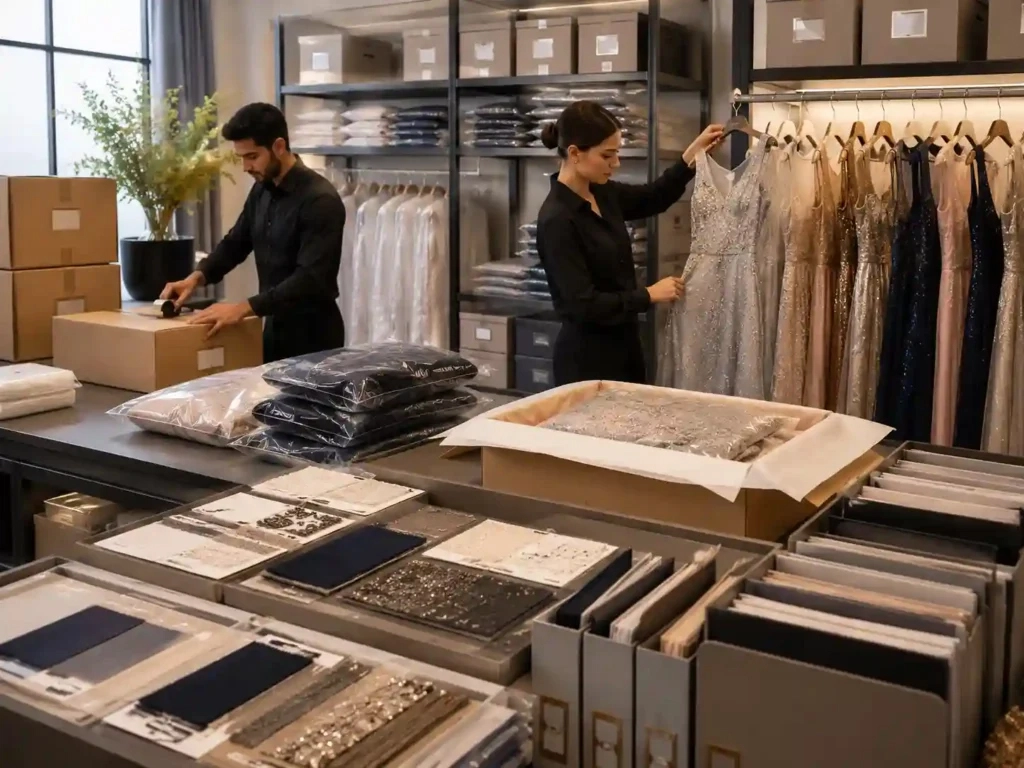
How to Choose a Reliable Dress Manufacturer in China or Cambodia
Before choosing a production partner, you should look beyond the country name.
Consider:
Product Experience
Does the manufacturer understand your dress category?
Development Ability
Can they support sampling and design adjustments?
Communication
Can they clearly explain production issues and solutions?
Quality System
Do they have inspection procedures before shipment?
Production Capacity
Can they support your expected growth?
A suitable manufacturing partner should help you reduce production risks from the first sample to final delivery.
Example: Why a Fashion Brand Chose China for Dress Development
A European fashion startup approached us to develop a small collection of silk and evening dresses. Their main challenge was not sewing production, but finding suitable fabrics and adjusting the fit after the first sample. By coordinating fabric sourcing, pattern modification, and production adjustment within the same supply chain, we helped them move into bulk production with fewer delays.
FAQ
1. Is China better for fashion startups producing dresses?
Many fashion startups need more support during their early collections because they are still testing fabrics, fits, and production methods. A manufacturer with stronger development support can help reduce mistakes before scaling production.
2. Can Cambodia manufacture custom dresses for fashion brands?
Cambodia can produce custom dresses, especially when designs are already finalized and production quantities are stable. However, brands requiring frequent design changes or complex development may need a supplier with stronger product development support.
3. What should buyers check before choosing a dress manufacturer?
Buyers should review the factory’s experience with similar products, sampling process, communication ability, quality control procedures, and production capacity instead of comparing only the quoted price.
4. Does manufacturing country affect dress quality?
Manufacturing location is only one factor. The final quality depends more on the factory’s production management, worker skills, material control, and inspection system.
5. Which country is better for premium dress production?
Premium dresses usually involve more details, such as fabric handling, lining construction, decoration, and fitting accuracy. Manufacturers with experience in these areas can help brands avoid costly production mistakes.
Conclusion
China and Cambodia can both support apparel production, but they are usually chosen for different production needs. Brands should evaluate not only production cost, but also sampling support, material access, communication efficiency, and long-term production needs.
The right choice depends on your dress category, production volume, and development requirements. If your brand needs flexible sampling, diverse fabrics, and support for custom designs, China may provide more advantages. For stable, high-volume basic production, Cambodia can also be a suitable option.
Related Dress Manufacturing Services
If you are developing a new dress and need support with fabric selection, internal construction, sampling, and bulk production, an experienced clothing manufacturer can help you deal with these decisions before they become production problems.
At Xiuyu Apparel, we work with fashion brands, startups, designers, and private label companies from sample development through bulk production.
- Silk Dress Manufacturer
- Evening Dress Manufacturer
- Bodycon Dress Manufacturer
- Private Label Dress Manufacturer
Get a Clothing Manufacturing Quote Based on Your Design
If you already have a garment design, send us the product photo, tech pack, or reference sample together with your target quantity.
As a dress manufacturer, we can review the fabric, lining, construction, trims, workmanship, and finishing requirements before preparing a quotation based on the actual garment rather than a general price range.

