

Many brands think the hardest part of working with a dress manufacturer is finding the right factory. In reality, many production problems happen after the supplier has already been selected. During our years producing dresses for overseas brands, we have seen issues caused by unclear measurements, fabric misunderstandings, delayed approvals, and design changes after production planning has started.
For fashion brands, boutiques, retailers, and private label companies, managing each production stage properly helps reduce unexpected changes, improve quality consistency, and keep seasonal launches on schedule.
Clear Product Information Helps Manufacturers Develop Accurate Samples
Before a dress manufacturer begins sampling, your design requirements need to be clearly communicated.
Many production problems do not come from the sewing process itself. They often start from missing information at the beginning, such as unclear measurements, unsuitable fabric choices, or different expectations between the design team and production team.
Before sample development starts, most manufacturers will need the following information:
- Technical drawings or reference images
- Fabric details and preferred materials
- Size specifications
- Construction requirements
- Trim and accessory information
- Packaging instructions
From a manufacturer’s perspective, a design may look simple on paper but require different production solutions depending on the fabric, silhouette, and construction method.
For example, when developing a satin slip dress, we usually check the fabric weight, bias cutting direction, seam finishing, and lining structure during sampling. These details directly affect how the dress falls after production.
A detailed product discussion before sampling helps both sides understand what needs to be achieved.
Use Sampling to Solve Problems Before Bulk Production
Sampling is where a design moves from an idea into an actual garment. It allows both the brand and manufacturer to check whether the style can be produced as expected before bulk production begins.
During sample development, the main areas normally reviewed include:
- Fit and measurements
- Fabric performance
- Garment structure
- Sewing details
- Comfort and appearance
The first sample often reveals details that are difficult to judge from drawings or photos. In garment production, the first sample is usually treated as a development sample rather than the final production version. We normally review measurements, fitting balance, workmanship, and construction details before confirming the approval sample.
For example, a neckline may need additional support, a lightweight fabric may require lining adjustment, or an embellished area may need reinforcement before moving into production.
In our factory experience, brands that provide clear sample feedback usually complete development faster because the production team can make accurate adjustments instead of guessing.
Before bulk production starts, the approved sample should become the reference standard for materials, workmanship, and finishing details.
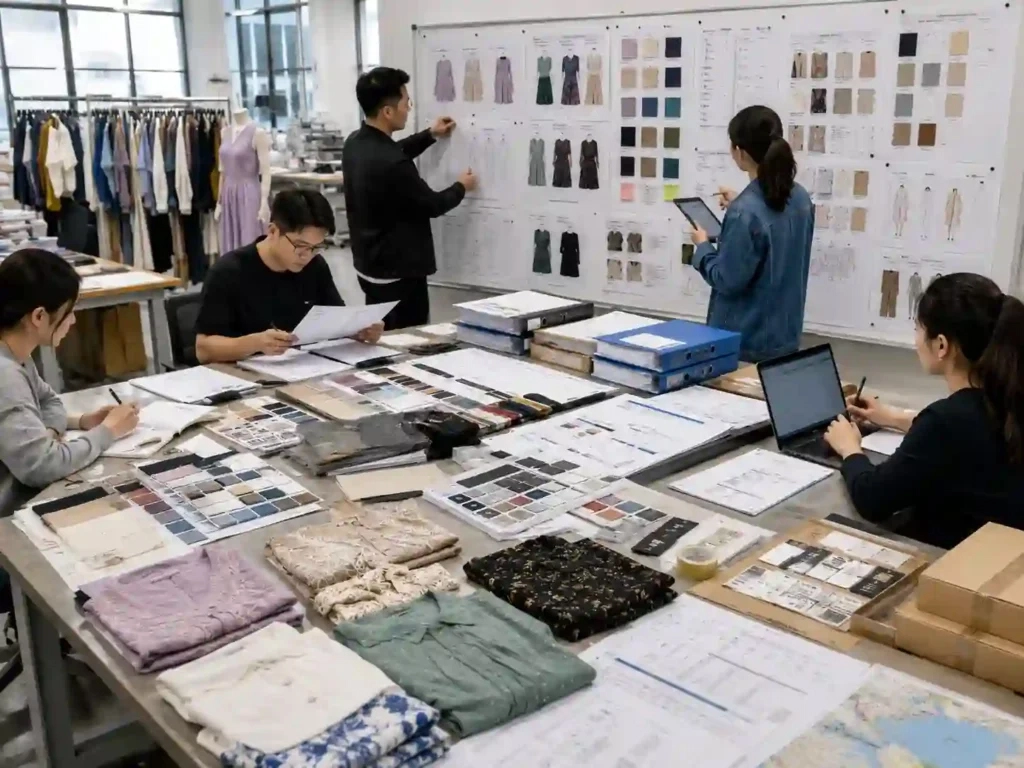
Fabric Approval Should Be Completed Before Bulk Cutting
Fabric is one of the first things we confirm with clients because it affects almost every production step, from cutting and sewing to final garment appearance.
Material details need to be confirmed before bulk manufacturing, including:
- Fabric composition
- Color approval
- Fabric weight
- Shrinkage control
- Hand feel
- Lining requirements
Different fabrics also create different production challenges.
Silk fabrics may require careful cutting and handling because of their softness. This is especially important when developing premium products such as silk dresses, where fabric quality, cutting direction, and finishing details directly affect the final garment appearance. Velvet requires attention to fabric direction. Sequined fabrics need additional checks because the surface decoration can affect sewing and finishing.
A small fabric issue during sampling can become a large production problem when thousands of pieces are involved.
Experienced brands usually confirm materials early because it gives manufacturers enough time to prepare production correctly.
Good Communication Prevents Costly Production Changes
When you work with an overseas dress manufacturer, communication directly affects production efficiency.
A clear production process normally includes checkpoints for:
- Sample approval
- Material confirmation
- Production updates
- Quality feedback
- Shipment preparation
One common problem we see in garment production is unclear feedback. Comments like “the fitting is not right” or “the quality needs improvement” are difficult for production teams to act on.
More useful feedback includes:
- Which measurement is different
- Which area needs adjustment
- What appearance needs to be improved
- Reference photos or examples
Clear communication reduces unnecessary sample revisions and helps both teams solve problems faster.
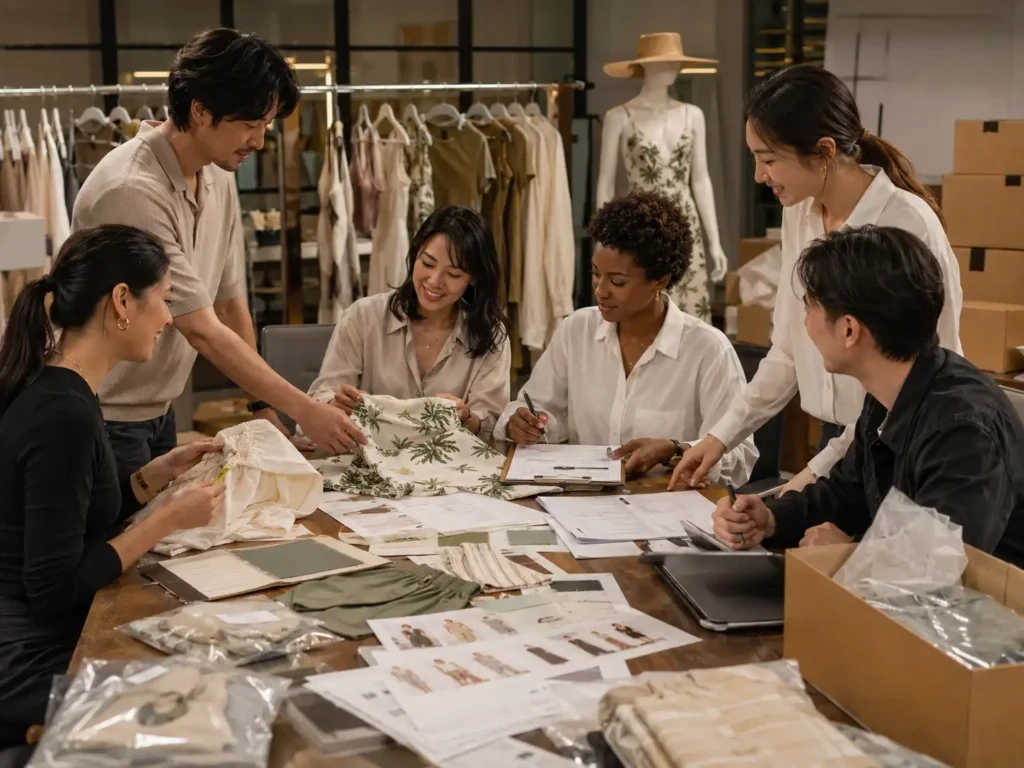
Understand Quality Control During Dress Production
Quality control should not only happen when finished garments are packed.
In our factory, quality checks are carried out at several stages, which is an important part of working with an experienced clothing manufacturer. These include incoming fabric inspection, cutting checks, sewing line inspection, and final garment inspection before shipment.
Fabric Inspection
Before cutting, our QC team normally checks fabric rolls for:
- Shade variation between rolls
- Surface defects
- Fabric width consistency
- Fabric tension and condition
Cutting Check
The cutting stage affects:
- Size accuracy
- Pattern matching
- Fabric usage
Sewing Inspection
During production, workmanship should be monitored, including:
- Stitch quality
- Seam strength
- Construction details
Final Inspection
Before shipment, finished dresses should be checked according to agreed quality standards.
From factory experience, solving small issues during production is usually faster and more cost-effective than discovering problems after completion.
Manage Production Timeline Based on Realistic Planning
Fashion brands often work around seasonal launches, campaigns, and retail schedules. For overseas brands, approval timing is often one of the biggest factors affecting delivery schedules. A delayed sample confirmation can directly affect fabric ordering, cutting arrangements, and production planning. A realistic production timeline helps prevent unnecessary pressure.
Production planning normally needs to consider:
- Sampling time
- Revision rounds
- Fabric preparation
- Bulk production period
- Final inspection
- Shipping arrangement
Many delays happen because approval decisions take longer than expected or product details change after production has already started.
A clear timeline allows both the brand and manufacturer to prepare resources properly.
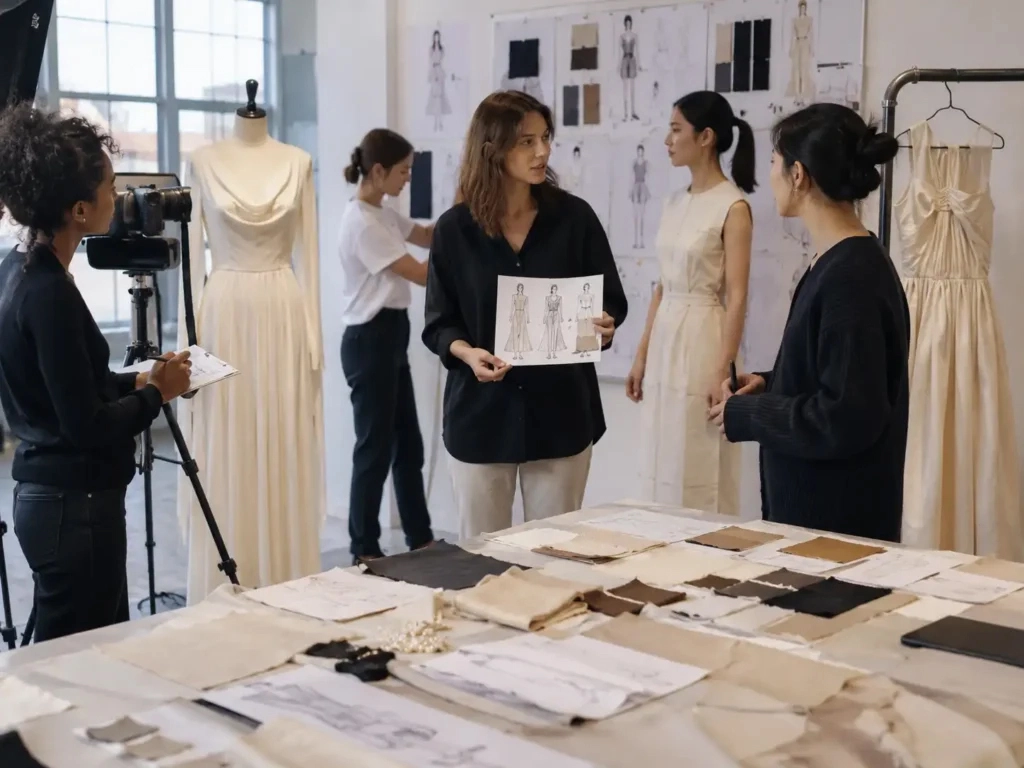
Build a Long-Term Partnership With Your Dress Manufacturer
For growing fashion brands, finding a suitable manufacturer is only the first step. Many brands choose to work with private label clothing manufacturers because long-term cooperation helps improve product consistency and development efficiency. A good manufacturing relationship becomes more valuable when a brand starts developing more collections with the same supplier.
When a manufacturer understands your:
- Quality expectations
- Preferred fabrics
- Product style
- Production standards
future collections usually become easier to develop.
In our experience, brands that grow with a manufacturer usually focus on more than the initial quotation. Over time, manufacturers who understand a brand’s fitting standards, preferred fabrics, and quality expectations can support new collections more efficiently.
FAQ About Managing Dress Manufacturers
1. What should a fashion brand prepare before contacting a dress manufacturer?
Before contacting a dress manufacturer, it is helpful to prepare your design references, measurements, fabric ideas, target price range, and expected quality level. This allows the manufacturer to evaluate whether the product can be developed and produced according to your requirements.
2. How many sample revisions are usually needed before bulk production?
The number of revisions depends on design complexity, fabric choice, and fitting requirements. Simple styles may need fewer adjustments, while structured dresses or special fabrics often require more testing before reaching the final approved version.
3. How can brands compare different dress manufacturers effectively?
When comparing manufacturers, price is only one factor to consider. Some factories may offer lower prices, but this does not always mean lower total cost if quality problems, delays, or repeated sample revisions happen later. A factory that understands your product category can often prevent problems before production starts.
4. What causes the biggest delays when producing dresses?
Delays often happen because of late approvals, unclear design changes, material availability issues, or unexpected adjustments during production. Early planning and quick decision-making can significantly reduce timeline problems.
5. Should small fashion brands choose low MOQ manufacturers?
Low MOQ can help startups test new designs with less inventory risk. However, brands also need to evaluate whether the manufacturer can maintain consistent quality, support future growth, and handle larger production volumes when your brand expands.
Conclusion
Managing a dress manufacturer successfully requires attention to every stage, from initial product communication and sampling to quality control and bulk production. When you understand how manufacturers work and create clear cooperation processes, you can reduce production risks, improve product consistency, and build a more stable supply chain for your fashion brand.
With more than 18 years of garment manufacturing experience, Xiuyu Apparel has supported fashion brands, designers, and private label companies from sample development to bulk production.
Explore More Dress Manufacturing Services
If you are developing a new dress and need support with fabric selection, internal construction, sampling, and bulk production, an experienced clothing manufacturer can help you deal with these decisions before they become production problems.
At Xiuyu Apparel, we work with fashion brands, startups, designers, and private label companies from sample development through bulk production.
Get a Clothing Manufacturing Quote Based on Your Design
If you already have a garment design, send us the product photo, tech pack, or reference sample together with your target quantity.
As a dress manufacturer, we can review the fabric, lining, construction, trims, workmanship, and finishing requirements before preparing a quotation based on the actual garment rather than a general price range.

