

Finding a reliable dress manufacturer is usually not the hardest part of creating a fashion collection. The harder part is finding a factory that can turn your design ideas into finished garments without unexpected problems during sampling and bulk production.
With more than 18 years of clothing manufacturing experience, we have worked with fashion startups, independent designers, retailers, and private label brands on different types of dress production.
Why Finding the Right Dress Manufacturer Is Important
When you are building a fashion brand, choosing a manufacturer is not only about finding a place that can make dresses.
The manufacturer you choose will influence almost every stage of your dress development, from fabric selection and pattern adjustment to sample approval and final production quality.
We often see brands choose a supplier because the first quotation looks attractive. However, after sampling starts, additional costs may appear because the fabric needs to be changed, measurements require several corrections, or production details were not confirmed clearly at the beginning.
Where Do Fashion Brands Find Dress Manufacturers?
Search Online With Specific Manufacturing Keywords
Today, most fashion brands start their supplier search through Google, Alibaba, trade platforms, or manufacturer websites.
Instead of only searching:
- dress factory
You can search more specific terms:
- dress manufacturer
- private label dress manufacturer
- custom dress manufacturer
- OEM clothing manufacturer
For example, a company ranking for “dress manufacturer” may have general production experience, while a “private label dress manufacturer” usually indicates experience supporting brands with labeling, packaging, and product development.
A manufacturer experienced in custom dresses will usually understand pattern development, fabric behavior, fitting adjustments, and production challenges better than a general trading supplier.
Check If the Manufacturer Matches Your Product Type
A common mistake is choosing a factory before checking whether they have experience with your type of dress.
Different dress styles create different production challenges.
For example:
- Silk and satin dresses usually require more attention during cutting because fabric slipping and shrinkage can affect final measurements.
- Bodycon dresses depend heavily on fitting accuracy. Incorrect grading or unsuitable stretch fabrics can change the silhouette after production.
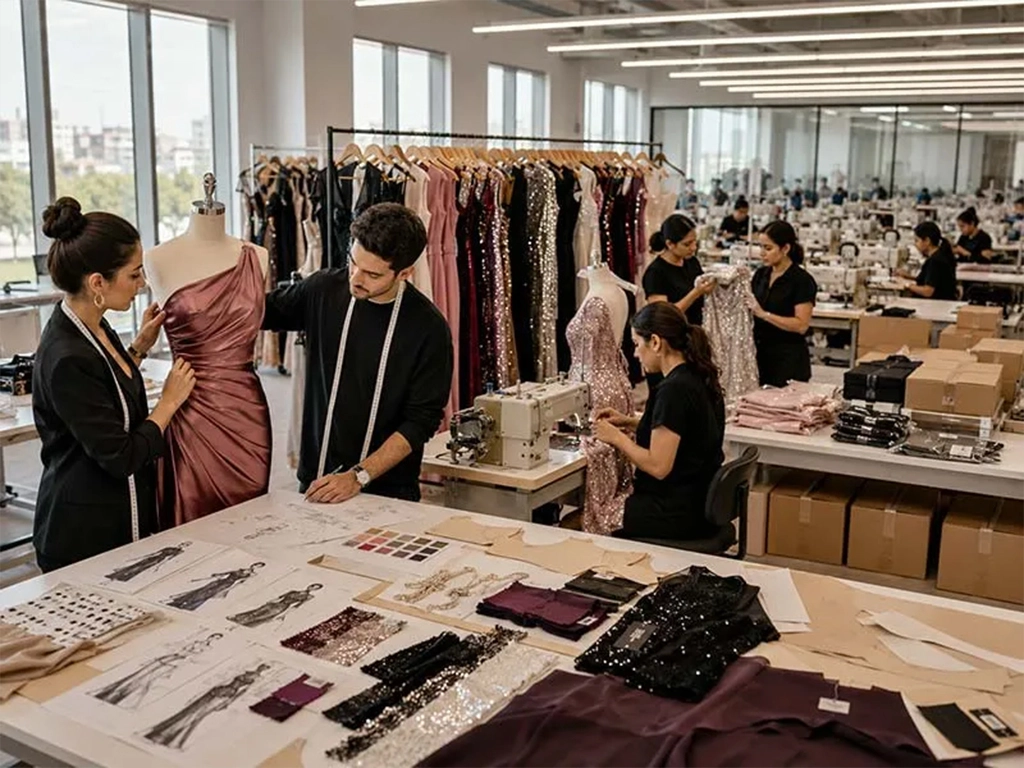
- Evening dresses may involve special fabrics, lining, embroidery, or embellishment. Especially when using sequins, beads, or embroidery, production time and workmanship control become important factors.
- Structured dresses require more attention to pattern and construction.
Before working with a manufacturer, you should review the manufacturer’s previous production experience and confirm whether they understand the technical requirements of your designs.
Evaluate the Sampling Process Before Bulk Production
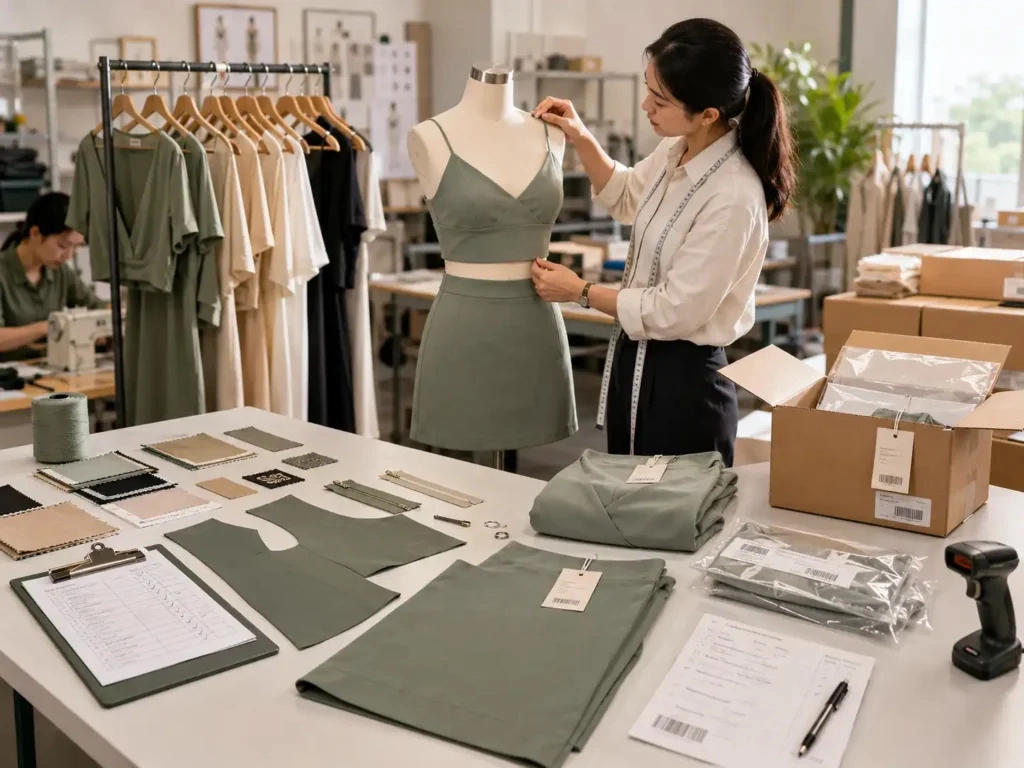
For most fashion brands, the sample stage is where you discover whether a manufacturer is the right partner.
A professional sampling process should help you check:
- garment measurements
- pattern adjustment
- fabric performance
- grading accuracy
- finishing details
In our experience, two or three sample adjustments are normal for new designs, especially when the garment involves complex fitting, special fabrics, or handmade details.
The important point is how the manufacturer handles these changes.
Can they understand your feedback?
Can they suggest practical solutions?
Can they improve the sample efficiently?
These details often show the difference between a supplier and a long-term manufacturing partner.
Consider MOQ Based on Your Brand Stage
MOQ is one of the biggest concerns for emerging fashion brands.
A startup brand may want to test a new collection with smaller quantities, while an established retailer may need stable large-scale production.
Before choosing a manufacturer, you should understand:
- MOQ per style
- MOQ per color
- fabric minimum requirements
- development costs
The right MOQ is not always the lowest MOQ.
A very low MOQ may reduce your initial risk, but it may also limit fabric choices, production efficiency, and customization options.
For example, some fabrics have minimum purchasing requirements, which means extremely small orders may limit fabric choices or increase unit costs.
Check Production Capability and Quality Control
Before placing a bulk order, you should understand how the factory manages production.
Important areas include:
Fabric Inspection
Fabric problems discovered after cutting can create delays and unnecessary waste.
Cutting Accuracy
Incorrect cutting can affect fitting and garment appearance.
Sewing Control
Small workmanship issues can become bigger quality problems when production volume increases.
Final Inspection
A proper inspection process helps identify problems before products reach customers.
Before cooperation, ask the factory to explain what happens after your order is confirmed — how fabrics are checked, how patterns are approved, how inline inspections are performed, and how final garments are packed before shipment.
In our production process, quality control starts before sewing. Fabric inspection is completed before cutting, and inline checks are performed during production instead of waiting until the final inspection stage.
What Information Should You Prepare Before Contacting a Dress Manufacturer?
The quotation process becomes much faster when the factory receives enough production information at the beginning.
Before contacting a factory, you should prepare:
- design sketches or reference images
- tech pack (if available)
- fabric requirements
- estimated order quantity
- target delivery date
- packaging requirements
The more production details you provide, the easier it is for the manufacturer to evaluate your project.
For designers and new brands, even basic information about the expected style, quantity, and materials can help the factory understand your direction.
How Fashion Brands Work With Dress Manufacturers
Although every brand has a different development process, most dress production follows similar stages.
Design Review
The manufacturer checks whether the design can be produced according to the expected construction and materials.
Fabric Sourcing
Fabric selection affects the appearance, cost, and production difficulty of the dress.
Sample Development
Samples are created to confirm measurements, fitting, workmanship, and design details.
Approval Before Production
After sample confirmation, production specifications are finalized.
Bulk Manufacturing
The factory starts production based on approved samples and confirmed requirements.
Quality Checking and Shipment
Finished garments are inspected before packing and delivery.
In many cases, problems found during sampling are actually design-development issues rather than production issues.
The exact process may vary depending on the design complexity, but experienced manufacturers usually help brands solve production issues before bulk manufacturing begins.
Questions to Ask a Dress Manufacturer Before Cooperation
1. Can you develop dresses from sketches or reference images?
We often receive inquiries from startup brands that only have sketches, Pinterest references, or product photos. In this situation, the manufacturer needs to help evaluate construction, fabric possibilities, and development steps before sampling.
2. How do you handle sample revisions?
Sample adjustments are common during product development. Ask how the manufacturer manages feedback, fitting changes, and production improvements before moving into bulk orders.
3. What information do you need before providing a quotation?
A factory normally cannot provide an accurate quotation from only a product photo. We usually need to check the fabric, construction details, measurements, quantity, and required finishing before confirming the production cost.
4. How do you control quality during production?
Quality should not only be checked at the end. Ask about fabric inspection, production checks, workmanship control, and final inspection procedures.
5. Can you support small fashion brands?
Many startups begin with smaller quantities when testing their first collection. A manufacturer with flexible MOQ support can help brands reduce inventory risk while still maintaining proper production quality.
Conclusion
A reliable dress manufacturer is not simply a company that can produce garments. The right partner should understand your designs, communicate clearly during development, and have the production experience to support your brand as it grows.
Before placing an order, take time to review the manufacturer’s product experience, sampling process, MOQ policy, and quality control system. A careful supplier selection process can help you avoid unnecessary costs and build a more stable production partnership.
If you are developing a new dress collection and looking for a manufacturing partner, you can share your designs, reference images, or tech pack with our team. We can help evaluate production requirements and provide suitable development suggestions.
Explore More Dress Manufacturing Services
If you are developing a new dress and need support with fabric selection, internal construction, sampling, and bulk production, an experienced clothing manufacturer can help you deal with these decisions before they become production problems.
At Xiuyu Apparel, we work with fashion brands, startups, designers, and private label companies from sample development through bulk production.
- Sequin Dress Manufacturer
- Cocktail Dress Manufacturer
- Evening Dress Manufacturer
- Maxi Dress Manufacturer
Get a Clothing Manufacturing Quote Based on Your Design
If you already have a garment design, send us the product photo, tech pack, or reference sample together with your target quantity.
As a dress manufacturer, we can review the fabric, lining, construction, trims, workmanship, and finishing requirements before preparing a quotation based on the actual garment rather than a general price range.

