

When a new dress style goes into development, checking the fabric does not stop with the first swatch. The color may be approved through a lab dip, but the fabric used for bulk production still needs to be checked before cutting starts.
Fabric Swatch vs Lab Dip vs Bulk Fabric Approval
A swatch, lab dip and bulk fabric approval do different jobs during dress production.
| Approval Stage | What You Are Checking | When You Use It |
|---|---|---|
| Fabric Swatch | Fabric quality, weight, hand feel, drape and basic color | Initial fabric selection |
| Lab Dip | Dyed color and shade | Custom color development |
| Bulk Fabric Approval | Production fabric, shade, width, weight and consistency | Before bulk cutting |
Keep a physical reference for each approved stage. If there is a question during production, the factory and buyer can check the bulk fabric against the same approved piece.
What Is a Fabric Swatch?
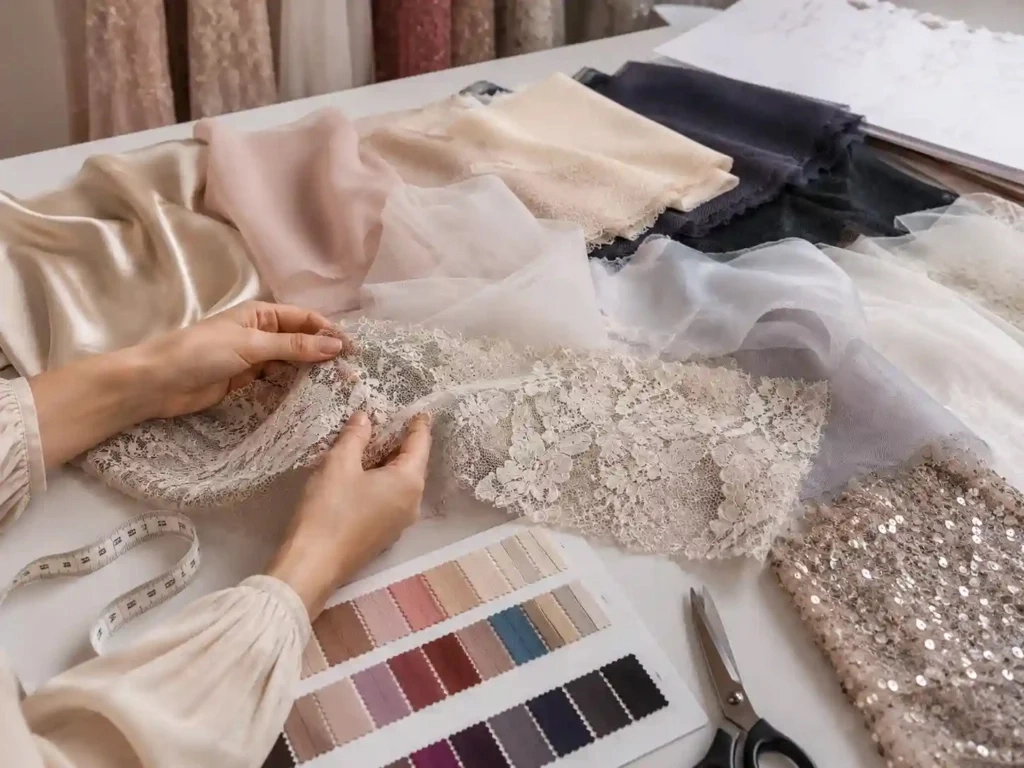
A fabric swatch is usually the first piece of material you receive when developing a new dress.
The swatch is mainly used to decide whether the material works for the dress. Depending on the fabric, the factory will normally look at composition, GSM, hand feel, drape, surface appearance, stretch and recovery, color and construction.
The factory also needs to consider whether the fabric will work with the pattern, cutting layout and sewing process.
A satin swatch can look right and still create a cutting problem later. Once the actual width is checked against the pattern, the marker may need to be adjusted or fabric consumption may increase. The same issue can happen with soft fabrics that need different lining or construction support.
So the swatch approval is mainly about the fabric itself. It does not mean the bulk production lot has been approved.
What Is a Lab Dip?
A lab dip is a small dyed fabric sample made to match a requested color standard.
You normally need one when the fabric has been selected but the color still needs to be developed or adjusted.
A lab dip should be checked against the actual color standard, not approved by color name alone. Color names are not precise enough on their own. Ivory, champagne, dusty pink and sage green can look quite different depending on the actual color standard and fabric surface.
When comparing a lab dip, look at the overall shade, depth, undertone and surface appearance, and compare it directly with the approved color standard.
Lighting can also change what you see. If you are comparing several lab dips, look at them under the same lighting rather than approving one sample in daylight and another under warm indoor light.
Once a lab dip is approved, keep the physical piece with the production records. It becomes the color reference for later comparison.
What Is Bulk Fabric Approval?
Bulk fabric approval is the check carried out on the production fabric before it is released for cutting. Unlike a lab dip, the bulk fabric has gone through full-scale dyeing and finishing, so the production lot needs to be checked for the characteristics that matter to the dress, not just color.
The checks will vary by fabric, but may include:
- Color and shade
- Fabric width
- Weight
- Hand feel
- Surface finish
- Construction
- Shrinkage
- Stretch and recovery
- Dye lot consistency
- Visible defects
This check gives the factory a chance to hold the fabric before it reaches cutting and sewing.
Once the fabric has been cut into garment panels, changing the material can mean re-cutting the order and delaying sewing.
Fabric Swatch vs Lab Dip vs Bulk Fabric Approval: What Is the Difference?
The three approvals cover different parts of the production process.
A fabric swatch confirms that the material is suitable for the dress — including its weight, hand feel, drape, construction and basic appearance.
A lab dip confirms that the dyed color matches the approved color standard.
A bulk fabric approval checks whether the production fabric matches the approved requirements for the actual order, including shade, width, weight and fabric behavior.
These approvals are related, but they are not interchangeable.
When Should You Approve Each Stage?
In production, the checks normally happen in this order:
1. Select the Fabric Swatch
Compare the fabric with the requirements of the dress rather than choosing it by color alone. Consider the silhouette, lining, drape, stretch, fabric width and target cost.
2. Develop the Lab Dip
If you need a custom color, the dye house prepares a lab dip.
You review it against your chosen color reference and keep the approved version for production records.
3. Receive and Check the Bulk Fabric
Once the production fabric is available, compare it with the approved references.
The production team checks the bulk rolls for shade, usable width, weight, shrinkage and other points that may affect cutting or sewing.
4. Release the Fabric for Cutting
Only after the fabric has been checked should you release it for bulk cutting.
The cutting team then works from the approved production information rather than an earlier fabric sample that may no longer represent the actual material.
Why Is a Lab Dip Not Enough for Bulk Production?
One point is worth making clear: approving the lab dip does not approve the bulk fabric.
A lab dip only shows the approved color on a small piece of fabric. It does not tell you whether the bulk rolls will match in width, weight, hand feel or finishing.
During bulk dyeing and finishing, the fabric can show differences in:
- Shade
- Surface appearance
- Hand feel
- Width
- Weight
- Shrinkage
- Finishing
You may not notice a small difference on a lab dip.
Once the fabric covers an entire dress, however, the same difference can become much easier to see.
A lab dip approval does not replace the bulk fabric check.
What Should You Check on Bulk Fabric Before Cutting?
The inspection points depend on the fabric and the dress. For example, width matters more when the pattern has large panels or limited layout options, while stretch and recovery are critical for fitted styles.
Color and Shade
Compare the production fabric with the approved reference under consistent lighting.
If the order contains multiple dye lots, identify them before cutting.
Fabric Width
Check the usable width rather than looking only at the nominal width supplied by the mill.
Width becomes especially important with wide skirt panels, bias-cut sections and patterns with limited layout options.
A small change in usable width can affect consumption and cutting efficiency.
Weight and Hand Feel
Compare the bulk fabric with the approved sample.
If the fabric feels noticeably heavier, stiffer, softer or thinner, the difference should be checked before production continues.
Shrinkage
If the fabric requires pre-shrinking or washing, test its dimensional change before bulk cutting.
This is particularly relevant when the finished garment has close-fitting measurements or when the fabric is expected to change after finishing.
Surface and Construction
Look for changes in sheen, texture, density, stretch, recovery or surface finish.
The correct fiber composition does not automatically mean the fabric will behave in the same way as the approved sample.
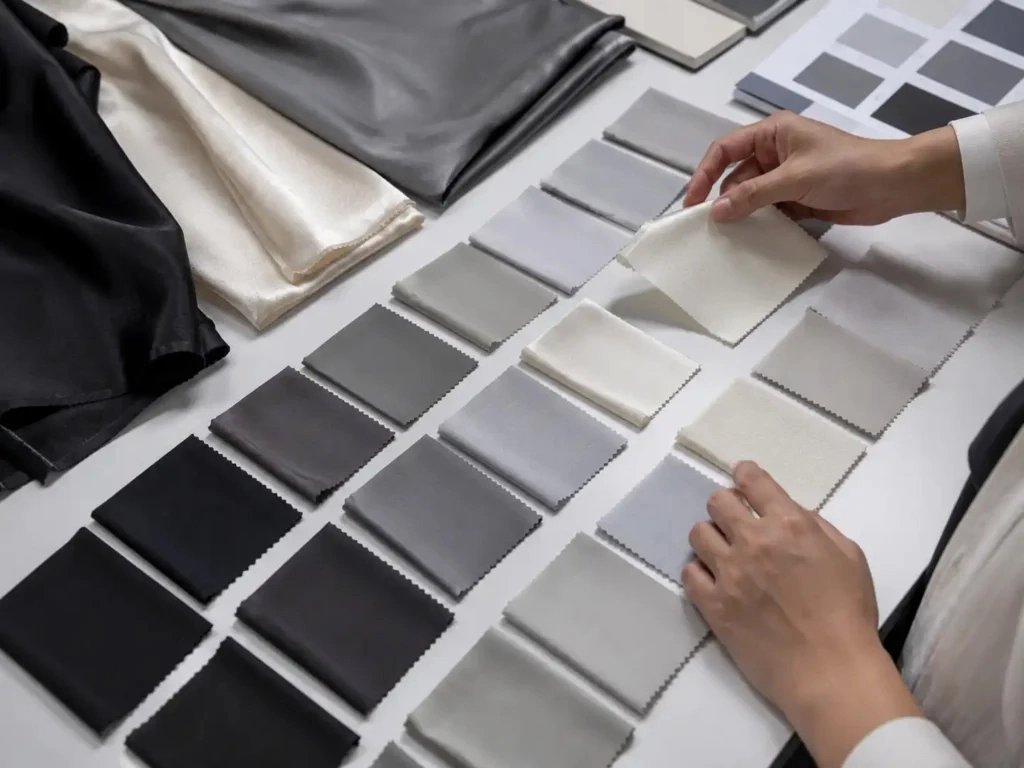
What We Check Before Fabric Goes to Cutting
A bulk fabric problem is not always an obvious color mismatch.
For a clothing manufacturer, these checks are part of the material inspection process before the fabric is released to cutting. You may discover that:
- The fabric width is lower than expected
- The hand feel has changed
- The fabric shrinks more than the sample
- Stretch is different
- The surface finish is inconsistent
- Two dye lots are visibly different
- The fabric does not behave the same way during sewing
Finding the problem before cutting gives the production team room to act. The fabric can be held, separated by lot, discussed with the supplier or reassessed before cutting continues.
After cutting, the options become much more limited.
Panels may already be bundled by size and color, and some pieces may already be in sewing. A material issue that could have been solved at the fabric stage can then turn into re-cutting, rework or delayed production.
Why Fabric Approval Matters for Dress Production
Fabric approval is especially important for dresses because a large area of the garment is often visible at once. This is one reason a dress manufacturer needs to check the actual production fabric before bulk cutting rather than relying only on the approved swatch or lab dip.
Satin Dresses
Satin can show differences in shade and surface sheen quite clearly. The way light reflects from the fabric can make a small change more noticeable across a full skirt or bodice.
Silk Dresses
With silk and silk blends, weight, finishing and drape can change how the dress falls. A fabric that feels correct as a small swatch still needs to be checked in the actual garment.
Lace Dresses
Lace needs a different type of fabric check. Width, motif repeat and scalloped edges can affect the marker and how the pattern pieces are positioned. A lace that looks fine on a small swatch may still create cutting or placement problems in bulk.
Mesh Dresses
For mesh, stretch and recovery can affect fit and construction. If the bulk fabric stretches differently from the approved material, the original pattern may not produce the same result.
The fabric choice can affect the pattern, construction and final fit, so these checks should not be separated from the garment itself.
How a Factory Checks Fabric Before Bulk Cutting
In actual production, fabric approval is not normally one single check.
The fabric is reviewed against the approved information before it moves into the cutting process.
A typical sequence is:
Approved reference → Bulk fabric arrival → Fabric inspection → Lot comparison → Technical checks → Cutting release
For some orders, the production team also separates fabric by dye lot or marks sections that need closer attention.
In our production process, the fabric is checked before cutting for shade, usable width, weight, surface appearance, shrinkage and fabric behavior. When an order contains more than one dye lot, the lots are also identified before the cutting plan is released.
Once the fabric is cut, correcting a material problem becomes much more expensive and time-consuming.
What Should You Keep in Your Fabric Approval Record?
If several styles or colors are running at the same time, the approval record needs to identify each fabric clearly.
Your production record should identify the material clearly enough for the next order to be compared against it.
Useful information includes:
- Fabric composition
- Fabric code
- Supplier reference
- Weight or GSM
- Usable width
- Approved color
- Approved lab dip
- Approved fabric swatch
- Dye lot
- Shrinkage result
- Stretch information where applicable
- Approval date
- Buyer comments
You may have the same fabric name and color code, but the new production lot still needs to be compared with the original approval. Fabric suppliers can change finishing methods, production batches or raw material sources without changing the name on the specification.
Fabric Approval Checklist for Dress Buyers
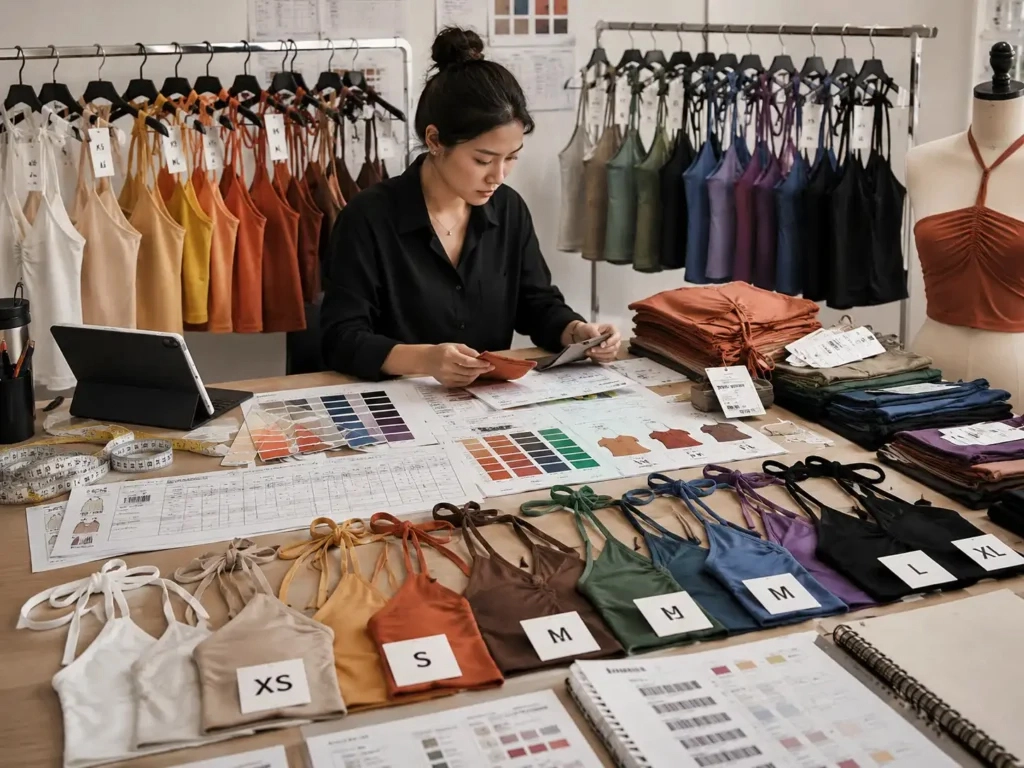
Before you release bulk fabric for cutting, check the points that can affect the finished garment:
- Fabric composition matches the approved specification
- Bulk shade has been compared with the approved reference
- Usable width is suitable for the pattern
- Weight is within the agreed range
- Hand feel is consistent
- Surface finish is acceptable
- Shrinkage has been checked where required
- Stretch and recovery are suitable where applicable
- Dye lots have been identified
- Visible defects have been reviewed
- Bulk fabric has been approved before full cutting
If you are developing several colors or styles at once, keep the approval references organized by style and color. It saves time when questions come up during production.
Frequently Asked Questions
1. Do you need a physical fabric reference if you already have a Pantone color?
Yes. A Pantone reference is useful for communicating the target color, but it does not describe the complete fabric. The final appearance can be affected by fiber content, construction, finish and surface. Keeping an approved physical fabric reference gives you something practical to compare when the bulk lot arrives.
2. Who should approve the bulk fabric before cutting?
The buyer and factory should normally agree on the approval responsibility before production starts. You may approve the material remotely from submitted fabric pieces, while the factory checks the full rolls locally. Both sides should work from the same approved reference, with the fabric release recorded before cutting.
3. How much bulk fabric should be checked before approving it?
The amount depends on the order size, number of rolls, dye lots and the fabric itself. One small cutting may not show variation across a large order. For larger orders or multiple dye lots, different rolls may need to be checked separately before the fabric is released for cutting.
4. Can bulk fabric be approved remotely by a buyer?
Yes. The factory can send fabric cuttings, photos or videos for review. For color, hand feel and surface appearance, however, a physical cutting is more reliable. Keep the submitted piece with the approval record so both sides are referring to the same fabric.
5. What should you do when the fabric is approved but production is delayed?
If production is delayed for several weeks or months, recheck the fabric before cutting. The material may be from a different lot, or the storage and production plan may have changed since the original approval.
Conclusion
The three approvals answer different questions during dress production. The swatch establishes the fabric choice, the lab dip establishes the color, and the bulk check confirms that the production lot is suitable before cutting.
Keeping the approved references and checking the actual production fabric before cutting gives both the buyer and factory a clear point of comparison if there is a problem with shade, width, weight or fabric behavior.
Explore More Dress Manufacturing Services
If you are developing a new dress and need support with fabric selection, internal construction, sampling, and bulk production, an experienced clothing manufacturer can help you deal with these decisions before they become production problems.
At Xiuyu Apparel, we work with fashion brands, startups, designers, and private label companies from sample development through bulk production.
- Velvet Dress Manufacturer
- Chiffon Dress Manufacturer
- Evening Dress Manufacturer
- Lace Dress Manufacturer
- Mesh Dress Manufacturer
Get a Clothing Manufacturing Quote Based on Your Design
If you already have a garment design, send us the product photo, tech pack, or reference sample together with your target quantity.
As a dress manufacturer, we can review the fabric, lining, construction, trims, workmanship, and finishing requirements before preparing a quotation based on the actual garment rather than a general price range.

