

Fabric shade variation can happen even when the dyeing process is controlled.
When the same fabric is produced in separate dye lots, a small difference in tone can occur. The difference may be difficult to notice on a small swatch, but it can become much more visible when large pieces of fabric are placed next to each other.
For dress production, the important point is not only whether the fabric is the “right color.” We also need to know which rolls belong together and where those rolls will be used.
Why Does Fabric Shade Variation Happen in Bulk Production?
Several factors can affect fabric shade during production, including dye lot, finishing, fabric surface and lighting. Dye lot, finishing, fabric surface and even lighting can affect how the final color looks.
For dress production, checking the color alone is not enough. We also need to know which rolls belong together and where those rolls will be used.
Different Dye Lots Can Have Slightly Different Shades
A fabric supplier may produce your required color in more than one dye lot, particularly when the order requires a large quantity.
The color name may be the same, but the actual fabric can be slightly warmer, cooler, darker, or lighter from one lot to another.
The problem becomes more noticeable when rolls from different lots are mixed within the same garment.
If the front bodice is cut from one shade group and the skirt from another, the difference may show where the two sections meet. On a plain dress with little surface detail, there is nowhere for that difference to hide.
Your Sample May Not Use the Same Fabric Lot as Bulk
The fabric used for sampling is not necessarily the same fabric that will be available for bulk production.
Your sample may be made from a roll already in stock. Several weeks later, the bulk order may require a new dye lot.
The specification may still show the same fabric composition and color, but the finished appearance can be slightly different.
A sample approval confirms the sample you received. It does not mean that every later dye lot will look exactly the same.
For repeat production, we recommend keeping the approved fabric reference and comparing new bulk fabric against it before cutting.
Finishing Can Change the Way Color Looks
Dyeing is only part of the process.
The finishing applied to the fabric can also change its appearance. Washing, softening, brushing, coating or calendaring can affect the surface and the way light is reflected.
This matters more with fabrics such as satin, silk and velvet, where the surface itself has a strong effect on how the color is seen.
Lighting Can Make the Difference Look Bigger
Lighting can also change what you see.
A fabric may look slightly different under daylight, warm indoor light and cooler commercial lighting. Screens add another variable, so we do not use a product photo or monitor image as the final shade reference.
For color-sensitive orders, we use the physical fabric reference when making the final comparison.
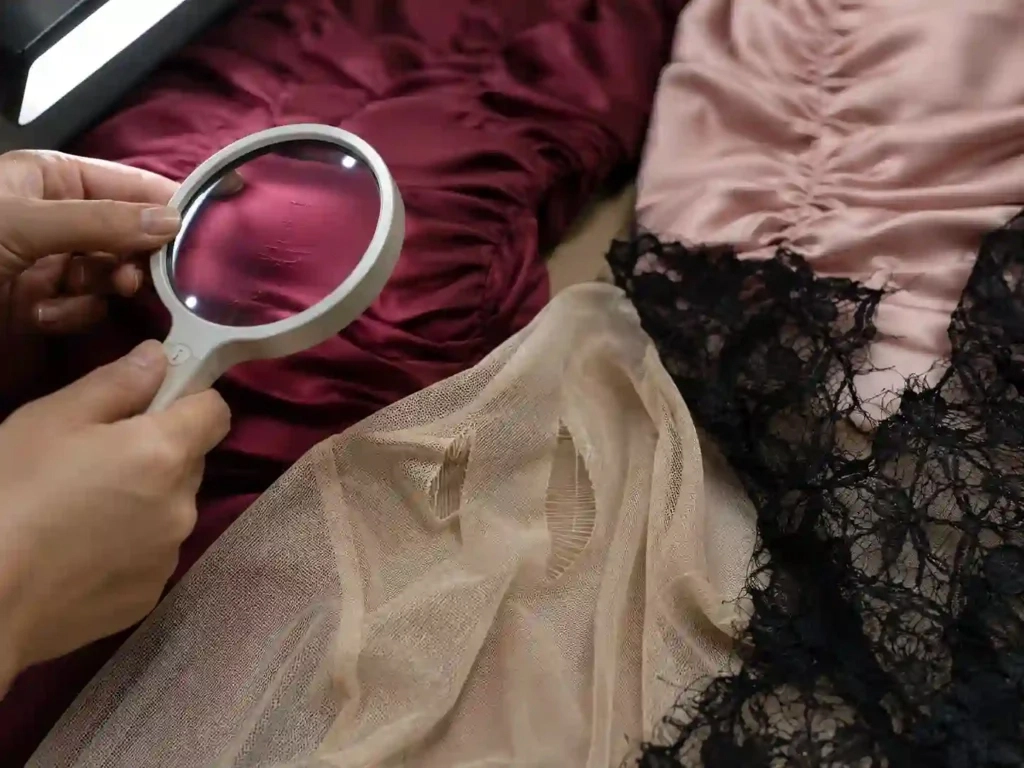
Why Shade Variation Matters in Dress Production
Shade differences are easier to judge once the fabric is cut into garment panels.
A small difference may be hard to notice on a 10 cm swatch. Put two full skirt panels next to each other and the same difference can look much stronger.
Large Dress Panels Show Color Differences More Clearly
Many dresses use large pieces of fabric for the skirt, bodice, sleeves, or train.
If adjacent panels come from different shade groups, you may see a visible line or change in tone after sewing.
This is particularly risky for:
- Maxi dresses
- Evening dresses
- Satin dresses
- Slip dresses
- Simple A-line dresses
- Floor-length gowns
The simpler the dress, the less visual detail there is to distract from a shade difference. A plain satin gown, for example, can show a color change between two large panels much more clearly than a heavily embellished style.
Keep Major Dress Panels Within the Same Shade Group
If the bodice and skirt are cut from different shade groups, the difference may become visible where the two areas join.
For color-sensitive styles, we prefer to plan fabric allocation before cutting. As a clothing manufacturer, we need to consider how the fabric will be distributed across the finished garment, not just whether the rolls match in color. Major visible panels can then be kept within the same shade group where the fabric quantity allows it.
Sheer Fabrics Add Another Layer of Complexity
With lace, mesh, and chiffon, you are not looking at the outer fabric alone.
The lining or underlayer affects the final appearance.
A slightly different lining color can change how the outer fabric looks, especially with pale colors and transparent materials.
For sheer dresses, we therefore check the fabric together with the intended lining or underlayer. This is particularly important when developing lace dresses and mesh dresses, because the lining can change the final appearance significantly. Looking at the two materials separately does not always show how the finished color will appear.
How to Check Fabric Shade Before Bulk Cutting
A shade problem is much easier to handle before the fabric is cut into garment panels.
Once the fabric has been cut and distributed to sewing lines, separating different shades becomes much more difficult.
1. Keep an Approved Physical Color Reference
You should keep the approved fabric swatch used during development.
For repeat production, this reference is particularly useful because the new fabric can be compared with the previous approved standard instead of relying on memory.
A Pantone reference is useful when discussing the target color with a supplier, but it is not a substitute for checking the actual fabric.
Fabric type, surface and finishing can all affect how the color appears. For this reason, we prefer to keep the approved fabric swatch together with the production information.
2. Check the Bulk Rolls Before Cutting
When bulk fabric arrives, checking the roll label is only the first step.
- Fabric lot
- Roll number
- Shade
- Fabric width
- Visible defects
- Surface appearance
If several rolls are being used, we keep the roll information traceable so that different shade groups do not get mixed accidentally during cutting.
3. Compare Rolls From Different Lots
When more than one dye lot is involved, we compare the rolls before making the cutting plan.
Sometimes the difference is small enough to use the rolls together. In other cases, the rolls need to be separated.
The decision is much easier to make when the fabric is still on the roll. After cutting, changing the allocation becomes far more difficult.
4. Group Similar Shades Together
If several rolls have small shade differences, group them before preparing the cutting plan.
The goal is not to reject every roll simply because there is a small difference.
Instead, we separate rolls into workable shade groups and plan where each group will be used. This gives the cutting team a clear reference and reduces the chance of different shades being mixed within one dress.
One shade group can then be allocated to a particular production batch rather than mixed throughout the order.
5. Allocate Large Panels Carefully
For a dress with large visible panels, fabric allocation needs to be planned before cutting.
We try to keep the front bodice, back bodice, sleeves and skirt within the same shade group where possible. This is especially useful for satin and other fabrics where a small difference can stand out after sewing.
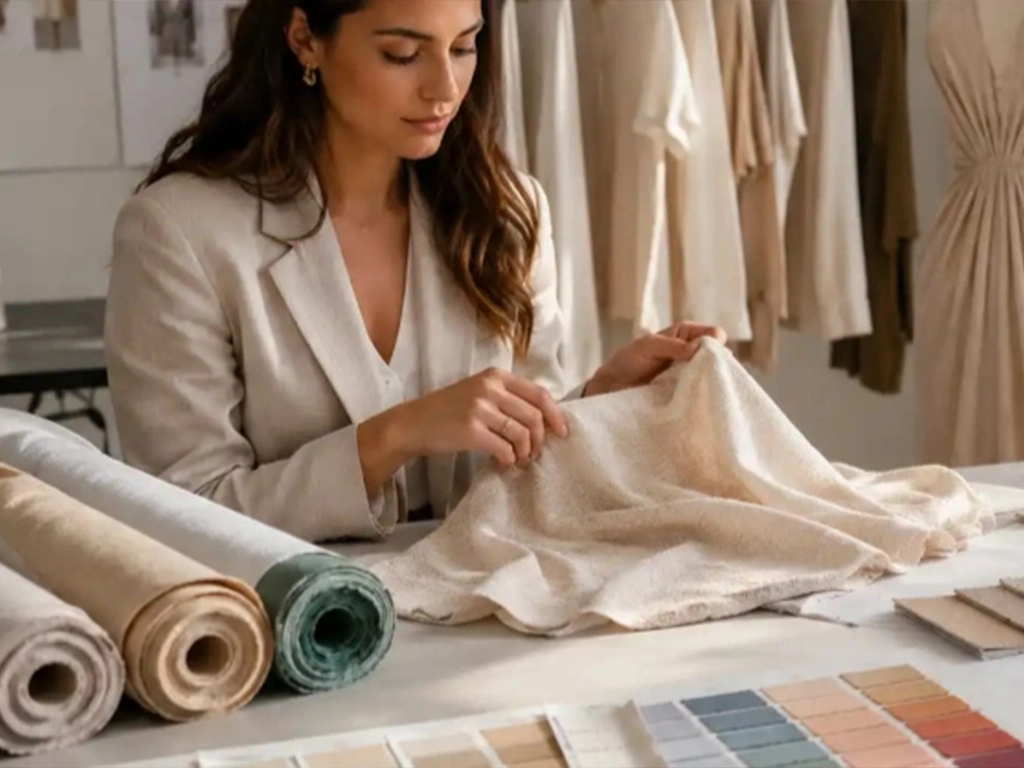
How Different Dress Fabrics React to Shade Variation
A shade difference can be much more noticeable on some fabrics than others. Fabric surface, transparency and garment construction all affect how the final color is perceived.
Satin
Satin often makes shade differences easy to see because its surface reflects light strongly.
Fabric direction matters as well. Two panels with the same color can look different when the surface direction changes, and a real shade difference becomes even more obvious when those panels sit next to each other.
For large satin skirts, we therefore pay attention to both shade grouping and cutting direction. These details are especially important when producing satin evening dresses, where large smooth panels can make even a small shade difference noticeable.
Silk
Silk can show subtle changes in shade, particularly on smooth surfaces such as silk satin. For silk dress production, we compare the actual bulk fabric with the approved swatch rather than relying on photographs.
For light or delicate colors, we compare the actual bulk fabric with the approved swatch rather than relying on photographs.
The lining should also be checked where it affects the final appearance of the dress.
Lace
Lace needs to be checked together with the lining.
A lace fabric may look correct by itself but produce a different overall tone once it is placed over a lining. This is especially noticeable with light colors and delicate lace constructions.
For lace dresses, we therefore judge the combination rather than the lace alone.
Chiffon
Chiffon is lightweight and often translucent.
The final color can change depending on the lining, number of layers, and what sits underneath the fabric.
A chiffon swatch viewed by itself may not represent the final garment color accurately.
Mesh
Mesh has a similar issue.
Because the fabric is often transparent or semi-transparent, the lining and body underneath influence the perceived color.
This is particularly important for nude, pastel, white, and other light shades.
Velvet
Velvet needs another check because of its pile direction.
The same velvet can look lighter or darker depending on how the pile lies and how light hits the surface. When comparing rolls, we therefore look at the fabric with the pile running in the same direction rather than judging color alone.
What Should You Approve Before Bulk Dress Production?
Before cutting starts, the color approval should be clear enough for both the buyer and production team to follow.
We normally confirm the following:
- Approved fabric swatch
- Fabric color reference
- Fabric composition
- Fabric weight or GSM where relevant
- Dye lot information
- Bulk roll shade
- Lining color
- Trim color
- Print or embroidery colors
- PP sample requirements
We also confirm how a slight shade difference will be handled before cutting starts. This avoids having to make the decision after the fabric has already been cut.
If the Bulk Fabric Does Not Match the Approved Shade
A shade difference does not automatically mean that all the fabric needs to be rejected.
Whether the fabric can be used depends on how noticeable the difference is and where the fabric will be used on the dress.
A small difference may be manageable if the rolls can be separated into different production groups. On a plain satin evening dress, however, the same difference may be too noticeable to accept.
If a difference is found, we normally handle it in one of three ways:
Use the Fabric Separately
If the shade difference is manageable, the fabric can be separated into different production groups.
Reallocate the Fabric
The rolls can sometimes be assigned to different parts of the order where the difference will be less noticeable.
Hold the Fabric for Approval
If the difference is significant, stop cutting and confirm the decision before more material is used.
The decision needs to be made before the problem spreads through the production line.
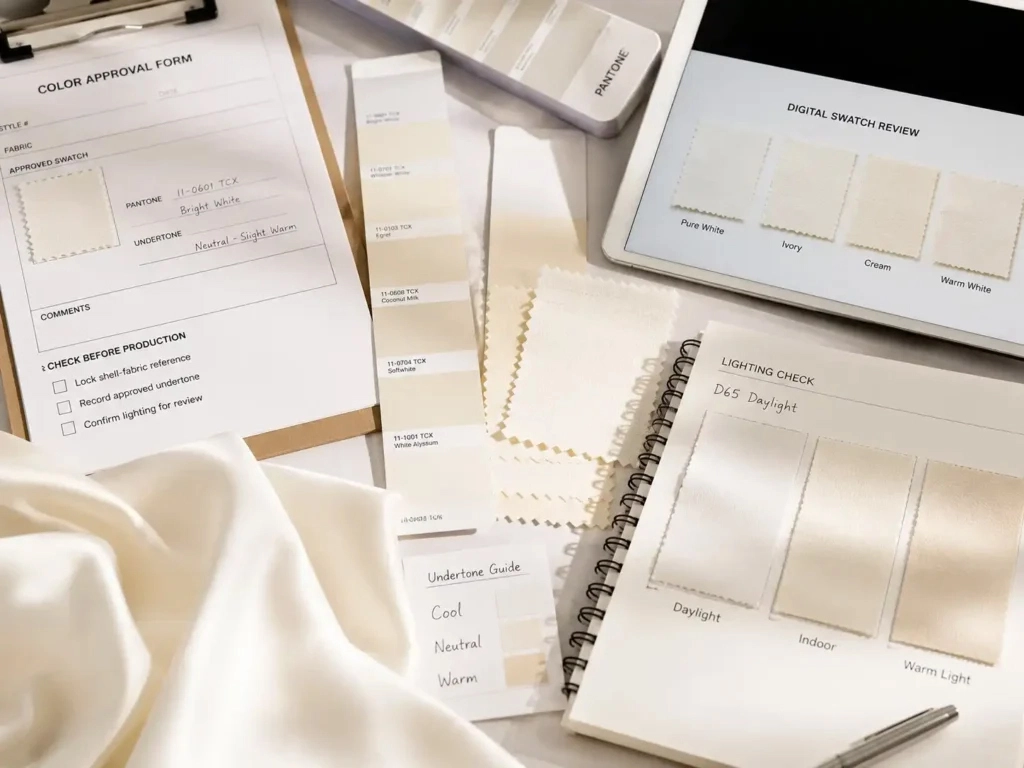
How Shade Control Affects Your Production Schedule
A shade problem can quickly become a scheduling problem once cutting has started.
If the difference is discovered after cutting, you may need to recut panels, reorder fabric, change the cutting plan or hold production while waiting for a decision.
For a larger wholesale or private label order, even a small delay at the fabric stage can affect the sewing schedule and delivery date.
What About Repeat Orders?
Repeat orders can have the same shade issue as a new production run.
The original dye lot may no longer be available six months later. Even when the color name, fabric specification and supplier remain unchanged, the new production run can look slightly different.
For repeat styles, compare the new bulk fabric with the previous approved swatch before cutting. Keeping physical references from earlier production makes this comparison much easier, especially when working with the same dress manufacturer on repeat orders.
A Practical Fabric Shade Control Process
For bulk dress production, the process can remain fairly simple:
Approved Color Reference
↓
Bulk Fabric Arrival
↓
Fabric Inspection
↓
Check Dye Lots and Roll Numbers
↓
Compare Shades
↓
Group Compatible Rolls
↓
Confirm Before Cutting
↓
Cut According to Shade Group
↓
Check During Sewing
↓
Final Inspection
Finding the shade issue before cutting gives us more options.
If the shade issue is found while the fabric is still on the roll, it can usually be dealt with as a fabric or cutting decision.
If the same issue is found after hundreds of garments have been sewn, the options become much more limited.
FAQ
Can a small shade difference be accepted in a bulk order?
Sometimes. It depends on the fabric, dress construction and where the difference appears. A small variation may be acceptable when shade groups can be separated, but it can be much more noticeable on a plain satin or silk dress with large panels.
Does a Pantone color guarantee the final fabric will look identical?
No. Pantone is a useful reference for communicating the target color, but fabric type, dyeing, finishing, texture and lighting can change the final appearance. The actual bulk fabric still needs to be checked before cutting.
Who should make the final decision if the bulk fabric is slightly off?
The buyer and production partner should agree on the acceptance standard. If the difference is unclear, compare the bulk fabric with the approved physical reference before cutting. From there, the fabric can be accepted, separated into shade groups or held for further approval.
Is shade variation more difficult to manage for large wholesale orders?
It can be, because larger orders usually involve more fabric rolls and sometimes more than one dye lot. Lot information should be confirmed before cutting, along with how different shade groups will be allocated if more than one lot is involved.
Can fabric shade variation affect product photography?
Yes. Garments from different shade groups can look noticeably different when photographed under the same lighting. Keeping the shade consistent within a production batch helps reduce visible differences between product photos and makes the collection look more consistent.
Conclusion
Fabric shade control is easiest when it is handled before cutting.
For bulk dress production, keep the approved fabric reference, check incoming rolls by dye lot, and separate shade groups before the cutting plan is released.
Once the fabric has been cut and sewn, correcting a shade problem becomes much more expensive and time-consuming. A few checks at the fabric stage can prevent a much larger production issue later.
Explore More Dress Manufacturing Services
If you are developing a new dress and need support with fabric selection, internal construction, sampling, and bulk production, working with an experienced clothing manufacturer can help reduce unnecessary development changes.
At Xiuyu Apparel, we work with fashion brands, startups, designers, and private label companies from sample development through bulk production.
Get a Clothing Manufacturing Quote Based on Your Design
If you already have a garment design, send us the product photo, tech pack, or reference sample together with your target quantity.
As a dress manufacturer, we can review the fabric, lining, construction, trims, workmanship, and finishing requirements and prepare a quotation based on the actual garment rather than a general price range.

