

When a new dress goes into development, the fabric can look perfect on the swatch and still cause problems during sampling.
The weight may not suit the pattern. The drape may look different once the fabric is cut into larger pieces. Sometimes the fabric simply does not sew the way it seemed to when we first checked it.
As a clothing manufacturer, we see this quite often. A buyer may approve a fabric based on its color and surface, then find during sampling that the dress needs a different lining, a pattern adjustment, or even another fabric.
That is why we prefer to check the fabric while the style is still being sampled. Once bulk fabric has been ordered or cut, there are far fewer easy ways to correct the problem.
What Should You Consider When Choosing Fabric for a Dress?
A fabric can look right in the supplier’s sample book and still be unsuitable for the finished dress. What matters is how it works with the silhouette, pattern and construction.
For a new style, we normally look at:
- Fabric composition
- Weight or GSM
- Drape
- Stretch and recovery
- Surface appearance
- Usable fabric width
- Shrinkage
- Opacity
- Lining requirements
- Target cost
- Cutting and sewing behavior
A lightweight chiffon may give you the movement you want, but it may also require lining and more careful handling during cutting. A structured fabric can make the same design look much firmer and may change the fit once the garment is assembled.
Two fabrics described as “satin” or “crepe” can behave quite differently. Composition, weight, construction and finishing can all change the way the fabric works in a dress.
Best Fabrics for Women’s Dresses
The fabric that works for a slip dress may be completely wrong for a structured cocktail dress.
Satin
Satin is a common choice for slip dresses, evening dresses and cocktail styles because of its smooth surface and fluid drape.
Two fabrics can both be sold as satin and still behave quite differently. Polyester satin is often easier to control for commercial production, while silk satin gives a different hand feel, drape and price position.
For fitted or bias-cut styles, we normally check the fabric before confirming the sample. Width, stability, stretch and pressing behavior can all affect the final result.
Satin can also show small differences in surface and shade under different lighting. A difference that is barely noticeable on a swatch can become much easier to see across a full skirt or bodice.
Chiffon
Chiffon is a good fit for lightweight, flowing dresses, especially occasionwear, layered skirts and soft summer styles.
The main checks are transparency, weight, drape and edge behavior. Depending on the design, the dress may need a lining or an additional layer underneath.
Lightweight chiffon can move easily on the cutting table, so the pattern pieces need to be handled carefully. With multi-layer designs, the fabric quality also affects whether the layers hang evenly after sewing.
Crepe
“Crepe” covers a wide range of fabric qualities. Composition and weight can change how the fabric stretches, falls and recovers, so two crepes can produce quite different results in the same dress pattern.
For fitted dresses, we pay particular attention to recovery. A fabric may stretch comfortably during fitting but fail to return properly around the waist, hip or neckline after wear.
Jersey
Jersey is often used for fitted dresses because it combines stretch with a comfortable hand feel.
For a bodycon dress, recovery is just as important as stretch. The fabric needs to return to its original shape after being pulled around the body.
A small swatch can give you a rough idea, but the actual pattern is a much better test. The stretch can also feel different once the fabric is cut into a full garment, compared with what you notice from a small swatch.
Lace
Lace is widely used for occasion dresses, bridal-inspired styles, eveningwear and decorative panels.
With lace, fiber composition is only part of the decision. Width, motif repeat, edge finish, backing, transparency and pattern direction can all affect the garment.
A large repeating motif is a good example. The front and back pieces may need to be positioned carefully so the pattern does not look uneven. With some designs, this means using more fabric than you would for a plain fabric. These details become especially important when working with a lace dress manufacturer, because motif placement and fabric width can affect both consumption and the final appearance.
Mesh
Mesh can behave very differently depending on its stretch, recovery and construction. A mesh that works well for a sleeve may not be suitable for a fitted bodice.
For a fitted mesh dress, stretch and recovery need to be checked early. Once mesh is combined with lining, elastic or another outer fabric, the way it behaves can change.
We also pay attention to high-tension areas such as the bust, waist, hip, armhole and neckline. These areas are often where poor stretch or recovery becomes noticeable first. These are also the points we check when developing fitted mesh styles as a mesh dress manufacturer.
Velvet
Velvet is usually chosen when a collection needs a richer surface and a more substantial look. It works particularly well for evening, party and autumn/winter dresses.
Pile direction is one of the first production points to check. Pattern pieces generally need to follow the same direction, which can increase fabric consumption.
The pile can also change how the color looks under different lighting. Because of this, a small swatch does not always give you the same impression as a finished velvet dress.
Cotton
Cotton is a practical choice for casual dresses, summer collections, everyday styles, and some resortwear.
Cotton comes in a wide range of weights and constructions. A lightweight cotton may work well for a loose summer dress, while a heavier cotton can provide more structure.
Shrinkage should be checked before the production fabric is finalized, especially when finished measurements are important.
Silk and Silk Blends
Silk and silk blends are usually chosen for dresses where hand feel, drape and a more premium appearance are important.
The fabric weight and finish make a big difference. Silk chiffon, silk satin and heavier silk fabrics can behave completely differently even when they are all used in the same pattern.
For silk dresses, we usually make the fabric decision after seeing it in the sample. If you are developing a silk collection, you can also see how we handle fabric sourcing and production as a silk dress manufacturer.
Which Fabric Is Best for Different Dress Styles?
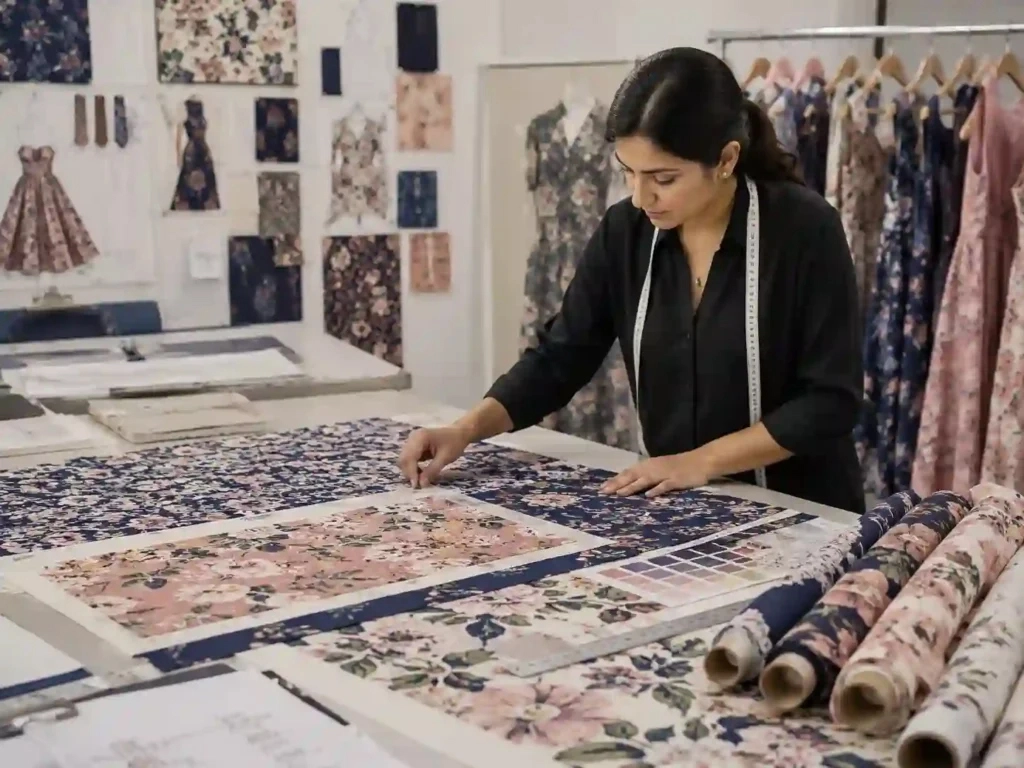
We usually start with the silhouette. A loose summer dress, a fitted bodycon style and a bias-cut slip dress will not behave the same way, so the fabric needs to be checked accordingly.
| Dress Style | Fabrics to Consider | Main Production Considerations |
|---|---|---|
| Slip Dress | Silk Satin, Satin, Crepe | Drape, bias cutting, lining |
| Bodycon Dress | Jersey, Stretch Crepe, Mesh | Stretch, recovery, fit |
| Evening Dress | Satin, Crepe, Velvet, Silk | Drape, surface, pressing |
| Maxi Dress | Chiffon, Crepe, Satin, Viscose | Weight, drape, fabric consumption |
| Summer Dress | Cotton, Linen, Viscose | Breathability, shrinkage, comfort |
| Lace Dress | Lace, Mesh, Chiffon | Motif placement, transparency, lining |
| Cocktail Dress | Satin, Crepe, Velvet, Chiffon | Structure, fit, finishing |
| Resort Dress | Cotton, Linen, Viscose, Chiffon | Weight, comfort, movement |
If you are developing several styles for the same collection, the fabrics do not have to be identical. A slip dress and a structured cocktail dress may need different materials, while the colors, finishes and overall look can still work together.
How Fabric Choice Affects Dress Production
You can see most of these problems during sampling. Once the fabric is cut and sewn into the actual dress, issues with width, stretch, drape or lining are much easier to identify.
Fabric Width Affects Consumption
A fabric can look suitable on the swatch and still create a cutting problem if the usable width is too narrow.
This becomes important with wide skirts, long dresses, large sleeves and bias-cut styles. The cutting layout may need to change, which can increase actual fabric consumption.
Before confirming the bulk quantity, check the usable width against the approved pattern rather than relying only on the supplier’s nominal width.
Stretch Changes the Pattern
For jersey, mesh, stretch crepe and other stretch fabrics, the pattern needs to be based on the actual stretch level of the material.
A small difference in stretch can affect bust, waist, hip, armhole, and neckline measurements.
When you are comparing fabrics from different suppliers, test them using the same method. The composition label gives you useful information, but it does not tell you exactly how the finished dress will fit.
Drape Changes the Finished Silhouette
Drape is easy to misjudge from a small fabric swatch.
You may choose a material because it looks soft in your hand, but the finished skirt can still fall differently once the fabric is cut into a larger panel.
For a flowing maxi dress or slip dress, testing the fabric on the actual pattern gives a much better indication of how the finished silhouette will look.
Lining Can Change the Result
A lightweight or transparent outer fabric may require lining, but the lining itself can affect the garment.
The lining also needs to be checked for composition, weight, color, coverage and movement.
This is especially important for chiffon, lace, mesh, and lightweight silk fabrics. A heavy lining can pull down the outer fabric, while a lining that is too light may not give enough coverage or support.
Cutting and Sewing Need to Be Considered
Not every fabric behaves the same way on the cutting table or sewing line.
Slippery satin can move during cutting. Delicate chiffon can shift. Lace may require motif matching. Stretch mesh can change shape when handled. Velvet may require consistent nap direction.
These are not necessarily reasons to avoid a fabric. They simply need to be considered before you finalize the production method.
How Should You Choose Fabric for Sampling?
When we develop a new dress, we normally start with the design and then work back to the fabric.
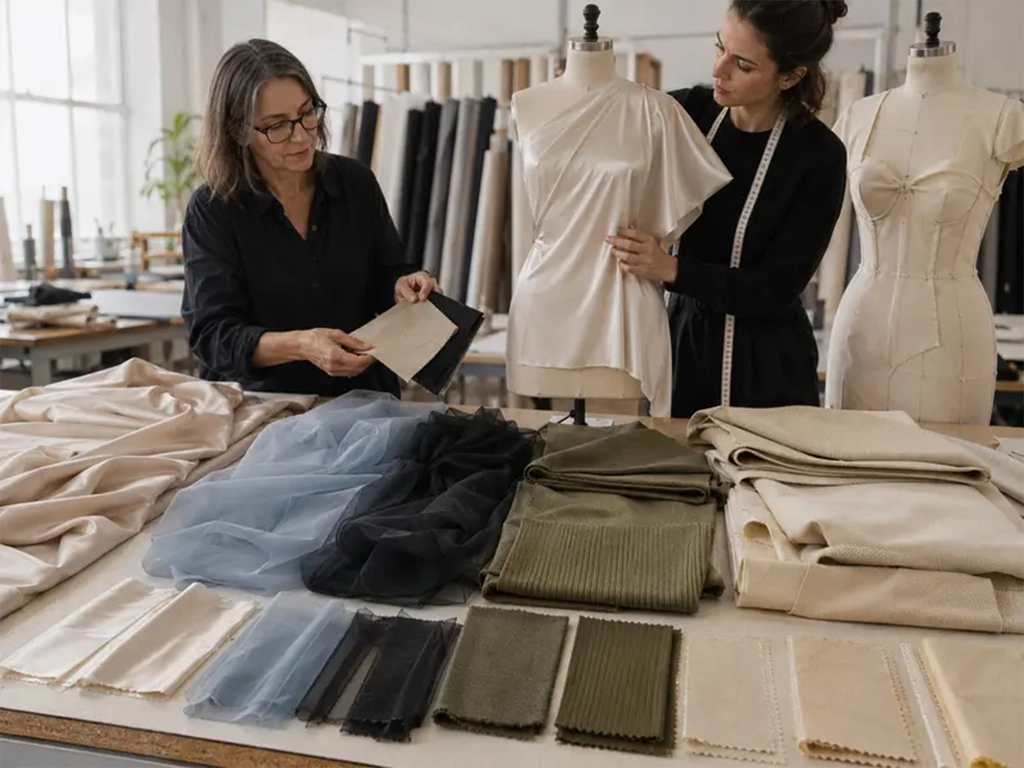
First, we look at the silhouette and how much structure or movement it needs. From there, we check the fabric weight, composition, stretch, recovery and drape. If the fabric is lightweight or transparent, the lining needs to be considered at the same time.
The most useful test is to put the fabric through the actual pattern. This shows things that are difficult to judge from a swatch, such as how the skirt falls, whether the neckline needs more support, or whether the seams behave properly during sewing.
A fabric can look right in your hand and still give you a different result in the finished dress. That is why we normally treat fabric approval and garment sampling as part of the same development process.
What Should You Check Before Bulk Dress Production?
Before bulk cutting starts, the production team should have a clear fabric reference to work from.
Check:
- Fabric composition
- Fabric code or supplier reference
- GSM or agreed weight
- Usable width
- Approved color
- Fabric hand feel
- Surface appearance
- Shrinkage where required
- Stretch and recovery where applicable
- Dye lot
- Visible defects
- Final sample construction
If you are producing several colors or styles, keep the fabric references organized by style and color. This makes later comparisons much easier, especially when you reorder a successful style.
The actual bulk fabric should be checked before cutting rather than assuming that an earlier swatch represents every production lot. If you want to understand the difference between these approval stages, see our guide to fabric swatch vs lab dip vs bulk fabric approval.
Fabric Selection Mistakes That Can Increase Production Cost
Choosing by Color Only
A color can look right while the fabric itself is wrong for the pattern. Weight, construction, hand feel and drape need to be checked at the same time.
Ordering Too Much Fabric Too Early
If the pattern is still changing, a large fabric order can leave you with stock that no longer matches the final design. It is safer to confirm the pattern and estimated consumption before committing to bulk fabric.
Ignoring Fabric Width
Fabric width is easy to overlook during development. A fabric can meet the required composition and weight but still be too narrow for a full skirt, maxi dress or bias-cut style.
Treating Similar Fabric Names as the Same Quality
Two suppliers may both offer “polyester satin” or “polyester lace,” but the fabrics can behave differently.
You should compare actual samples rather than relying on the fabric name or composition alone.
Changing Fabric After the Final Sample
If you change the fabric after the final sample is approved, you may also need to revisit the pattern, lining, fit, and construction.
For a new collection, it is better to settle the fabric while the design is still being developed. It gives the pattern and sample team a stable material to work with before bulk production begins.
Fabric Selection Checklist for Dress Buyers
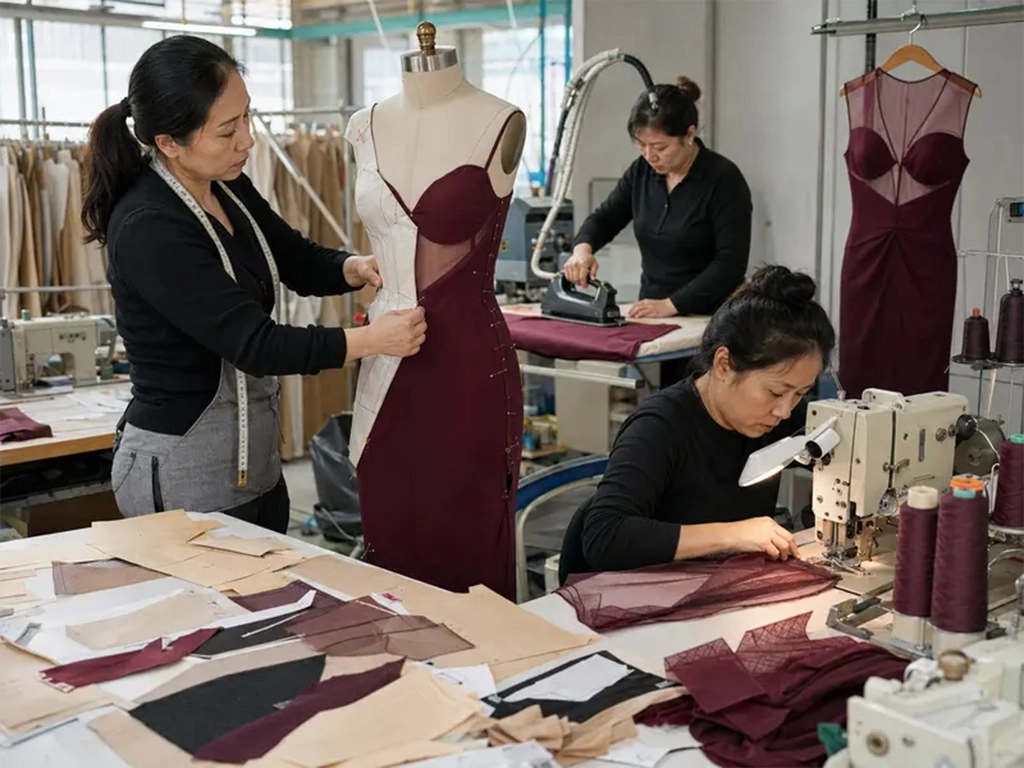
Before approving a fabric for bulk production, check the following:
- Silhouette compatibility
- Fabric weight
- Drape
- Stretch and recovery
- Usable width
- Opacity
- Lining requirements
- Shrinkage
- Pattern compatibility
- Cutting and sewing behavior
- Target cost
- Approved color and fabric reference
- Bulk fabric condition before cutting
Frequently Asked Questions
1. How can you choose fabric when you have a limited target price?
If the target price is tight, first decide which fabric properties the dress cannot compromise on. A fitted style may need reliable stretch and recovery, while a flowing dress may need better drape. Once those points are fixed, you can compare suitable fabrics within the available price range.
2. Should you use the same fabric for an entire dress collection?
Not necessarily. A fitted dress, a flowing maxi and a structured cocktail dress may need completely different fabric behavior. Many collections use different materials while keeping the colors, finishes and overall design direction consistent.
3. How do you compare fabrics from two different suppliers?
Put the two fabrics side by side and compare more than the composition label. Check the weight, width, hand feel, drape, stretch, recovery and opacity. If possible, test both fabrics against the same pattern or sample so you are comparing their actual performance.
4. When should you finalize the fabric for a new dress?
The fabric should ideally be settled before the final sample is approved. If it changes afterward, the pattern, lining, fit or construction may also need to change. In that situation, the approved sample is no longer a reliable reference for bulk production.
5. What should you do if the fabric looks different after the first sample?
First compare the sample fabric with the approved reference. Look at weight, width, hand feel, stretch, surface and color. If the bulk material is different, deal with the fabric issue before changing the pattern. Otherwise, you may end up modifying the garment to compensate for the wrong material.
Conclusion
The right dress fabric is the one that works from sampling through bulk production. It needs to suit the pattern, hold the intended shape, meet the required hand feel and appearance, and remain practical to cut and sew at production scale.
For buyers developing a new collection, the fabric is best settled while the sample is still being developed. Once bulk material has been cut, changing the fabric can affect the pattern, lining, fit and production schedule.
From our experience as a clothing manufacturer, the best way to judge a dress fabric is to see how it works in the actual garment. A swatch can tell you a lot about the material, but the sample will show you whether it really works for production.
Explore More Dress Manufacturing Services
If you are developing a new dress and need support with fabric selection, internal construction, sampling, and bulk production, an experienced clothing manufacturer can help you deal with these decisions before they become production problems.
At Xiuyu Apparel, we work with fashion brands, startups, designers, and private label companies from sample development through bulk production.
Get a Clothing Manufacturing Quote Based on Your Design
If you already have a garment design, send us the product photo, tech pack, or reference sample together with your target quantity.
As a dress manufacturer, we can review the fabric, lining, construction, trims, workmanship, and finishing requirements before preparing a quotation based on the actual garment rather than a general price range.

