

When developing a lace or mesh dress, the fabric needs to be checked against the pattern, not just the design sketch.
A lace may look right on a small swatch but create problems with motif placement or cutting waste. Mesh can look suitable until you test its stretch, recovery and behavior around seams.
We normally check these points before approving the final pattern or ordering fabric for bulk production.
Lace vs Mesh: The Main Difference
Lace and mesh can both work for dresses, but they create different production issues.
With lace, we usually pay more attention to the pattern, edges and how the motifs land on the garment. Mesh is more about stretch, recovery, transparency and keeping the fabric stable during cutting and sewing.
The difference becomes practical once the fabric is cut. With lace, the main concern may be where a motif lands on a seam or hem. With mesh, stretch and recovery can affect the finished measurements.
Lace vs Mesh: Quick Comparison
| Factor | Lace | Mesh |
|---|---|---|
| Main purpose | Decorative surface and texture | Sheerness, stretch and layering |
| Stretch | Depends on lace construction | Available in many stretch options |
| Appearance | Patterned and textured | Usually cleaner and more uniform |
| Transparency | Depends on pattern density | Depends on mesh type and layering |
| Lining | Frequently required | Often required for coverage |
| Cutting | Pattern placement can be important | Stretch direction needs attention |
| Fitted dresses | Stretch lace can work well | Stretch mesh can work well |
| Best suited for | Decorative dresses and overlays | Sheer, fitted and layered styles |
| Main production concern | Motif placement and delicate handling | Stretch, recovery and distortion |
| Fabric consumption | Can increase with motif matching | Depends on width and garment construction |
The table gives a general comparison. In production, the fabric quality and the way the dress is constructed can change the result quite a lot.
When Should You Choose Lace for a Dress?
If the lace pattern is one of the main visual elements of the dress, start with the lace rather than choosing it after the pattern is finished.
This is common for evening dresses, cocktail dresses, bridal-related styles and boutique occasionwear. A relatively simple silhouette can look much more detailed when the lace has a strong floral or geometric pattern.
Lace is usually worth considering when:
- The fabric pattern is an important part of your design.
- You want a decorative surface without adding many separate trims.
- The lace itself is meant to be a visible part of the garment.
- Your design includes lace sleeves, panels or an overlay.
- A scalloped or decorative edge is part of the original design.
- You want the material to remain visually important even with a simple silhouette.
Lace Pattern Placement Matters
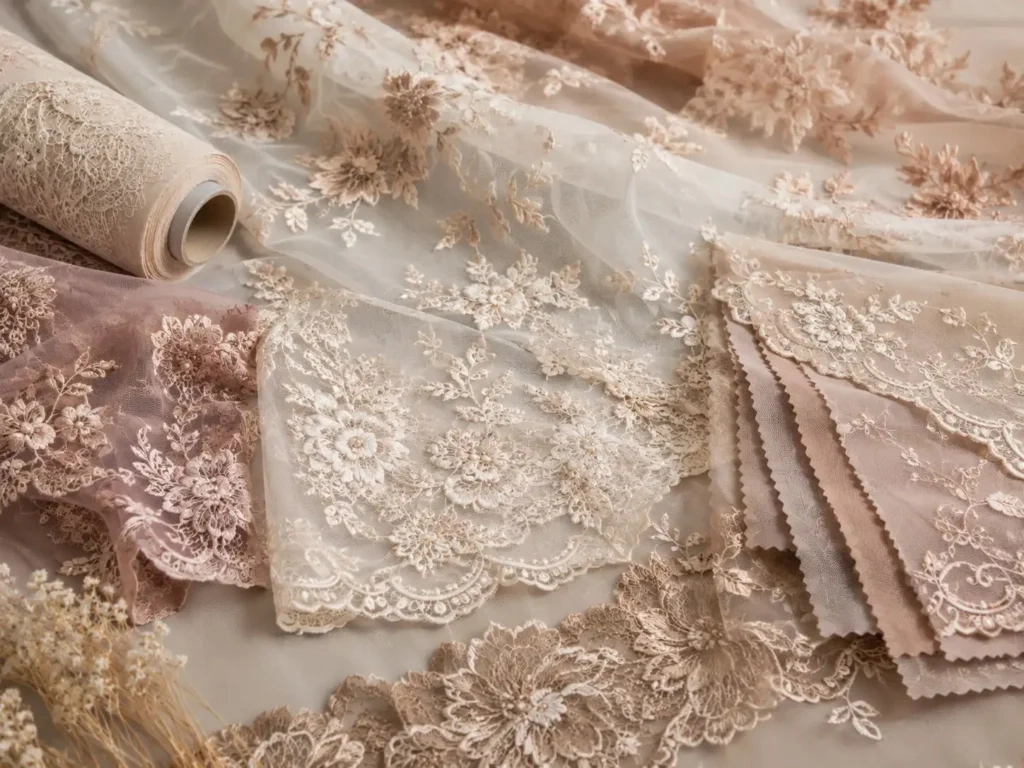
Motif placement is one of the first things we check when developing lace dresses.
A lace sample may look good when you hold a 20 cm swatch in your hand. That does not mean the same pattern will look balanced across a full bodice or skirt.
For example, a large floral motif can fall directly across the bust or stop awkwardly at the waist. A scalloped edge may also need to be positioned carefully around a hem or sleeve opening.
When developing a lace dress, we check the pattern repeat before finalizing the cutting layout.
The lace direction, scalloped edges and main motifs all need to be considered. We look at where the pattern will fall on the bodice, waist and hem, while also checking fabric width and expected cutting waste.
This becomes particularly important when the lace is expensive or the order quantity is large.
When Should You Choose Mesh for a Dress?
It is often used for bodycon dresses, sheer panels, layered skirts, sleeves and illusion necklines. On fitted styles, the important point is not simply how much the fabric stretches, but whether it returns to its original shape.
Mesh Stretch and Recovery Need to Be Checked
If you are developing a fitted mesh dress, do not judge the fabric only by how stretchy it feels.
Recovery is just as important.
A fabric can stretch easily when you pull it but fail to return properly after repeated tension. This can affect the waist, hip, neckline or sleeve opening after the garment has been worn.
During development, we check the fabric after it has relaxed and after repeated stretching. We do not rely on the supplier’s description alone.
We pay particular attention to recovery on styles with:
- A close body fit
- Ruched construction
- Long fitted sleeves
- Narrow shoulder straps
- A tight waist
- Strong tension around the hips
A mesh can feel comfortable on the first fitting and still be unsuitable for bulk production if it does not recover well. The problem may only become obvious around the waist, hips or neckline after repeated wear.
Lace vs Mesh for Transparency
Lace and mesh can both look sheer, but the reason for the effect is different.
With lace, the pattern itself affects how much of the underlying fabric or skin can be seen. A dense floral lace and an open lace can produce completely different results.
With mesh, transparency is more closely related to fabric density, color, layering and construction.
Do not approve a sheer fabric from the swatch alone. Test it with the actual lining and, if possible, in the same color combination planned for the dress.
For example, a nude lining under black lace can create a completely different visual effect from black lining under the same lace.
The same applies to mesh.
If you are developing a sheer mesh evening dress, the final appearance depends on:
- Mesh density
- Fabric color
- Lining color
- Number of layers
- Panel placement
- Distance between the mesh and lining
A fabric that looks suitable on a supplier’s swatch may not give you the same result once it is assembled into the complete dress.
Lace vs Mesh for Fitted Dresses
For fitted dresses, the choice becomes more technical.
Stretch lace is a good fit when the dress needs body-hugging coverage with a visible surface pattern. Stretch mesh is more useful when flexibility and a cleaner sheer effect are the priority.
The pattern also needs to match the fabric.
If you use a stretch material with a pattern drafted for a stable woven fabric, the finished measurements may not behave as expected.
For bodycon styles, we pay particular attention to:
- Stretch direction
- Recovery
- Bust and hip measurements
- Seam tension
- Zipper area
- Waist stability
- Fabric relaxation
For a fitted dress, the visual result is only one part of the approval. The stretch, recovery and seam behavior also need to work with the pattern.
Lace vs Mesh for Evening Dresses
Lace and mesh are both common in eveningwear, but they behave differently once they are built into the dress.
Lace adds surface detail, while mesh gives you more freedom with layering and transparency.
You can also combine the two.
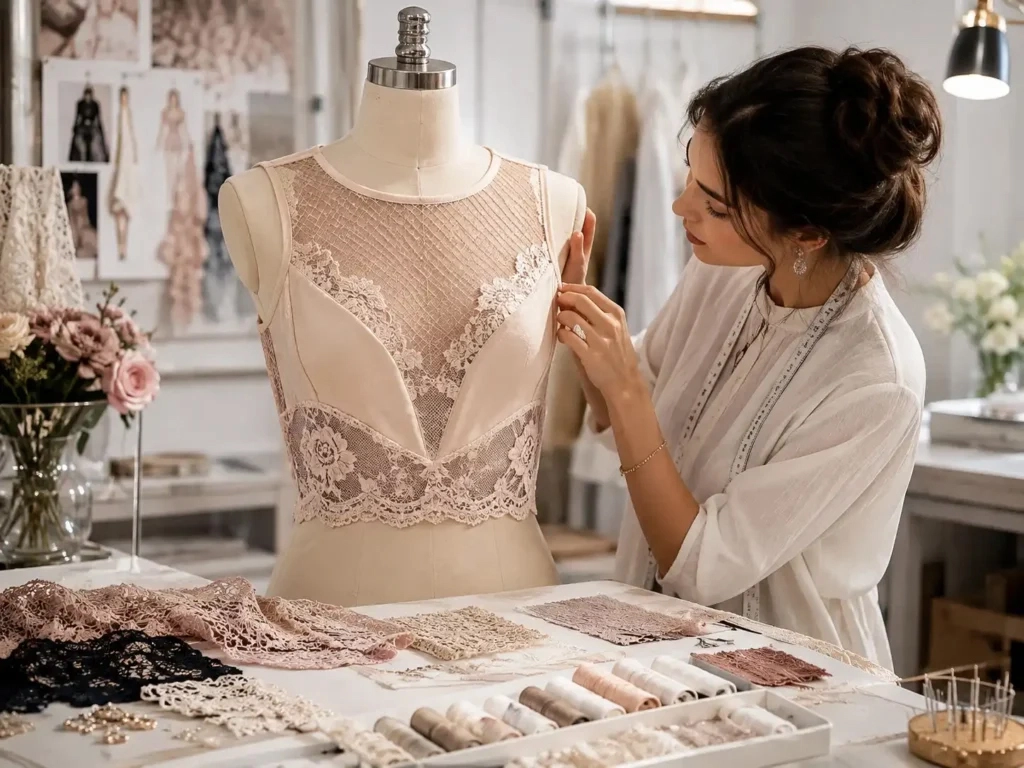
For example, a dress may use mesh as the base layer and lace as a decorative overlay. This can provide the transparency and stretch you need while allowing the lace pattern to create the visual focus.
Check the weight of both fabrics together before approving the combination.
A heavy lace placed over lightweight mesh can pull the base fabric down and change the shape of the garment.
Which Fabric Is Easier to Manufacture?
Neither fabric is automatically easier to manufacture. The difficult part depends on the construction.
With lace, more time may go into motif placement, edge matching and careful handling. With mesh, the bigger challenge is usually controlling stretch, recovery and distortion during cutting and sewing.
In our production work, we look at the complete construction rather than trying to label one fabric as easier to sew.
Lace Production Considerations
For lace dresses, you should consider:
- Motif matching
- Cutting direction
- Lace edge placement
- Seam finishing
- Fabric damage
- Lining attachment
- Pattern alignment
Delicate lace can also catch on sewing equipment or become damaged during handling. Operators need to control the fabric rather than treating it like a regular woven material.
Mesh Production Considerations
For mesh dresses, we normally check:
- Stretch direction
- Fabric recovery
- Cutting stability
- Seam tension
- Gathering
- Edge finishing
- Transparency consistency
If the mesh stretches during cutting, the pieces can change slightly before they even reach the sewing line.
For fitted mesh styles, the fabric is allowed to relax before cutting so the pattern pieces are not being cut from a stretched position.
How Lace and Mesh Affect Lining
The lining can change the result just as much as the outer fabric.
With lace, the lining can determine how visible the lace pattern appears. A matching lining gives one effect, while a contrasting or nude lining can make the lace stand out differently.
With mesh, lining often controls coverage.
Common lining options include:
- Full lining
- Partial lining
- Bodice lining
- Skirt lining
- Nude lining
- Matching-color lining
- Separate inner slip
For a private label collection, it is useful to decide the lining at the same time as the outer fabric.
Changing the lining later can affect the weight, drape and fit of the finished dress.
Which Fabric Has Higher Fabric Consumption?
There is no fixed rule that lace always uses more fabric than mesh.
The actual requirement depends on the width of the fabric, garment length, pattern layout, motif repeat, stretch direction and construction.
Lace can have higher consumption when large motifs need to be aligned or when certain decorative edges have to be preserved.
Mesh can also require additional fabric when the design includes gathers, multiple layers or a large amount of drape.
If you are working to a target garment cost, it is better to calculate consumption from the actual pattern rather than estimate it from the fabric price per meter.
A cheaper fabric can sometimes result in a higher finished garment cost if the pattern consumes significantly more material.
How to Choose Between Lace and Mesh for Your Dress
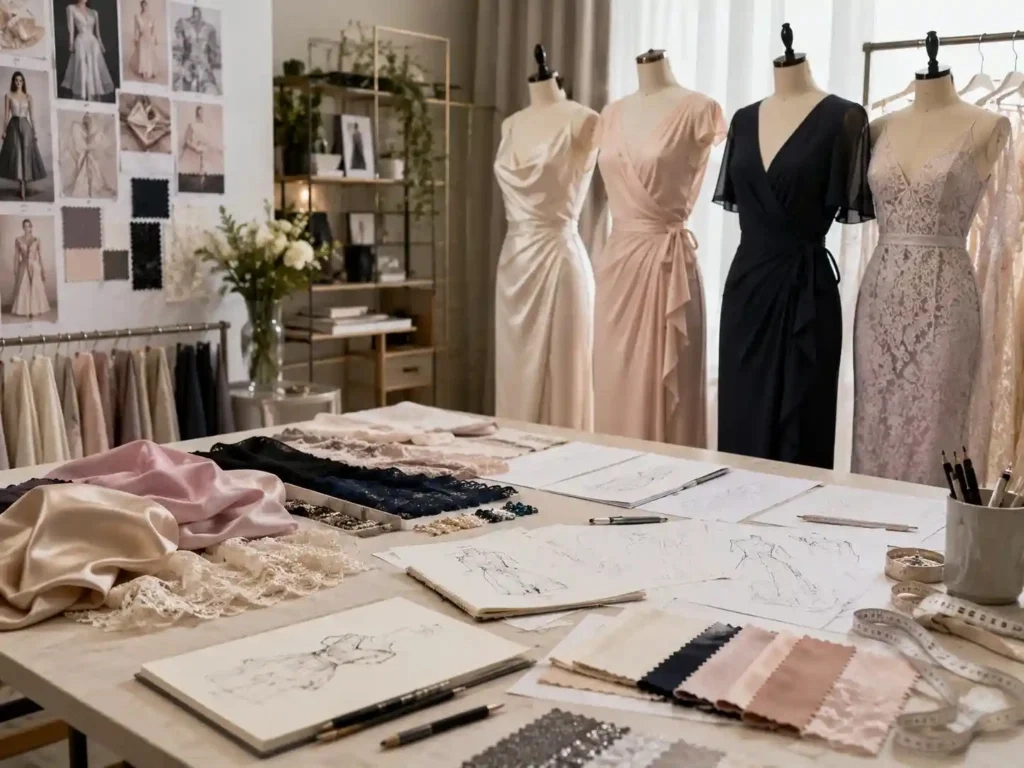
When we review a new dress for production, the silhouette usually comes first. The fabric needs to support the fit and construction rather than simply look good on a swatch.
1. Start with the silhouette
A fitted bodycon dress may need good stretch and recovery.
A structured evening dress usually needs a more stable base.
For an overlay dress, either lace or mesh may work depending on the desired effect.
2. Set the required level of coverage
Mesh gives you more control through fabric density and layering.
Lace adds transparency together with a visible pattern.
3. Check the fabric pattern and repeat
If the motif is part of the design, lace needs to be considered early because placement can affect the cutting layout.
If the main goal is a clean sheer layer, mesh may give you more flexibility.
4. Calculate the target garment cost
Do not compare the price per meter alone.
Check fabric width, consumption, cutting loss, lining, sewing time and any additional decoration.
5. Test the fabric on the actual sample
A material that looks right in a product photo may not give the same result once it is fitted to the body.
For fitted styles, check stretch and recovery. For evening dresses, check weight and drape. For sheer designs, check coverage with the intended lining.
Common Problems We Check Before Bulk Production
Most fabric problems are cheaper to solve during sampling than after bulk cutting has started.
A swatch can show the color, surface and hand feel, but it cannot tell you exactly how the fabric will behave in a finished dress.
For lace, we check motif placement, edge alignment and possible damage during sewing.
For mesh, we pay closer attention to stretch, recovery, distortion and finished measurements.
Before bulk production, the fabric is reviewed together with the approved pattern and sample. Depending on the style, this may include:
- Fabric width
- Stretch and recovery
- Shrinkage
- Fabric weight
- Transparency
- Lining compatibility
- Pattern placement
- Seam behavior
- Finished measurements
If the fabric changes after bulk cutting has started, both cost and production timing can be affected.
It is safer to confirm the fabric before locking the final pattern. This is also where an experienced dress production team can help, especially when the fabric, pattern and construction need to be checked together before bulk cutting.
Can You Combine Lace and Mesh in One Dress?
Yes. In some designs, combining the two gives you more control than choosing only one.
Mesh can provide the base structure, stretch or transparency, while lace can add the decorative surface.
You may see this combination in:
- Sheer sleeve dresses
- Lace-overlay dresses
- Bodycon evening dresses
- Illusion neckline dresses
- Layered party dresses
- Decorative panel designs
The main consideration is the relationship between the two fabrics.
If the lace is significantly heavier than the mesh, it can pull or distort the base layer. If the mesh is too stretchy, the lace placement may move during wear.
For this type of construction, the sample should be tested as a complete garment rather than approving each fabric separately.
What Should You Send a Manufacturer Before Sampling?
You do not need a complete tech pack to ask a manufacturer whether the design is workable.
For an early-stage design, useful information can include:
- Reference images
- Sketches
- Existing samples
- Fabric preferences
- Target quantity
- Target market
- Size range
- Target price
If you already have a tech pack, include the fabric composition, weight, lining details and construction requirements.
The clearer the fabric and construction requirements are, the easier it is to judge whether the design can be reproduced consistently in bulk.
Frequently Asked Questions
1. Can lace or mesh be replaced after the first sample?
Yes, but changing the fabric may also require pattern adjustments. A different stretch, thickness or drape can change the finished measurements and how the dress sits on the body.
If you are comparing two fabrics, it is better to test both before the final pattern is approved.
2. How should I compare fabric samples from different suppliers?
Ask for samples large enough to test, not only small swatches. Check them under normal lighting, stretch them if required, place them against the intended lining, and wash or press a test piece when the fabric may shrink or change shape.
3. What should I check if my lace supplier offers several similar qualities?
Look beyond the composition label. Compare the lace width, motif repeat, edge quality, backing, softness and consistency between rolls. Two fabrics can both be described as polyester lace while behaving quite differently during cutting and sewing.
4. Can one fabric specification be used for every color in a collection?
Not necessarily. Different colors can show small changes in hand feel, shade, stretch or surface appearance after dyeing, especially with delicate or elastic fabrics.
For a multi-color collection, it is safer to check the approved quality across the main colors before placing a larger order.
5. Should I approve the fabric before or after the dress sample?
The fabric should normally be selected before the final sample is approved.
The sample then confirms how that fabric behaves in the actual construction, including the seams, neckline, lining, fit and movement. If the fabric is changed after approval, the approved sample may no longer represent the bulk product.
Conclusion
For dress production, the better fabric depends on what the style needs from the material.
If the lace pattern, scalloped edge or surface detail is part of the design, lace usually makes more sense. If stretch, transparency or layering is more important, mesh may be easier to work with.
Before moving into bulk production, we recommend testing the selected fabric on the actual dress sample. This gives you a chance to check fit, transparency, fabric consumption and construction before the pattern and material order are locked.
Explore More Dress Manufacturing Services
If you are developing a new dress and need support with fabric selection, internal construction, sampling, and bulk production, an experienced clothing manufacturer can help you deal with these decisions before they become production problems.
At Xiuyu Apparel, we work with fashion brands, startups, designers, and private label companies from sample development through bulk production.
- Lace Dress Manufacturer
- Mesh Dress Manufacturer
- Velvet Dress Manufacturer
- Chiffon Dress Manufacturer
- Evening Dress Manufacturer
Get a Clothing Manufacturing Quote Based on Your Design
If you already have a garment design, send us the product photo, tech pack, or reference sample together with your target quantity.
As a dress manufacturer, we can review the fabric, lining, construction, trims, workmanship, and finishing requirements before preparing a quotation based on the actual garment rather than a general price range.

