

When you develop a fitted dress, the fabric may stretch well during fitting but fail to hold its shape after repeated wear. This can leave the waist loose, the hips stretched, or the neckline sitting differently from the approved sample. As a clothing manufacturer, we pay attention to fabric recovery before pattern approval because a good initial fit does not always mean the garment will keep that fit.
What Is Fabric Recovery?
Fabric recovery is the ability of a material to return toward its original dimensions after being stretched and released.
It is not the same as stretch. Stretch tells you how far the material can extend; recovery tells you how much of that extension remains after the pulling force is removed.
This difference matters when you are choosing fabric for a fitted dress. A material may stretch easily over the bust and hips but stay slightly wider after the wearer moves or sits. The dress may look fine on the first fitting, yet gradually lose its shape.
When reviewing a stretch fabric, we look at how it behaves in both directions, not just the maximum extension. The amount of stretch, remaining growth, and recovery time all help explain whether the material is suitable for the intended garment.
Why Does Fabric Recovery Matter for Dress Fit?
A dress can meet every measurement in your tech pack and still develop fit problems after wear. The reason is that the fabric continues to respond to tension once the garment is being used.
For example, a fitted waist may measure correctly on the cutting table. After the wearer sits, bends, and moves throughout the day, a fabric with poor recovery may remain slightly extended. The waist then feels less fitted, even though nobody has changed the original pattern.
You may notice this in several ways:
- The waist loses its original shape after wear.
- The fabric around the hips looks stretched or begins to sag.
- Necklines or shoulder areas gradually move out of position.
- The dress develops unwanted folds around areas under tension.
- The garment does not return to its original appearance after being taken off.
The effect depends on the design. A loose dress may tolerate some fabric growth without a visible change, while a bodycon dress has much less room for it.
For buyers developing close-fitting styles, recovery is therefore part of the fit requirement, not simply a fabric specification.
How Does Fabric Recovery Affect Dress Sizing?
Your garment measurements describe the dress at a particular point in its development. They do not automatically tell you how the garment will behave after being stretched on the body.
Take a dress with a finished waist measurement of 70 cm. The sample may measure 70 cm when laid flat, but if the fabric does not recover properly after being stretched, the waist can become wider during wear.
This can also affect how your size range feels. A fabric that works comfortably in a smaller size may behave differently when used in a larger size, where the garment experiences different levels of tension.
When developing a stretch dress, you need to consider:
- Body measurements and finished garment measurements
- Negative ease across the bust, waist, and hips
- Fabric stretch and recovery
- Horizontal and vertical stretch direction
- Fabric weight and construction
- Seam placement and garment design
Negative ease deserves particular attention. If your pattern is designed to rely on fabric stretch, the amount of reduction needs to suit the actual material.
A pattern developed for one jersey fabric may not produce the same fit in another, even when their GSM and fiber composition look similar. Changing the material without reviewing the pattern can create problems that are difficult to correct during bulk production.

Which Areas of a Dress Are Most Affected?
Fabric recovery does not affect every part of a dress equally. The areas under regular tension deserve closer attention during sample fitting.
Bust and Neckline
The bust places tension on the front and side panels, particularly in close-fitting dresses.
If the fabric gradually loses its recovery, the neckline may become less stable or move away from its intended position. This is worth checking on square-neck, strapless, sweetheart, and close-fitting scoop-neck styles.
For designs that rely on the shell fabric to hold the upper bodice in place, recovery should be considered alongside the pattern and support construction.
Waist
The waist is often where a change in fit becomes easiest to notice.
If the fabric remains extended after movement, the dress may no longer follow the waist as closely as intended. This can affect the appearance of fitted dresses with shaped panels, waist seams, or a defined bodice.
A smaller pattern is not always the answer. If the fabric has poor recovery, reducing the waist measurement may simply make the dress uncomfortable when worn.
Hip
The hip area experiences repeated extension during walking, sitting, and bending.
On bodycon dresses and fitted skirts, weak recovery can leave the fabric looking loose around the seat or upper thigh. You should check whether the material returns to its original appearance after movement rather than judging the sample only while the wearer is standing.
Dress Length
Length changes are worth checking on stretch knit dresses, especially fitted midi and maxi styles.
Fabric weight, vertical stretch, hanging time, and garment construction can all affect the finished length. A material that relaxes after being cut or sewn may cause the hem to sit lower than the approved sample.
For longer fitted dresses, we pay attention to the fabric’s vertical behavior as well as its stretch across the body.
Fabric Stretch vs. Fabric Recovery: What Is the Difference?
When comparing fabrics, buyers often use stretch percentage as an initial reference. It is useful, but it does not give you the complete picture.
Consider two jersey fabrics that both extend by 40% under the same test conditions. One returns close to its original dimensions after release. The other retains noticeable growth.
They may feel similarly stretchy in your hand, but the finished dresses could fit quite differently.
| Fabric Property | What It Measures | Effect on Dress Development |
|---|---|---|
| Stretch | How far the fabric extends | Affects movement and fitting ease |
| Recovery | How much extension is regained | Affects shape retention |
| Fabric growth | Remaining extension after stretching | Indicates possible permanent loosening |
| Dimensional stability | How well fabric dimensions remain consistent | Affects measurements after care |
You need enough stretch for the wearer to move comfortably, but the material should also return sufficiently for the garment to maintain its intended shape.
A very firm fabric is not automatically the better choice either. If recovery comes with excessive resistance or insufficient extension, a fitted dress may feel restrictive around the bust, waist, or hips.
The right balance depends on the silhouette and the way the dress is expected to be worn.
Which Dress Fabrics Need Particular Attention?
Different fabric constructions behave differently under tension. Even within the same fabric category, recovery can vary according to yarn, knitting structure, fiber blend, and finishing.
Rib Knit
Rib knit is widely used for fitted dresses because its structure allows the fabric to extend around the body.
However, horizontal and vertical behavior may differ. A rib fabric can stretch comfortably across the body but relax along its length, which may affect the hem position of a fitted midi dress.
Check both directions before using it for a design that relies on a close, consistent silhouette.
Jersey
Jersey is common in casual, fitted, and everyday dresses. Cotton jersey, viscose jersey, polyester jersey, and elastane-blend jersey should not be treated as interchangeable.
Two jersey fabrics can have similar GSM and composition but different stretch and recovery because of their construction and finishing.
If you are developing a fitted jersey dress, request the actual production fabric early enough to evaluate it during sampling. A fabric description alone cannot confirm how it will perform in the finished garment.
Ponte and Roma
Ponte and Roma fabrics generally have more body than lightweight jersey. They are often selected for fitted dresses that need a cleaner, more structured appearance.
Their weight and firmness can help support the silhouette, but they also affect movement, seam thickness, and drape.
If you are replacing lightweight jersey with Ponte, for example, the original pattern may not be suitable without adjustment. The new fabric needs to be assessed against the intended fit.
Stretch Crepe
Stretch crepe is useful when you want a more tailored appearance without choosing a completely rigid woven fabric.
Its performance depends on the fiber blend and fabric construction. Pay attention to whether it stretches evenly and returns consistently, especially across fitted waist and hip panels.
A smooth-looking surface does not necessarily mean the fabric has sufficient recovery.
How Do You Check Fabric Recovery Before Dress Production?
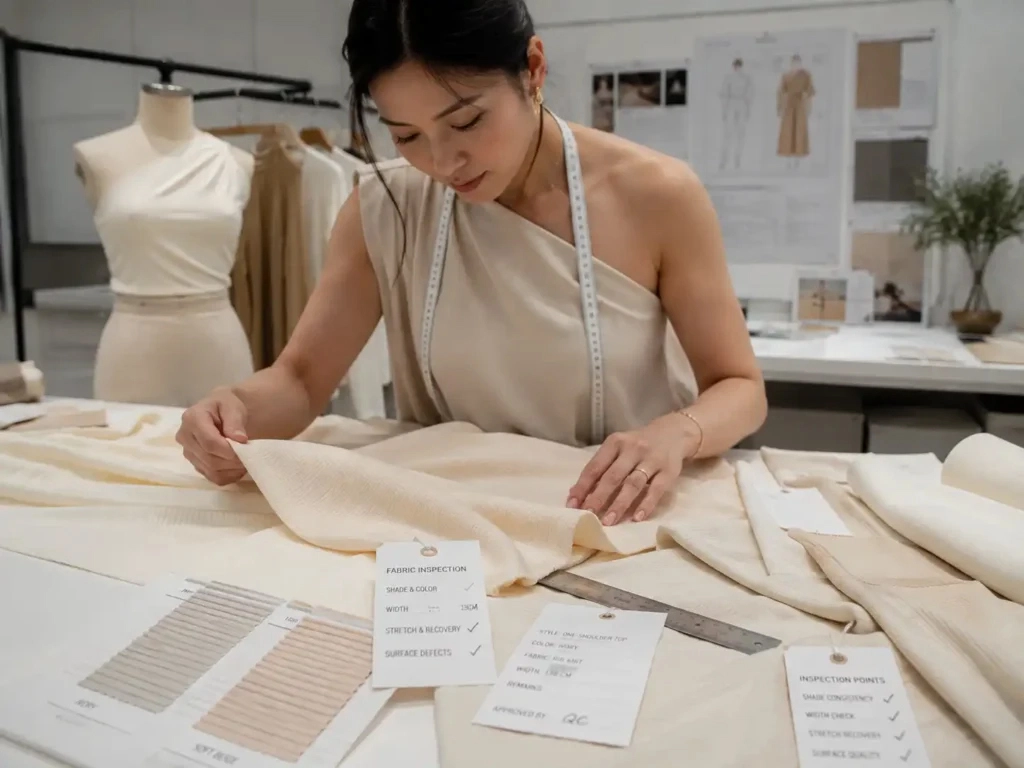
The most useful time to identify a recovery problem is before bulk cutting. At that stage, you can still review the material or make pattern changes without affecting a large quantity of finished garments.
1. Start With the Production Fabric
Ask your supplier for the fabric intended for the order, rather than relying only on a showroom swatch.
Check its composition, GSM, width, stretch direction, hand feel, and finishing. Keep the fabric reference and supplier specifications together so the same material can be identified during sample approval and bulk preparation.
If you are comparing several options, label each swatch clearly. This avoids confusion when the sample room receives similar-looking materials from different suppliers.
2. Check Stretch and Recovery Under Consistent Conditions
Stretch the fabric in both directions and observe how it returns after release.
A hand check is useful for an initial comparison, but it should not replace a controlled test when the result will be used for fabric approval.
For a more consistent comparison, use marked test sections, the same extension or applied load, the same holding time, and a defined recovery interval. Record the remaining growth rather than relying on the feeling of the fabric returning.
For reference, ASTM D2594/D2594M covers stretch properties of certain low-power knitted fabrics, while ASTM D3107 covers stretch properties of woven fabrics made with stretch yarns. The appropriate method depends on the material and its intended use. <Cite refs={[“turn297738search4″,”turn297738search1”]}/>
3. Make a Sample With the Selected Material
A fabric swatch cannot show how the material will behave after cutting and sewing.
Once it becomes a garment, seam construction, pattern shape, lining, and body tension all influence the fit.
During fitting, check the bust, waist, hips, neckline, and hem. Ask the wearer to sit, walk, bend, and raise their arms. Watch for areas where the fabric stays extended or the garment shifts out of position.
This is where you can decide whether the problem comes from the fabric, the pattern, or the construction.
4. Check the Garment After Washing
If the dress is intended for regular washing, evaluate the fabric and sample after the relevant care process.
Washing can affect shrinkage, dimensional stability, and elasticity. A dress that fits correctly before washing may not retain the same measurements afterward.
Follow the intended care instructions and compare the garment measurements and appearance before and after washing.
5. Compare the Bulk Fabric With the Approved Sample
Before cutting the full order, compare the production batch with the fabric used for the approved sample.
Look for differences in GSM, width, stretch, recovery, hand feel, and finishing. A replacement batch should not be treated as identical simply because the supplier uses the same fabric name or specification.
If a meaningful difference is found, review it with the supplier and production team before releasing the fabric for cutting.
Should You Change the Pattern if Fabric Recovery Is Different?
Sometimes you need a pattern adjustment, but changing the measurements should not be the first response to poor recovery.
Imagine that your original sample uses a fabric with good recovery, but the supplier sends a replacement with greater permanent growth. Making the waist and hip smaller may improve the first fitting, but the garment could become too tight during normal movement.
First, decide whether the replacement material is suitable for your design. If it is, the pattern maker can review the negative ease, body measurements, seam placement, and fabric direction against the new material.
Lining also needs attention. A stretch shell paired with a lining that has little extension can restrict movement and pull the outer fabric out of position. Both layers should be checked together on the finished sample.
For OEM dress development, fabric selection and pattern approval should remain connected. A change to the approved material may require another fitting before the revised version is released for production.
When Should Buyers Approve Fabric Recovery?
Do not leave fabric recovery until the final quality inspection. It should be considered while you are still deciding whether the material and pattern work together.
A practical development sequence is:
Fabric Selection → Fabric Evaluation → Sample Development → Fit Testing → Pattern Adjustment → PP Sample Approval → Bulk Production
At the fabric stage, you assess whether the material suits the design. The first sample shows how it behaves after cutting and sewing. Fit approval confirms the silhouette, while the PP sample provides the reference for bulk production.
If you change the fabric after sample approval, the previous fitting result may no longer be valid. A new material should be reviewed before the production team proceeds.
This is particularly important for repeat orders. Keep an approved fabric swatch and the relevant specifications so that future batches can be compared against the original development.
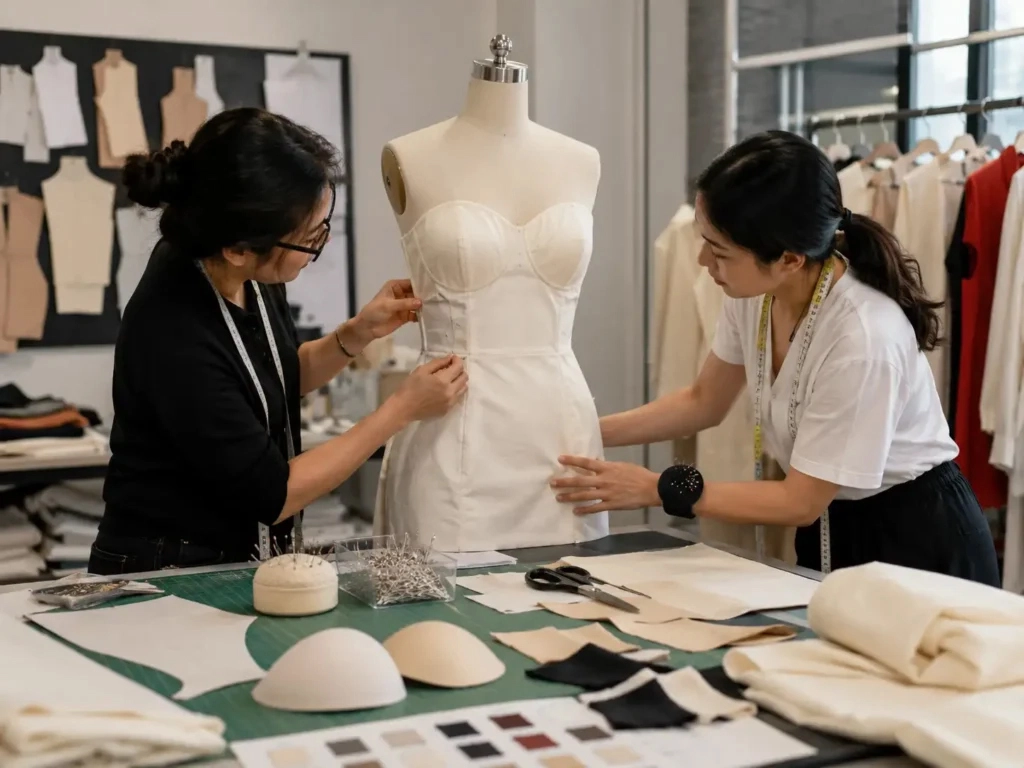
What Should You Check When Approving a Stretch Dress Fabric?
Before confirming your fabric, make sure the following information has been reviewed:
| What to Check | Why It Matters |
|---|---|
| Fiber composition | Helps identify the material’s characteristics |
| GSM | Affects weight, coverage, and drape |
| Fabric width | Influences marker planning and consumption |
| Stretch percentage | Shows how far the material extends |
| Fabric recovery | Indicates how well it returns after stretching |
| Shrinkage | Affects finished garment measurements |
| Stretch direction | Influences pattern placement |
| Drape | Changes the appearance of the silhouette |
| Washing performance | Helps assess post-care behavior |
| Sample fitting | Confirms fabric and pattern compatibility |
| Batch consistency | Helps maintain the approved fit in bulk |
A fabric can look almost identical to your reference and still produce a different garment. For fitted dresses, approval should be based on its performance in the sample, not appearance alone.
What Problems Can Poor Fabric Recovery Cause in Bulk Production?
A recovery issue discovered during sampling is usually easier to handle. You can reconsider the fabric, adjust the pattern, or make another sample before committing to the full order.
After bulk cutting, the situation is different. If the material does not behave like the approved sample, finished garments may no longer match the intended fit.
You may face additional alteration work, inconsistent sizing, delayed shipments, or complaints from customers who find that the dress loses its shape after wear.
There is also a cost that is easy to overlook: reworking a fitted garment can take considerably more time than correcting the material or pattern during development.
For this reason, fabric approval should be completed before the production team releases the bulk cutting plan. It is a small step compared with the cost of correcting an entire order.
FAQ
1. Can fabric recovery affect the grading of a dress size range?
Yes. When a fitted dress is graded from XS to XXL, the amount of fabric extension changes across sizes. Your pattern maker should review whether the same negative ease works throughout the range. If the design is particularly close-fitting, fitting additional sizes can prevent problems that a single-size sample will not reveal.
2. What should I do if my fabric supplier cannot provide a recovery test report?
Ask for a production swatch and arrange a comparative test before approving the material. You can also discuss independent textile testing if the fabric is critical to the garment’s performance. Keep the results with your approved sample so future orders have a clear reference.
3. Can a dress pass factory inspection but still lose its shape after customers wear it?
Yes. A standard final inspection mainly checks the garment against agreed specifications and visible quality requirements. It does not automatically predict every effect of repeated wear. If shape retention is important to your product, include suitable fabric and garment performance checks during development.
4. Should I approve a replacement fabric if the original supplier is out of stock?
Do not approve a substitute based only on a similar appearance or composition label. Ask the supplier for specifications and a physical sample, then compare its performance with your approved material. If the fabric changes the fit or drape, request another garment sample before confirming the replacement.
5. How can I keep fabric specifications consistent when ordering the same dress again?
Keep the original fabric swatch, supplier details, composition, GSM, width, color reference, and approved sample measurements. When placing a repeat order, ask the supplier to confirm whether the material or finishing has changed. A retained reference makes it easier to identify differences before production begins.
Conclusion
Fabric recovery deserves attention when you are developing fitted and stretch dresses. A material that works during the first fitting may not maintain the same shape after wear or washing. Check the fabric alongside the pattern and finished sample before bulk cutting. If you need help reviewing a dress design or production requirements, contact Xiuyu Apparel, an experienced dress manufacturer supporting fashion brands and private label projects.

