

When you are developing a velvet or velour dress, the fabric choice can affect the fit, appearance and production cost of the finished garment. As a clothing manufacturer, we have to look beyond the fabric swatch. Weight, stretch, pile direction and sewing performance all need to work with your design before the material is approved for bulk production.
Velvet vs Velour: What Is the Difference?
Velvet and velour are both pile fabrics, but they have different surface characteristics and handle differently during garment production.
Velvet generally has a denser, more defined pile that gives the fabric a deeper, richer appearance. It is often used for evening dresses, cocktail dresses and formal styles. Velour usually has a softer surface and a more flexible feel. Stretch versions are commonly used for fitted and casual dresses.
For your dress project, the name of the fabric is only a starting point. Two materials sold as velvet may have different compositions, weights and stretch properties. The same applies to velour.
| Factor | Velvet | Velour |
|---|---|---|
| Surface | Denser, more defined pile | Softer, more flexible pile |
| Appearance | Richer, more formal | Softer, more relaxed |
| Stretch | Depends on construction | Stretch versions are common |
| Drape | Strongly affected by weight | Often softer |
| Fitted dresses | Suitable with the right construction | Stretch versions work well |
| Eveningwear | Common choice | Depends on the design |
| Cutting | Pile direction needs attention | Depends on surface construction |
| Pressing | Sensitive to direct pressure | Also requires careful handling |
When comparing fabric options, check composition, GSM, usable width, stretch and recovery. These details are more useful for production planning than the fabric name alone.
Which Fabric Works Better for Different Dress Styles?
The dress silhouette should guide your fabric selection. A material that works on a straight mini dress may not give the same result on a fitted bodycon or a long evening gown.
Velvet for Evening and Occasion Dresses
If your design relies on a rich surface and a more formal appearance, velvet is often a good starting point.
It is commonly used for cocktail dresses, velvet midi dresses, long-sleeve occasionwear and evening gowns. The pile gives the garment visual depth, particularly on styles with large, visible fabric panels.
One detail worth checking is how the surface looks under different lighting. Velvet reflects light differently depending on the direction of the pile. A small swatch may look consistent, but the effect can become more noticeable when several panels are sewn together.
Weight also needs attention. A heavy velvet can give a dress more body, but it may pull down a long skirt or make gathered sections look bulky. If your design needs a softer, flowing silhouette, a lighter fabric may work better.
Velour for Bodycon and Fitted Dresses
For fitted dresses, stretch and recovery matter more than whether the fabric is called velvet or velour.
Stretch velour is often considered for bodycon dresses because it offers a soft hand feel and can follow the body closely. Stretch velvet is another option, provided the fabric returns to its original shape after being stretched.
A fabric may have plenty of elasticity but still perform poorly if its recovery is weak. During fitting, the dress may look correct at the waist and hip. After repeated wear, those areas can become loose or lose their original shape.
We check the material against the actual pattern during sample development. This helps identify problems around curved seams, fitted panels and areas that experience more movement.
Velour for Casual and Relaxed Dresses
Velour can also suit casual mini dresses, relaxed silhouettes and styles where comfort is more important than a highly structured appearance.
However, a soft hand feel does not always mean the fabric is lightweight. Some velour materials feel soft but carry enough weight to pull down a loose dress.
Very lightweight options may create a different problem. They can show body lines more easily or require lining to provide sufficient coverage.
Before choosing the material, consider how the finished dress should hang rather than judging the fabric by touch alone.
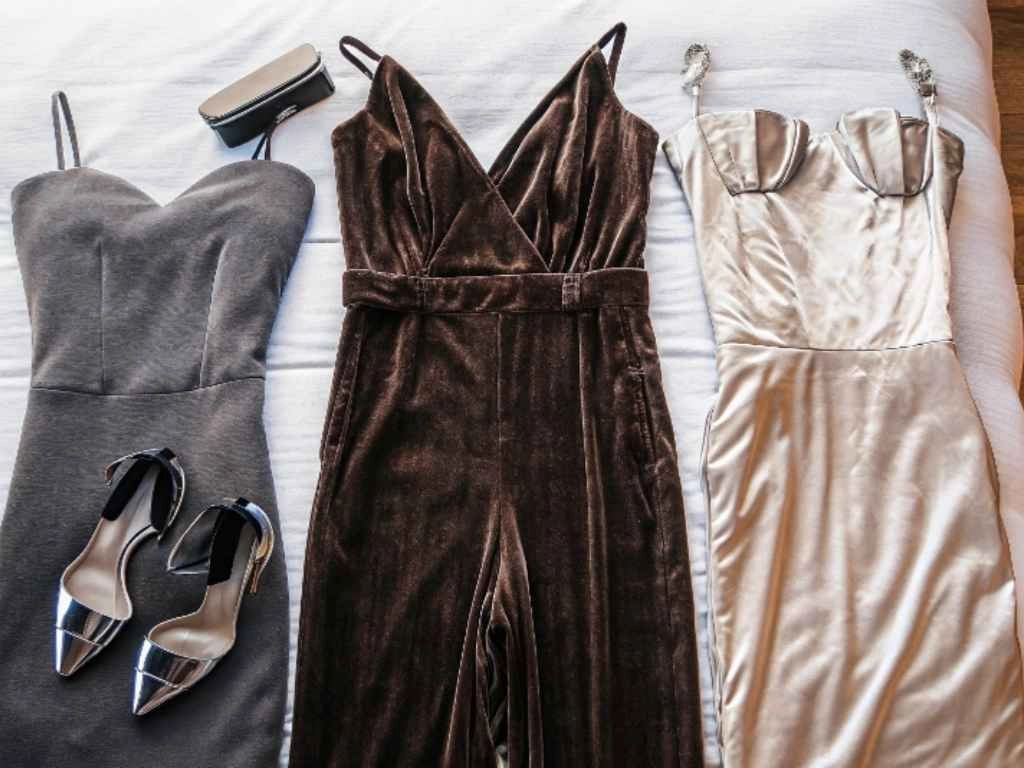
How Does Fabric Weight Affect Velvet and Velour Dresses?
GSM affects how your dress feels, hangs and performs during production.
A heavier velvet can give an evening dress more body and warmth. It also adds weight to the finished garment and can create bulk where several layers meet, such as at waist seams, gathered sections and zipper areas.
On a long dress, excessive weight may pull the skirt downward and change the intended silhouette. This can be particularly noticeable on designs with a fitted bodice and a full skirt.
Lighter fabrics generally offer more movement, but they may provide less coverage or show body lines more clearly.
Fabric weight also affects your material budget. Two fabrics with a similar appearance may have different prices, usable widths and consumption rates. A lower price per meter does not necessarily mean a lower finished garment cost.
When comparing factory quotations, look at GSM, fabric width and estimated consumption together. The cutting layout should be considered before you make a final cost comparison.
How Important Are Stretch and Recovery?
For fitted velvet and velour dresses, stretch needs to be checked before cutting and after the garment has been sewn.
During sample development, we pay attention to:
- Stretch percentage in each direction
- Direction of maximum elasticity
- Recovery after repeated stretching
- Fabric growth under tension
- Seam stability
- Fit around the bust, waist, hip and armhole
One problem we sometimes encounter with stretch fabrics is that the material feels comfortable during the first fitting but does not hold its shape well afterward.
The fabric itself may stretch sufficiently, but the finished garment can behave differently once seams, lining and other construction details are added.
For example, the outer fabric may stretch comfortably across the hip, while a non-stretch lining restricts movement. The dress then feels tighter than expected, even though the shell fabric passed the initial stretch test.
Testing the outer fabric and lining together gives a more realistic indication of how the finished dress will fit.
Why Does Velvet Nap Direction Matter?
Nap direction is one of the details that needs to be settled before velvet reaches the cutting table.
The pile reflects light differently depending on which direction you view the fabric. If two panels are cut in opposite directions, they can appear to have different shades after sewing, even when they come from the same roll.
For this reason, the main pattern pieces generally need to follow a consistent pile direction.
This creates a practical issue during marker making. Pattern pieces cannot always be turned around to fill empty spaces. The cutting layout may need to follow one direction throughout, leaving some areas of the fabric unused.
The effect is more noticeable on long dresses, wide skirts and designs with several large panels.
If you are calculating fabric requirements for a bulk order, this restriction needs to be included in the consumption estimate. Otherwise, the factory may need more fabric than originally planned.
Ask for consumption to be calculated using the approved pattern and cutting direction rather than a general estimate based on a similar dress.
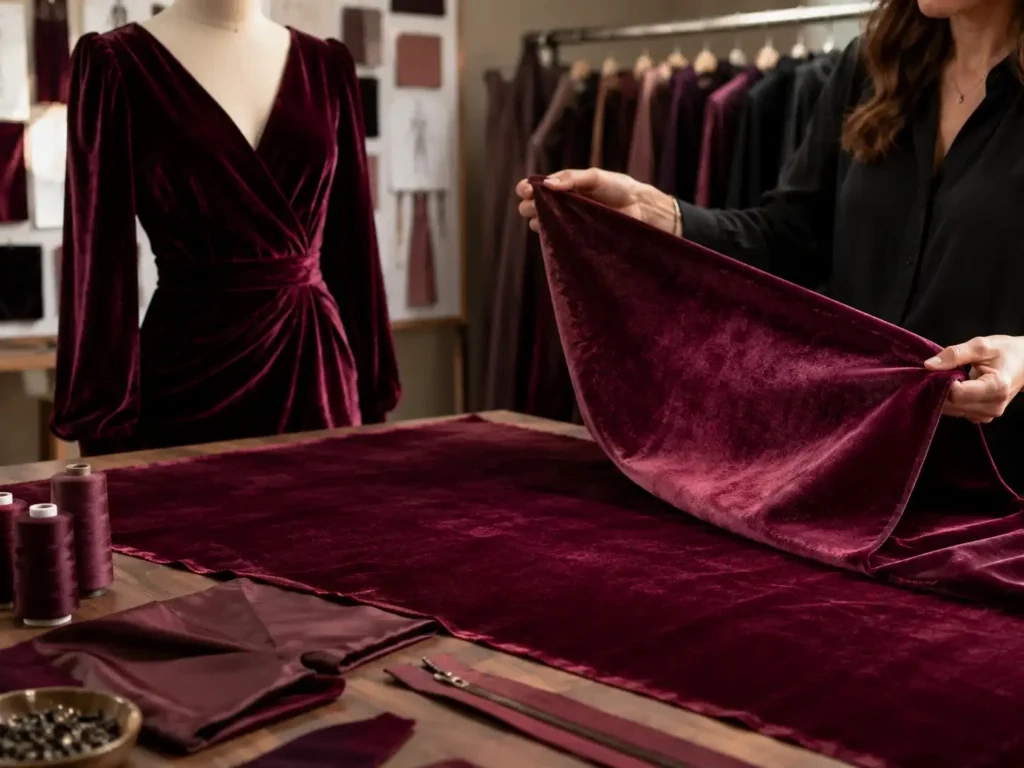
What Should You Check Before Cutting Velvet or Velour?
Before bulk cutting starts, the fabric should be inspected against the approved sample and production specifications. Several issues are easier to identify while the material is still on the roll.
Usable Fabric Width
Check the usable width rather than relying only on the supplier’s stated width.
Uneven selvedges, damaged edges and defective sections can reduce the area available for cutting. Even a small reduction can affect marker efficiency, especially when the pattern pieces need to follow the same nap direction.
Shrinkage
Shrinkage should be tested before the final pattern measurements are confirmed.
A small change in length or width can affect the fit of a close-fitting dress. If the fabric requires pre-treatment, the pattern and material calculation should reflect its condition after treatment.
Stretch Direction
For stretch velvet or velour, confirm that the direction of elasticity matches the pattern.
Turning the fabric to improve cutting efficiency may change how the finished dress fits. This is particularly important around the bust, waist and hip.
Shade Consistency
If your order uses several fabric rolls, check their shades before cutting.
A slight variation may not be obvious when rolls are inspected separately. Once garment panels are joined, however, the difference can become much easier to see.
Surface Defects
Look for crushed pile, pressure marks, irregular surfaces and damaged areas.
These defects should be identified before cutting. Otherwise, damaged sections may end up in visible parts of the garment, requiring replacement panels or additional fabric.
What Problems Can Happen When Sewing Velvet and Velour?
Velvet and velour can behave differently under the presser foot. Thick pile, fabric stretch and surface friction can all affect seam quality.
Common problems include:
- Uneven seams caused by fabric shifting
- Puckering along curved seams
- Wavy seams on stretch fabrics
- Excessive bulk at seam intersections
- Distortion around zippers
- Visible differences in pile appearance along joined panels
For fitted dresses, seam distortion can affect the overall silhouette. A curved seam running through a high-stretch area may not sit correctly if fabric tension is poorly controlled during sewing.
During sampling, the sewing method needs to suit the material. Needle selection, thread tension, presser-foot pressure and fabric handling may all require adjustment.
For example, excessive presser-foot pressure can leave marks on some velvet surfaces. Poor control of the fabric layers can also cause shifting, resulting in uneven seams.
The first sample is where these construction details should be checked. Changing the sewing method after bulk production has started can create unnecessary rework.
How Should Velvet Be Pressed During Production?
Velvet needs particular care during pressing because direct pressure can flatten or crush the pile.
Once the pile has been damaged, visible marks may remain on the garment and can be difficult to correct during finishing.
We test the pressing method on a fabric cutting or sample before bulk production. Temperature, pressure and handling should suit the particular material rather than follow one setting for every velvet fabric.
Pay particular attention to:
- Seams and seam allowances
- Hem edges
- Zipper areas
- Bust and waist seams
- Folded edges
The surface should also be checked after pressing. A dress may look correct before finishing but lose some of its original texture if the pile is handled incorrectly.
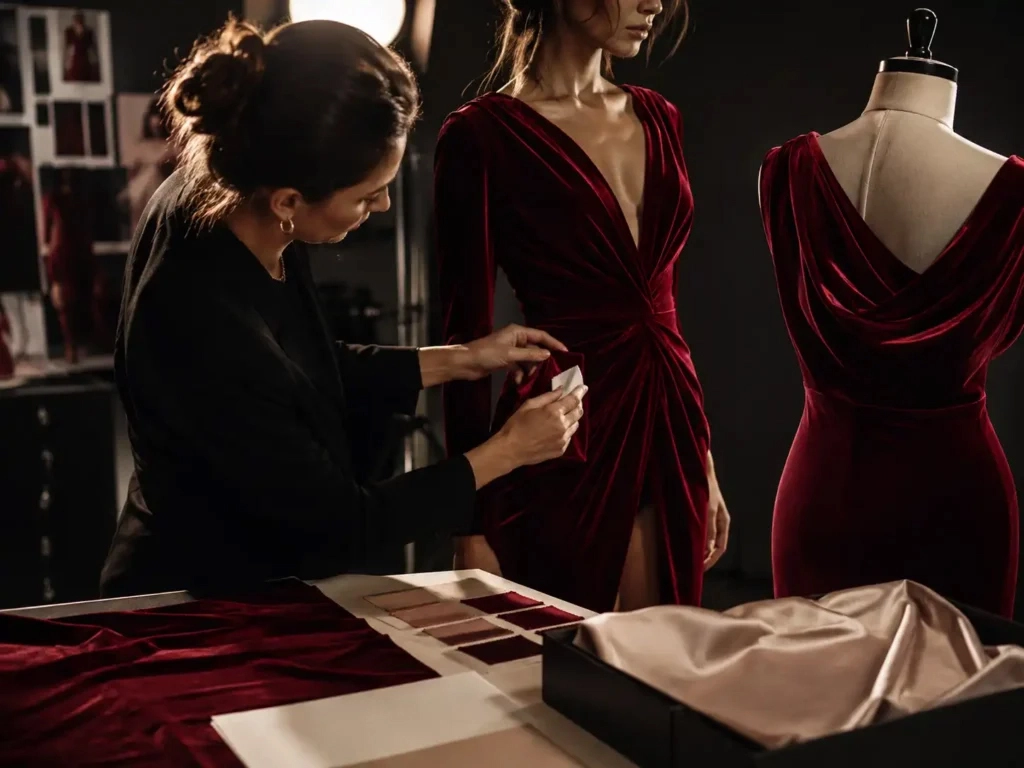
Does Lining Change the Choice Between Velvet and Velour?
Lining affects how a velvet or velour dress feels, fits and moves. It should be considered during fabric selection rather than added after the outer material has already been approved.
For fitted stretch dresses, the lining needs to work with the elasticity of the shell fabric. If the outer fabric stretches but the lining does not, the finished garment may feel restrictive even when the shell has sufficient stretch.
We test both layers together to check movement and fit around the body.
With heavier velvet, lining adds another layer of weight. This can change how a skirt hangs, particularly in long or gathered designs.
When developing your dress, consider:
- Stretch compatibility with the outer fabric
- Hand feel against the skin
- Static and cling
- Added weight
- Breathability
- Attachment and seam construction
If your design requires a fully lined dress, include this in the original tech pack. Adding or changing the lining after fit approval may affect the measurements and construction already confirmed.
What Should Buyers Consider Before Approving Velvet or Velour?
Before approving a fabric for your new collection, compare the available options using the same dress pattern.
Two swatches may look similar, but the finished garments can behave quite differently. A sewn sample gives you a better basis for comparing fit, surface appearance, movement and construction.
During approval, pay attention to:
- Appearance under different lighting
- Weight and drape on the finished dress
- Fit and movement during wear
- Surface consistency between panels
- Sewing and finishing quality
- Lining compatibility
- Fabric consumption and estimated cost
If you are comparing two materials, ask the factory to sample both using the same pattern where practical. This keeps the comparison more consistent.
The approved fabric should also be recorded clearly. Composition, GSM, color reference and fabric construction give the production team a reference when the order moves into bulk manufacturing.
What Information Should You Send the Factory Before Ordering?
When you approach a clothing manufacturer with a velvet or velour dress project, the information you provide can affect how accurately the factory assesses the material and construction.
Prepare the following details where available:
- Tech pack, design sketch or reference garment
- Preferred fabric composition
- Target GSM or fabric weight
- Stretch and recovery requirements
- Finished garment measurements
- Size range and colorways
- Lining requirements
- Fabric color references
- Expected order quantity
- Washing and care requirements
- Label and packaging specifications
If you already have a fabric supplier, send a physical swatch along with the technical details. This gives the factory something concrete to assess rather than relying only on the composition listed in your tech pack.
For a new design, it is useful to review the fabric before the pattern is completely finalized. A change in weight, stretch or usable width may require adjustments to the measurements, seam construction or fabric consumption.
Velvet or Velour: Which One Should You Choose?
Velvet is often a suitable choice for evening and occasion dresses where surface depth and a richer appearance are important. Velour may be more appropriate for fitted or casual styles that need a softer hand feel and flexible construction.
Neither fabric is automatically better. Your decision should come down to the dress silhouette, fabric properties, lining and production requirements.
A fabric that looks right on a swatch still needs to perform well once it is cut and sewn. Testing it on the actual pattern gives you a much more reliable basis for approval.
FAQ
1. Can velvet and velour be used together in one dress collection?
Yes. You can use both fabrics in the same collection if they serve different design purposes. For example, velvet may be used for formal styles while velour is selected for relaxed silhouettes. Keep their fabric specifications and care requirements separate in your production documents.
2. Can a factory source velvet or velour from a reference photo?
A reference photo helps communicate the intended appearance, but it cannot confirm the exact material. Your factory will also need to understand the preferred hand feel, composition, weight and stretch requirements before sourcing suitable options for sampling.
3. Should you order bulk fabric before the dress sample is approved?
It is generally safer to confirm the pattern and fabric specifications before committing to a large fabric order. Early purchasing may be necessary for limited-stock materials, but the risks of pattern changes, shade differences and unused fabric should be considered first.
4. Can you change the fabric after approving the first sample?
Yes, but a fabric change should trigger another round of evaluation. Even materials with similar appearances may differ in weight, stretch and drape. The factory should check whether the existing pattern and construction still work before the replacement is approved.
5. What if the bulk fabric does not match the approved sample?
The factory should compare the bulk material with the approved reference, checking color, composition, weight and surface appearance. If the difference affects the finished garment, the issue should be discussed with you before production continues rather than treated as an acceptable substitution.
Conclusion
Velvet and velour can both work well for dress manufacturing, but the right choice depends on your design and the way the fabric performs after sewing. Check the material, pattern, lining and cutting requirements before approving bulk production. If you are planning a new collection, Xiuyu Apparel is a useful place to learn more about working with an experienced dress manufacturer for custom dress development.

