

When you develop a dress, getting the shell fabric and pattern right does not guarantee a good-fitting sample. Lining, interfacing and internal support can change the way the garment sits on the body, sometimes creating tightness or stiffness that was not visible in the original design. As a clothing manufacturer, we pay close attention to these details during sampling because correcting internal construction early can save you unnecessary pattern changes and production costs.
Why Internal Materials Matter in Dress Manufacturing
A common problem during dress development is that the shell measurements match the tech pack, but the finished sample does not feel right when worn.
You may notice tightness around the bust, pulling at the hip or a neckline that feels much firmer than expected. Increasing the pattern measurements is not always the correct solution. The problem may come from the way the internal layers have been selected or assembled.
For example, a lightweight satin dress may have the correct outer measurements, but a heavier lining can restrict its movement. A soft neckline may also become too rigid after interfacing is added.
During sample fitting, we look at the complete garment rather than judging the shell fabric separately. The following components can all influence the result:
- Lining can affect garment movement, weight and wearing comfort.
- Interfacing can change the firmness of necklines, waistbands and closures.
- Underlining can add coverage and body but may reduce fabric softness.
- Boning can improve bodice support but cause pressure if positioned incorrectly.
- Bust cups can change the shape and balance of the front bodice.
- Stay tape and elastic can control stretching but also affect garment tension.
The important point is that internal materials are part of the garment construction, not simply finishing details added after the pattern has been completed.
Which Internal Materials Are Used in Dress Construction?
Not every dress needs the same internal components. Your fabric, silhouette, intended fit and level of support determine which materials are necessary.
1. Lining
Lining provides coverage, improves the inside finish and makes many dresses more comfortable to wear. It can also influence how the outer fabric falls.
When selecting lining for satin, chiffon or lightweight crepe, consider its weight, stretch and surface friction. A lining that is too heavy may pull against the shell, while a restrictive lining can affect movement around the bust, hip and hem.
Length is another detail worth checking. If the lining is too short, it may pull the outer layer upward and create an uneven hem. If it is too long, excess fabric can bunch inside the garment.
For fitted styles, we check the lining measurements and seam alignment during sample fitting. Matching the shell measurements alone does not guarantee that both layers will sit correctly when worn.
2. Interfacing
Interfacing reinforces selected areas that need additional stability.
Common applications include:
- Necklines and shoulder areas
- Waistbands
- Button plackets and closures
- Cuffs
- Structured bodices
The challenge is choosing enough support without changing the character of the outer fabric.
For example, a lightweight satin neckline may only need gentle stabilization. Using a heavy interfacing can make the edge noticeably harder than the surrounding fabric. The difference may also show on the outside after pressing.
Fusible or sew-in interfacing?
Fusible interfacing is convenient when the shell fabric can withstand the required heat and pressure. However, delicate satin, textured fabrics and heat-sensitive materials may not respond well to fusing.
Sew-in interfacing is another option when heat could affect the fabric surface or when the construction needs more flexibility.
Before confirming the method, check the fabric reaction, adhesion, thickness and finished appearance on a test piece. A specification that works for one fabric should not automatically be used for every style in the same collection.
3. Underlining
Underlining is attached directly to the shell fabric, and both layers are handled together during construction.
It is often used when the outer fabric needs more body, coverage or stability. You may consider it for sheer chiffon, lace, lightweight satin and delicate woven fabrics.
However, another layer also means more fabric consumption, additional handling and a change in garment weight.
If your design relies on a soft drape, heavy underlining can make the dress look less fluid. We would rather test the shell and underlining together before confirming the construction than add unnecessary material to solve a problem that could be addressed another way.
4. Boning and Bust Cups
Boning and bust cups are common in corset, strapless and structured dresses.
Boning helps the bodice maintain its shape, while cups provide support and define the bust area. Both need to work with the pattern rather than being selected independently.
During fitting, we pay attention to boning position, channel width, cup placement, bust shaping and waist construction. If a boning channel sits too close to the body or ends in the wrong position, the wearer may feel pressure when sitting or moving.
Cup placement also needs to be reviewed across the size range. A position that works in the base size may not give the same result after grading.
5. Stay Tape and Elastic
Stay tape helps control unwanted stretching around areas such as necklines, shoulders and waist seams.
Elastic has a different job. It provides tension while allowing the garment to stretch and recover.
This is especially relevant to halter, off-shoulder and stretch dresses. If the elastic is too tight, the fabric may gather or distort. If it is too loose, the neckline may move during wear.
When reviewing these components, consider both the stretch of the shell fabric and the recovery needed to keep the garment in position.
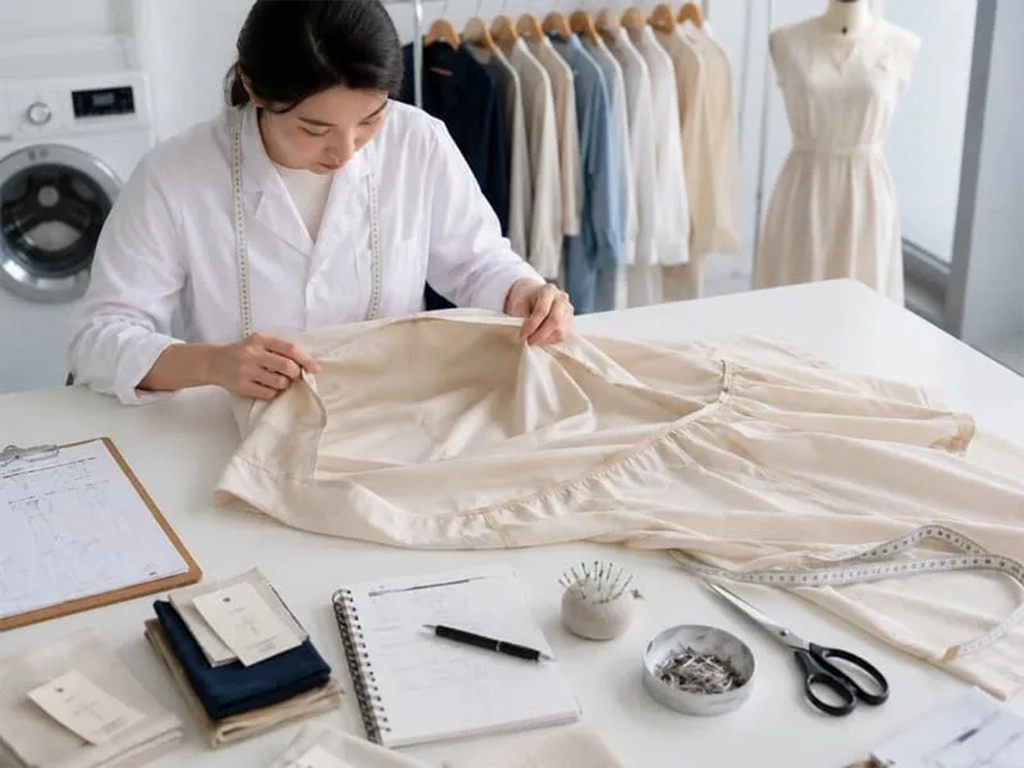
How Internal Materials Affect Different Dress Silhouettes
The same lining or reinforcement can produce different results depending on the design. Choosing internal materials by following the silhouette is more useful than applying one construction method to every dress.
A-Line Dresses
Most A-line dresses need more attention around the bodice and waist than throughout the skirt.
If the shell fabric already has enough body, adding unnecessary layers can make the skirt heavier and affect how it swings. The aim is to keep the upper body stable while allowing the skirt to fall naturally.
Bodycon Dresses
Bodycon dresses are sensitive to changes in stretch and recovery.
A lining with insufficient stretch can restrict the shell, even when the outer fabric feels comfortable on its own. Reinforcement and elastic can also affect how closely the dress follows the body.
When checking a bodycon sample, look at the bust, waist, hip and movement together. A garment that fits while standing may pull across the hips or ride up when the wearer sits down.
Slip Dresses
Slip dresses rely on fabric movement rather than heavy internal structure.
For satin and other fluid fabrics, the lining should not interfere with the intended drape. Pay attention to lining weight and friction, particularly around the side seams and hem.
Corset and Strapless Dresses
These styles require closer control of the internal bodice construction.
Boning, cups, interfacing, lining and waist reinforcement all contribute to the finished shape. The complete bodice needs to be checked during fitting, since testing the shell alone cannot show whether the support is sufficient or comfortable.
Sheer and Lace Dresses
With sheer and lace designs, the main challenge is deciding where coverage is needed without losing the original appearance of the fabric.
A separate lining, underlining or selected reinforcement may be suitable. The decision should follow the design: some areas may need full coverage, while others are intended to remain transparent.
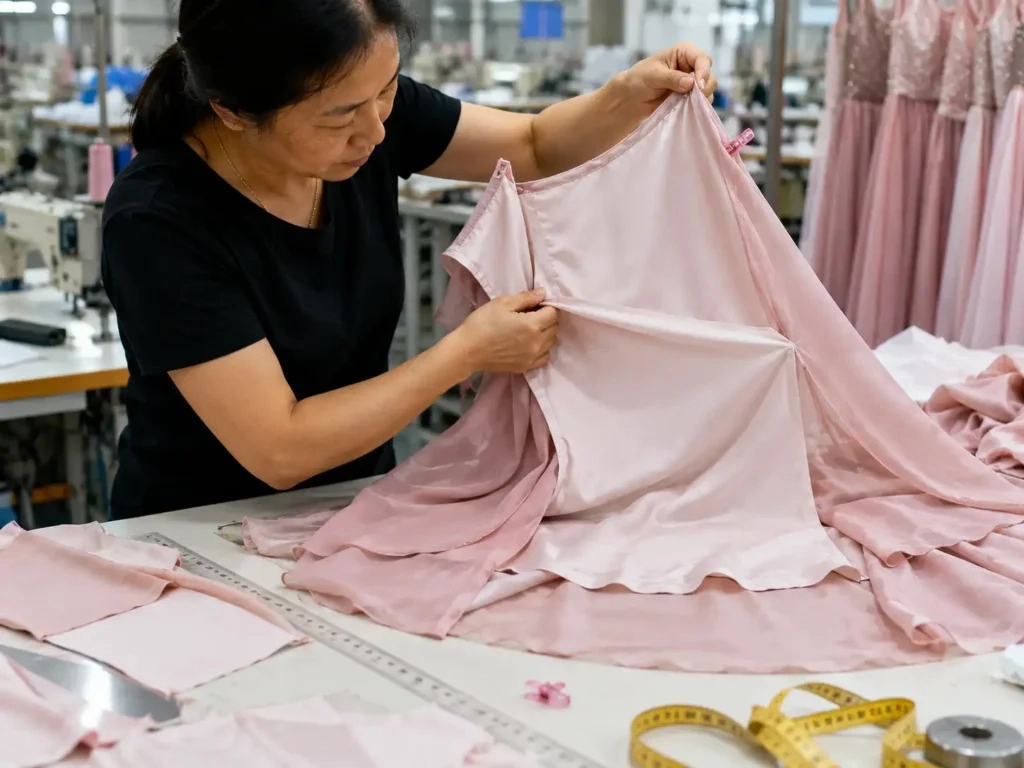
Why Can the Same Pattern Fit Differently After Internal Materials Are Added?
Consider a fitted satin bodice with a lining, neckline interfacing, bust cups, side boning and a concealed zipper.
The shell pattern may meet the specified bust and waist measurements. However, every additional layer occupies space and creates its own tension. The finished bodice can therefore feel tighter or sit differently from the original fitting expectation.
When a sample has this problem, we do not immediately increase the pattern measurements.
We first look at where the garment pulls and what construction is present in that area.
If the neckline feels tight, for example, the pattern measurement is only one part of the investigation. Lining tension, interfacing stiffness and seam construction also need to be checked.
If the waist feels restrictive, we would look at the internal layers and boning arrangement as well as the finished waist measurement.
This distinction matters during sample correction. Changing the pattern without identifying the cause can solve one fitting issue while creating another.
What Should You Check During Dress Sample Development?
When you receive a dress sample, compare the measurements with your tech pack, but do not stop there. The garment needs to be checked on the body and through normal movement.
| Area | What to Check |
|---|---|
| Bust and waist | Fit, balance and pressure |
| Lining | Ease, length and pulling |
| Interfacing | Stiffness and surface appearance |
| Underlining | Added weight and fabric movement |
| Boning | Position, support and comfort |
| Bust cups | Size, placement and shape |
| Elastic | Tension and recovery |
| Drape | Natural movement of the shell |
| Silhouette | Whether the intended shape remains intact |
| Movement | Sitting, walking and lifting the arms |
We also look at the garment from the front, side and back. A neckline may look balanced from the front but pull toward the back. Similarly, a hem may appear even when the dress is laid flat but become uneven when worn.
For fitted and structured dresses, these checks are especially useful before confirming the sample for production.
How to Control Internal Materials Before Bulk Production
Once you approve a sample, the internal construction needs to be recorded clearly. Otherwise, the production team may have to interpret details that were never fully specified.
Your production reference should include:
- Shell and lining fabric specifications
- Interfacing type and placement
- Underlining material, if required
- Boning type, length and position
- Bust cup size and placement
- Elastic width and construction method
- Finished measurements and tolerances
- Relevant sewing and finishing instructions
For example, writing “add interfacing” does not tell the production team whether to use lightweight fusible interfacing or a firmer sew-in option.
The approved PP sample should represent the materials and construction intended for the bulk order. If the lining, interfacing or support components change after approval, the differences should be reviewed before bulk cutting.
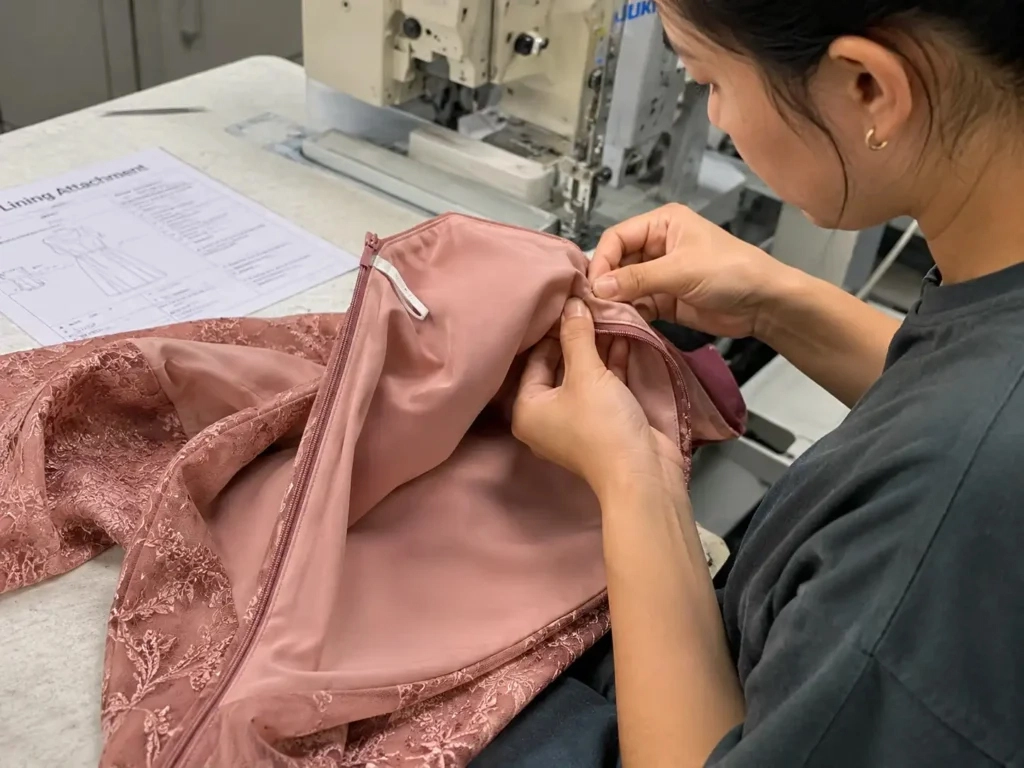
What If an Internal Material Needs to Change?
Material substitutions can happen when a supplier runs out of stock or the original material does not perform as expected.
However, replacing a lining or support component is not always a straightforward purchasing decision.
A different lining may have more friction. A replacement interfacing may react differently to heat. Even a change in boning width can affect the inside finish of a structured bodice.
Before accepting a substitute, compare it with the approved specification. Check whether the difference affects garment weight, fit, drape, appearance or construction.
If the change is significant, make a revised sample or construction test before continuing with bulk production. The buyer should approve the change rather than allowing an unconfirmed substitution to become part of the finished order.
How to Reduce Internal Construction Problems in Your Dress Collection
If you are developing several styles for one collection, these steps can make communication with your manufacturer more efficient.
1. Confirm the complete material package.
Provide shell, lining and support material specifications as early as possible. This gives the sampling team a clearer starting point and reduces changes caused by missing information.
2. Test the actual material combination.
Two materials may work well individually but behave differently once sewn together. Test the intended shell and internal materials as a combination before approving the final construction.
3. Explain the intended fit.
Tell your manufacturer whether the dress should feel close to the body, remain flexible, provide firm bust support or maintain a soft drape. A clear fit requirement is more useful than simply asking for stronger support.
4. Record sample corrections.
If the first sample needs a shorter lining, softer interfacing or repositioned boning, update the pattern and construction instructions. Keep the approved changes in one production reference.
5. Review the PP sample before bulk cutting.
Check the finished fit, materials, workmanship and movement against the approved reference. This is the final opportunity to resolve construction differences before they affect the full order.

What Should You Discuss With Your Dress Manufacturer?
When sending a new design to a dress manufacturer, include the intended silhouette, target fit, fabric composition, lining preference and any areas that require additional support.
Reference photos and sketches are useful, but they may not show the internal construction. If you have a tech pack, identify which materials and construction details are already confirmed.
If some details are still open, explain the result you want. You may need a neckline that stays flat without feeling rigid, or a corset bodice that provides support without excessive pressure.
This gives the factory a clearer basis for reviewing the pattern, selecting materials and developing the first sample. It also helps you discuss construction and cost before the style moves into bulk production.
FAQ
1. Can a factory estimate internal construction costs before making a sample?
Yes, an initial estimate is possible when you provide the design, fabric details and expected construction. However, complicated bodices may need pattern review before labor costs can be confirmed. Ask for the quotation to identify any additional support components or special sewing operations.
2. Who should approve a material substitution during production?
The buyer or authorized brand representative should approve changes that affect the agreed product specification. Your factory can suggest alternatives and explain the differences, but it should not assume that a cheaper or more readily available material is acceptable without your confirmation.
3. Should you develop all dress sizes during the first sample stage?
Most styles begin with an agreed base size so the pattern and construction can be corrected before grading. If you are developing a highly fitted or structured dress, ask whether additional size checks are needed to confirm that support and fit remain consistent.
4. Can a factory use leftover lining or interfacing from another order?
It may be possible if the material matches your approved specification. However, the factory should check composition, weight, width, color and performance first. For repeat orders, unidentified leftover materials can make it difficult to maintain consistent quality between production batches.
5. What happens if internal construction increases the production cost?
Ask your manufacturer to break down the additional material and sewing costs. You can then compare practical alternatives, such as different lining specifications or selective reinforcement. Removing a support component without reviewing its function may reduce the quotation but compromise the finished garment.
Conclusion
Internal materials can change the way a dress fits, moves and holds its shape, even when the shell pattern meets the original measurements. Confirming these details during sampling gives you a better chance of avoiding unnecessary corrections before bulk production. At Xiuyu Apparel, we understand how pattern development, material selection and fitting work together when developing styles with an experienced dress manufacturer.

